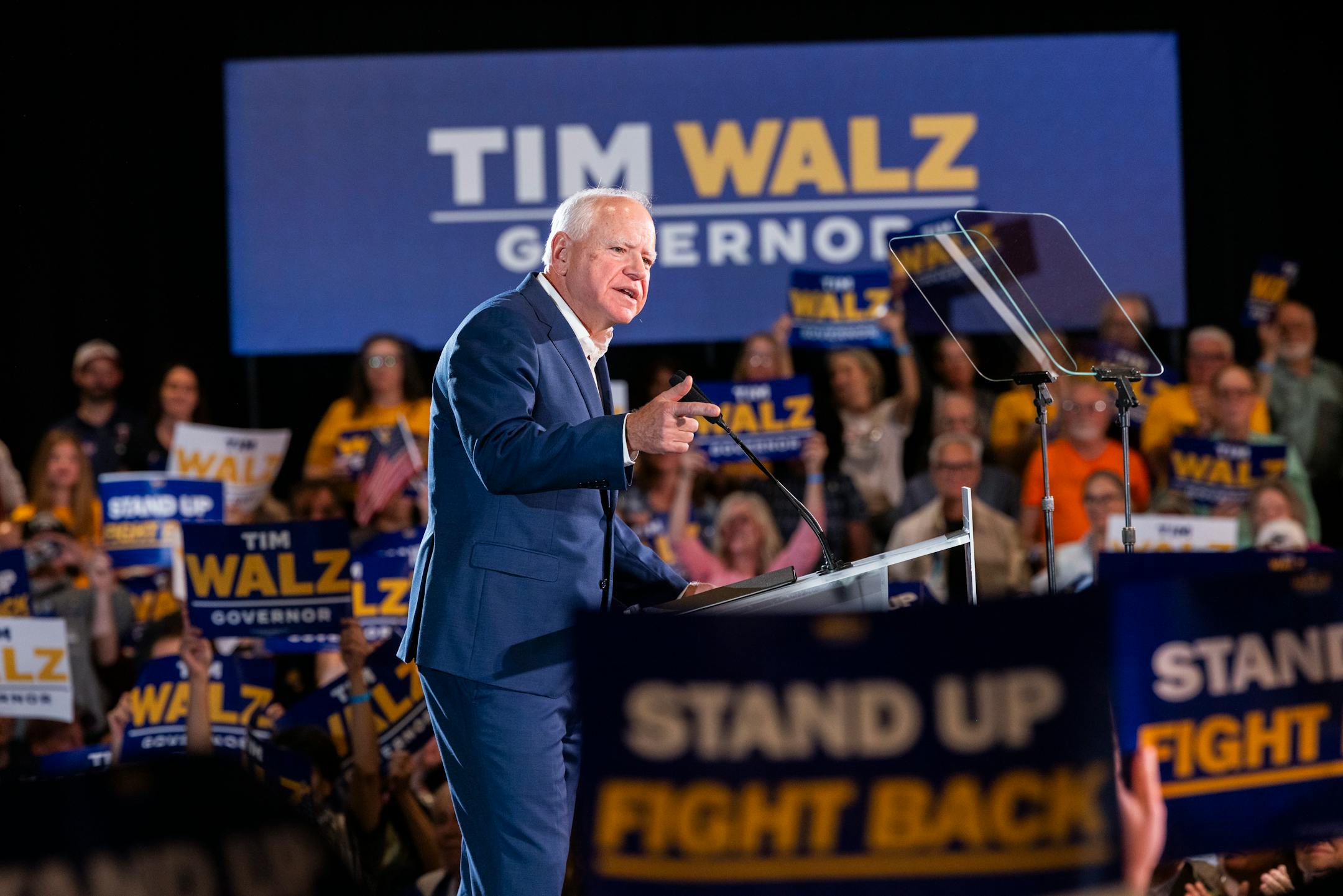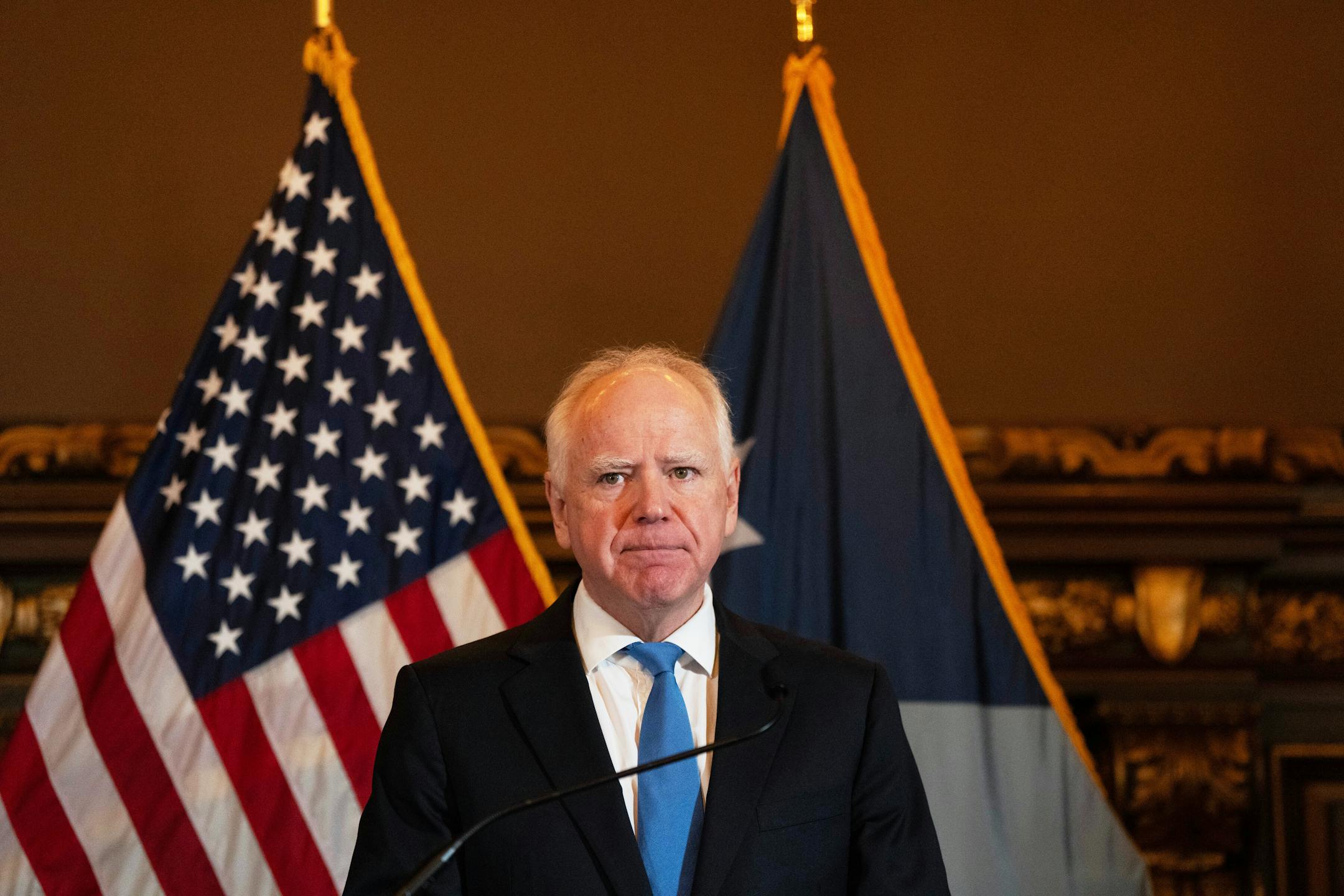
Gov. Tim Walz’s decision to end his re-election campaign appeared, at first, to be the culmination of weeks of punishing headlines about the state’s sprawling fraud crisis and his escalating feud with the Trump administration.
His Jan. 5 announcement came just four months after he launched his bid for a third term, a reversal so abrupt it shocked political insiders and fundamentally reoriented the race in ways that could reverberate in Minnesota and Washington.
But before the public unraveling, there had been a quieter, more personal reckoning. Walz had been privately deliberating with aides and his family since last summer about whether he wanted to serve 12 consecutive years.
This account is based on interviews with multiple people close to the governor and nearly two dozen prominent DFLers dating back to last summer.
During his time in the governor’s office, Walz dealt with the crises of COVID-19 and civil unrest, signed a parade of progressive policies into law in a landmark legislative session and ascended to the national stage as the 2024 Democratic vice-presidential nominee. But then he suffered a bruising national defeat and, several months later, a devastating loss.
The June political assassination of his close friend, former House Speaker Melissa Hortman, knocked him off his axis. He considered her his closest governing partner and struggled to imagine navigating state budgets and Capitol dynamics without her.
“She is irreplaceable, both as a friend and a person but she’s irreplaceable in this building,” Walz said in a July interview at the State Capitol.
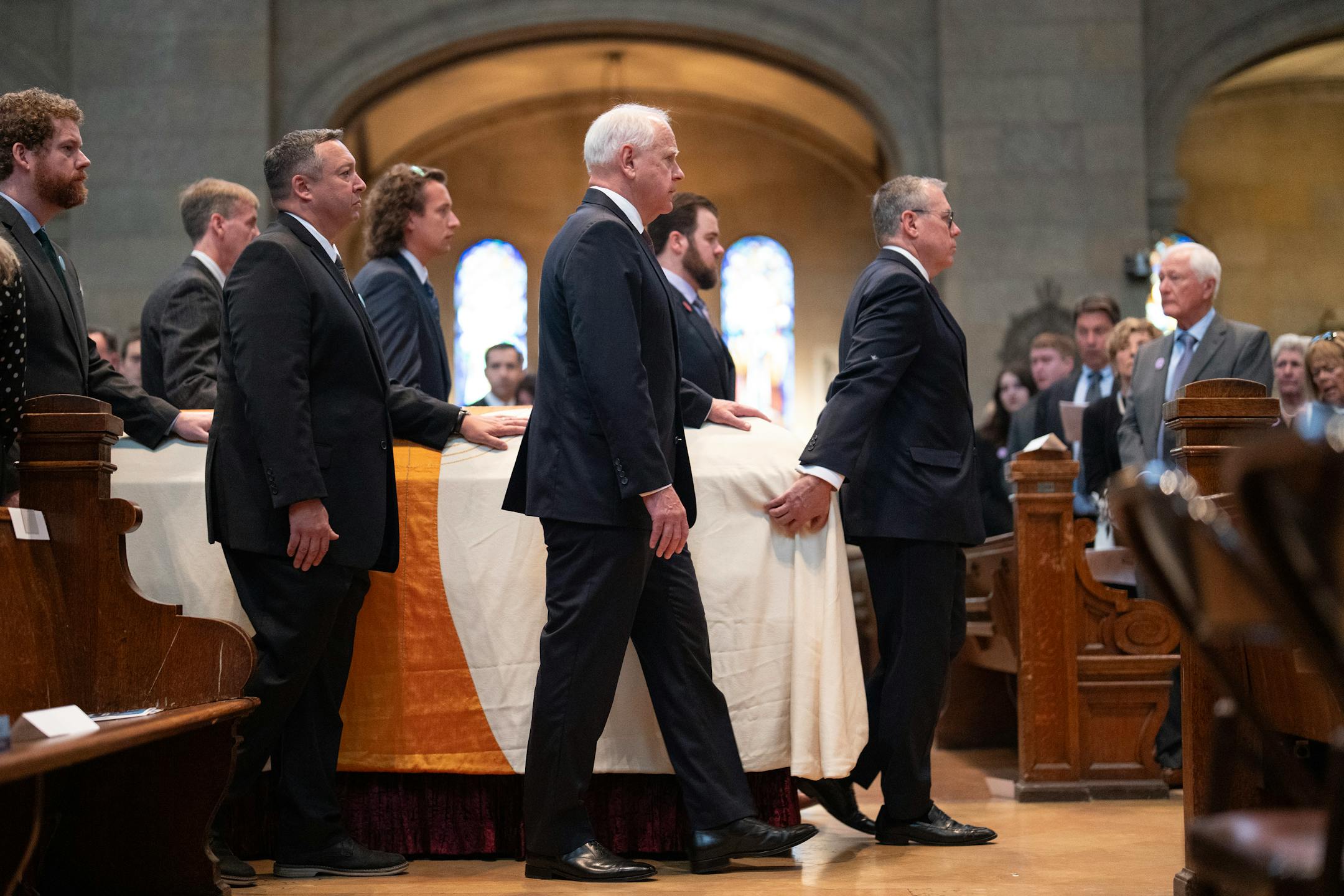
Walz was a pallbearer and one of two people who gave a eulogy at Hortman’s funeral. He told the Minnesota Star Tribune that no other relationship — not with his commissioners, his governor’s office team or with other legislators — matched what he had with Hortman.