


For a fleeting moment, Minnesota Gov. Tim Walz was on top of the political world.
It was the summer of 2024, and Walz had become the the unlikely Democratic vice presidential nominee alongside Kamala Harris after signing a sweeping progressive agenda into law in Minnesota.
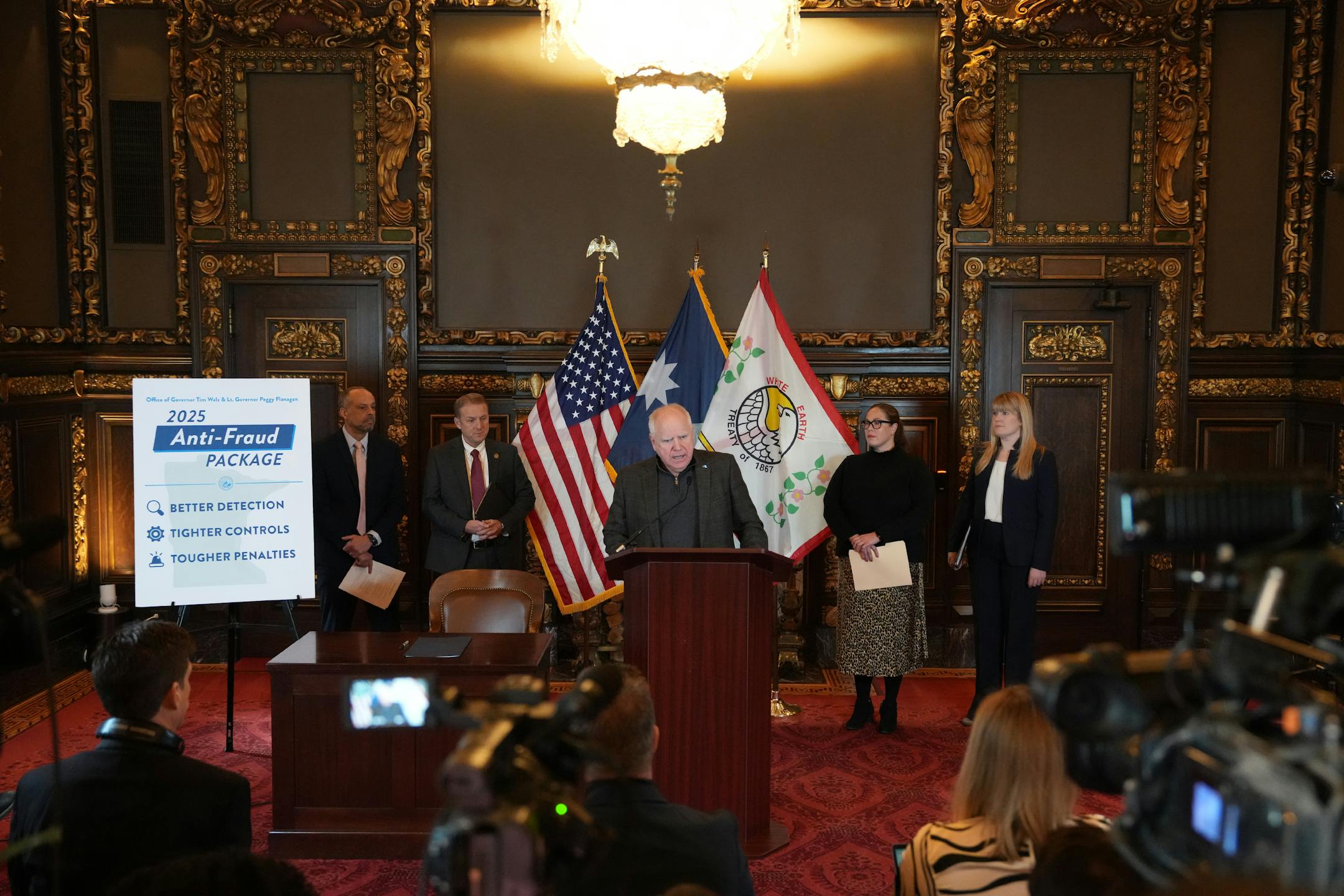
Then, his political career unraveled almost as quickly as it took off. Walz suffered a bruising national defeat, lost his close friend and colleague in a political assassination and found himself under white-hot scrutiny for a sprawling fraud crisis in the state’s welfare programs.
On Monday, Jan. 5, almost a year and a half after Harris asked him to be her running mate, Walz stood before a crowd of reporters at the Minnesota Capitol to announce he was dropping his bid for a third term. His wife, First Lady Gwen Walz, looked on as he read brief prepared remarks and then left abruptly without taking questions.
“I’m confident that I’ll find ways to contribute to the state that I love long after next January,” Walz said in his remarks. “I want Minnesotans to know how grateful I am for the opportunity to serve this state, for the privilege that I have been given to serve in this office.”
Walz’s exit from the governor’s race — and possibly from politics entirely — marked a stunning reversal of fortune and came as he faced unrelenting attacks from his greatest political foe, President Donald Trump, on the issue of fraud.
The governor’s move to end his re-election campaign amid scrutiny will almost certainly leave a mark on his legacy.
“His legacy is something that, perhaps more than some elected officials, may be dependent on sort of doubling down on righting the ship here in the last year,” said former Minnesota DFL chair Mike Erlandson, who encouraged Walz to take strong action on fraud in his final year.





![Shoppers made their way through a parking ramp at the Mall of America, Tuesday, November 13, 2018 in Bloomington, MN. A new camera-based parking system, currently up and running at the mall, is expected to help shoppers have an easier time finding a place to park. ] ELIZABETH FLORES ï liz.flores@startribune.com](https://arc.stimg.co/startribunemedia/QUXCIHRX6DTG5YE7PMPVXA63AI.jpg?&w=252&ar=3:2&fit=crop)
