Advertisement

Vang: The Olympic loyalty test no one asked for

They both won gold medals. But Alysa Liu was heralded while Eileen Gu was criticized for her choice to compete for China.

Columnist Icon
The Minnesota Star Tribune
February 26, 2026 at 11:00AM
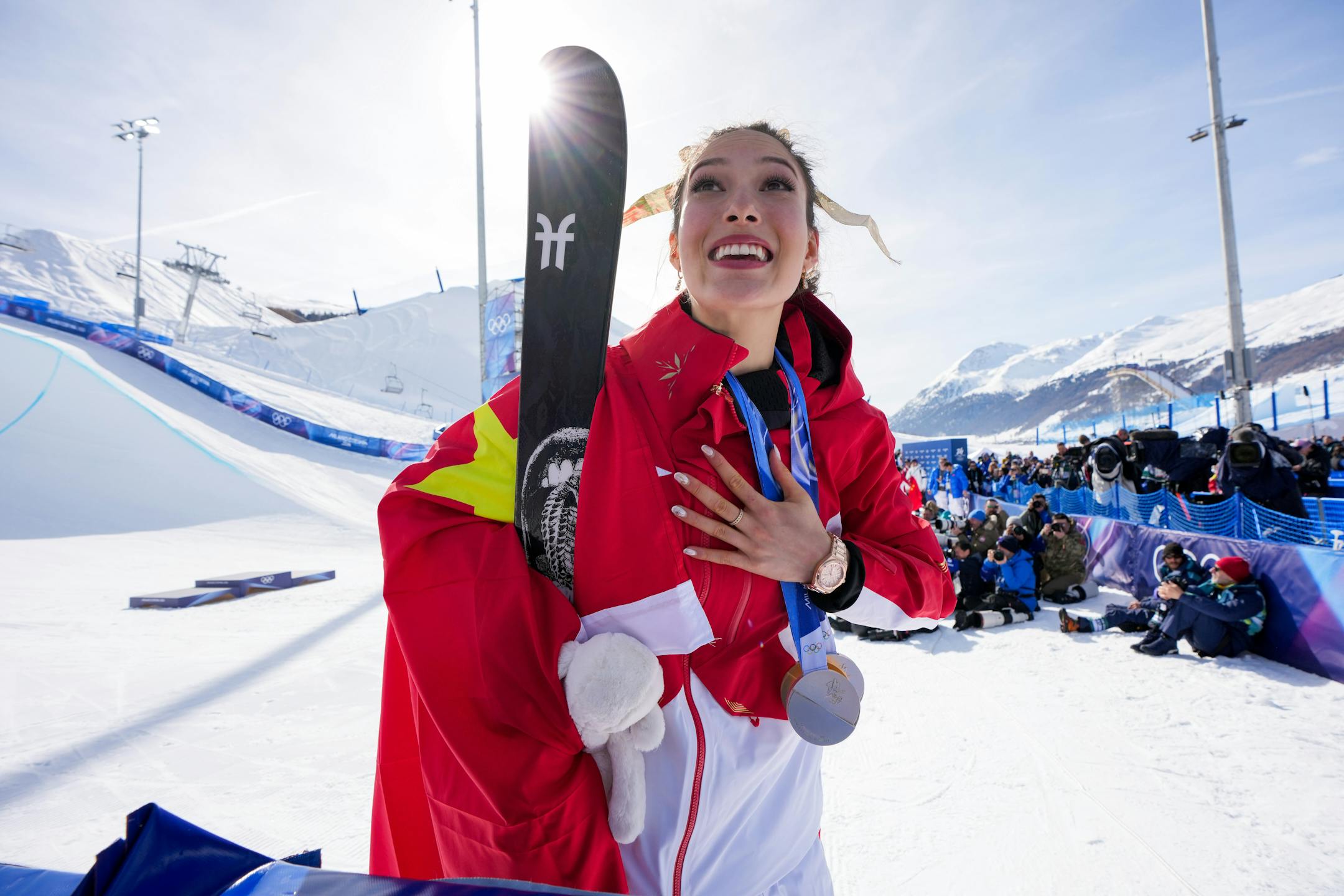
Eileen Gu celebrates winning the women's freestyle skiing halfpipe final at the 2026 Winter Olympics in Livigno, Italy. (Julia Demaree Nikhinson/The Associated Press)
Advertisement

Opinion editor’s note: Strib Voices publishes a mix of material from eight contributing columnists, along with other commentary online and in print each day. To contribute, click here.

•••

This winter, two Asian American women, Alysa Liu and Eileen Gu, soared across Olympic ice and snow. One wrapped herself in the Stars and Stripes. The other chose to compete for China. And suddenly the country had very strong opinions about Asian daughters.

I learned the quickest way to make America nervous is to let an Asian American woman make her own decisions, especially if she wins a gold medal.

Liu beamed beneath the American flag and we exhaled. There she was: prodigy, child of immigrant success story, good daughter who did her homework and her triple jumps. She fits neatly into the national scrapbook — patriotism with creative-colored hair and sequins.
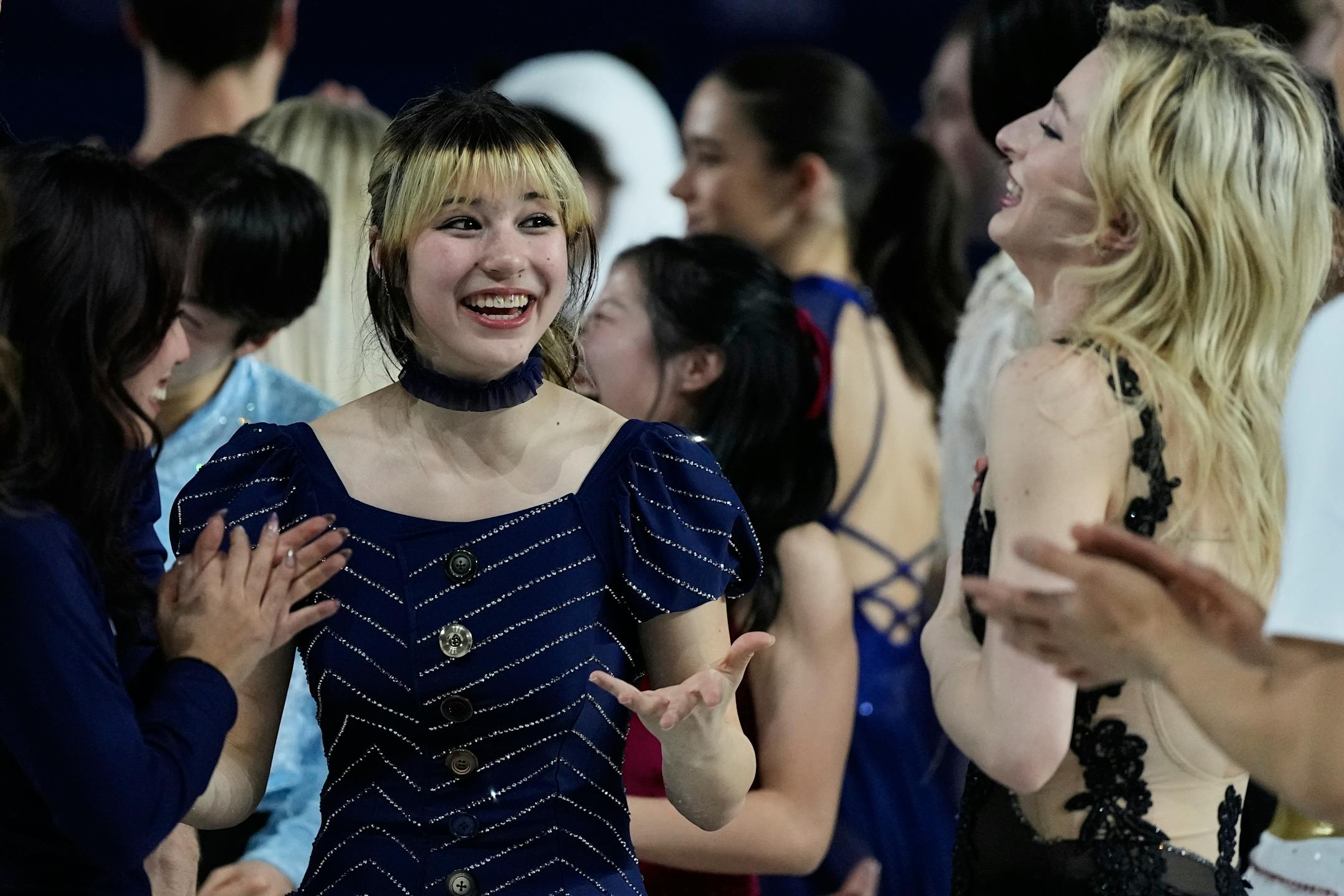
U.S. skater Alysa Liu after performing in the figure skating exhibition at the 2026 Winter Olympics in Milan, Italy, on Feb. 21. (AP Photo/Ashley Landis) (Ashley Landis/The Associated Press)

Gu, raised in California and skiing for China, has been cast differently: calculating, opportunistic, suspect. Cable news panels furrowed their brows. Politicians, including Vice President JD Vance, questioned the loyalty of globally mobile elites in ways that landed hardest on bodies like hers.

The subtext was louder than a starter pistol at the Olympic finals. There is apparently a right way to be Asian American. And there is a wrong way.

We are the model minority when compliant and the perpetual foreigner when inconvenient. What fascinates me is how quickly celebration curdles into interrogation. Both women are praised for being bicultural — fluent in languages, markets and expectations — until that biculturalism fails to affirm American supremacy. Global when it flatters us. Suspicious when it doesn’t.

Advertisement

When Eileen made a sovereign choice — financially strategic, personally complex — she disrupted something older and uglier. She did not bow her head and whisper “thank you” to her Western masters. She won her medals, cashed her endorsements and skied beautifully.

The audacity.

Asian American women are navigating race wrapped in misogyny: the “China doll,” the ingénue of “Miss Saigon,” the obedient daughter with a slight tilt of the head. Step out of line and you become “Suzie Wong.” Or worse, the “Dragon Lady.”

When we win, America claims us. When we make decisions that surprise some people, America audits us. What strikes me most is not the outrage. It is the assumption of ownership.

The moment an Asian American woman wins, she becomes “ours.” Our immigrant success story. Proof that diversity pays dividends. Evidence the American dream is still alive.

But ownership has a dark twin. If she is ours when she wins, she owes us when she chooses. That is the quiet truth beneath the debate. Not disagreement. Not geopolitics.

Advertisement

Possession.

Asian American women in this country have long been treated as trophies, brides, symbols and cautionary tales. Rarely as sovereign.

We do not ask white athletes who play abroad to prove they still love us. Their Americanness is presumed durable, internal and unquestioned. Their choices are framed as pragmatic. Strategic. Cosmopolitan. Rarely treasonous.

Perhaps what unsettles us is not which flag Gu carries. It is the realization she was never ours to begin with.

I learned early in my life that belonging here comes with terms. I grew up in Minnesota, the daughter of Hmong refugees from the Secret War in Laos. Gratitude was our inheritance. We were told America saved us from death. Less discussed was America’s role in the war itself and the CIA’s recruitment of Hmong men and boys into a conflict most barely understood beyond promises of shoes and rice.

In 1942, President Franklin D. Roosevelt signed Executive Order 9066, sending 120,000 Americans of Japanese ancestry into camps. They belonged — until they did not.

Advertisement

Today, Asian immigrants are celebrated as high-achieving contributors — until geopolitical tensions rise. Then we are eyed with suspicion. We belong until we are no longer convenient.

There are more than 24 million Asian Americans in this country — and roughly 300,000 in Minnesota alone, with Hmong residents making up a significant portion of that number. We are your neighbors in Edina, your children’s classmates in St. Paul, your doctors in Rochester.

Here is the part that makes me angry in a calm, well-articulated way: Gu and Liu are young women building lives. They are not metaphors. Not Cold War chess pieces dressed in Lululemon. Not vessels for our unresolved fears.

Who gets to claim an Asian American woman? The country of her birth? The country of her mother? The loudest voice on cable news?

Or — and this feels radical — does she claim herself?

about the writer

about the writer

Ka Vang

Contributing Columnist

Ka Vang is a contributing columnist for the Minnesota Star Tribune. She focuses on historically marginalized communities.

See Moreicon

More from Contributing Columnists

See More
card image
Julia Demaree Nikhinson/The Associated Press

They both won gold medals. But Alysa Liu was heralded while Eileen Gu was criticized for her choice to compete for China.

card image
Advertisement