
Advertisement

Perry: The learning loss from the ‘ICE pandemic’

Getting kids back in school is just the first step.

Columnist Icon
The Minnesota Star Tribune
February 23, 2026 at 10:59AM
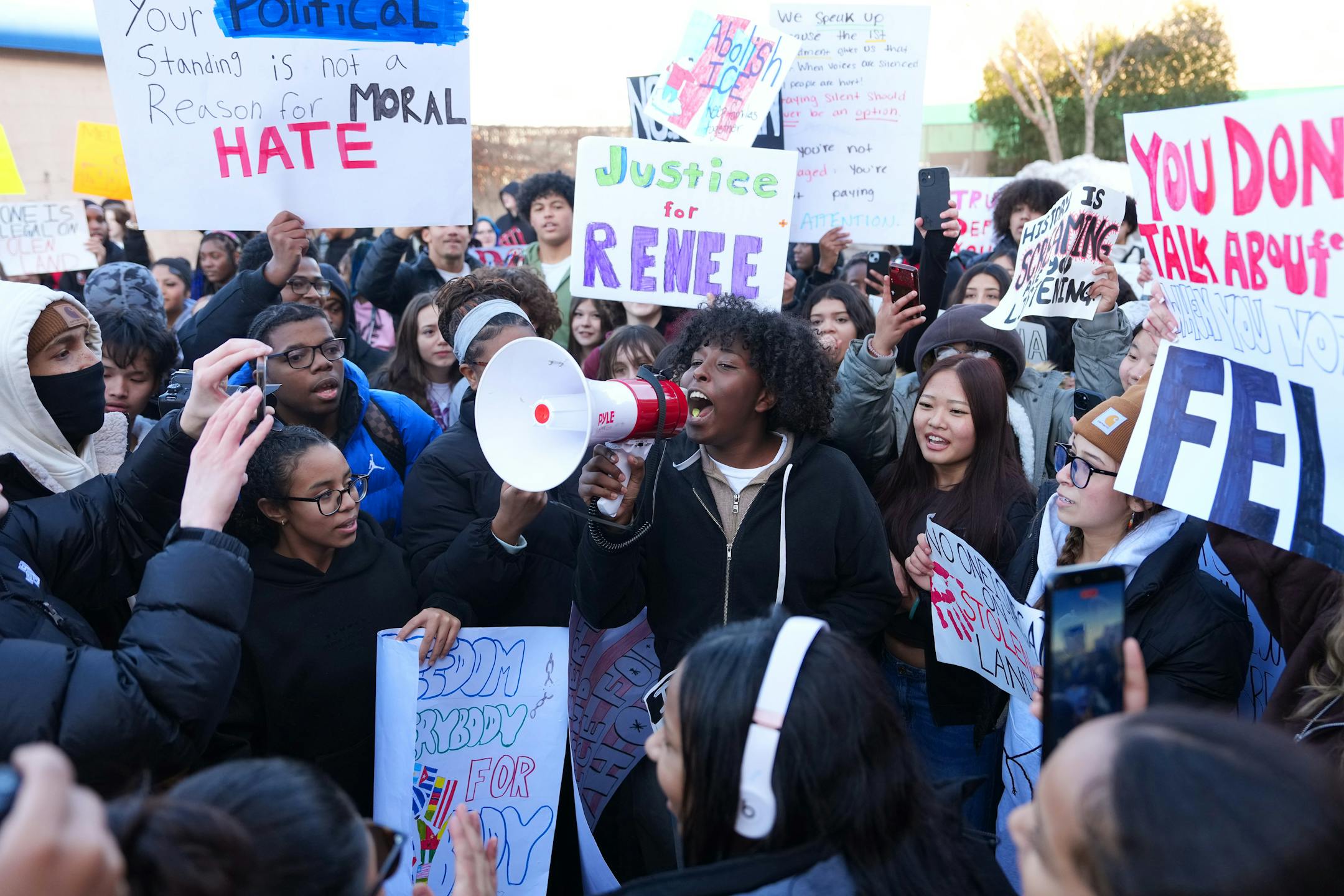
North Senior High School students chant and hold signs outside North St. Paul City Hall as they staged a mid-afternoon walkout on Jan. 9 in protest of ICE and the killing of Renee Good. (Anthony Souffle/The Minnesota Star Tribune)
Advertisement

Opinion editor’s note: Strib Voices publishes a mix of material from eight contributing columnists, along with other commentary online and in print each day. To contribute, click here.

•••

It’s easy now to dwell on the divisions that emerged in the aftermath of the COVID-19 pandemic, but I want us to remember the unity as well. During those opening months, the vast majority of Americans committed, for the first time I can remember in my life, to supporting the common good.

For most of us as individuals, that support required social distancing and masking, both of which were largely uncontroversial at first. But there was a bigger structural response as well. Our elected representatives, on a broadly bipartisan basis, implemented programs intended to protect as many people as possible both from the direct harms brought by the virus and from the secondary harms to education, housing and income.

When I look back at those years I have plenty of anger and sorrow, but I also marvel at the swift and structural responses. For example, the U.S. came as close as it ever has to providing universal health care (continued Medicaid enrollment), free college (a pause on student loan payments) and guaranteed housing (federal eviction moratorium). And I take heart knowing that we have these kinds of models available to face the next crisis, which, as it happens for Minnesota, is right now.

In the wake of another deadly invasive virus, what I’m calling the “ICE pandemic,” Minnesotans (and soon other states) are going to need that level of support again. Our businesses need support. Evictions need to stop. College students need a little grace when it comes to grading. And then there are the kids in K-12.

I’m particularly concerned about learning loss. It’s become increasingly clear that many students across the country, though not universally, fell behind during COVID-19 when it came to expected learning for core subjects like reading and math.

Since the peak of the pandemic, the issue of learning loss has, like so much else, become politicized. People who were opposed to remote education all along tout the data as evidence that they were right in their opposition. Although I found remote education extremely challenging, the evidence isn’t so simple that living through a global mass-death event would have gone better by crowding kids into schools. What is clear, though, is that through the mental health impacts of the pandemic, the loss of extracurriculars, the digital divide and just the general difficulties of teaching and learning online left many American schoolchildren behind.

Advertisement

The sudden shift to remote learning in the wake of the ICE pandemic has had a similar impact on far too many Minnesota children. We don’t have the full numbers yet, but it’s clear that as Trump’s virus lurked around Minnesota schools looking to kidnap children and their parents, many children quite reasonably went into hiding. Schools have done their best, as they did six years ago, to provide remote learning options, but we know that learning loss is going to follow, and we’re going to need structural responses.

This isn’t the first time immigration enforcement has resulted in learning loss, unfortunately, but that also means scholars have been studying what we can do about it. Thomas Dee, an education professor at Stanford University, has been studying absenteeism related to immigration enforcement since before the COVID-19 pandemic. In “Vanished Classmates,” he and a co-author found that before 2012, ICE partnerships with local law enforcement “displaced more than 300,000 Hispanic students (i.e., by encouraging them to leave and discouraging them to arrive),” a reminder that the problems date to well before this current regime. But they’ve gotten worse.

I talked to Dee over the phone a few weeks ago. He told me that on Jan. 7, 2025, just a day after Congress certified the election of Donald Trump, Greg Bovino (whom Minnesotans know only too well) “went rogue.” With Operation “Return to Sender” around Bakersfield, Calif., last year, Bovino prefaced the kind of disruptive violent actions he later brought to Illinois and then Minnesota, claiming he was targeting criminals but finding few. Mindful of the effect this kind of enforcement effort can have, Dee started approaching California schools to get real-time attendance data to track the ways that ICE actions disrupted education. He found a 22% drop in school attendance and emphasized to me that attendance is just the canary in the coal mine to “other social and developmental consequences for youth in the communities.” In other words, when kids don’t go to school, all kinds of other community problems follow.

To address this, Dee warned, communities like ours are going to need to marshal resources for a long, sustained period of work. First, “if fortunate to see the back end of this living nightmare,” he said, we’ll need to do everything possible to communicate to families that it’s safe to come back to school. But then the real work begins.

The best practices seem to be empowering individual schools, rather than imposing top-down solutions. But we’ll need to implement measures such as “trauma-informed pedagogy, high-dosage tutoring as a complement to the instruction kids receive in school.” Perhaps most important of all, Dee said, is “getting kids to see school as a safe productive place where they belong and bring their full psychological selves.”

When people around the country ask me how it’s going in Minnesota, how we’ll know when the current horrors are really over, I always say to ignore news conferences and politicians, and just watch to see whether kids are coming back to school. But getting kids back in school is just the first step. Then the real work begins.

Advertisement
about the writer

about the writer

David M. Perry

Contributing columnist

David M. Perry is a contributing columnist for the Minnesota Star Tribune focusing on disabilities, history, higher education and other issues. He is a historian and author.

See Moreicon

More from Contributing Columnists

See More
card image
Advertisement