
Perry: Abolish ICE? How about DHS altogether.

Many are talking about better training and body cameras for ICE agents, or getting rid of the agency altogether. This is another option.

Columnist Icon
The Minnesota Star Tribune
January 27, 2026 at 10:59AM
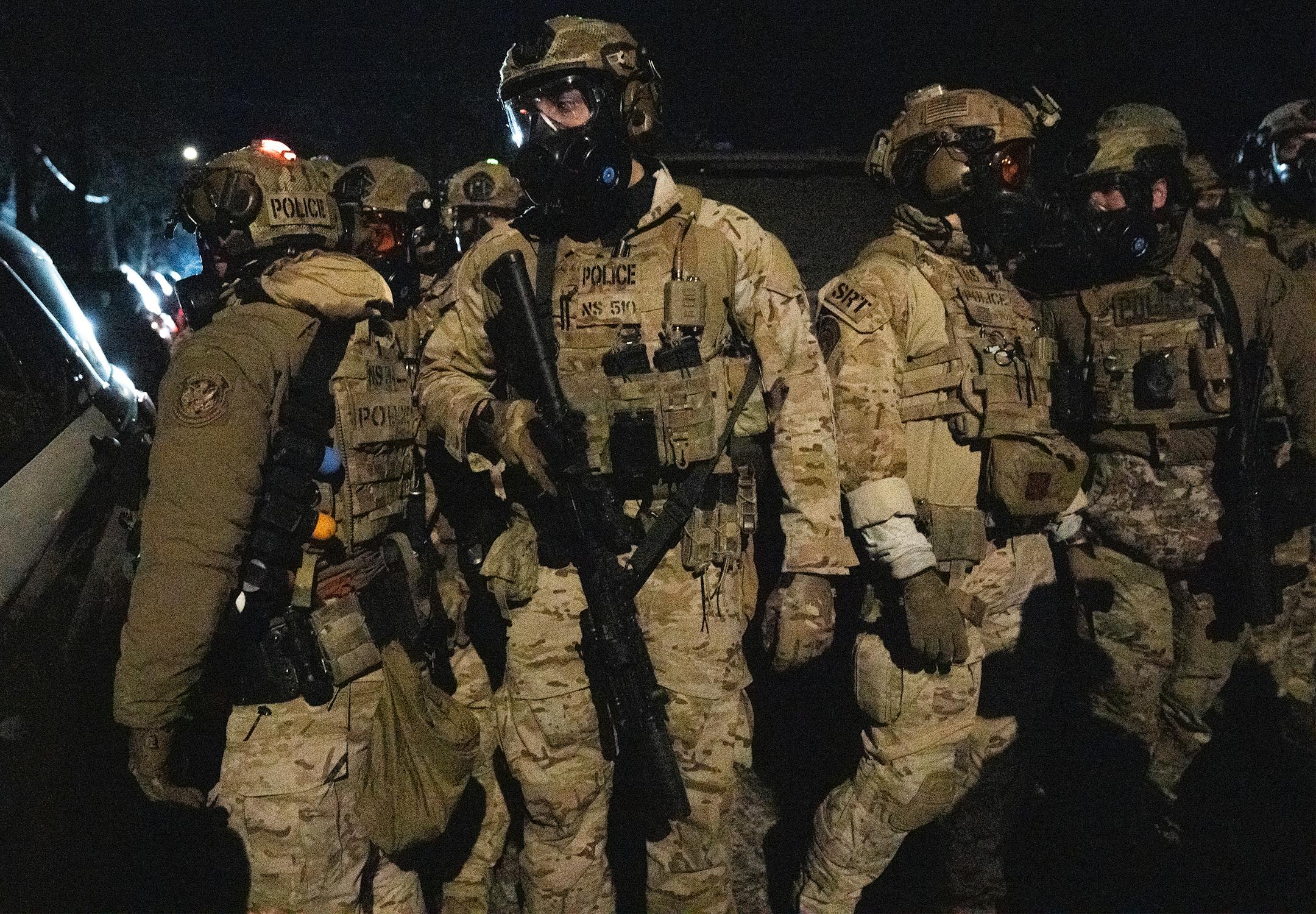
"The whole DHS was created in a very specific moment in history not that long ago, so we have models for how to structure federal immigration oversight that doesn’t rely on an unaccountable masked secret police force running rampant in our streets," David M. Perry writes. Federal agents in Minneapolis on Jan. 14. (Richard Tsong-Taatarii/The Minnesota Star Tribune)

Opinion editor’s note: Strib Voices publishes a mix of material from eight contributing columnists, along with other commentary online and in print each day. To contribute, click here.

•••

A few days after Congress passed the Homeland Security Act in 2002, I met my buddy Kurt to play racquetball at the old rec center at the University of Minnesota. We were yelling about politics as we took out our frustration on the court, and one of us said, “Homeland Security! That’s what’s they’d call it in a dystopian movie!”

We imagined masked thugs parading the streets, kidnapping anyone they wanted to, going door-to-door looking for political enemies, establishing checkpoints where we’d have to show our papers, and otherwise undermining the core freedoms established in the Constitution. November 2002 wasn’t that long ago. “Lose Yourself” by Eminem was the No. 1 song. The latest James Bond flick had just passed the second Harry Potter movie in the rankings.

None of this is ancient history, inevitable or unchangeable.

As the federal occupation of Minnesota stretches onward, part of my process to maintain hope is to try to imagine what comes next, what a better future might realistically look like. And as a historian, I always look back not only to generally understand how things change over time, but specifically to the context in which something like DHS was created. It wasn’t ancient history, but 2001-2002 is still history, and we can understand what happened in that moment so that — and this is the key bit — we can make different choices today.

There seem to be two main lines of proposals unfolding among critics. I characterize them as “better training and body cameras for Immigration and Customs Enforcement in order to create accountability” versus “Abolish ICE.” The former is obviously inadequate, especially given that we already have plenty of videos of the lethal encounters in addition to the fact that one of the agents in question was a veteran federal officer with over 10 years of experience.

The latter — abolishing ICE — is compelling to me, but many Americans want to know how immigration enforcement would actually work in a post-ICE era. Transformative change requires broad coalitions across at least some parts of the political spectrum. The most centrist folks of the 61% who thought (prior to this weekend’s killing of Alex Pretti) that ICE has gone too far are persuadable, but will need to be persuaded. What’s more, we know that the officer who killed Pretti in fact worked for Customs and Border Protection, not ICE, so we’ll need to expand our frame.

The answer, for me, is not to focus on ICE at all, but to understand the whole. DHS was created in a very specific moment in history not that long ago, so we have models for how to structure federal immigration oversight that don’t rely on an unaccountable masked secret police force running rampant in our streets.

In the aftermath of 9/11, an overwhelming bipartisan consensus formed around the need to rebuild the security state, folding all or parts of 22 different departments and agencies into a single bureaucratic entity. The goal was to link border security, transportation security, immigration enforcement, immigration documentation and emergency response all into a single department, ensuring easy flow of information.

It’s not clear that the existence of such a department would have stopped 9/11, but backers agreed that it would lower the risk of future attacks. The Homeland Security Act passed 90-9 in the Senate, with Minnesota senators Mark Dayton (DFL) and Dean Barkley (an independent who replaced Paul Wellstone after the senator’s death) voting in favor. The House passed it 295-132 (among Minnesota members of Congress, two Republicans and three Democrats voted for it, and three Democrats voted against it).

But not everyone was in favor at the outset, with left-wing groups — and guys playing racquetball at the U — predicting that DHS would not keep us safer from foreign enemies and would fundamentally erode our freedoms. Criticism has only intensified in recent years. The American Civil Liberties Union pushed against DHS in 2002 and in 2020, calling for spinning off the various elements into smaller agencies with “clearer missions and more limited functions.” In 2011, the CATO Institute called for abolishing DHS, echoing a proposal from 2014 that argued that far from being lean and efficient, it was bloated and inefficient. In 2020, the Atlantic Council think tank proposed a new apolitical DHS that would focus on the biggest non-military threats to the U.S. — at the time, especially COVID-19 and climate change. Many writers, including in places like the New Republic, Vox, the Guardian, CNN (by me), Reason and the Atlantic, have all pushed for abolishing DHS.

But I’m not aware of serious attempts in recent years to imagine a post-DHS federal government even from the Democratic left or the remaining libertarians in Congress. Instead, Rep. Delia Ramirez, D-Ill., has proposed legislation that would limit funding for imprisoning and monitoring immigrants. And Rep. Shri Thanedar, D-Mich., has filed the “Abolish ICE” act that zeros out the budget and closes the agency. I think we can do more.

We’re a long way from having a federal government that is likely to defy President Donald Trump, no matter how many Minnesotans his agents shoot. But someday this, too, will end. Someday, the Democrats seeking our votes in the coming year, or even Republicans who decide to care about liberty, will have a chance to craft something new.

One model for a post-DHS government, though there might be others, would be to separate agencies by their core mission. So move all enforcement-related functions to enforcement agencies (like Department of Justice). Move all bureaucratic functions to bureaucratic agencies (Department of Transportation or Commerce). Free FEMA to once again act independently, free from politics.

These are imperfect solutions in an imperfect world. Simply changing structures won’t hold those killing and terrorizing Minnesota accountable; that’s a separate issue and a vital one. But we need a new structure for how we manage borders, shipping, emergencies and more, whenever a new government takes over. We don’t have to be bound by the specifics of November 2002. We can’t be.

We’ve been through a debate like this before in Minnesota. The “defund the police” mantra sparked widespread arguments and ultimately resulted in more funding for the police (and a weird belief that the slogan hurt Democrats despite epic nationwide victories in the 2020 elections). I do think we need to fundamentally change American policing, but I also understand that none of us can remember a world before modern policing. With DHS, that’s just not true.

Whether, like me, you think DHS was always a mistake, or whether you believe it was a necessary response to the specific circumstances post 9/11, it wasn’t very long ago for either of us. If you can remember a world before “Harry Potter and the Chamber of Secrets,” you can remember a world without the Department of Homeland Security. And so you can imagine a future without it as well.

about the writer

about the writer

David M. Perry

Contributing columnist

David M. Perry is a contributing columnist for the Minnesota Star Tribune focusing on disabilities, history, higher education and other issues. He is a historian and author.

See Moreicon

More from Contributing Columnists

See More
card image
Richard Tsong-Taatarii/The Minnesota Star Tribune

Many are talking about better training and body cameras for ICE agents, or getting rid of the agency altogether. This is another option.

card image
card image