
Advertisement

Taylor Schlitz: Jesse Jackson’s words are still relevant to Gen Z

It can become easy to choose silence, withdrawal or opting out. Jackson pushed for the opposite.

Columnist Icon
The Minnesota Star Tribune
February 18, 2026 at 8:33PM
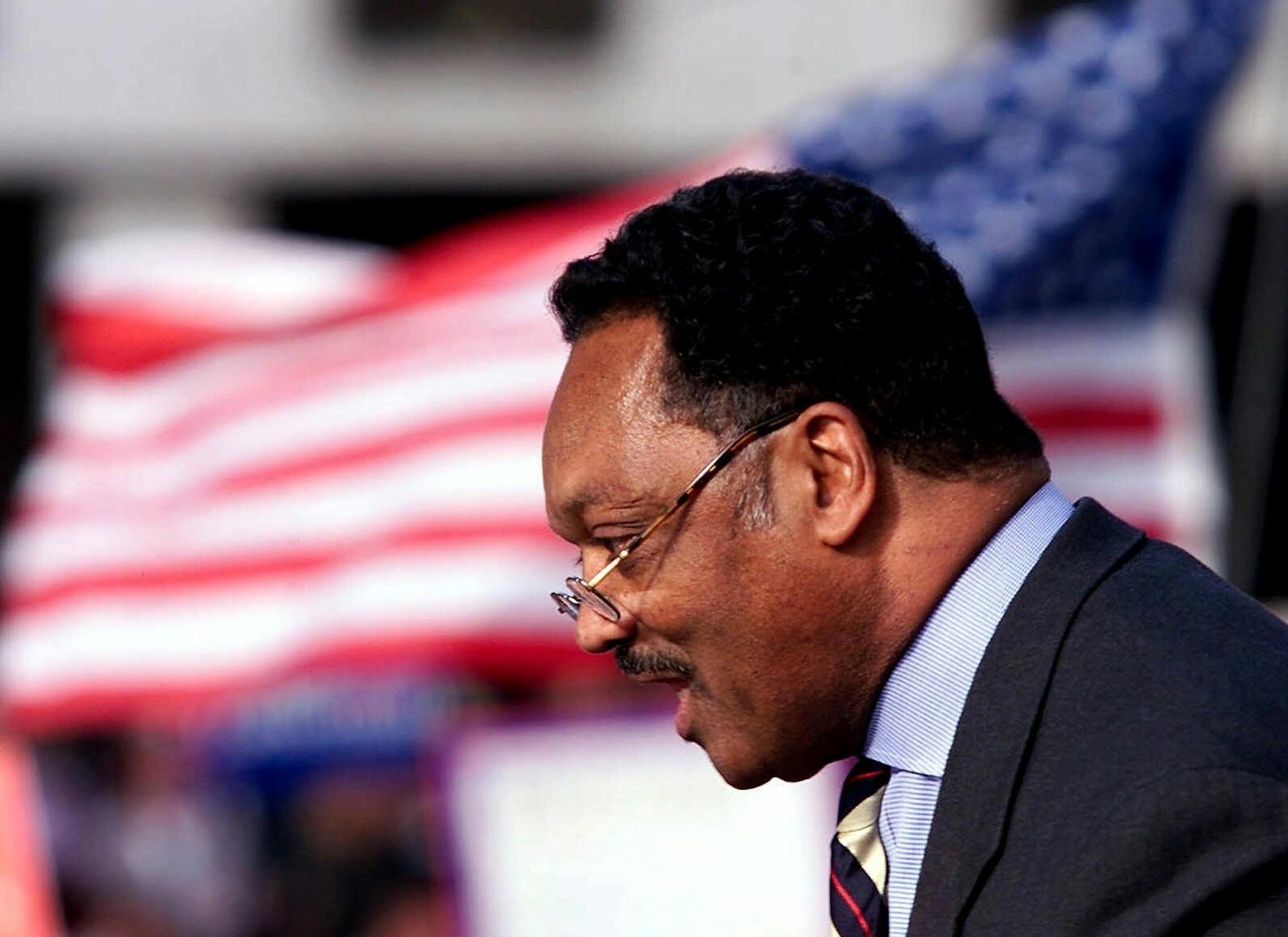
The Rev. Jesse Jackson speaks in 2000. (VINCENT LAFORET/The New York Times)
Advertisement

Opinion editor’s note: Strib Voices publishes a mix of material from eight contributing columnists, along with other commentary online and in print each day. To contribute, click here.

•••

When news broke of the passing of the Rev. Jesse Jackson, I followed the tributes and retrospectives. Nearly 10 hours later, a different kind of remembrance appeared on my screen. A clip from a 1989 episode of the TV show “A Different World” had begun circulating on TikTok.

In it, Jackson stands before students at Hillman College, a fictional historically Black university, and addresses a young man who feels insignificant, powerless and convinced that as one person he cannot make a difference.

Jackson disagrees.

He reminds the students that change in America did not begin in the White House or on Wall Street. It began with individuals who believed they counted. Rosa Parks refused to move. Nine students walked into Little Rock Central High. Young people marched, organized and, in some cases, died for the right to vote. One person can make a difference, he tells them. History shifts when someone decides to stand up.

I watched that clip more than once. Then I called my parents.

My father was 18 when that episode aired, a freshman in college. My mother was 15, still in high school. They were roughly the age of the students Jackson was addressing. For them, he was not a trending clip. He was part of the civic atmosphere of their coming of age. Years later, my father worked alongside him to plan a march in California. For their generation, the movement was not content. It was proximity.

Advertisement

For mine, it feels different.

Gen Z has developed a well-documented nostalgia for the 1990s, a decade most of us never lived through. We scroll through old sitcoms and other media searching for something steadier than the present. But the longing is not really about fashion or theme songs. It is about the illusion of less complexity — a world that felt more legible than the one we are navigating now.

The late 1980s and 1990s were hardly tranquil. Yet there was visible forward motion. Apartheid collapsed. The Cold War ended. A serious Black presidential campaign was no longer unimaginable. The Voting Rights Act still felt durable.

That TV clip from 1989 feels like it belongs to that era of confidence.

But if you listen closely, Jackson was not speaking from comfort. He was speaking into doubt.

The student at the center of that episode is Dwayne Wayne, played by actor Kadeem Hardison. Dwayne is smart and ambitious, yet discouraged. His campaign for student government is struggling not because he lacks ideas, but because he cannot convince his fellow students to take the moment seriously. While he is focused on issues, too many of his peers seem more focused on parties. His frustration curdles into resignation, the kind that makes you wonder whether it is even worth trying.

Advertisement

That is the part that lands differently now.

Gen Z does not lack awareness. We are hyper aware. We follow court rulings in real time. We debate policy in group chats. We show up to protests. We register to vote. And yet many of us know Dwayne’s specific frustration, the feeling of trying to name what matters while it seems so many others can simply scroll past it.

When urgency meets indifference, discouragement sets in. The temptation is not only to lose faith in institutions, it is to lose faith in people. To conclude that engagement is for the few and distraction is the default.

Jackson’s response was not sentimental. In one scene, Dwayne goes to apologize after a supporter posts a campaign poster that pairs him with Jackson. Dwayne is embarrassed, his campaign is struggling, and he tells Jackson he is ready to drop out. Jackson does not indulge the retreat. He tells him, “You got to stand up. You can’t surrender. A man can’t be heard if he stops talking. Stand up.”

That is the part that feels written for this moment.

Gen Z has grown up in an economy of attention. A clip goes viral, a narrative hardens, a serious issue becomes content and disappears. It becomes easy to choose silence, withdrawal or opting out.

Advertisement

Jackson offers the opposite. He argues that dignity requires presence, and that participation is not only for the confident. It is also for the discouraged. His message to Dwayne is not that the system will be gentle, but that quitting guarantees you will never be heard.

That tension is not theoretical here.

In Minnesota, immigration enforcement actions and the public response have sharpened debates about safety, belonging and accountability. Protests have formed. Students have organized. The emotions are real.

Beneath the debate is a more fundamental question: Who counts?

Jackson’s public life returned repeatedly to that point. We must turn to each other, not on each other. Coalition, not fragmentation. Participation, not withdrawal.

In a state that prides itself on civic engagement, Gen Z is inheriting systems that feel strained. A protest can be amplified in seconds. Policy change rarely moves that quickly.

Advertisement

Jackson did not promise instant transformation. He offered a framework. Dignity first. Participation second. Hope as discipline. “Keep hope alive” was never casual optimism. It was a demand to remain engaged even when outcomes lag behind effort.

He was born into segregation and lived long enough to see a Black man elected president. He also lived long enough to see backlash, retrenchment and renewed fights over voting rights and immigration. Progress did not move in a straight line. It surged and it stalled. It expanded and it met resistance.

Many in my generation were children during the two terms of President Barack Obama, absorbing the language of possibility. We came of age during intense polarization and the rise and return of President Donald Trump, watching institutions strain under pressure. It can be tempting to interpret setback as futility.

Jackson’s life suggests something else. Backlash is not proof that participation failed. It is evidence that participation mattered.

After I hung up with my parents, I watched the clip again. In 1989, Jackson stood before fictional students and told them that their votes mattered, that their presence mattered, that history bends when young people decide to move it.

Nearly four decades later, the students he addressed on screen are now our parents. The clip circulates among their children. We are living in a different world again, shaped by new technologies, new anxieties and renewed debates about belonging.

Gen Z was not expecting to relitigate so many of the fights that defined earlier decades. We were told the arc bent forward. Instead, we find ourselves guarding gains and questioning durability.

The question Jackson answered still lingers.

One person can make a difference. Not alone. Not instantly. But cumulatively.

In this different world, the challenge is not whether we can critique the system. It is whether we will participate in shaping it.

The clip resonates because it names something my generation recognizes: the temptation to feel small.

Jackson refused that framing.

Nearly 40 years later, that refusal may be his most relevant gift.

In a different world, he told students they counted.

In this different world, we have to decide whether we believe it.

about the writer

about the writer

Haley Taylor Schlitz

Contributing Columnist

Haley Taylor Schlitz is a contributing columnist for the Minnesota Star Tribune focusing on Gen Z issues and perspectives. She is an attorney and writer based in St. Paul.

See Moreicon
Advertisement