
Garrison: I have a new addiction — and it shocks most who know me

Cold plunging (in between rounds in a sauna) has become a critical part of my self-care routine.

Columnist Icon
The Minnesota Star Tribune
February 17, 2026 at 7:05PM
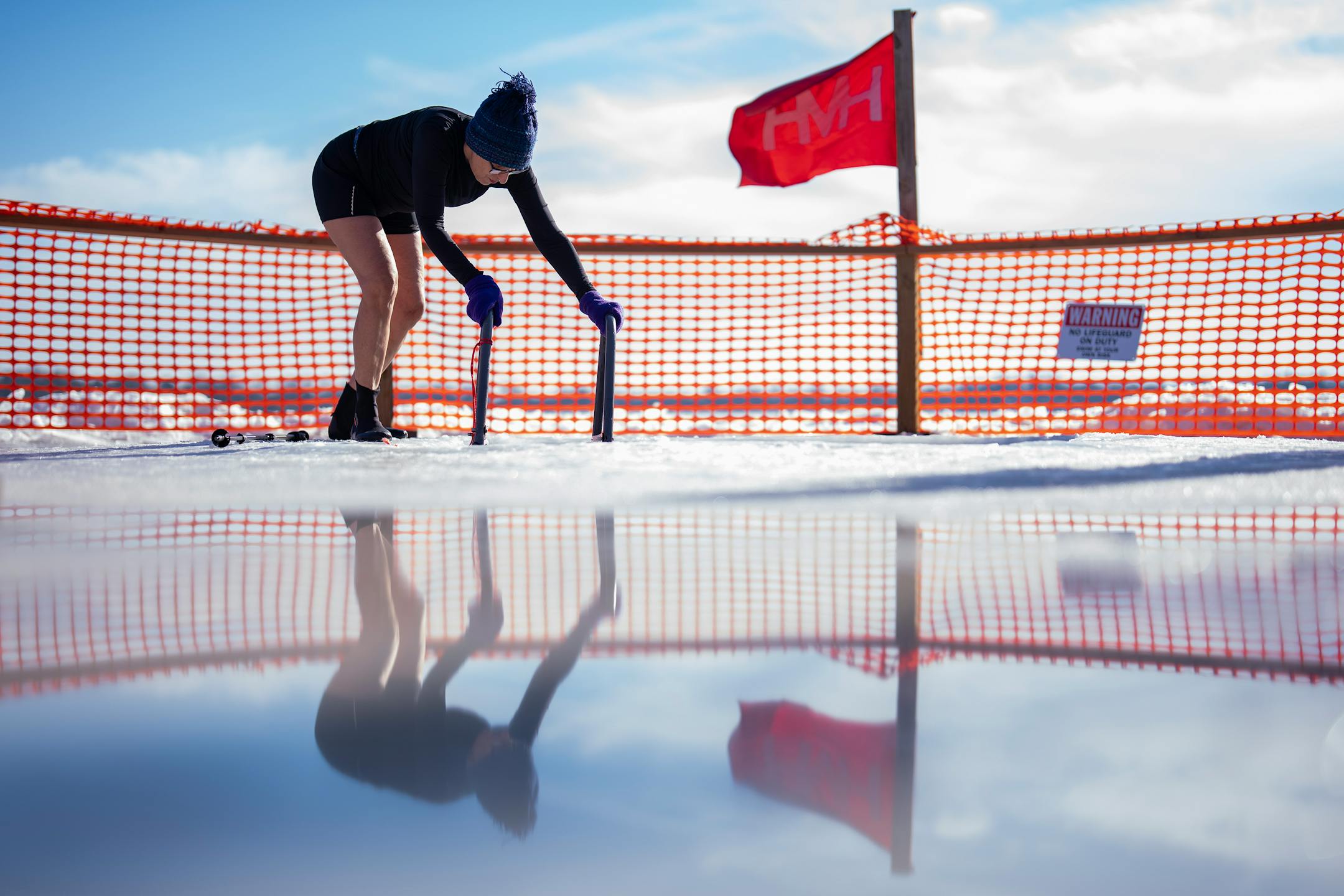
Diana Cohen lowers herself into a cut out hole in the ice for a cold dip in Lake Harriet as temperatures hovered around 48°F in Minneapolis on Feb. 13. (Alex Kormann/The Minnesota Star Tribune)

Opinion editor’s note: Strib Voices publishes a mix of material from eight contributing columnists, along with other commentary online and in print each day. To contribute, click here.

•••

I can’t believe I’m saying this, but I’m now an avid cold plunger.

I grew up in south Texas, right on the Mexican border, where the average temperature rarely dips low enough to justify a jacket. To say I hate being cold is an understatement. I moved to Minnesota almost 27 years ago and have cursed winter almost every year since.

Yes, I learned how to downhill ski and have grown to enjoy winter walks with friends. But it’s one thing to be outside in the cold while moving your body and wrapped in layers. It’s another thing entirely to sit in a tub of freezing water or lower yourself into a hole cut into a frozen lake.

And yet, here I am.

Cold plunging — or contrast therapy, more precisely, which involves alternating between heat (usually a sauna) and cold water — has become a critical part of my self‑care routine, particularly as I move through menopause. It has taken on even greater importance amid the ongoing stress, chaos and trauma that have marked life in Minnesota over the past several weeks. When my nervous system feels fried and my anxiety threatens to take over, contrast therapy is one of the few things that reliably helps me reset.

Science backs up at least some of that experience. According to various studies, cold therapy triggers the release of stress hormones and endorphins, increasing alertness and elevating mood. It has also been linked to improved sleep, overall quality of life, and general well‑being. One study focused specifically on women who regularly engage in cold water swimming found that perimenopausal women reported significant improvements in anxiety (46.9%), mood swings (34.5%), low mood (31.1%) and hot flashes (30.3%).

Beth Joscelyne has been cold‑water dipping in Minneapolis for five years.

“I’m obsessed with it,” she told me. Her primary winter spot is Lake Harriet, home to what regulars affectionately call HMH — the Harriet Magic Hole. With permission from the park board, volunteers cut and maintain a hole in the ice, complete with a fence, ladder and safety rules. “It’s just the cold water — no sauna — but it’s incredibly powerful,” she said.

A large proportion of the people Joscelyne sees at the Harriet Magic Hole are women in their 40s. “I don’t think that’s a coincidence,” she said.

Beyond mood and connection, Joscelyne sees physical benefits of cold dipping, especially for women navigating hormonal shifts. Many people she knows use it to manage chronic pain — from knees to backs to general inflammation. She recently started adding in sauna sessions at a local spot called Portal Thermaculture, discovering the benefits of pairing heat with cold.

Like many people, Joscelyne didn’t plan to become a regular. “The first time, I thought I’d do it once because it sounded really crazy and insane,” she said. She found a Facebook group, waited until someone could go with her, and took the plunge on a bitterly cold day.

“My fingers were frozen. But the rest of the day, I was on this massive dopamine high,” she said. “It blasted away my winter blues. I was a different person afterward. All I could think was, ‘I’ve got to get back in that lake.’”

My own first experience wasn’t nearly as brave.

It happened at a city spa in Calgary, where I had tagged along with my sister during a work trip. The sauna and hot tub were delightful. But when I approached the cold pool and dipped a toe in, I shrieked. It wasn’t just cold — it was miserably cold. There was no way I was going to submerge my body in it.

Or so I thought.

From the safety of the sauna, I watched person after person step into the cold pool with little hesitation. None of them died. Most of them actually looked happy.

“Come on, Nicole,” I finally told myself. “If they can do it, you can, too.”

I lasted about 20 seconds. I plunged with my head and shoulders out and forced the rest of my body to stay submerged even though every instinct was screaming at me to flee. When I got out, all I wanted to do was go back to the sauna. But the instructions were clear: Don’t rush straight back into heat. Moving too quickly between extremes can shock the system. Instead, I wrapped myself in a robe and sat in the open air.

Almost immediately, a wave of relaxation washed over me. The tension drained from my body, replaced by a strange, euphoric calm. It felt almost religious.

That was the moment I got hooked.

For Joscelyne, the ritual has become non‑negotiable self‑care. “No matter how busy I am, I make time for this,” she said. She dips about five days a week, often in the morning. “From a mood‑boosting perspective, it makes the rest of the day better — focus, concentration, everything.”

As for me, a relatively new convert to the practice, I’ve been trying to go once a week. I won a free three-month membership to Embrace North in northeast Minneapolis, so that’s been my location of choice. Embrace offers three saunas — a large community one, a small “silent” one and a medium-sized one — as well as a row of cold plunge tubs. It’s a very communal and social space, something I’ve come to enjoy. In addition to their $40-a-month membership for one-hour sessions, they offer day passes.

I’ve also tried Watershed Spa in Minneapolis. As the name would suggest, this model offers a much more relaxing and spa-like vibe. Talking is prohibited and in addition to a giant sauna, there is a steam room and a hot pool as well as a cold plunge pool. Of course, I tried all the things. The hydrotherapy sessions at Watershed cost $63 for two and a half hours and you can add various other spa treatments for an additional price.

The Harriet Magic Hole is free.

Of course, cold dipping and sauna aren’t for everyone. Extreme temperatures can cause negative reactions in some people, so while I am certainly a new evangelist, I also want to preach caution and extra care. Joscelyne does as well.

“There’s no forcing and no competition,” she said. “A short dip is all you need. Listen to your body. Don’t come alone.”

Contrast therapy isn’t about toughness or endurance. It’s about regulation — teaching your nervous system how to move between stress and recovery.

For someone who once despised the cold, that lesson has been transformative. Winter hasn’t exactly become my favorite season — but it no longer feels like something I simply have to survive.

And that, honestly, feels like a small miracle.

about the writer

about the writer

Nicole Garrison

Contributing columnist

Nicole Garrison is a contributing columnist for the Minnesota Star Tribune focusing on menopause and women's health. She is a Twin Cities marketing and communications executive and a former journalist. She can be reached at menopausedinmn@gmail.com.

See Moreicon