
Garrison: It’s OK to not be OK in Minnesota right now

Many of us are feeling anxious. Here are some tips to help you cope.

Columnist Icon
The Minnesota Star Tribune
February 1, 2026 at 7:30PM
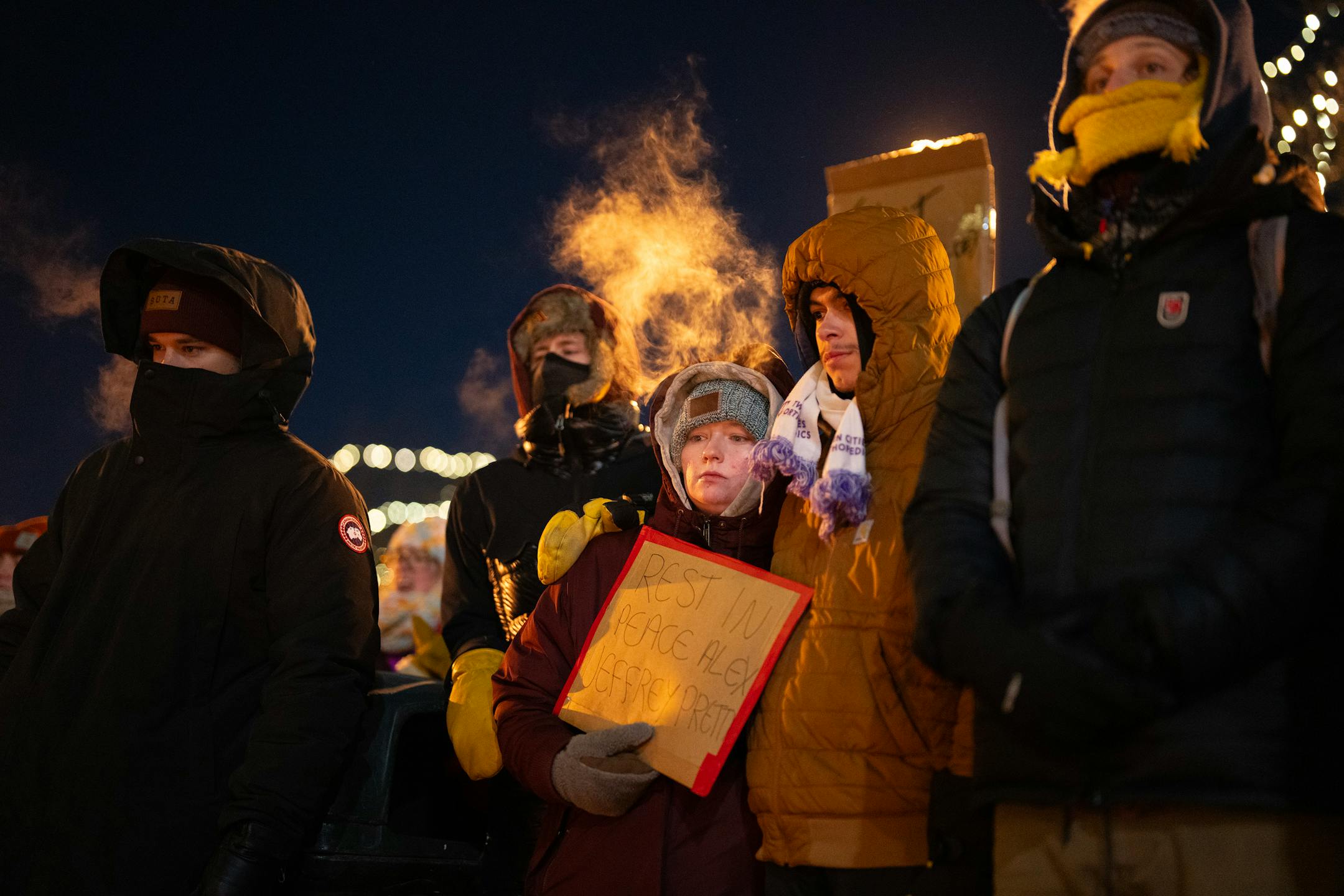
Hundreds of people chant, place candles and flowers around a memorial at the site Alex Pretti was shot and killed by a federal agent near Nicollet Ave. and W. 26th St. in Minneapolis on Jan. 24. (Alex Kormann/The Minnesota Star Tribune)

Opinion editor’s note: Strib Voices publishes a mix of material from eight contributing columnists, along with other commentary online and in print each day. To contribute, click here.

•••

The world feels heavy right now. Particularly for us in Minnesota. I don’t mean this as a political statement, but as a human one.

Armed local and federal law enforcement agents are patrolling our streets. Cars sit eerily abandoned on the sides of the road, prompting passersby to wonder what happened to their drivers. Whistles are blowing and horns are blaring. People are holed up in their homes, afraid to go outside.

Many of us, understandably, are on edge.

“Minnesotans are in a unique position right now, because we have been … repeatedly traumatized,” said Anna Roth, a psychologist in Minneapolis.

It was almost six years ago that the world plunged into a global pandemic. Mere months later, George Floyd was killed, putting Minneapolis at the center of a national reckoning on race. And then, this summer, two children died and 28 people were injured in a mass shooting at Annunciation Catholic Church in Minneapolis.

“We couldn’t even catch our breath from the Annunciation shooting before we’re processing another large-scale trauma,” Roth said, referring to the surge of federal immigration agents in the state.

Last week, Roth posted a video on her Instagram account sharing some tips for managing the stress and anxiety many of us are feeling right now. That video struck a chord, drawing more than 200,000 views and 11,000 shares in just a matter of days.

I learned about the video from my network of perimenopausal friends, many of whom have confessed that the anxiety they thought they had under control with hormone replacement therapy or some other menopausal treatment is back with a vengeance in the wake of what is happening in Minnesota.

Anxiety is a common symptom of menopause and perimenopause, mostly due to hormone fluctuations, according to the Menopause Society. It can manifest in several ways, including fear and worry. To be dealing with these hormonal changes in an environment such as the one we find ourselves in today can be particularly challenging.

“You’re kind of screwed in a way,” Roth said. “Perimenopause and menopause destabilize the systems that are intended for us to feel safe and calm … and then you have all these threats hitting a system that’s already destabilized.”

So what can we do to cope? In her social media video, Roth shared five basic tips that are proven to help, whether you are menopausal or not. The video was so popular that she shared more in subsequent installments. I’ve outlined those that I found most helpful here:

1. Zoom in. Rather than worrying about what’s going to happen next month or next year, focus on what you can control by zooming in on the tangible things you need to do in the next 5 minutes, the next 15 minutes, the next 30 minutes, the next 60 minutes. Get a glass of water, make yourself a sandwich or go to the bathroom. Focusing on these small tangible things helps take the focus off the bigger things that may haunt us but that we cannot control.

2. Tend to your nervous system. Most of us are bombarded with information daily thanks to a 24/7 news cycle, endless social media feeds, etc. Allowing all this information to flood your system can be harmful to your mental health.

“You go from a happy space in your nervous system where you’re able to think clearly, make decisions, plan, strategize, analyze … into fight or flight, feeling irritable, feeling anxious, feeling pressured,” Roth said.

And when that goes on too long, we go into freeze mode. For some, freeze mode feels like depression and hopelessness. For others, it’s more of a paralysis. I’ve found myself in this state multiple times over the past weeks.

To snap yourself out of it, Roth recommends trying an exercise developed by physical therapist Stanley Rosenberg. Lie down on the ground, clasp your hands behind your head and move your eyes to the right for 30 to 60 seconds until you feel a release. Then repeat on the other side.

Temperature changes can also work, she says. Go for a walk outside in the freezing cold (hello -30 degrees!) or fill a bowl up with ice water and dunk your face in it. Cold plunges and hydrotherapy, which I’ve recently fallen in love with, are other options. Warmth — like a hot shower or bath with essential oils — also can help.

“It’s like a total body nervous system reset,” she said.

I have one more nervous system reset trick to offer that a former therapist taught me: Breathe in for five counts, hold for five counts, breathe out for five counts and then pause for five counts. Do this over and over until your brain begins to quiet down and your breathing returns to normal.

3. Take action. My anxiety tends to get worse when I feel powerless. I am a woman of action. A fixer. A doer. If I don’t know how to respond to what is happening around me, I often feel paralyzed.

“One way of getting out of feeling paralyzed is to take some action,” Roth said.

That action looks different for each of us. For some, it’s calling our representatives. For others it’s volunteering at the local food pantry or taking in abandoned pets. For others still, it’s protesting and picketing.

“It’s OK that we show up in different ways,” she said. “All of it matters.”

4. Be kind to yourself. As women, I think we need to hear this on repeat in all areas of our life. We constantly second-guess ourselves, tell ourselves we’re either overreacting or underreacting. That we misspoke or failed someone we love.

That negative self-talk doesn’t disappear in times of trouble — in fact it often gets louder. Don’t listen to it, Roth says. Instead, take a more validating stance, be more accepting and loving of yourself.

“Do not be hard on yourself about how you’re struggling,” she said.

In other words, it’s OK not to be OK.

about the writer

about the writer

Nicole Garrison

Contributing columnist

Nicole Garrison is a contributing columnist for the Minnesota Star Tribune focusing on menopause and women's health. She is a Twin Cities marketing and communications executive and a former journalist. She can be reached at menopausedinmn@gmail.com.

See Moreicon

More from Contributing Columnists

See More
card image