Opinion editor’s note: Strib Voices publishes a mix of material from eight contributing columnists, along with other commentary online and in print each day. To contribute, click here.
•••
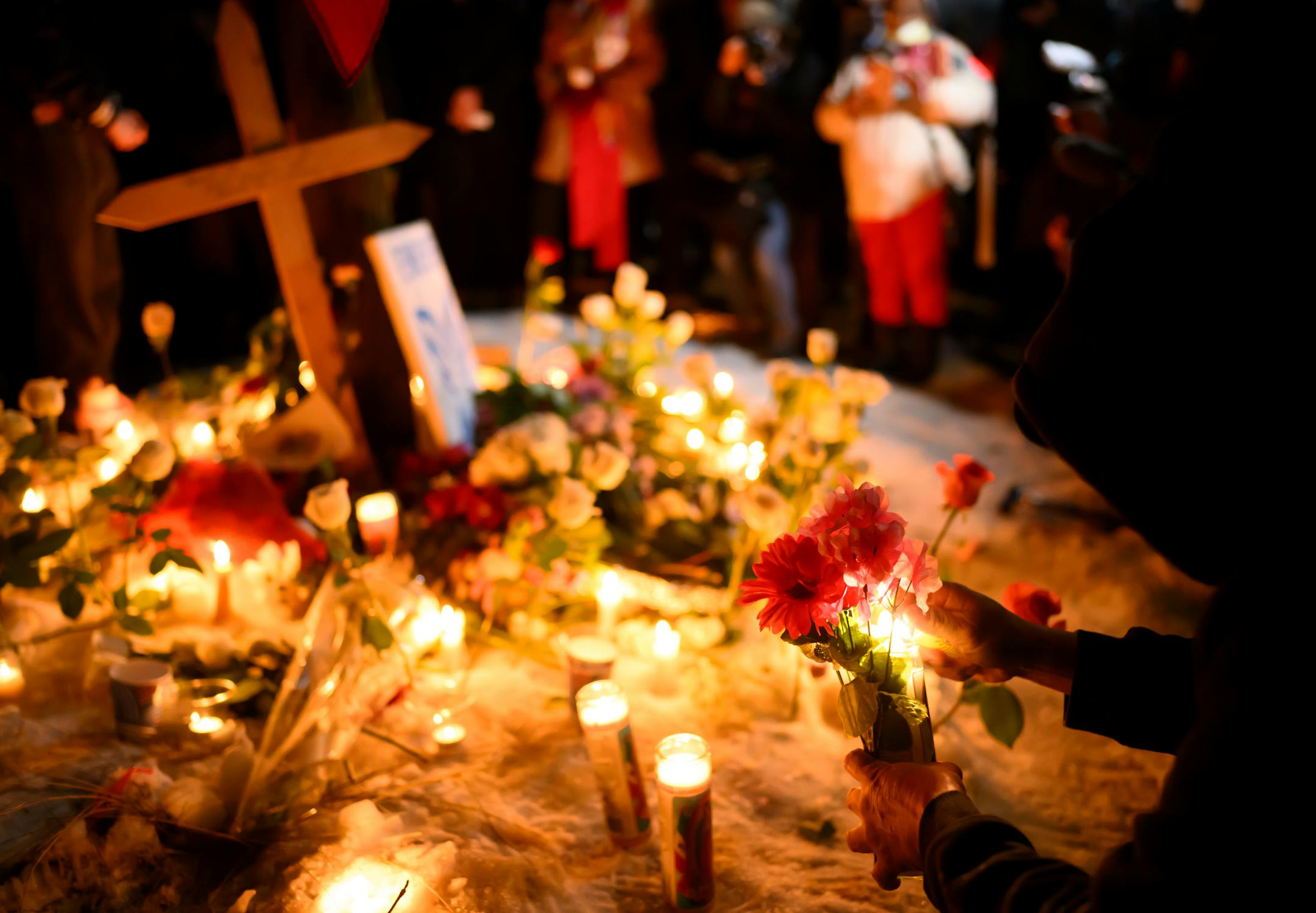
Renee Nicole Good was shot in the head and killed by an ICE agent in south Minneapolis — not while climbing a wall at the border, not during a hidden raid, not inside a remote detention facility. She was killed on a city street where people walk their dogs, take their children to school and stop to greet their neighbors. A street lined with homes, meant to be ordinary. Until three shots rang out, and Good was dead.
In Minnesota, immigration enforcement is often framed as something that happens somewhere else. At the border. In distant detention centers. In communities separate from our own. It is discussed in abstract policy language and political sound bites, safely removed from daily life. But over the past few weeks, that distance narrowed with ICE activity increasing in the Twin Cities. And on Jan. 7, it collapsed entirely.
What does it mean for Minnesotans when federal violence enters the geography of our state?
By the end of Wednesday, the impact of the expanded ICE presence moved through the Twin Cities like a tornado. Restaurants closed early. Small and large businesses sent workers home. Minneapolis Public Schools closed for the rest of the week — not because of an official curfew or emergency order, but because fear had settled over the city like a violent fog out of a Stephen King novel. This is the kind of fear that reshapes behavior. That rewrites the meaning of public safety.
Safety becomes conditional. Streets once neutral turn into sites of calculation. Is it safer to drive or to walk? To go to school or stay home? To shop in person or order online? To intervene or look away? These are not abstract questions. They are the questions people ask when the ground beneath them no longer feels steady.
This is how fear works. It redraws maps in our hearts and our heads.