
Opinion | What ICE is doing in the Twin Cities — and what the Supreme Court made possible

Recent detentions show how quickly people can be taken.

January 7, 2026 at 8:47PM
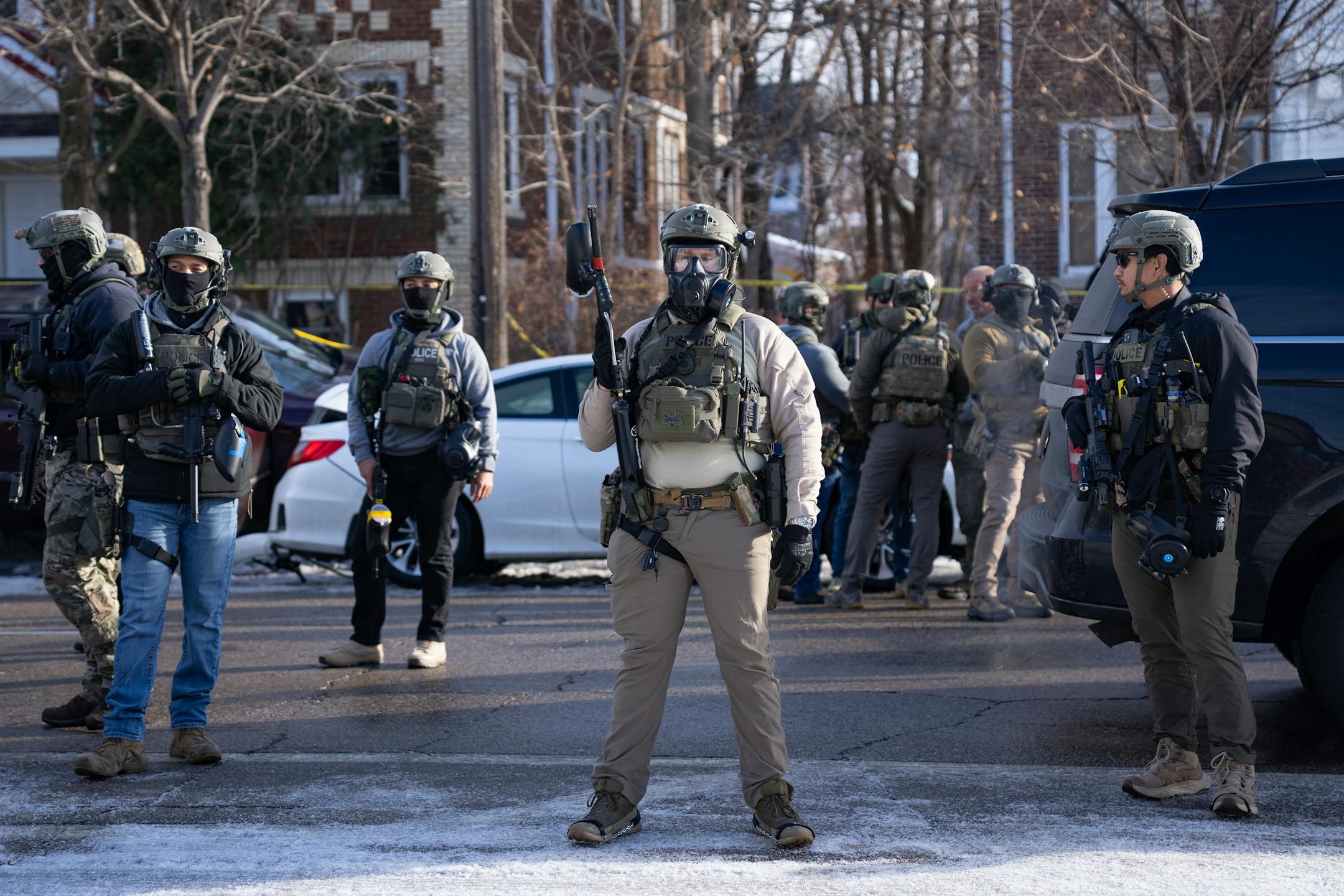
Federal agents including ICE and U.S. Border Patrol stand with weapons along Portland Avenue near the scene where federal agents shot and killed a woman earlier in Minneapolis on Jan. 7. (Alex Kormann/The Minnesota Star Tribune)

Opinion editor’s note: Strib Voices publishes a mix of guest commentaries online and in print each day. To contribute, click here.

•••

In the Twin Cities, people are disappearing from ordinary places.

In recent weeks, immigration agents have increased activity across Minneapolis, St. Paul and surrounding suburbs. Men and women with no criminal histories are being detained. People who have lived and worked openly in these communities for years are being taken. Families are left without information as loved ones are transferred out of state before families can locate them or reach legal help. Children and partners are left behind, not knowing where their family members are or when they will hear from them again.

And on Wednesday, an Immigration and Customs Enforcement officer shot and killed a woman during a protest over ICE operations in south Minneapolis. The news was developing as the deadline for publication of this article arrived.

This is happening because the legal framework governing immigration enforcement has fundamentally shifted — and most people don’t realize it yet.

A Latino man has been working on houses on our block for six years, including on a house our neighbor inherited from her elderly father. Recently while doing routine business at his bank, he was taken by ICE. Word spread through the neighborhood, neighbor to neighbor. That’s how my wife heard.

She’s a history teacher. She’s spent decades teaching students about how authority is supposed to work in this country — that there are processes, protections, limits. She could not sleep that night.

There’s a difference, she said, between knowing something is happening and actually letting yourself feel what it means. The U.S. Supreme Court uses the phrase “contextual factors.” She sees what that means in practice: Brown people doing manual labor is now reasonable suspicion.

He’s being held somewhere in Kentucky — his family isn’t sure exactly where, and he could be moved to another facility at any time. He’s more than 500 miles from home. His family cannot visit. His lawyer, if he can get one, cannot easily reach him.

What keeps her awake: Pretending this is normal changes us. And once that change sets in, it doesn’t announce itself. It just becomes the way things are.

Last September, the Supreme Court (in Noem v. Vasquez Perdomo) cleared the way for these stops. The court lifted a lower-court order that had restricted immigration agents from stopping people by using cues such as where someone is, what work they appear to be doing, how they speak or what they look like. Justice Brett Kavanaugh wrote that agents can consider “context” and the “totality of circumstances,” including work settings such as day-labor or construction sites, as factors for reasonable suspicion.

This is what those “contextual factors” look like here: ICE agents closed restaurant doors and demanded IDs from everyone inside — even when all present were U.S. citizens. Construction workers stood on an unfinished Chanhassen rooftop for hours in subzero temperatures rather than come down when agents arrived; two were hospitalized afterward.

In December, in a separate Supreme Court case about military deployment, Kavanaugh wrote in a footnote that agents “must not make interior immigration stops or arrests based on race or ethnicity.” That sentence has been treated as a safeguard, but it does not bind lower courts or restrict how ICE operates.

When I first heard about the December decision, I felt hopeful. Maybe things would change. They didn’t. ICE is a civilian agency, so that restriction does not apply.

In practice: People are taken first and sorted out later. Documents are questioned or set aside. People are moved hundreds of miles away from families and lawyers before any hearing. By the time legal review begins, the damage is done.

That is what is happening here.

ICE has deployed more than 2,000 federal agents to the region. Workers disappear from job sites. Families lose contact with loved ones. People are afraid to leave their homes, which means not going to work, not earning wages to support their families.

Communities are building their own protections. Libraries post know-your-rights information. Neighbors organize alert systems, spreading word by text when agents are seen. Some use whistles. Some stand outside workplaces so enforcement does not happen unseen. People document what they witness — badge numbers, vehicles, who is taken and where. Protests interrupt what otherwise would happen quietly beyond public view.

These citizen actions are attempts to slow a process that now moves faster than legal safeguards. They are not a substitute for constitutional limits. But when the court does not impose them, this is what neighbors do.

If due process and human dignity mean anything in Minnesota, they must apply when people are taken from their neighborhoods with little notice and almost no transparency. When detention happens with speed and secrecy, it becomes a concern for everyone who lives here — not because of who is taken, but because of how it is done.

Until courts impose binding restrictions or Congress acts, ICE will continue operating under the authority the Supreme Court granted in September. Kavanaugh’s footnote changes nothing about how agents operate here.

Neighbors are looking out for neighbors. What more can we do?

Edward F. Kouneski is a psychologist emeritus based in Minneapolis who writes about health, education, ethics and public policy.

about the writer

about the writer

Edward F. Kouneski

More from Commentaries

See More
card image
Alex Kormann/The Minnesota Star Tribune

Instructors taught us that the facts on the left side of the equation — the person with a gun, the escaping felon in a car, the person running into a home or away from the agents — did not always equate to an authorized use.

card image
card image