Vang: These searing images tell a clear story about ICE’s ruthlessness

History has its eyes on us, which is why we must continue to document what is happening right now in Minnesota.

Columnist Icon
The Minnesota Star Tribune
January 24, 2026 at 11:01AM
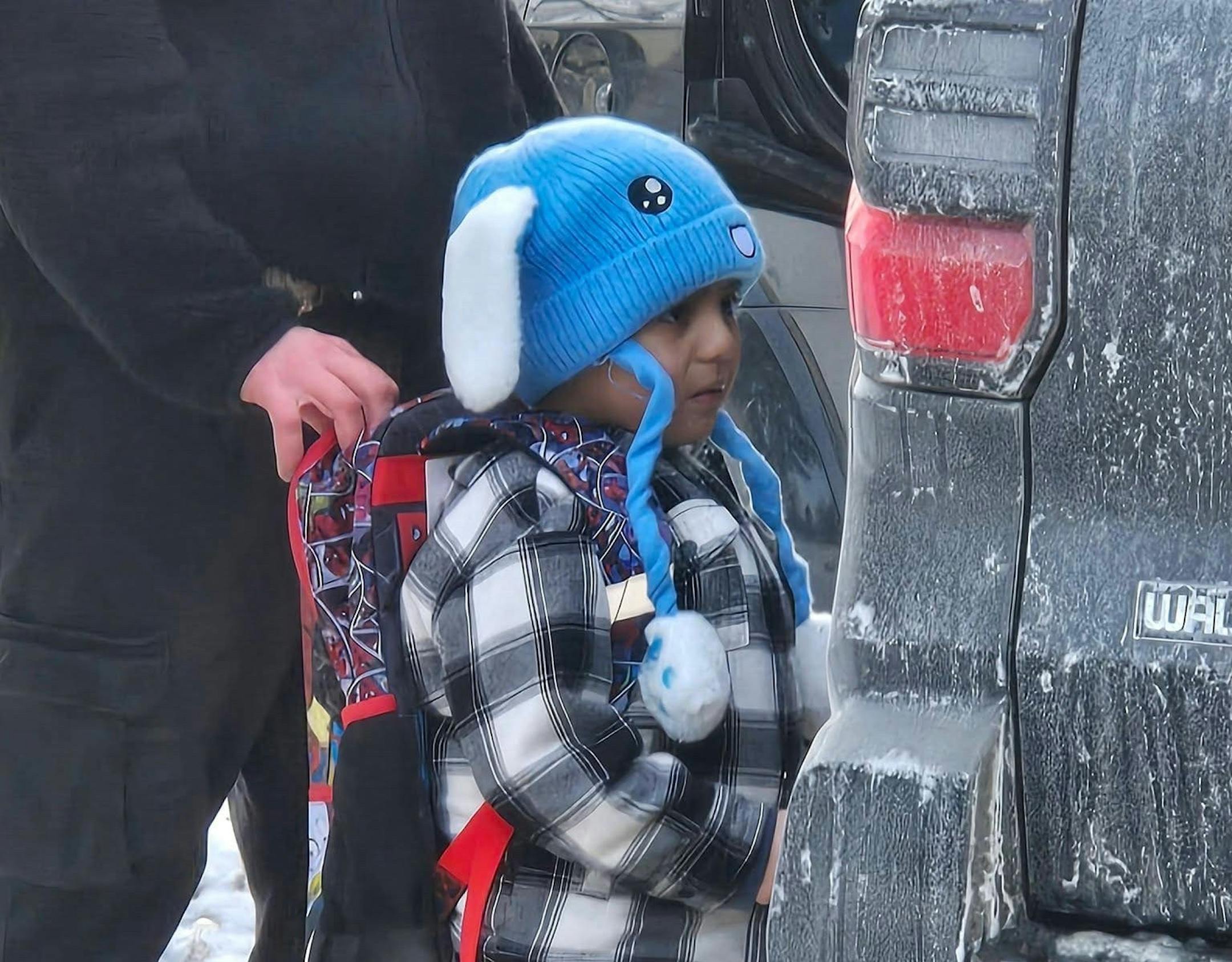
Liam Conejo Ramos, a preschool student at Valley View Elementary in Columbia Heights, was transported by federal immigration agents to Texas with his father, according to his school district. (Courtesy of Columbia Heights Public School District and the Ramos family attorney)

Opinion editor’s note: Strib Voices publishes a mix of material from eight contributing columnists, along with other commentary online and in print each day. To contribute, click here.

•••

When I first saw the photograph of Liam Conejo Ramos, my breath caught.

The five-year-old is surrounded by ICE agents twice his size. He is wearing a blue bunny hat with floppy white ears. A Spider-Man backpack hangs from his small shoulders — proof that moments earlier his world consisted of preschool, snacks, cartoons and whatever comes after nap time.

ICE apparently did not see him as you or I do: a frightened child. They saw him as leverage. They reportedly used him as bait, instructing him to knock on his own front door so his family would emerge and be taken into custody. Later, Vice President JD Vance claimed the boy’s father had “abandoned” him and that ICE merely stepped in to help.

One look at the image tells the truth. This was not care. It was cruelty cloaked as concern — like the Big Bad Wolf insisting he was helping Little Red Riding Hood while Grandma disappeared down his throat.

I felt the same shock when the world was introduced this week to ChongLy Scott Thao. The man was pulled from his Minnesota home by ICE wearing only his underwear, Crocs on his feet and his grandchild’s blanket draped across his back. It was 10 degrees that day. He was exposed to the cold, to the cameras, to a humiliation made complete by the sound of his family crying as they watched.
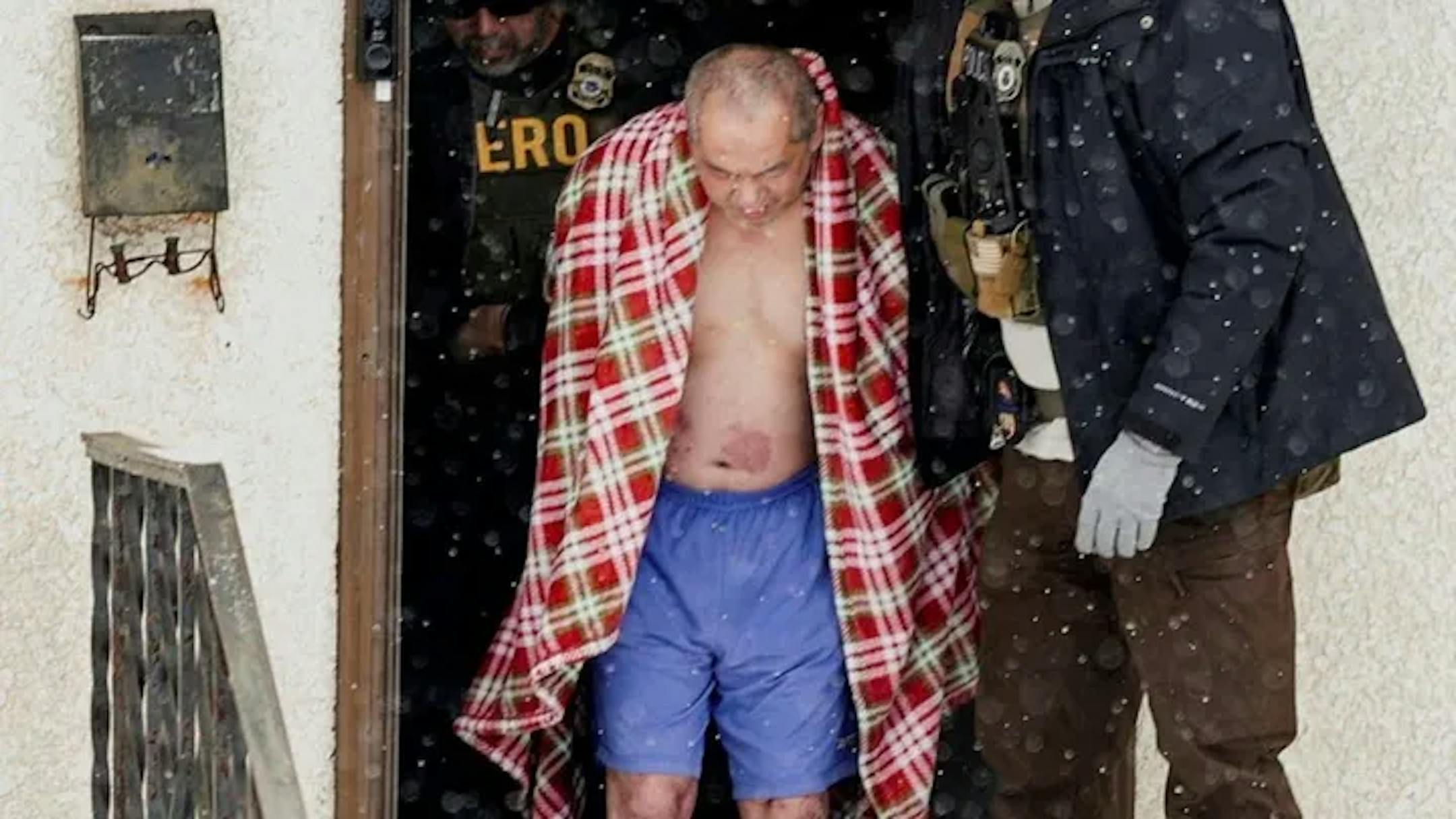
Federal agents detained ChongLy Scott Thao at his St. Paul home Jan. 18 in a photo taken by family and shared on GoFundMe. (Courtesy of GoFundMe.com)

No warrant was presented. No explanation offered. Not even the basic human courtesy of allowing him to put on clothes. ICE let him go later after verifying he was a citizen.
These images from the past week are not accidents. They are not unfortunate byproducts of ICE enforcement. They are demonstrations of dominance, power and terror. It doesn’t matter if you are a U.S. citizen or an immigrant following the proper procedures. ICE is hunting Black, brown and yellow bodies — and daring their white neighbors to look away.

I cannot imagine the trauma Ramos and Thao will carry, the way these images will ambush them years from now. I know Thao would rather we speak of his mother, Choua Thao, the first Hmong nurse to heal wounded American soldiers during the Secret War. Instead, his name —and his half-naked body — will now be tethered to an image of state-endorsed terror. Authoritarian regimes like Trump’s administration are rarely gentle with those it chooses to round up.

I did not sleep the night I saw the picture of Ramos. I woke at 3 a.m. in a panic, because my own son owns a Spider-Man backpack just like his. It does not matter that my son was born in Woodbury. Fear does not obey paperwork. Those in power want us to feel this way — hyper-aware, on edge, knowing the line between “safe” and “targeted” can be redrawn without warning.

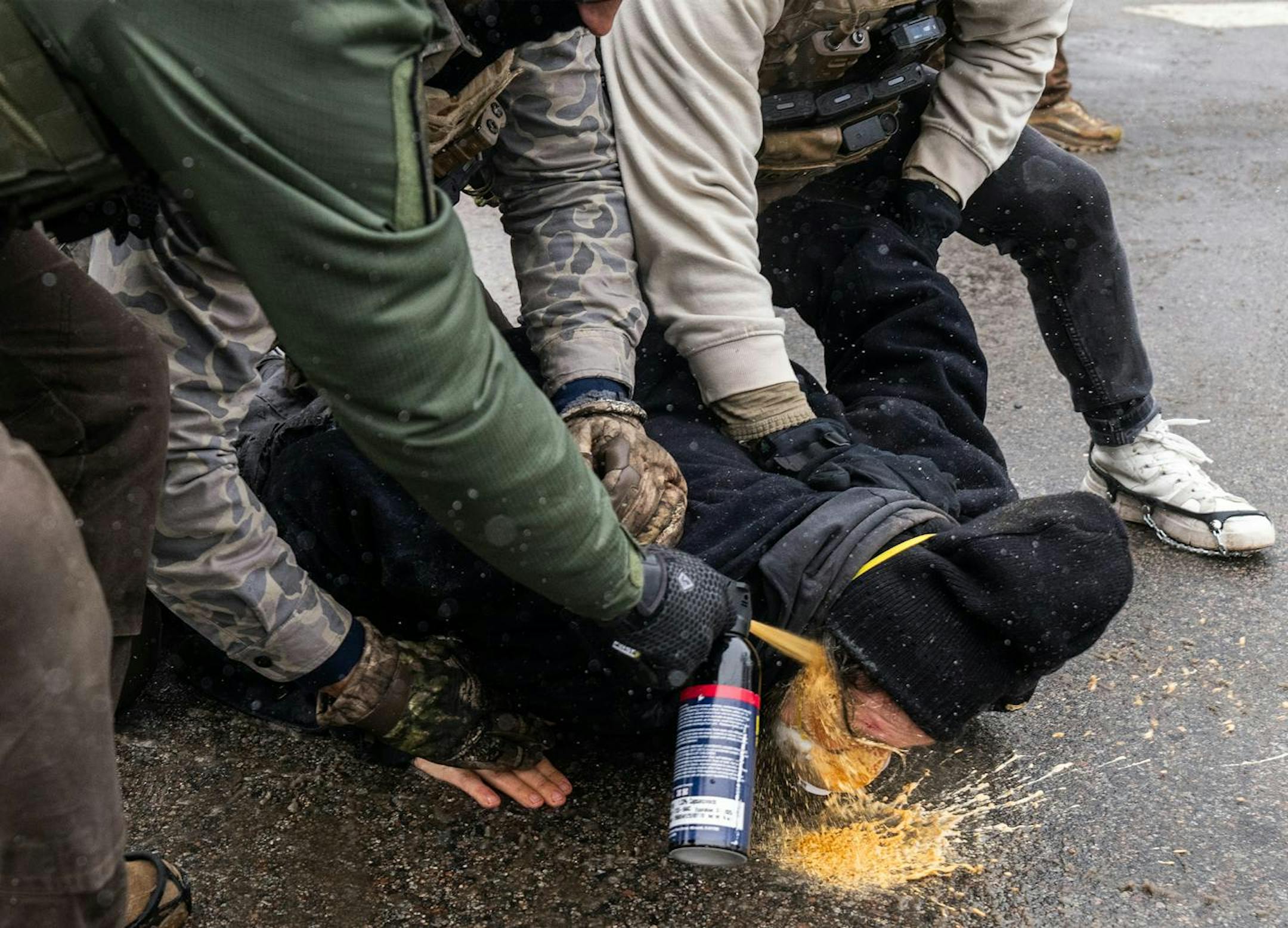
These photographs and videos are now circulating far beyond Minnesota, becoming global symbols of ICE’s ruthlessness. Just recently, I saw another image captured by Star Tribune photographer Richard Tsong-Taatarii of federal agents spraying an orange chemical irritant directly into a person’s face at close range. I cannot unsee it. I refuse to look away, because looking away has never saved anyone.

Federal agents pin a protester to the ground and spray a chemical irritant directly into his face at 28th and Blaisdell Avenue South in Minneapolis on Jan. 21, 2026. (Richard Tsong-Taatarii/The Minnesota Star Tribune/TNS) (Richard Tsong-Taatarii/The Minnesota Star Tribune)

That is why the people documenting these moments matter so deeply. Community observers, journalists and ordinary residents holding up their phones are not nuisances. They are essential. Documentation is often the only barrier between truth and erasure. The First Amendment protects the right to record what happens in public. Unchecked power has always preferred darkness. Despite claims by some Trump administration officials that filming ICE is illegal, federal courts have repeatedly reaffirmed that Americans have the right to record public officials performing public duties.

We have been here before. In 2020, George Floyd’s murder might have vanished into a police report if not for a young woman, Darnella Frazier, who refused to stop recording. That act of witnessing altered Minneapolis — and the world.

History offers an even starker warning. In April 1945, after visiting the Ohrdruf concentration camp in Germany, Gen. Dwight D. Eisenhower ordered exhaustive documentation — photographs, film, testimony — because he knew the truth would one day be questioned. He understood that forgetting is not passive; it is an act of violence.

That insistence feels urgent now. When abuses go undocumented, they are not only repeated — they are erased. Today’s ICE observers play the role Eisenhower understood so well. In an era that urges us to doubt our own eyes, documentation insists on reality. It is not spectacle. It is memory’s last defense.

And what is being recorded is not only harm, but humanity. Neighbors driving children who are not their own to school. Strangers delivering food to families too afraid to leave their homes. These acts of courage, too, deserve a place in the record.

I understand the risks. We have seen observers harassed, beaten, detained. But this work must be done.

My children love the musical Hamilton. My son has seen it three times on Broadway. One song lyric echoes now with unbearable clarity: “history has its eyes on you.” Not in some distant future tense, but right now — through photographs, videos and the courage of those who refuse to look away.

So to Minnesotans, and to anyone else paying attention: Keep documenting. Keep witnessing. History has its eyes on us. What it remembers will depend on what we are brave enough to record.

about the writer

about the writer

Ka Vang

Contributing Columnist

Ka Vang is a contributing columnist for the Minnesota Star Tribune. She focuses on historically marginalized communities.

See Moreicon

More from Contributing Columnists

See More
card image
Courtesy of Columbia Heights Public School District and the Ramos family attorney

History has its eyes on us, which is why we must continue to document what is happening right now in Minnesota.

card image
card image