

Ramstad: Under investigation, UnitedHealth lost half its value in 3 months. Time to buy shares?

Social media and YouTube are filled with people talking about the Tuesday earnings announcement of Minnesota’s biggest public company.

Columnist Icon
The Minnesota Star Tribune
July 28, 2025 at 2:00PM
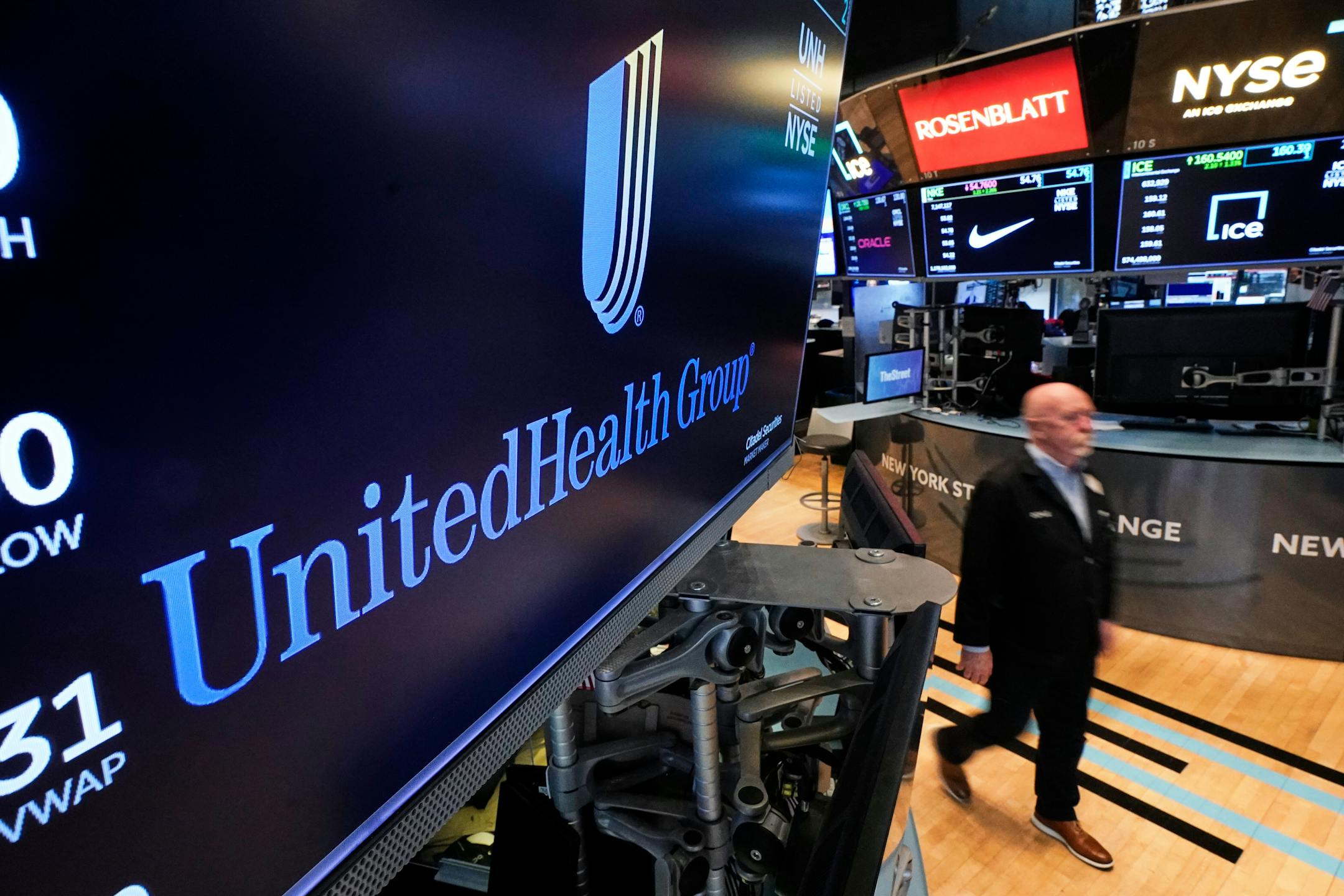
UnitedHealth shares have undergone a historic decline in the past three months. Investors everywhere are asking: Is it time to buy? (Richard Drew/The Associated Press)

I’ve never seen so many people talking on social media about a Minnesota company’s earnings announcement as there have been about UnitedHealth Group’s results coming on Tuesday morning.

But then, never before has Minnesota’s largest company (by revenue and value) lost half its value in three months.

To say that decline is stunning doesn’t do it justice — especially because UnitedHealth outperformed all other big companies in Minnesota with investors for the last 25 years.

Now the question many investors have is: Should I buy UnitedHealth shares?

You don’t have to be the shrewdest investor to realize how rare it is for a blue-chip stock to experience such a steep decline in value, and thus see an opportunity to make money in its rebound.

There’s a chance UnitedHealth, as the nation’s biggest provider of health insurance, can recover quickly from issues affecting health insurers more broadly. Those issues include smaller government reimbursements in Medicare, rising medical costs and greater utilization — or more people getting sick. If it can find fast solutions, its shares may shoot back up.

On the other hand, UnitedHealth shares may be stuck in a “value trap.” That happens when a stock appears undervalued based on traditional metrics but won’t rise because of non-financial issues. For instance, a Department of Justice investigation, confirmed last week by the company, looms as an unknowable impact on UnitedHealth’s future.

“I don’t remember a time in which the entire industry appeared to have as little visibility on their business than [insurers] have over the past six to 12 months,” Jared Holz, healthcare equity strategist at Mizuho Securities in New York, told me Friday. “And that’s hampered our ability as analysts and investors to know and analyze the group.”

Here’s a way to look at UnitedHealth’s earnings announcement Tuesday. It’s based on whether an investor is making a bet for the short term, meaning this week, the medium term over the next couple of years, or the long term for the rest of the decade.

Short term investment

Many people expressing themselves on social media, and analysts on business-news TV channels, focus on what UnitedHealth executives will predict about profits for this year.

UnitedHealth shares began to plunge on April 17 in reaction to its last quarterly results announcement, when the company missed investors’ expectations for the first time since 2008. Its share price was $585 on April 16, and is now around $280.

In May, the company ousted CEO Andrew Witty and brought back Stephen Hemsley, who led the company from 2006 to 2017. It also canceled its profit outlook for the year, after previously guiding investors to expect per-share earnings of $24.65 to $25.15.

Hemsley on Tuesday is expected to speak about profit outlooks for the first time since his return. At the moment, analysts expect the company to forecast per-share profit of around $18 to $20 for 2025. Below that range, UnitedHealth shares could fall further. Above it, and you can expect a surge in share price, likely above $300 and perhaps up to around $325, at least according to speculators and pundits on social media.

But there’s a bigger context, which is that even with its giant plunge, UnitedHealth’s shares are still relatively expensive compared to the prices of other insurers and other companies in healthcare.

Following the company’s silence, its announcement Tuesday and investors’ reaction is a heightened moment of “price discovery,” Holz said.

“It’s about where investors think the stock deserves to trade based on the numbers that [UnitedHealth executives] provide and the multiple investors are willing to give them,” Holz said, referring to the multiple of around 12 times earnings. “I don’t think the stock at its current price, especially if the guidance for 2025 comes below $18, is inexpensive.”

Medium term investment

An investor looking beyond UnitedHealth’s immediate future will listen for what executives expect for 2026 profits.

That will show whether some of the issues that have shaken up the health insurance industry are being resolved, and whether UnitedHealth has a grip on its own challenges.

“We’ve got to understand some of the drivers that have led to the underperformance and what happens over the next six to 12 months with Medicare and commercial [business customers],” Holz said. “And then they’ve got this DOJ investigation they’re contending with.”

It’s unlikely UnitedHealth executives will forecast 2026 profits at the level they previously expected for 2025. As a result, only the most bullish investors think UnitedHealth shares will get back above $500 before 2027.

Long term investment

The most daunting development that could happen on Tuesday would be greater uncertainty: no profit forecast for 2025 or 2026.

Investors would ask whether the business model that fueled UnitedHealth’s immense growth over the last 30 years has run its course. A long-term investor might still buy the stock, but he or she would be betting on executives to make sweeping changes that work.

That is not a sure thing. Look back to the early 1990s, when two blue chips — Kodak and IBM — saw their old business models erode underneath them. Kodak shriveled away.

IBM survived, after undertaking in 1993 the largest restructuring ever seen in corporate America up to that time.

about the writer

about the writer

Evan Ramstad

Columnist

Evan Ramstad is a Star Tribune business columnist.

See Moreicon

More from Business

See More
card image
Hormel headquarters in Austin, MN. ] GLEN STUBBE * gstubbe@startribune.com Friday September 11, 2015 Despite woes throughout the food industry, partly due to consumers turning away some from processed foods, Hormel has managed to continue prospering -- even though a good part of its business -- Spam, chili -- is about as processed as you can get. But the company's turkey and pork offerings are riding a hot protein trend. And over the past two years, it's made some of the biggest acquisitions in