
Brown: With money flowing and change afoot, Minnesota’s iron industry must modernize or die

It’s tempting to argue that boom times are coming, but trade and economic uncertainty cloud the crystal ball.

Columnist Icon
The Minnesota Star Tribune
November 24, 2025 at 10:59AM
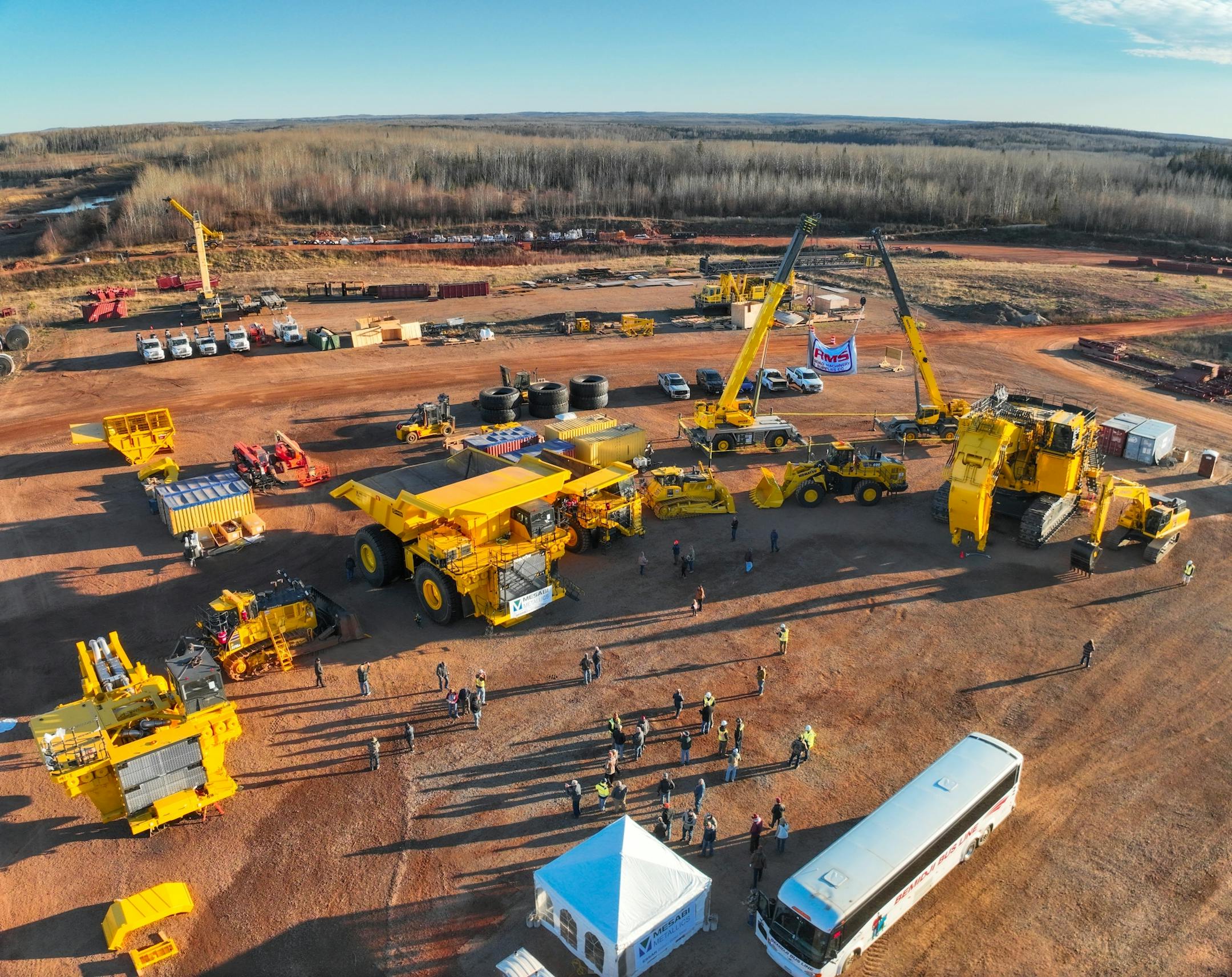
(Mesabi Metallics) welcomed more than 600 visitors from across the region to its Fall Open House on Tuesday, November 18, offering the public a behind-the-scenes look at Minnesota’s newest and most advanced taconite mining operation and an up-close look at Minnesota’s largest mining trucks.

During the event, guests toured the Mesabi project site, met the company’s engineers and saw some of the largest mining equipment in the world—including the 400-ton 980E-5 Komatsu haul trucks, the largest ever to operate in Minnesota.
More than 600 visited Mesabi Metallics' Fall Open House Nov. 18 in Nashwauk, Minn. (Mesabi Metallics)

Opinion editor’s note: Strib Voices publishes a mix of commentary online and in print each day. To contribute, click here.

•••

NASHWAUK, MINN. – Last week, I gazed up at the largest mining truck in Iron Range history — a 400-ton Komatsu 980E-5. The yellow behemoth occupies some 44,000 cubic feet of space, similar to Nashwauk’s two-story brick city hall a couple miles away. I couldn’t reach the top of the shiny new tires but, in fairness, neither could NBA superstar Giannis Antetokounmpo at full speed.

Mesabi Metallics is months away from finishing a new iron ore mining and processing facility in this northern Minnesota community. After two decades of starts and stops, an Indian investment group called Essar Global will launch the state’s first new taconite mine in more than 50 years next June.

But it is not the newness of the $2.4 billion Mesabi Metallics plant, or its $110 million fleet of electrified heavy equipment, that deserves our attention. Rather, the company’s direct-reduced grade iron pellets portend massive change in an industry that still provides most of the raw material used to make steel in America.
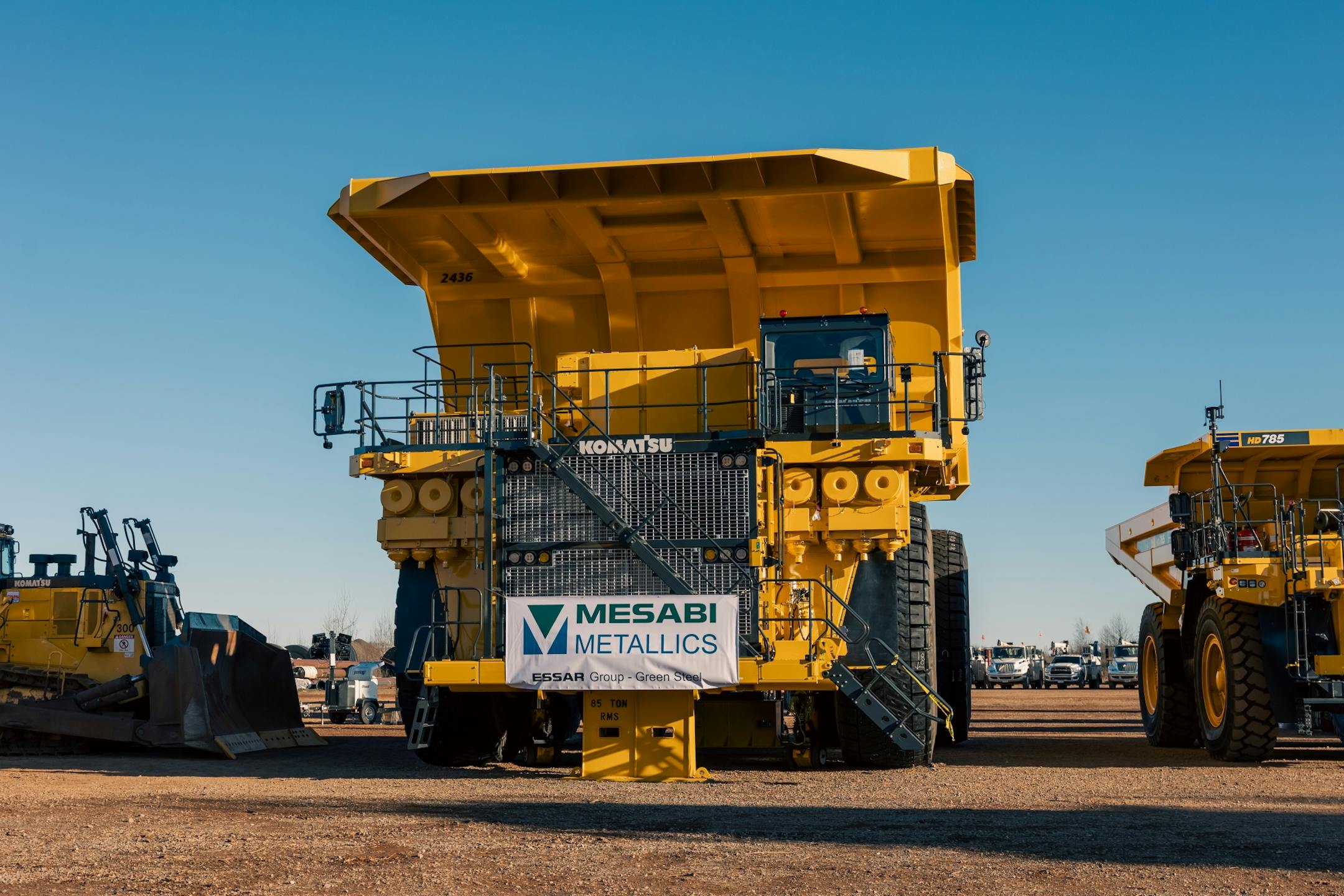
A Komatsu 980E-5 haul truck at Mesabi Metallics on Nov. 18, 2025.
A Komatsu 980E-5 haul truck at Mesabi Metallics on Nov. 18, 2025. (Mesabi Metallics)

“The vision for the site is to be very diligent from an environmental perspective, support the mission of decarbonizing the steel industry, but also do that in a sustainable way from a competitive perspective,” said Joe Broking, CEO of Mesabi Metallics. “Because if we don’t, if we’re not competitive, we’ll all go away.”

Put another way, without adding direct-reduced iron products, Minnesota’s iron industry will fade sooner than those who depend on these high-paying jobs can bear.

Direct-reduced iron grade pellets contain more iron than traditional taconite pellets. They ultimately feed more efficient electric arc furnaces instead of blast furnaces like the ones that have dotted the Rust Belt and blotted the skies since the Industrial Revolution.

This also means that Mesabi Metallics will supply markets entirely different from those served by existing Iron Range mines. Broking said they’ve already brokered offtake agreements with firms in North America, the Middle East and North Africa. They’ve already sold the first load of pellets slated to ship next summer.

Global money, political and economic volatility and technological advances roiled Minnesota’s iron mining industry this year. In addition to the Lazarus-like revival of the Mesabi Metallics project, the state’s largest iron miners — U.S. Steel and Cleveland-Cliffs — both announced massive foreign investments.

U.S. Steel’s complicated merger with Nippon Steel of Japan came with a promise of $11 billion in facility upgrades across the company’s footprint. About $800 million of that was designated for Minntac and Keewatin Taconite iron ore operations in Minnesota.

U.S. Steel will restart a direct-reduced grade iron ore production line at Keetac to feed a new plant at its Big River Steel facility along the Mississippi River in Arkansas.

Meantime, U.S. Steel’s Minntac is the state’s largest mine, and though it produces blast furnace pellets, upgrades to the Gary and Mon Valley Works indicate steady work for the time being.

Cleveland-Cliffs expanded significantly over the past decade but hit some bumps recently. Last May, Cliffs laid off about 620 workers by idling the Minorca Mine near Virginia, Minn., and closing one of two lines at Hibbing Taconite. Wall Street liked the move, but those miners remain out of work.

Hibtac is running out of ore while some fear Minorca will never reopen. Other Cliffs facilities like United Taconite in Eveleth and Northshore Mining in Babbitt and Silver Bay produce traditional taconite pellets, though Cliffs has produced DR-grade material from the Iron Range to feed its hot-briquetted iron plant in Toledo, Ohio.

Last month, Cliffs announced its own unusual arrangement, a tentative agreement with the South Korean steelmaker POSCO. For at least a 10% stake in Cliffs, POSCO would invest about $700 million into the company, allowing Cliffs to pay off debt incurred during its recent expansion. This would allow POSCO to circumvent U.S. trade restrictions on foreign steel by using Cliffs’ American facilities to produce its products. This is uncharted territory.

With all this money swirling around, it’s tempting to argue that boom times are coming. But trade and economic uncertainty cloud the crystal ball.

For one thing, the U.S. Steel and Cliffs investments are built around unusual U.S. trade policies that have driven up prices. An economic downturn could cause Americans to rethink those policies.

New technology requires better trained, better paid workers, but ultimately far fewer of them. Mesabi Metallics will ship 7 million tons of pellets a year with just 350 full-time workers, the most efficient employee-to-ton ratio on the Range.

This single fact explains the economic and political shift of the last 50 years on the Iron Range. Bigger trucks are more efficient but need fewer drivers. In fact, Mesabi Metallics’ new Komatsu trucks are outfitted with autonomous driving technology. They’ll eventually follow an electric trolley line around the mine, piloted by technicians inside the plant and guided by a small force of light trucks looking out for obstacles.

This sudden burst of investment in Range mines is badly needed and sorely overdue. But those of us affected by the mining economy, and that includes the entire state, need to do more than cheerleading for these companies. We must plan to grow new industries that could take advantage of the availability of higher-grade iron, including potential manufacturing and service-sector innovations.

The Brazilian poet Carlos Drummond de Andrade grew up on rolling hills that would become an iron mine, one that would supplant Minnesota’s natural ore mines in the 1950s. In his most famous work, “The Biggest Train in the World,” he laments the one-time nature of a mining harvest.

“There goes the biggest train in the world

It snakes, it disappears

And one day, I know it won’t come back."

In another era, the wily mining industry of the Iron Range overcame all expectations by surviving the end of natural ore and the rise of low-grade taconite. As we observe another moment of seminal change, this industry, this region — indeed, our whole state — must imagine a more diversified Iron Range economy anchored by a smaller, cleaner, more nimble iron mining sector.

It won’t be like the old days. It can’t be. That’s why we must work harder than ever to make the new days more than just a hole in the ground.

about the writer

about the writer

Aaron Brown

Editorial Columnist

Aaron Brown is a columnist for the Minnesota Star Tribune Editorial Board. He’s based on the Iron Range but focuses on the affairs of the entire state.

See Moreicon

More from Columnists

See More
Attendees of the Wrap gathered at the Heritage Center in Minneapolis on Jan. 3.
Amari Townsend/Townsend Creative

There’s hope for journalism when the public decides it matters.

card image