


Opinion editor’s note: Strib Voices publishes a mix of commentary online and in print each day. To contribute, click here.
•••
The words “socialism” and “fascism” sure give people the vapors, but lots of folks can’t seem to recognize them when they walk into the building and lick all the doorknobs.
Socialism advocates for the “collective or government ownership of the means of production and distribution of goods,” according to Merriam-Webster.
Fascism, meanwhile, “exalts nation and often race above the individual” and is “associated with a centralized government headed by a dictatorial leader,” and is “characterized by severe economic and social regimentation and by forcible suppression of opposition.”
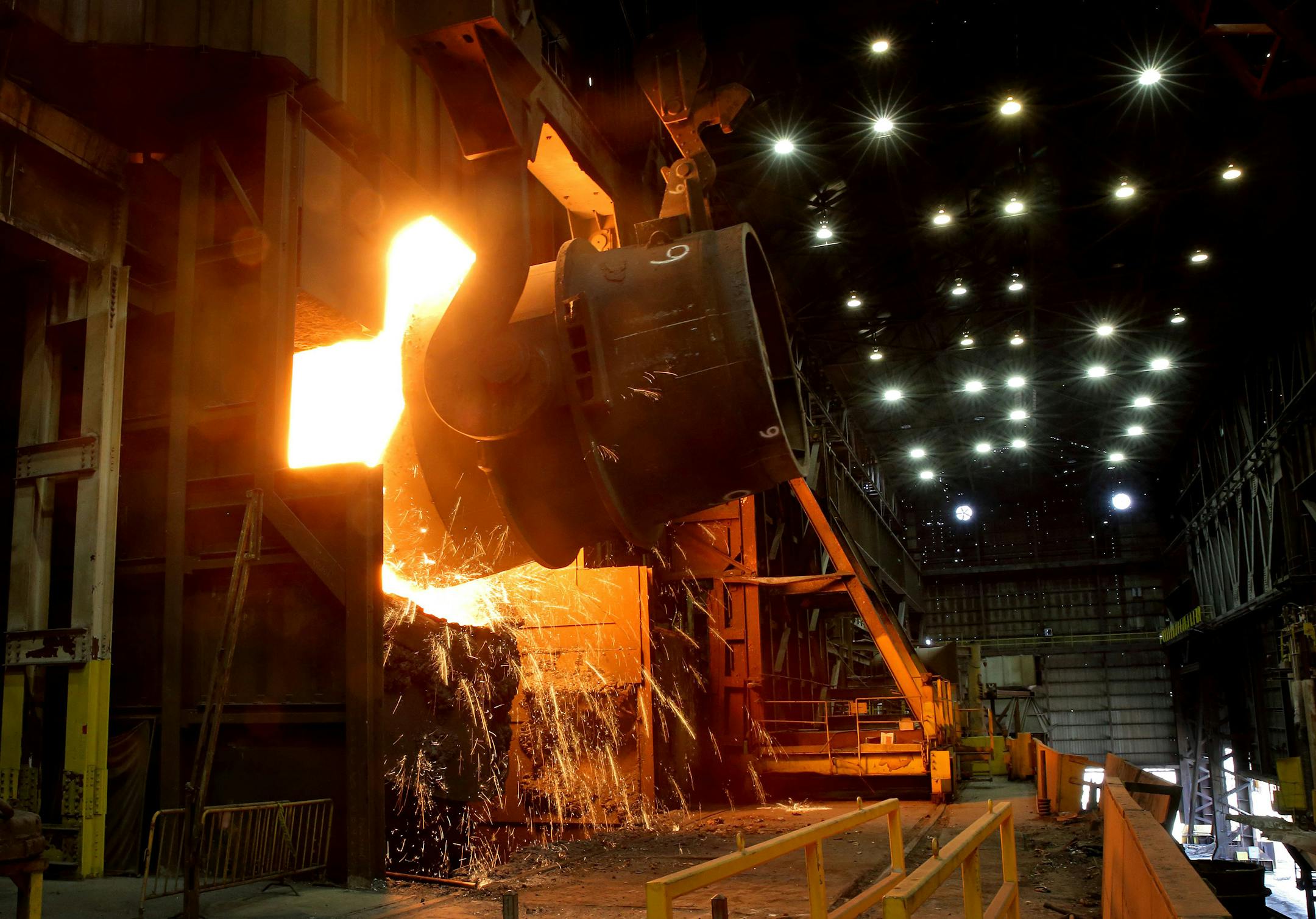
It’s hard not to describe President Donald Trump’s recent actions with Nippon’s purchase of U.S. Steel as one of these two things. And while that’s concerning on its own, such an approach could deny the steel industry, which employs thousands of Minnesotans on the Iron Range, what it really needs: modernization.
The Japanese steelmaker’s acquisition of the storied American industrial powerhouse is not necessarily bad; time will tell. But Trump is now actively ordering the company around using his unprecedented “golden share” in U.S. Steel, veto power he demanded to allow the $14.9 billion merger to go forward.
Earlier this month, U.S. Steel had announced it would move steel production at its Granite City, Ill., steel mill to its Gary Works in Indiana. Because the company agreed not to lay off workers, it said it would retain employees to perform maintenance at the plant and prepare for an improvement in economic conditions. This is a highly unusual approach that only makes sense in the context of the merger agreement.


