
Brown: We need more communication about mining and the environment, not less

The point of negotiation is not to crown a winner but to find shared opportunity.

Columnist Icon
The Minnesota Star Tribune
December 20, 2025 at 11:00AM
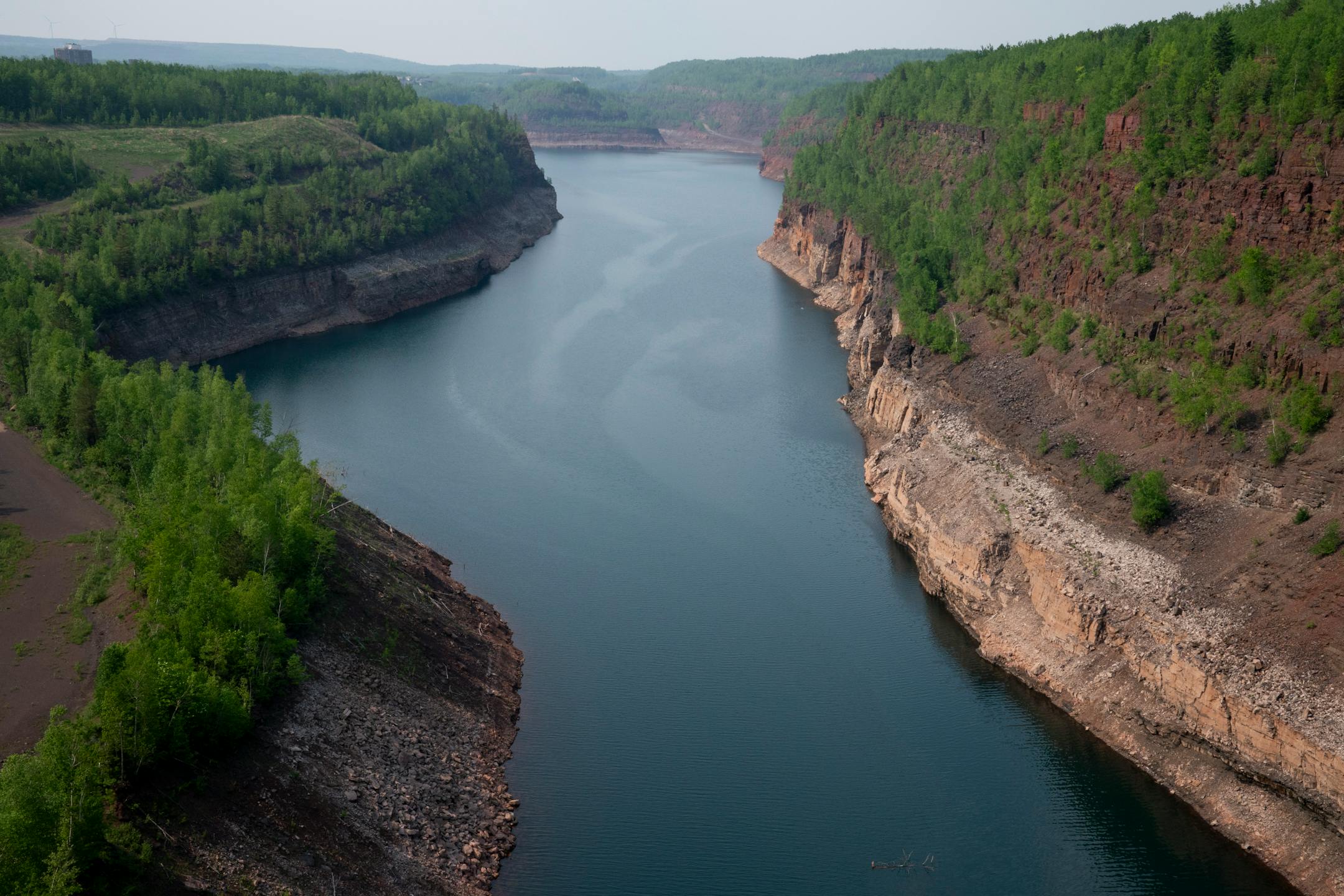
The Rouchleau Mine Pit is seen May 29 from the Tom Rukavina Memorial Bridge in Virginia, Minn. (Erica Dischino /For the Minnesota Star Tribune)

Opinion editor’s note: Strib Voices publishes a mix of commentary online and in print each day. To contribute, click here.

•••

A year ago, a new president and Congress were expected to clear the way for stalled copper-nickel mining projects in northern Minnesota. Today, they provide clear evidence that communication resolves controversy better than ramrod political rhetoric.

Take U.S. Rep. Pete Stauber from Minnesota’s Eighth Congressional District, for instance. He sits in the Republican House majority, down the hall from a Republican Senate majority with a Republican president in the White House. In Minnesota vernacular, that’s a pretty good deal. And yet, he seems to have a hard time availing himself of these advantages.

On Dec. 2, Stauber and two GOP colleagues from the House Committee on Natural Resources sent a letter to three environmental groups. They demanded that the environmental law firm Earthjustice, the Wilderness Society and the Center for Biological Diversity turn over information about meetings held with the Biden administration. It wasn’t a subpoena, but it played like one on TV.

The letter implied that such meetings created the appearance of impropriety because the Biden White House later imposed a moratorium on mining in the watershed of the Boundary Waters Canoe Area Wilderness.

The Center for Biological Diversity quickly responded that it hadn’t discussed mining in the BWCA in its communication with the White House. Instead, it alleged that the request itself was a bald-faced attempt to intimidate nongovernment environmental groups.

Now, I get the feeling that Stauber likes it when newspaper columnists target him. Similarly, public squabbles with environmental groups are his own personal Monday Night Raw. It feeds the very online culture war he is constantly waging.

Given that the mineral leases for the Twin Metals project near Ely are still blocked, despite the GOP trifecta and President Donald Trump’s disregard for established procedure, I suppose this letter is a way for Stauber to let off steam. So, let’s not dwell on this political theater, which faded from the headlines almost immediately.

There are three points I’d like to make.

First, state and federal regulators should consult with as many interested parties as possible, including environmental groups, tribes, local officials and mining companies.

Second, they already do.

Third, they should do it more often.

The insinuation that only granola-crunching nonprofit organizations try to influence the federal government is laughable. International mining corporations lobby public officials all the time in ways both visible and invisible. In fact, the bigger the interest, the more pervasive its influence can become.

That’s why it’s important for journalists, public officials and government regulators to seek out a broad range of opinions during the process.

Consider the goal of any negotiation. You’re not crowning a winner; you’re looking for a shared opportunity. No party will agree to a deal that’s bad for their interests. The worse the deal, the harder they will fight it.

That’s why successful mining projects in developed countries around the world all include robust conversations. You don’t just plop a big project on the public docket and expect everyone to fall in line. That’s precisely why the PolyMet project near Hoyt Lakes, now called New Range Minerals, and Twin Metals in Ely were sent back to the drawing board after years of wasted effort. People with environmental concerns quickly became opponents, and now they are entrenched.

Conversations are happening right now. I’m aware of mining companies talking to tribes. Local governments are talking to state officials. Good! We need more of this, not less.

If you don’t want an environmental lawsuit to derail a project, why wouldn’t you do all you can to learn what arguments and data that lawsuit might include? Likewise, if you were concerned about the environment, and worried that a mine might cause damage, why wouldn’t you seek to influence the company to improve its plan? Even if you don’t support the plan, it will be better than a worse plan.

Everyone should talk to everyone. Debate and disclosure must be public, but fact-finding and relationship-building should happen all the time.

When a mineral is discovered by mining companies, there are three primary questions taken into consideration: Should we mine it? If so, how? Will the return be worth it?

These are the core questions that citizens should ask as well. Mined minerals are one-time resources that belong to the people. Value may filter through lease holders and mining companies, but the fundamental beneficiary of mining must be society, or it should not occur.

That’s for regulators working on behalf of the people in a democratic society to decide. It’s a hard choice. They should talk to everyone, often, and again if necessary. The more people feel heard, the more friendly adjustments are made, the better the chances of any given project becoming successful.

Negotiation might cost mining companies more money. It might demand alternatives to mining. Politics is, after all, the art of what’s possible, not what’s perfect. But this is serious business, and we should take a dim view of those who overpower the discussion with empty slogans and closed minds.

about the writer

about the writer

Aaron Brown

Editorial Columnist

Aaron Brown is a columnist for the Minnesota Star Tribune Editorial Board. He’s based on the Iron Range but focuses on the affairs of the entire state.

See Moreicon