
Rash: Inhumane detentions at Whipple betray America

The nation’s 250th should be a fiery recommitment to why the country and the Constitution were forged in the first place.

Columnist Icon
The Minnesota Star Tribune
February 7, 2026 at 11:00AM
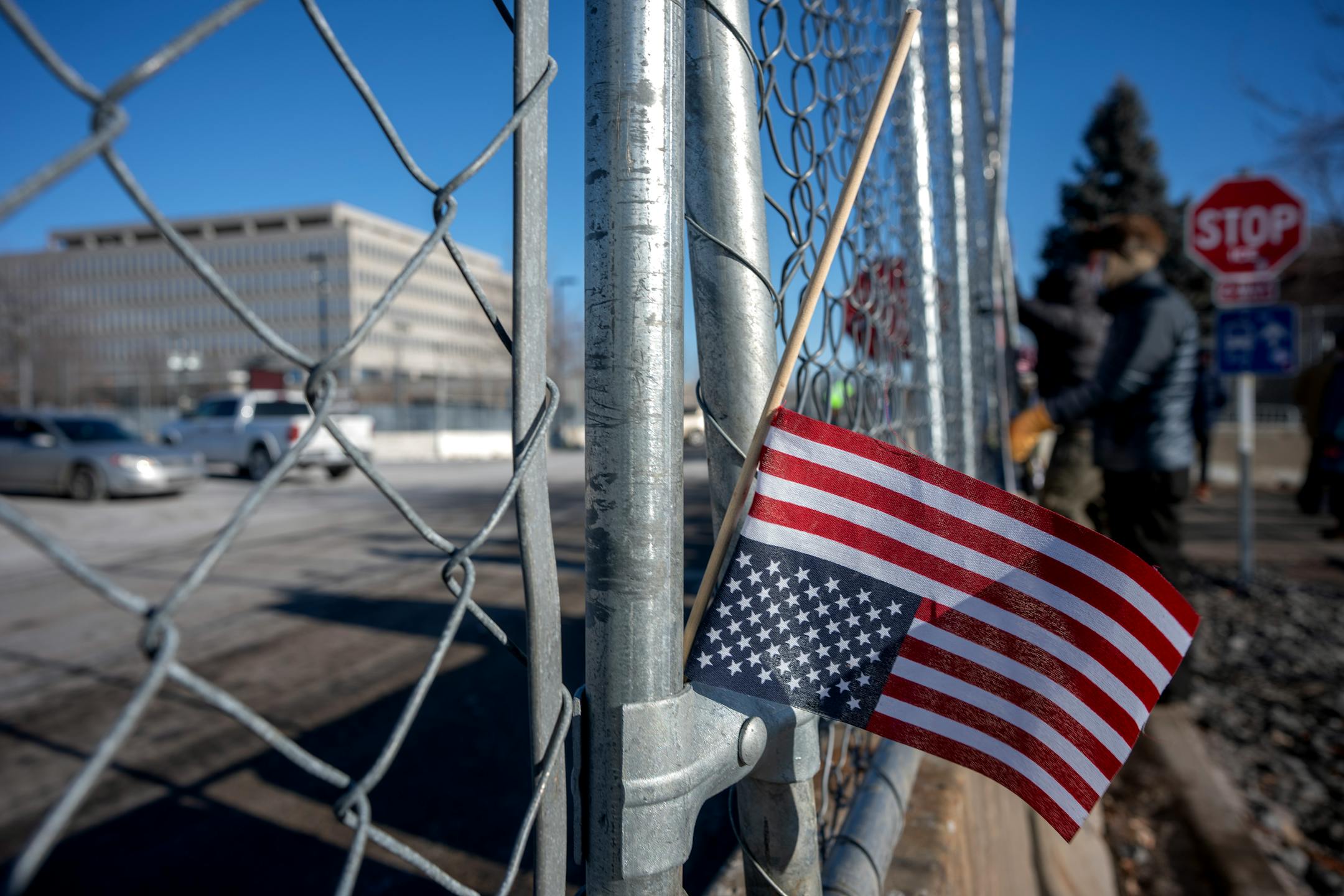
Protesters gather outside the Whipple Federal Building on Jan. 27. (Jerry Holt/The Minnesota Star Tribune)

Opinion editor’s note: Strib Voices publishes a mix of commentary online and in print each day. To contribute, click here.

•••

Milestone birthdays are a time to take stock.

So as the country turns 250, Americans should ask: Who are we?

Are we the nation of unblemished exceptionalism that many, including the president, project?

Or are we a nation that can recognize and reckon with our flaws? Flaws like the unconscionable and likely unconstitutional conduct done in America’s name at the Whipple Federal Building near the Minneapolis-St. Paul International Airport, where many Minnesotans swept up by Immigration and Customs Enforcement’s Operation Metro Surge are or have been detained.

In three separate, credible accounts the same adjective described detainees’ experience: inhumane.

“Detained in a place of ‘no humanity,’” headlined the Feb. 1 Minnesota Star Tribune story based on interviews with 30 Whipple detainees and reviews of nearly 200 court records of wrongful detainment claims and lawsuits filed in federal court. Another account was congressional testimony by Aliya Rahman, whose violent arrest, captured on video that went viral worldwide, became a searing image of ICE aggression often bordering on brutality. The third was from Third District Democratic Rep. Kelly Morrison, who in a video described detainees’ ordeals.

“What I saw was not what I would expect in the United States of America,” said Morrison, a doctor, who was particularly concerned that Whipple had “no specific medical policy and no real medical care onsite.” Two female detainees, Morrison said, shared “harrowing experiences” including that agents were “cruel” and that they were “treated like they weren’t human beings.”

Whipple, said Ana Pottratz Acosta, a University of Minnesota law professor who leads the U’s Immigration and Human Rights Clinic, “is being used for a purpose that it was never intended for.”

That’s evident in the Star Tribune’s account of a young Muslim woman, a refugee legally in this country, who was shackled at the ankles in a room with three men for 24 hours. When she began to menstruate, she was instructed to use toilet paper. When she fell ill and twice vomited, agents didn’t grant her request for medical care. Describing her tribulation, she said that “there was no humanity.”

That assessment was reflected in other accounts, including from a Venezuelan man who was one of 100 placed in a holding cell intended for 20, where some handcuffed detainees slept standing up, near an overflowing toilet. Four or five other detention rooms, he described in a court filing, held 40-50 people. One detainee with epilepsy begged for his medication, but his pleas went unanswered.

Authorities “have used and weaponized detention” to encourage self-deportation, Linus Chan, faculty director of the University of Minnesota’s Detainee Rights Clinic, said at a recent legislative hearing, according to the Star Tribune story.

It’s not only ICE targets treated inhumanely at Whipple; those protesting the agency have suffered similar experiences, including Iraq veteran Will Vermie, who told Star Tribune reporters that he was placed in a small cell with seven other detainees — some bloodied from being roughed up by agents.

Separately, detainee Patty O’Keefe said she and her fellow cellmates had to “beg” for water or bathroom access by pounding on their door. “They wanted it to be an uncomfortable experience,” she told the Star Tribune. “They want to deter you from getting back out there and continuing to resist their efforts.”

And sometimes it’s not those swept up over immigration status or those protesting ICE but everyday Minnesotans like Rahman, who said in her testimony that on Jan. 13 she was on her way to her 39th appointment at Hennepin County’s Traumatic Brain Injury Center when she got caught in a traffic jam caused by ICE vehicles.

Rahman, who has autism along with her brain injury, said that “agents on all sides of my vehicle yelled conflicting threats and instructions that I could not process while watching for pedestrians.” After ICE agents shattered her window, she yelled, “I’m disabled!” only to be told, “Too late!” as she was grabbed in what is now an infamous image of ICE brutality.

Rahman said she doesn’t “deserve more humane treatment than anyone else.” But she deserves no less, and everyone in America, regardless of immigration status, deserves to be treated humanely. In her testimony she recalled being brought to Whipple where there were “Black and brown people shackled together and being marched by yelling agents.” She was never told she was under arrest, read her rights or charged with a crime. No medical screening or phone call to her lawyer or access to her communication navigator when her speech began to slur. She remembers agents laughing, she told Congress.

And before she blacked out on her cell floor and woke up in Hennepin County Medical Center’s emergency room, where she was treated for assault, she recalls a cellmate repeatedly pleading to get her medical attention, only to be told, “We don’t want to step on ICE’s toes.”

It’s time to step on ICE’s toes.

Especially now. Because America’s 250th shouldn’t just be red-white-and blue bunting and fireworks but a fiery recommitment to why the country and the Constitution were forged in the first place; not just historical re-enactments in tricorn hats but demand for action from the three branches of government to live up to the laws and values it espouses to other countries.

To do so, citizens must continue to make democracy — which is what America’s founding was fundamentally about — vital by voting.

“If you’re angry about this,” Acosta advised, call congressional representatives who are currently debating Department of Homeland Security funding. And ultimately, she added, “the only solution is to vote.”

Acosta concluded by saying that in interviews with international journalists covering the ICE crisis, their “universal reaction to what’s happening in Minneapolis is they’re all horrified and cannot believe this is happening in the United States.”

And despite her years representing asylum-seekers, it somewhat stuns Acosta herself.

“It’s quite shocking to actually witness it come to pass,” she said. “And it’s especially hard because I’m from Minnesota, because it’s not just happening in my country, it’s happening in my home.”

about the writer

about the writer

John Rash

Editorial Columnist

John Rash is a columnist.

See Moreicon

More from Columnists

See More
card image
Elizabeth Flores/The Minnesota Star Tribune

A staff exodus and a courtroom exchange that went viral raise urgent questions about the office’s management and whether it can meet its constitutional obligations.

card image
card image