Brown: Hungry tech sector will force tough choices over critical minerals

Critical mineral mining proposals dot northern Minnesota’s landscape, each attracting environmental scrutiny and political heat.

Columnist Icon
The Minnesota Star Tribune
November 2, 2025 at 11:58AM
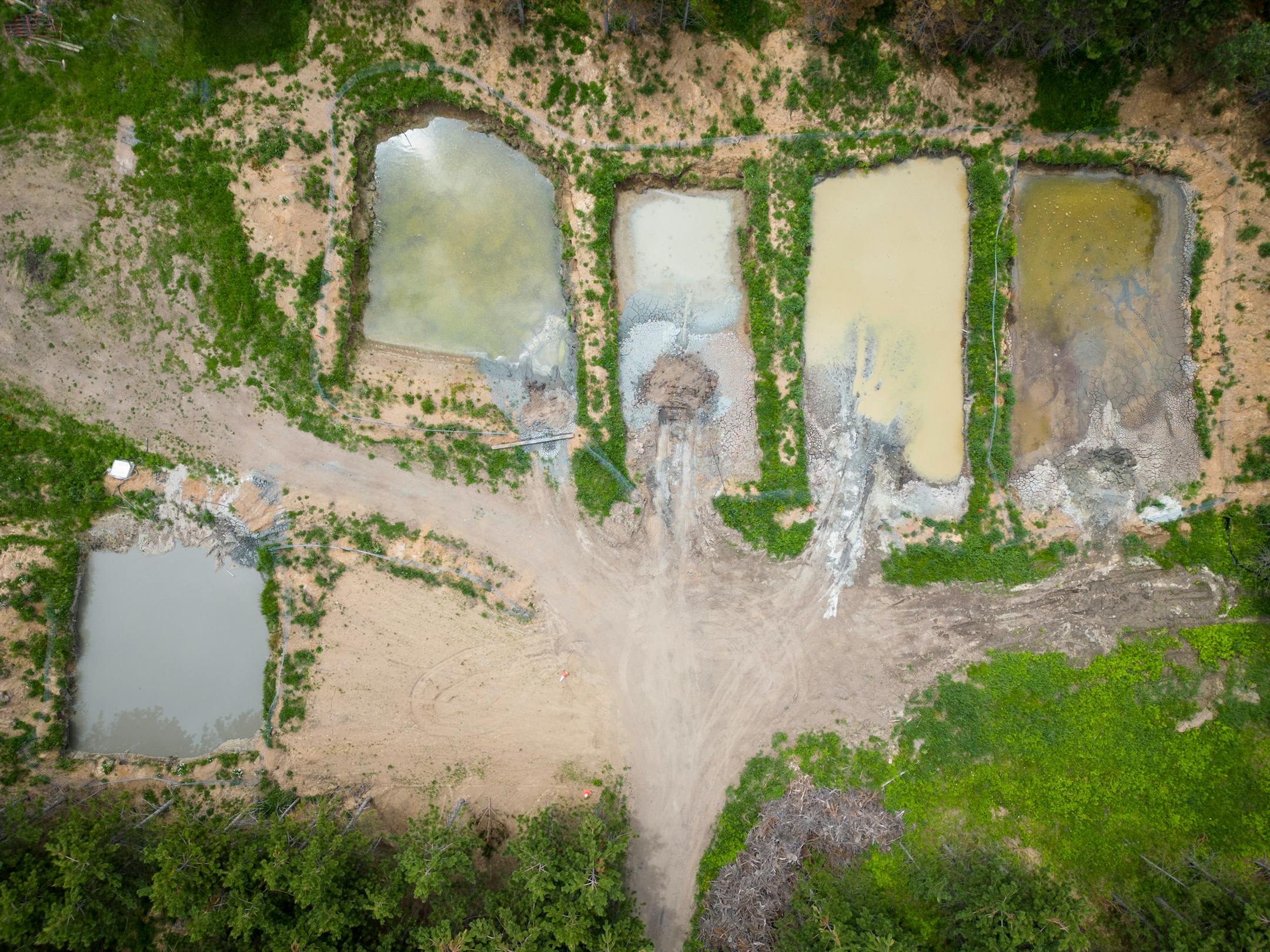
Sumps, where cuttings from the core sampling machines are deposited, are seen in an upland area at the Talon Metals Corporation drilling site near Tamarack, Minn., on June 7, 2023. (Ben Hovland/The Associated Press)

Opinion editor’s note: Strib Voices publishes a mix of commentary online and in print each day. To contribute, click here.

•••

In January 1913, workmen expanded the basement of a 900-seat downtown theater in Hibbing, Minn., to build an ornate smoking lounge for a higher class of patrons. Twelve feet down, their shovels struck a soft, dark material that resembled the rich hematite iron ore being mined half a mile away.

The proprietor, a raconteur named W.J. Power, desperately wanted to save vaudeville from the scourge of motion pictures. But he was also a longtime mining speculator. He knew what he saw. With his theatrical investment in mind, he told the Hibbing Daily Tribune that rumors were overblown, that they only found “discolored quicksand.”

By summer, the dazzling Power Theater re-opened with a nationally celebrated Catholic boys choir singing in front of a full orchestra. And yet, within just five years, the theater was demolished. U.S. Steel had quietly secured the mineral rights years earlier. When World War I depleted existing reserves, the company cleared Hibbing’s entire business district and moved the town 2 miles south to create the world’s largest iron mine.
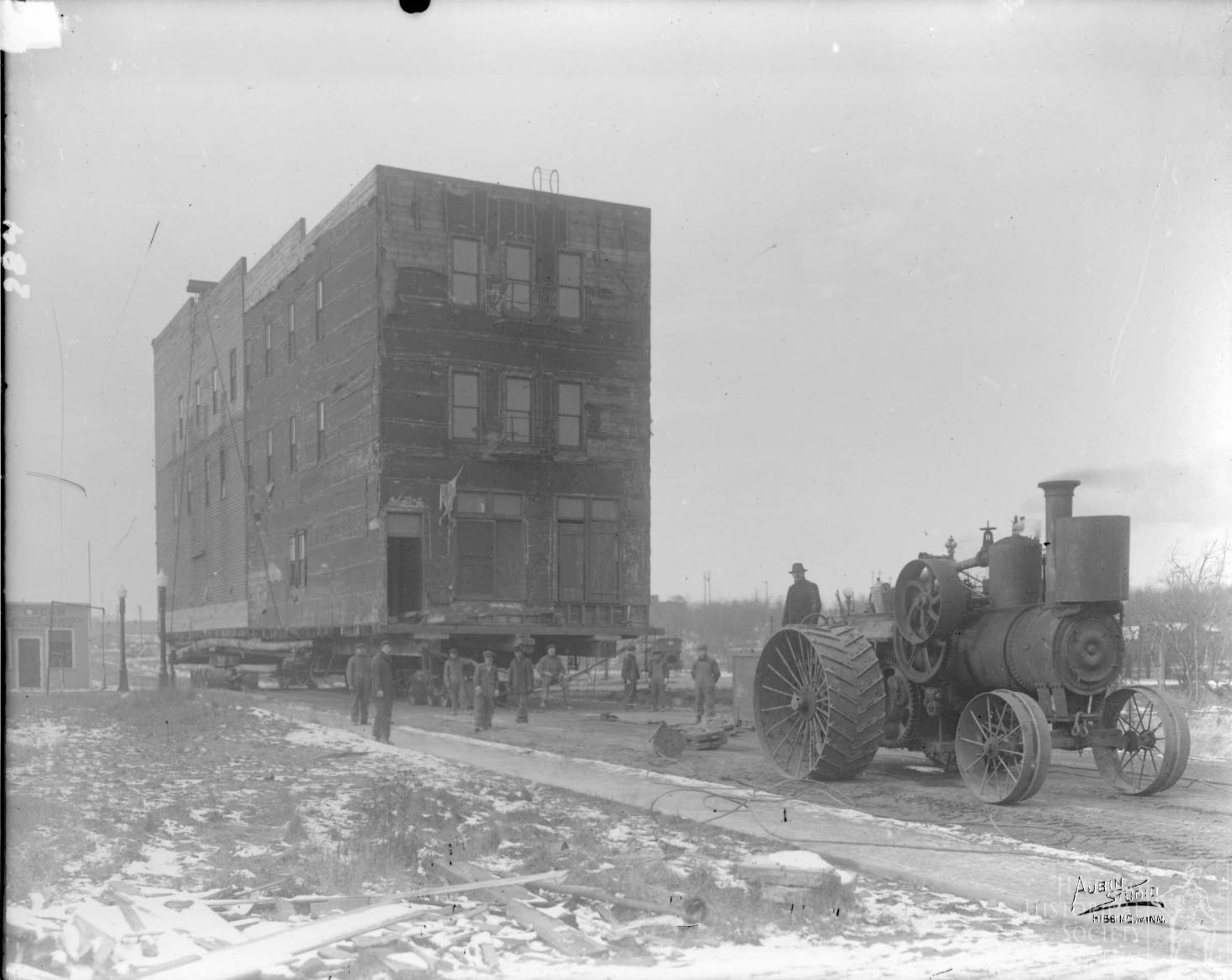
A building moves from north to south Hibbing circa 1918-1922. Starting in 1918, the village of Hibbing was moved two miles south to accommodate the growth of the Hull-Rust-Mahoning mine. Workers jacked up wooden buildings and wheeled them south with steam tractors. Other buildings were scrapped or torn down as the town was rebuilt in its present location.
A building moves from north to south Hibbing circa 1918-1922. Starting in 1918, the village of Hibbing was moved two miles south to accommodate the growth of the Hull-Rust-Mahoning mine. Workers jacked up wooden buildings and wheeled them south with steam tractors. Other buildings were scrapped or torn down as the town was rebuilt in its present location. (Hibbing Historical Society, Aubin Studios Collection)

No one could have stopped what was coming out of that mine, for what emerged was the primal steel of modern America. From this yawning canyon spewed the richest economy on Earth and decisive victory in World War II. The disruption was undeniable, but the spoils irresistible to a nation hell-bent on progress. Iron Range communities would remain dependent on mining revenue for generations unto the present.

Today, Hibbing Taconite still blasts where the old town once stood, but the mine is poised to run out of ore within a few years. Over a century, automation, consolidation and bigger equipment eliminated thousands of mining jobs, with autonomous trucks idling on the distant horizon. Last May, Cleveland-Cliffs laid off 630 workers in Hibbing and Virginia, Minn., with only dim prospects of a callback. Locals fear another industry contraction.

At the same time, Cliffs recently announced it would explore rare earth elements at two of its mines. Critical mineral mining proposals dot northern Minnesota’s landscape — notably, New Range Minerals in Hoyt Lakes and Twin Metals in Ely — each attracting environmental scrutiny and political heat.

Some hope that a 21st century tech boom will fuel another transformation for aging mining towns, while others fear the consequences. Minnesotans should know what they’re getting into. This kind of change throws people and places like dice.

Critical minerals in Minnesota

“Critical minerals” refers to mined material that might be short in supply, high in demand, or whose supply chains might be threatened.

Rare earth elements are 17 specific critical minerals with high tech applications. The Trump administration has announced several deals to acquire these elusive commodities in recent months, including agreements with Australia and Japan within the past few weeks.

“Rare earths, they’re not rare,” said Ernest Scheyder, author of “The War Below: Lithium, Copper and the Global Battle to Power Our Lives.” “What’s rare is to find them in economical quantities.”

China processes a vast majority of the rare earth elements used around the world, in part because doing so is an environmentally fraught, expensive proposition made easier by an authoritarian government. This strategic decision made years ago now gives China extraordinary leverage in diplomatic and trade negotiations. The rest of the world now realizes it needs to catch up in both rare earth and critical mineral production.

That, Scheyder says, is why we’re seeing more exploration by companies like Cliffs that have massive stores of mining waste called tailings that, in some cases, might contain hidden gems.

“What Cliffs is doing is realizing that, sure, it’s got a core business with steel. But as it produces the building blocks for steel can it also get rare earths?” said Scheyder.

In “The War Below,” Scheyder spends a chapter exploring critical mineral mining proposals in Minnesota.

“The more that we engage with each other, with our elected officials, with the companies that make the products we use every single day, I think we’re going to get to a better sense of consensus around this,” said Scheyder.

Negotiate for the public, not the company

Last month, I visited Talon Metals, a proposed nickel mine in Aitkin County. The corporate headquarters is an old house in Tamarack, Minn., located across a narrow street from a shop where core samples are tested and stored. Staff members have been caring for a friendly stray cat that appeared to have run of the facility. This sort of informality is the hallmark of a junior mining company trying to win permits.

Like most mining projects in Minnesota, Talon has generated local support and opposition. But the mine is distinct from other proposals located in historic iron mining communities like Hoyt Lakes and Ely.

Talon plans to mine nickel underground. It seeks to ship the material to an old coal mining facility in Beulah, N.D., for processing and dry tailings storage. Most interesting is how its proposal changed with feedback from people in the community, including indigenous voices.

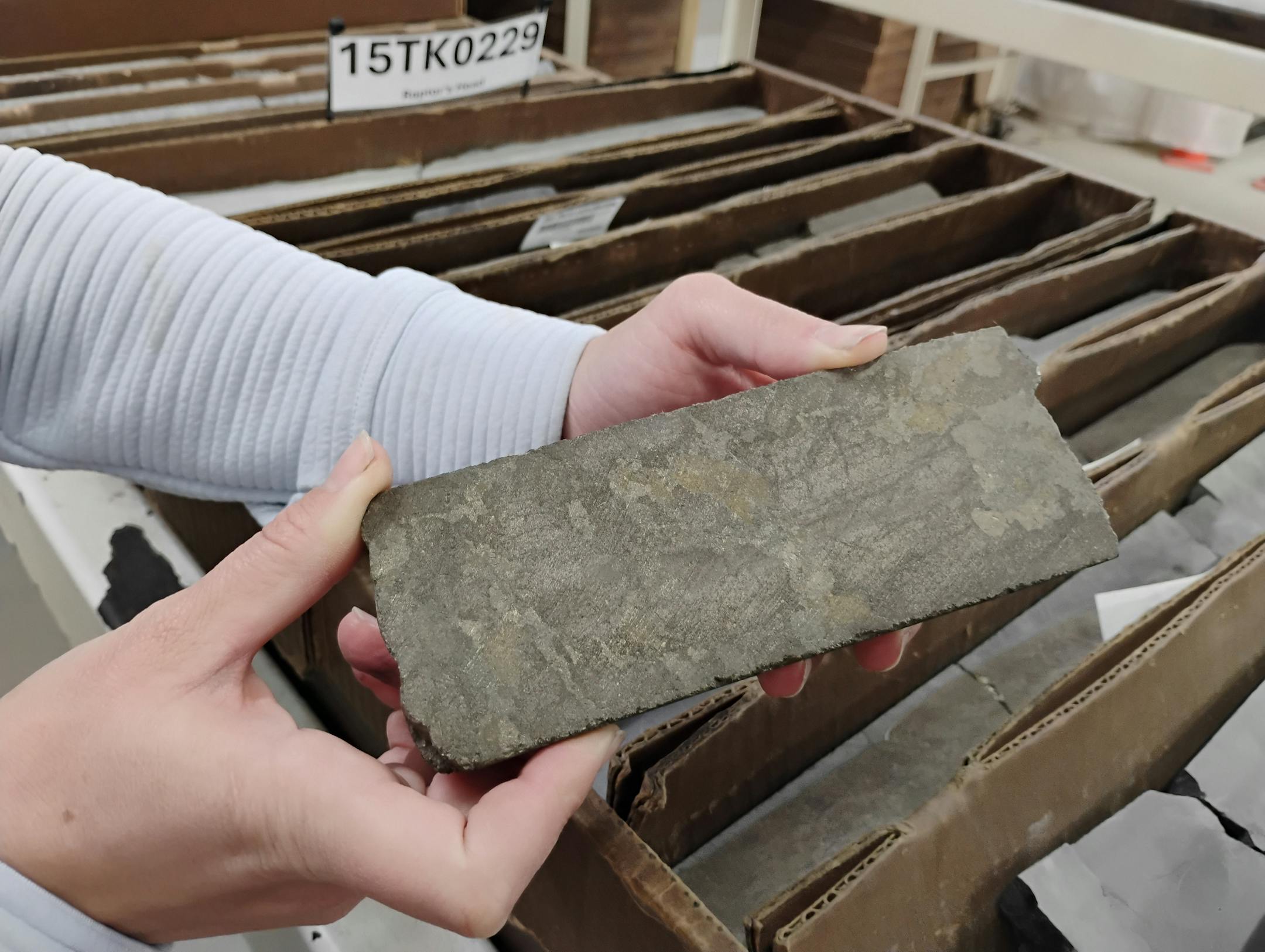
A close-up of a core sample rich in nickel at Talon Metals' company shop in Tamarack, Minn., on Oct. 9.
Jessica Johnson, vice president of external affairs for Talon Metals, shows a core sample rich in nickel at the company shop in Tamarack, Minn., on Oct. 9. (Aaron Brown/The Minnesota Star Tribune)

In early plans, the mine resembled ones we’ve seen before, with overburden piles exposed to rainwater that would gradually leach chemicals. Last year, the mine redesigned its plans so that everything from the trucks emerging from underground to the trains that haul off the ore remain enclosed indoors. Waste rock is distributed back underground, greatly reducing environmental risk.

“What our team hopes is that we show we are actively listening,” said Jessica Johnson, the company’s vice president of external affairs. “That might not be enough for everybody, but we hope people see we’re trying.”

Trying is important. The public needs that from mining companies as much as they do the minerals.

Right now, the demand for critical minerals is rising with a technological tsunami of renewable energy, artificial intelligence and ever-more-sophisticated electronics. Scheyder said his research shows only three ways forward.

“Either the United States or other nations have concrete discussions about how we get more of these minerals, or we recycle more, or we use less,” said Scheyder. “It seems like some kind of mix of all three is the way we’ll move forward here.”

In Hibbing, where iron ore consumed and rebuilt a whole village, a historical lesson was learned. Leaders must negotiate on behalf of the public, or private interests will have their way. In the years preceding the move of Hibbing, Mayor Victor L. Power (yes, brother of W.P.) held mining companies to account for polluting the water supply and insisted they pay their share of property taxes for schools and parks in the new village.

“Ore is not the handiwork of mankind, or of his genius, but the act of Providence,” bellowed Vic Power at a Labor Day address. “We found the iron land of Minnesota controlled by the millionaires of New York City. We sought to correct a condition for society.”

One hundred and ten years later, our moment requires a lot of honest conversation about what mining gives and what it takes away. The discovery of ore is not the end but the beginning of a negotiation over how the public will benefit from the mine being there.

Mining might not always be the right solution in every place where ore is found. Mining proposals are often puffed up to goose stock prices and generate political support. But neither should we ignore responsible proposals that fill serious demand. If recycling or conservation sound better, then we’re going to have to seriously invest in those things, which come with different tradeoffs.

Growing up on the Iron Range and researching its history for the last two decades taught me something that all mining communities learn to understand in time.

When a mine opens, it screams until the air runs out. They all fall silent in the end, leaving us with nothing but what we built for the future.

Clarification: A previous version of this article incorrectly truncated a quotation about handling community division over mining from Ernest Scheyder, author of “The War Below: Lithium, Copper and the Global Battle to Power Our Lives.” The full quotation is: “The more that we engage with each other, with our elected officials, with the companies that make the products we use every single day, I think we’re going to get to a better sense of consensus around this.”

about the writer

about the writer

Aaron Brown

Editorial Columnist

Aaron Brown is a columnist for the Minnesota Star Tribune Editorial Board. He’s based on the Iron Range but focuses on the affairs of the entire state.

See Moreicon

More from Columnists

See More
card image
Wally Skalij/The Associated Press

Americans are seeing a split screen of conflicting imagery on deportations: The Trump administration offers one narrative, and amateur cellphone clips offer another.

Travis Pennings uses a pair of binoculars to look for deer in the early morning hours, Nov. 3, 2018, during opening weekend of the season in Sandstone, Minn.