


Opinion editor’s note: Strib Voices publishes a mix of commentary online and in print each day. To contribute, click here.
•••
A growing snowstorm didn’t deter attendees to the Dec. 9 Human Rights Day Symposium held at the Humphrey School on the University of Minnesota campus. Many were especially eager to hear from keynote speaker Paul O’Brien, the executive director of Amnesty International USA.
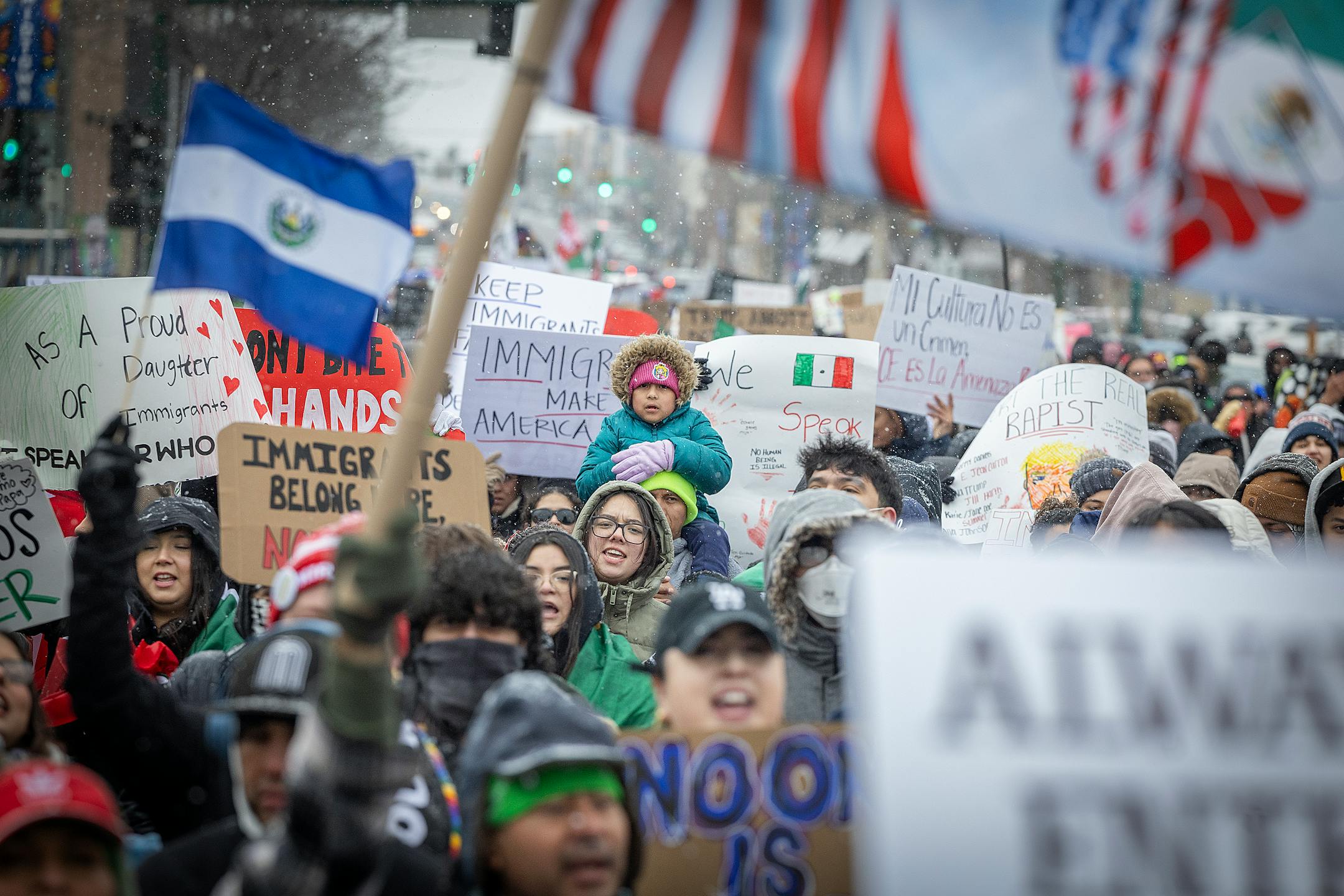
But O’Brien seemed just as keen to listen — and learn — from the real-time classroom happening just blocks away in the Minneapolis Cedar-Riverside neighborhood and other areas particularly impacted by an ICE enforcement surge, presidential rhetoric on Somali immigrants and the targeting of elected leaders who support them.
In fact, O’Brien told the crowd that as he prepared his speech this thought occurred: “I shouldn’t be telling these folks anything; we should just be coming here and learning — fast.”
In an interview before his address, O’Brien indicated that it wouldn’t be the only insight and inspiration he’s gleaned from Minnesota’s vibrant human-rights community, in which he senses “a breath of energy.” There are nearly 200 students at the undergraduate, graduate and Ph.D. level in the U’s Human Rights Program, which collaborates with the law school, the Humphrey School and the Center for Holocaust and Genocide Studies. Noting the student involvement, O’Brien added that “there is a history here that I’ve always been familiar with. I mean, even working as a human rights activist in other contexts I knew about Minnesota and Minneapolis in particular.” Especially the U, which he put alongside Harvard University, Columbia University and New York University as “academic hubs of energy and excellence.”
The U’s human-rights reputation “has its own momentum,” O’Brien said, indicating that was “absolutely crucial now because we are in this period of massive human-rights disruption.” Things, he said, “are being torn apart and we need new solutions. We need it for resilience, because the scale and the depth and breadth of the human-rights attacks are so significant that we need centers of study to not just understand the nature of the threats, where they are coming from, and what they will lead to in terms of human-rights harm, but we also need a whole new set of thoughts around how we rebuild.”
The depth and breadth of attacks are metastasizing as Moscow, Beijing and beyond learn from each other’s repression. “There’s been an authoritarian playbook that’s out there” used by dictatorships and illiberal democracies alike in places like Hungary, O’Brien said. The U.S., he said, “is not an originator of what’s going on in anti-rights terms, but it’s a massive accelerant of it.”


