
Rash: UNICEF and Starkey partner to help kids hear

The Minnesota multinational works with the international institution on its inaugural Children with Disabilities fund.

Columnist Icon
The Minnesota Star Tribune
December 14, 2025 at 11:00AM
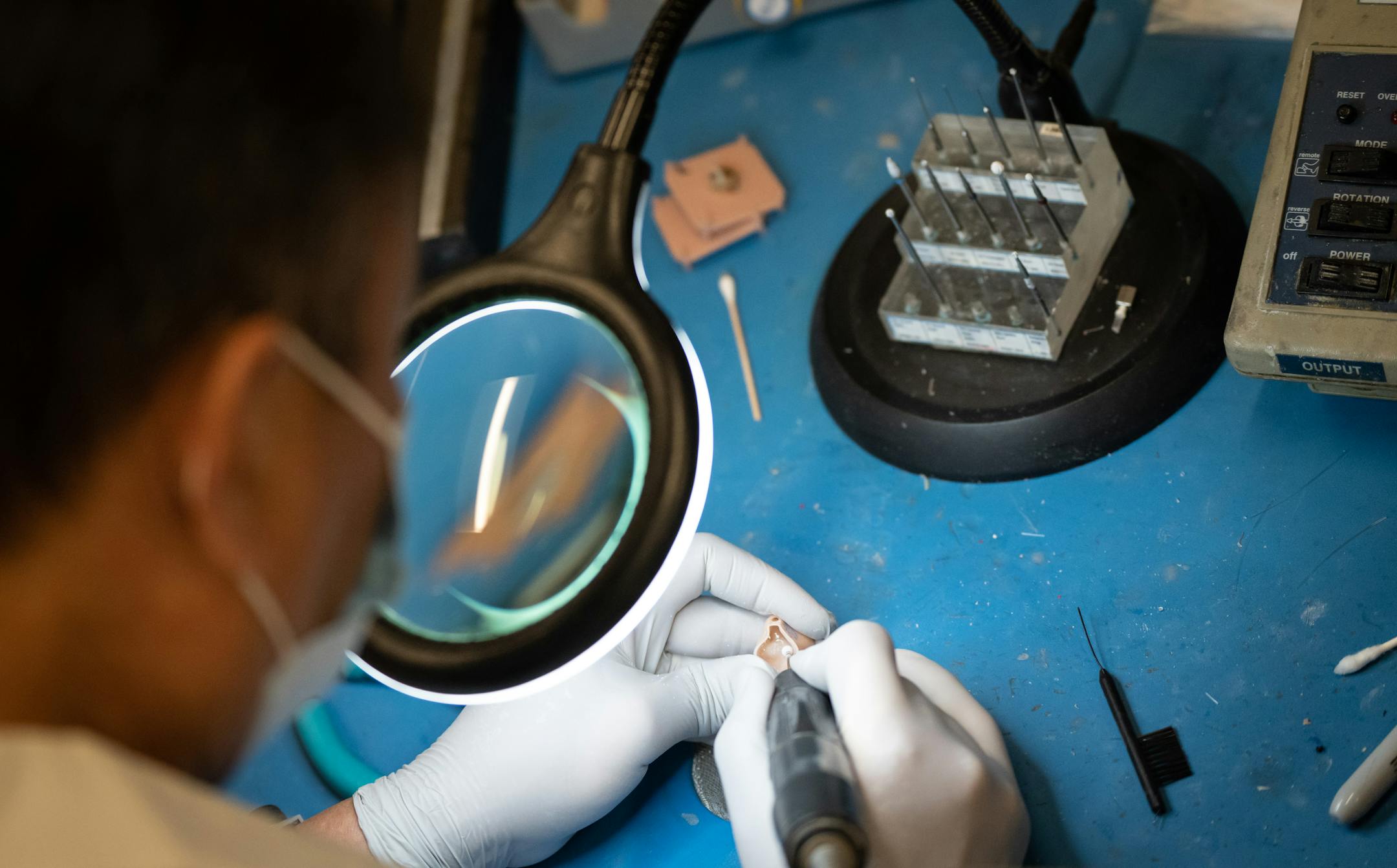
A senior hearing aid technician works to assemble a custom hearing aid at Starkey's Technology Center on May 3, 2022, in Eden Prairie. (Renée Jones Schneider/The Minnesota Star Tribune)

Opinion editor’s note: Strib Voices publishes a mix of commentary online and in print each day. To contribute, click here.

•••

Dec. 3 was the official International Day of Persons with Disabilities. But unofficially for UNICEF, every day is dedicated to helping children across the world.

The need is greater than ever. Funding isn’t. Particularly given sharp reductions (and for many programs, elimination) in U.S. international aid. So it’s an ideal time for UNICEF, the United Nations Children’s Fund, to partner with locally based, globally focused Starkey, a global leader in hearing technology, for its inaugural Children with Disabilities Fund.

In 2025, the fund’s first full year, the objectives included but weren’t limited to having 35% of UNICEF country offices meeting benchmarks for reducing stigmatization and discrimination against children, families and communities marginalized due to disability, sociocultural background or migration status. Additionally, UNICEF strove to ensure that 65 countries have scalable capacity-development programs for front-line workers focusing on kids with disabilities.

Other objectives revolved around countries providing disability-inclusive programs and services in humanitarian responses, as well as 444,000 children with disabilities reached by assistive technology and inclusive products through UNICEF-supported programs.

Accordingly, starting with three pilot projects — in India, Uganda and Peru — the international institution and the Minnesota multinational are trying different approaches to address hearing issues.

For instance, in India there will be an effort at social and behavioral change, because “as anybody who’s experienced any sort of disability knows, stigma is a big part of not just screening prevention, but also of interventions,” explained Michele Walsh, UNICEF USA’s executive vice president and chief philanthropy officer. “So it’s really building awareness with parents, communities, front-line workers on the importance of early screening and helping to build some of the demand for early detection and support services for children with disabilities.”

Meanwhile, in Uganda, more than 4,000 children under 8 have undergone screening for disabilities and development delays, with follow-up care scheduled, while the Peruvian projects included similar screening as well as training of health care workers, among other efforts.

The global scope is staggering. Almost 1.5 billion people have some form of hearing loss and about 431 million have a disabling hearing loss — with about 34 million of them being children. And about 80% of all afflicted live in the developing world, said Owen Olende, Starkey’s vice president for sales in Latin American and Africa, citing data from the World Health Organization.

Diagnosis, cost and health care infrastructure are among the barriers to care, said Olende, who added this blunt reality: In many developing-world countries, “priorities are quite different from the developed world.” In a form of public-health triage, “mainly fatal diseases are given more priority vs. noncommunicable diseases. Hearing health care or hearing loss is really not considered as much of a major issue, even though it has major impact on the overall health of individuals.”

And both UNICEF and Starkey hope to reach many more individuals, in part by playing off each other’s strengths. Starkey’s biggest investment, said Olende, is technical expertise in scaling up programs in hearing health care. Having three different countries and strategies is challenging, Olende said, “but also gives us a very good parameter of how we can adapt our partnerships moving forward and scale up in different regions across the world.”

Starkey, Walsh said, is a “values-aligned partner.” And as with so many Minnesota firms, those values are reflected in other community investments, including the 2026 Special Olympics USA Games that will take place in the Twin Cities area from June 20 to 26. Starkey will be among the 25 state-based companies that make a majority of the sponsors. And as part of its partnership, Starkey will staff a Healthy Hearing area for athletes and coaches at no charge, and will send about 150 volunteers, including audiologists, to the Games.

“This partnership is a major win for our athletes,” Mary Horwath, the Games’ chief marketing officer, said in a statement. “For many athletes, these screenings may be their only opportunity to access care, so Starkey’s support is crucial. Ultimately, it’s about championing the whole health of every athlete and coach, because their well-being is foundational to their performance both on and off the field.”

Regarding its partnership with UNICEF, Walsh said that “our hope is to really drive transformative change at it relates to children with disabilities. And there’s no way we do that work alone. And to have partners with the technical understanding they have, the depth of humanity at the community level,” she said, can be game changing.

Change, and challenge, are nothing new to UNICEF, borne of postwar crises but continually responding to an ever-turbulent world of what Walsh describes as “more children living in conflict than ever before, more children on the move, and those needs disproportionately felt by children. We are here to make sure that we are responding as well as we possibly can with the resources that we have at our disposal and calling on not just donor governments to allocate their budgets in ways that really benefit children, which ultimately benefit at the country level and the community level as well.”

The number in need and the number of dollars needlessly pulled back can stagger. But it’s crucial that the crushing totals don’t eclipse the individual.

“Sometimes when we talk in really large numbers, it can get lost and it’s hard to imagine what impact you can have,” said Walsh. “But every act of generosity or partnership or investment big or small really does help meet the urgent needs of a child.”

That’s something that’s not lost on UNICEF, as well as its partner Starkey and many other Minnesota-based institutions and individuals.

And it shouldn’t be lost on our country’s conscience.

“We’re talking hundreds of millions sometimes, but if it’s your child that matters, that one extra bit, that incremental amount, helps us go a little bit farther,” said Walsh. Ideally, she concluded, that results in reaching “a kid whose life can be changed forever.”

about the writer

about the writer

John Rash

Editorial Columnist

John Rash is an editorial writer and columnist. His Rash Report column analyzes media and politics, and his focus on foreign policy has taken him on international reporting trips to China, Japan, Rwanda, Kazakhstan, Turkey, Lithuania, Kuwait and Canada.

See Moreicon

More from Columnists

See More
card image
Renée Jones Schneider/The Minnesota Star Tribune

The Minnesota multinational works with the international institution on its inaugural Children with Disabilities fund.

card image
card image