
Burcum: ‘Zero impact,’ or rolling the dice on vets’ health care?

Scrutiny of Veterans Affairs’ staffing decisions is imperative after report that thousands of vacancies will go unfilled.

Columnist Icon
The Minnesota Star Tribune
December 20, 2025 at 7:30PM
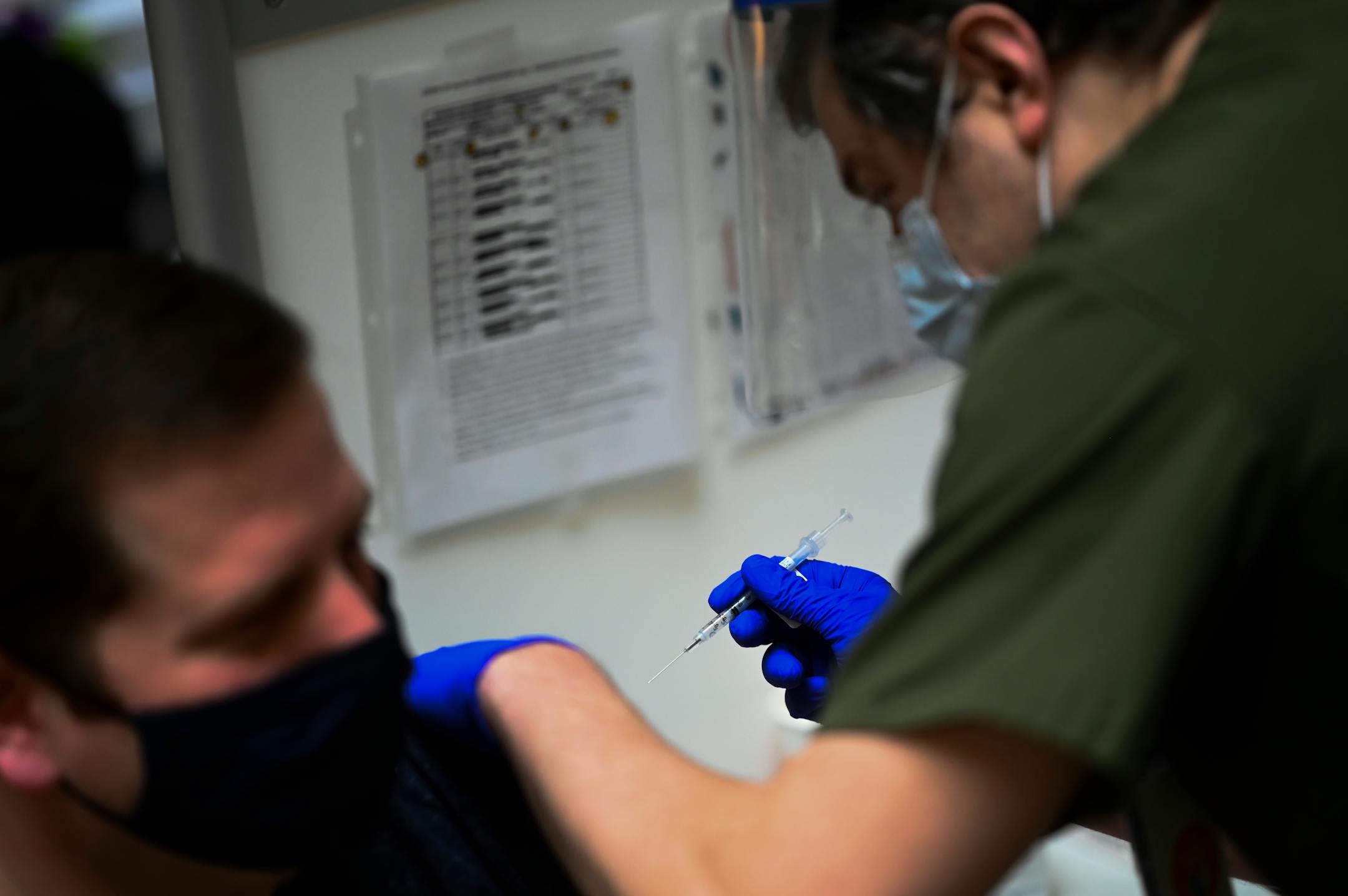
Nurse Matt Brenner gives out a dose of the COVID-19 vaccine at the Minneapolis VA in 2021. (Aaron Lavinsky/The Minnesota Star Tribune)

Opinion editor’s note: Strib Voices publishes a mix of commentary online and in print each day. To contribute, click here.

•••

A historic health care labor shortage has made it challenging to fill job openings for physicians, nurses and other professionals in Minnesota and across the nation.

It stands to reason that this workforce reality means it can take months or even more than a year to backfill positions. But the U.S. Department of Veterans Affairs (VA) has a dubious alternate explanation for hiring vacancies:

That a position, if it has gone unfilled for a certain period, is no longer needed. Therefore, this job and thousands of other vacant positions within the VA health system, can be eliminated with “zero impact on Veteran care.”

That “zero impact” claim came from a VA spokesman this past week. I reached out after the Washington Post recently reported that the VA “plans to abruptly eliminate as many as 35,000 health care positions this month, mostly unfilled jobs including doctors, nurses and support staff, according to an internal memo, VA staffers and congressional aides.”

The move comes after a “massive reorganization effort already resulted in the loss of almost 30,000 employees this year,” according to the Post report.

Count me among those deeply skeptical that this will be pain-free and that all of these positions are no longer needed. Congress should seek a second opinion about backfilling these positions and follow up with high-profile hearings. Our veterans deserve that at a minimum.

The VA health care system, of course, is dedicated to caring for the military men and women who have served our nation. It provides specialized, affordable care tailored to veterans’ unique needs, which are often linked to their service. It includes 170 medical centers across the nation, one of which is in Minneapolis, and 1,193 outpatient sites. The VA reports that over 9.1 million veterans are enrolled.

In addition, many doctors receive their training in the VA system. The system also plays a vital role in medical research.

For all these reasons, any diminishment of the VA will undoubtedly have profound reverberations across the entire health care system. That’s why the Washington Post’s VA staffing report merits scrutiny.

Some context is important. It wasn’t all that long ago that VA wait times were a national scandal. In 2014, righteous outrage erupted after reports of veterans waiting months for appointments and shameful machinations were deployed within the system to hide the delays.

Congressional investigations ensued. The head of the VA at the time, Eric Shinseki, an Obama appointee, resigned.

I remember watching this unfold. Watchdogs barked, politicians did their job and accountability ensued. While the delays were shameful, it was heartening to see bipartisan consensus that our veterans deserved — and had certainly earned — better.

I’d like to think that we still share that fierce collective commitment to caring for those who have “borne the battle,” as the VA mission statement puts it. That requires delving into the VA’s assurances rather than taking them at face value. VA Secretary Douglas Collins should push pause on the proposed “zero impact” changes until Congress can properly vet their actual impact.

Fortunately, Minnesota’s senior U.S. senator, Amy Klobuchar, a Democrat, is among those sounding an early alarm.

“I am deeply concerned by what the reported elimination of tens of thousands of health care jobs at the VA would mean for our veterans and their access to the care and services they deserve. Eliminating jobs the VA administration has chosen not to fill is still eliminating positions now and in the future,” Klobuchar said in a statement. “When our veterans signed up to serve, there was no waiting line — there shouldn’t be one when they need to access the benefits they’ve earned.”

Klobuchar’s office said that the unfilled openings could potentially include more than a hundred doctor and nurse positions at the Minneapolis VA. For perspective, the VA website listed 4,787 employees in the Minneapolis VA system in 2022.

A well-known service organization, Iraq and Afghanistan Veterans of America (IAVA), is also raising concerns.

“IAVA sees a real risk to care quality and access if the VA shrinks its hiring capacity while demand for veteran health care keeps rising. A vacancy is not an opportunity to shrink and privatize the VA. In many facilities, it is a signal that the system cannot recruit and retain fast enough to meet the needs of the veterans it serves,” Lou Elliott-Cysewski, IAVA’s vice president of external affairs, told me this week.

Collins disparaged the Washington Post story as “fake news” on social media. In an email, VA spokesman Peter Kasperowicz told me the story is “highly misleading” and said the VA is “developing plans to eliminate about 25,000 open and unfilled positions — mostly COVID-era roles that are no longer necessary.”

He also disputed IAVA’s claim that demand for veteran care is rising. The information he provided shows that the number of veterans enrolled declined from 9,152,504 in 2024 to 9,112,717 in 2025. But enrollment has stayed over 9 million since 2015.

Kasperowicz’s information also highlighted that the number of VA employees has risen significantly in the last decade. But reverberations from the 2014 wait-time scandal are likely a factor, with hiring boosted afterward.

A physician who practices at the Minneapolis VA pushed back on the claim the Minneapolis medical center could painlessly absorb unfilled vacancies. I’m not using the doctor’s name because this medical professional fears VA retaliation.

The physician said that Minneapolis patients have experienced labwork wait times of two hours or more due to inadequate numbers of phlebotomists. The system has also long struggled to attract and retain highly paid subspecialist doctors. The departure of several anesthesiologists this year required transferring out emergency surgery patients for a time. Another staffing challenge: medical physicists who program radiation machines used in cancer treatment.

I asked Kasperowicz about possible staffing losses at Minnesota VA facilities if the current VA plans go forward. He said that current staffing and operations “will not change because no VA employees are being removed. Additionally, all VA facilities serving Minnesota Veterans are continuing to fill vacancies as needed.”

While that initially sounds reassuring, that “as needed” gives me pause. Who makes that decision? How is “as needed” defined? Answers matter when a Minneapolis VA quarterly report from earlier this year listed 357 vacancies, including 10 police, 9 social workers, 24 medical officers (physicians), 82 nurses and 19 custodians.

I’d like to hear from the physicians who practice at the VA, not administration bureaucrats, about staffing needs. Congress, let’s make this happen.

about the writer

about the writer

Jill Burcum

Editorial Columnist

See Moreicon

More from Columnists

See More
card image
Aaron Lavinsky/The Minnesota Star Tribune

Scrutiny of Veterans Affairs’ staffing decisions is imperative after report that thousands of vacancies will go unfilled.