Burcum: Why does the DOJ want Minnesota voter data?

A conversation with Secretary of State Steve Simon, who says the DOJ’s demand threatens voter privacy.

Columnist Icon
The Minnesota Star Tribune
February 1, 2026 at 10:59AM
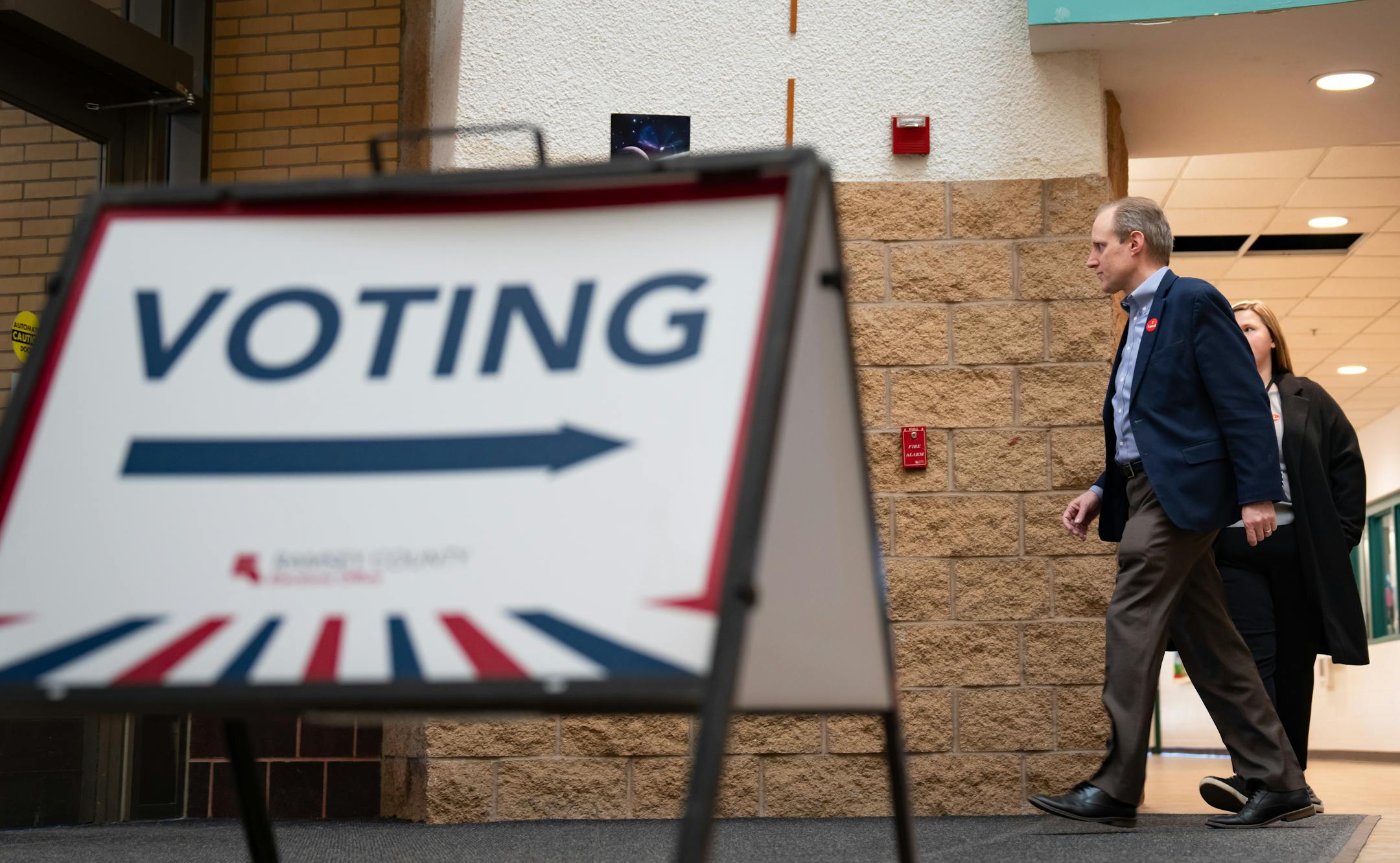
Minnesota Secretary of State Steve Simon tours Dayton’s Bluff Recreation Center, a polling place in Ramsey County, as voters cast ballots for the presidential primary on March 5, 2024, in St. Paul. (Glen Stubbe/The Minnesota Star Tribune)

Opinion editor’s note: Strib Voices publishes a mix of commentary online and in print each day. To contribute, click here.

•••

The U.S. Department of Justice filed suit in September against Minnesota Secretary of State Steve Simon for access to state voter data, part of a broader DOJ effort to compel multiple states to provide their voter rolls.

On Jan. 24, as Minnesota reeled from Alex Pretti’s death at the hands of federal immigration agents, Attorney General Pam Bondi renewed her push for the information. I subsequently spoke with Simon, a DFLer, to understand why the DOJ wants the voter data, what’s at stake and why he’s fighting in court to keep it private. Here’s an edited version of our conversation:

Q. In Bondi’s recent letter to Minnesota Gov. Tim Walz, she stated that the DOJ should be allowed to “to access voter rolls to confirm that Minnesota’s voter registration practices comply with federal law as authorized by the Civil Rights Act of 1960.” On its face, the request doesn’t seem unreasonable. Why is your office fighting it?

A. We are 100% compliant, of course, with federal law, but that all seems to be a smoke screen for what [Bondi and the Trump administration] really want, which is the data, the personal sensitive data on millions of people. They want Social Security numbers. They want driver’s license numbers and the like. And we have offered them repeatedly the redacted list, the public list, the list that political parties and campaigns routinely order from us.

But they want all of the private stuff. And just to put this in perspective, just zoom out a little bit. Last I checked, they … asked 44 states, including Minnesota, for this exact same data. Ten had said yes. Thirty-two, including Minnesota, had said no. So over three-quarters of the states, including Minnesota, have said no. So it’s not like Minnesota is some defiant island. This is very much the mainstream position among the states.

What is disturbing is that it is bundled in with the ICE surge. And it has nothing to do with facts on the ground, with force levels or immigration policy or anything. So you know they must really want this.

Q, Under previous administrations, has there ever been a request like this to Minnesota or other states that you’re aware of?

A. Not that I have ever heard of. Not in my time in this office. And in my consciousness of such issues, I don’t believe that’s ever happened.

Q. You called Bondi’s letter “an apparent ransom” note. That’s pretty strong language. How do you justify that?

A. Certainly, I think a reasonable person would read it as one of three conditions for returning to some more normal sense of peace and security and stability in Minnesota. I mean, I don’t know any other way to read the letter. I don’t think anyone can express shock that someone would connect those dots.

Q. Doesn’t the federal government already have access to some of the data, such as Social Security numbers?

A. Well, yes, but fortunately there are laws in place that silo those numbers within particular places and agencies, which is why I suspect that they’re trying to get it from the states, because they know they can’t just knock on the door of Agency X and get it in the federal government … .

And that’s our legal position in the lawsuit. I’m not trying to be cagey with you, but this is in litigation, so I don’t want to say too much about the litigation other than, generally speaking, our legal position is that federal and state privacy laws keep this private. And that argument has been successful in other states as well.

Q. We’ve covered this a bit, but let’s drill down more specifically into what is in the voter data wanted by the feds.

A. It’s an address. It’s year of birth, not date of birth, but year of birth. It’s voting history. Obviously, that term can be dangerous. It’s not who someone voted for. Obviously, there’s no trace of that. We have a secret ballot. Voting history means, is this a person who shows up once every four years to vote for president? Is this a person who votes in primaries? Is this a person who votes in municipal elections or not? Just which election did you participate in? And then there’s the personal identifying information, Social Security numbers … .

Q. Critics contend the data could be used to interfere with free and fair elections. Specifically, how could the feds having the data enable this?

A. If what they’re aiming to do is get data so that they can flag the people that they believe are ineligible to vote and force or compel the removal of the voting rolls, that could have an adverse impact.

Here’s the fear of mine and many, many other states — [it’s] that what they appear to want to do is to run this through untested, unvetted databases that will produce a high volume of people who are falsely accused of being ineligible. In other words, they take this list — which is only a snapshot, keep in mind, it will change tomorrow. If I gave you that list today, it’ll change tomorrow. People die or people get newly naturalized in the course of a week or a month as citizens.

And so any list is going to change … . I’d say it looks like what they aim to do is get all this data from the state, run it through this newly configured, newly designed SAVE database, flag a bunch of people who are ineligible, and then get them off the list.

The problem is this thing has not been tested. The last time it was thoroughly tested … it had a very high error percentage … . I would say at this point, that database … if it were a plane, you would not board it. If it were a car, you would not drive it.

Q. March 3 is a significant date in the legal battle over access to this Minnesota data. What’s happening then?

A. The hearing on our motion to dismiss is coming up on March 3rd. I don’t know what the court will do, but we’re arguing that the law, both state and federal law, does not give them the right to obtain this data.

We’re among the 32 states that have said no. And among the 24 states that they’ve sued … so far, the Justice Department is zero and three on motions to dismiss.

Three states have dismissed their lawsuit, Georgia, California and Oregon. I don’t know what the court will do, but we’re arguing that the law, both state and federal law, does not give them the right to obtain this data. So that’s our position, and it’s the apparent position of 31 other states in addition to us.

about the writer

about the writer

Jill Burcum

Editorial Columnist

See Moreicon

More from Columnists

See More
card image
Glen Stubbe/The Minnesota Star Tribune

A conversation with Secretary of State Steve Simon, who says the DOJ’s demand threatens voter privacy.