Open enrollment puts pressure on Minnesota schools. Look up which districts win and lose.

September 4, 2025
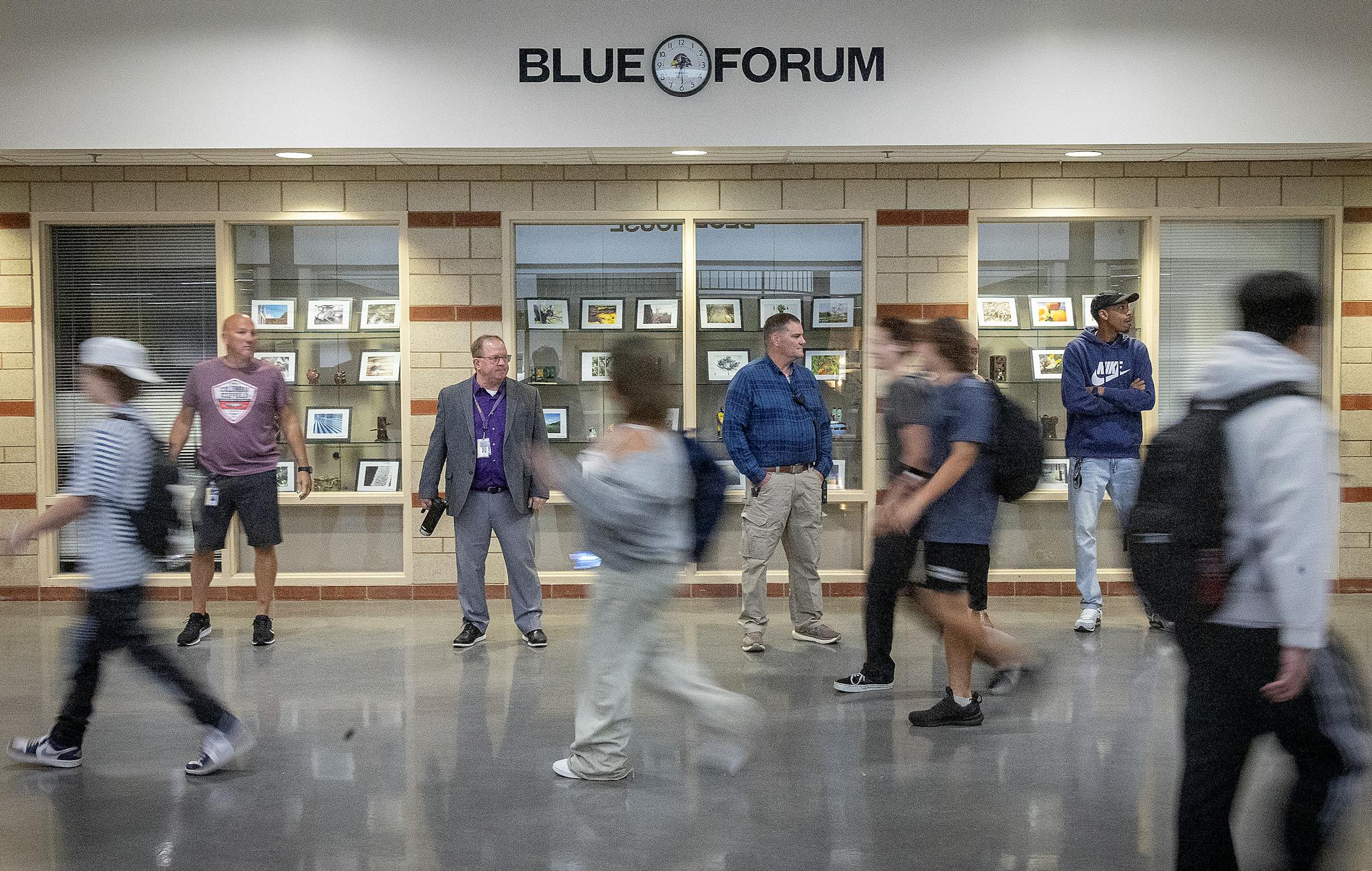
Teachers greet students on the first day of school at Chaska High School. (Elizabeth Flores/The Minnesota Star Tribune)

Minnesota was the first state to implement the public school choice system that allows students to attend schools outside their home district.

The Minnesota Star Tribune

Minnesota students are back to school, and a growing percentage of them aren’t attending classes in their home district.

Instead, they’re taking advantage of the state’s open enrollment policy, an increasingly popular option that lets families send their children to public schools elsewhere as long as there is room. Last year, all of the state’s more than 300 districts saw student numbers shift as a result of open enrollment.

Some families choose out-of-district schools for academic, arts or sports programs. Others are seeking smaller or more diverse classes. But it’s clear the numbers have risen since the program began — 17% of the state’s nearly 870,000 students enrolled outside their resident district last year, according to data from the Minnesota Department of Education.

And that has repercussions.

School funding from the state is tied to enrollment — each student accounts for about $10,000 — so attracting and keeping students is critical to the bottom line.

“Open enrollment sets up a very competitive environment,” said Scott Croonquist, executive director of the Association of Metropolitan School Districts. “There’s real pressure and a real challenge for districts to keep up with what students and families want.”
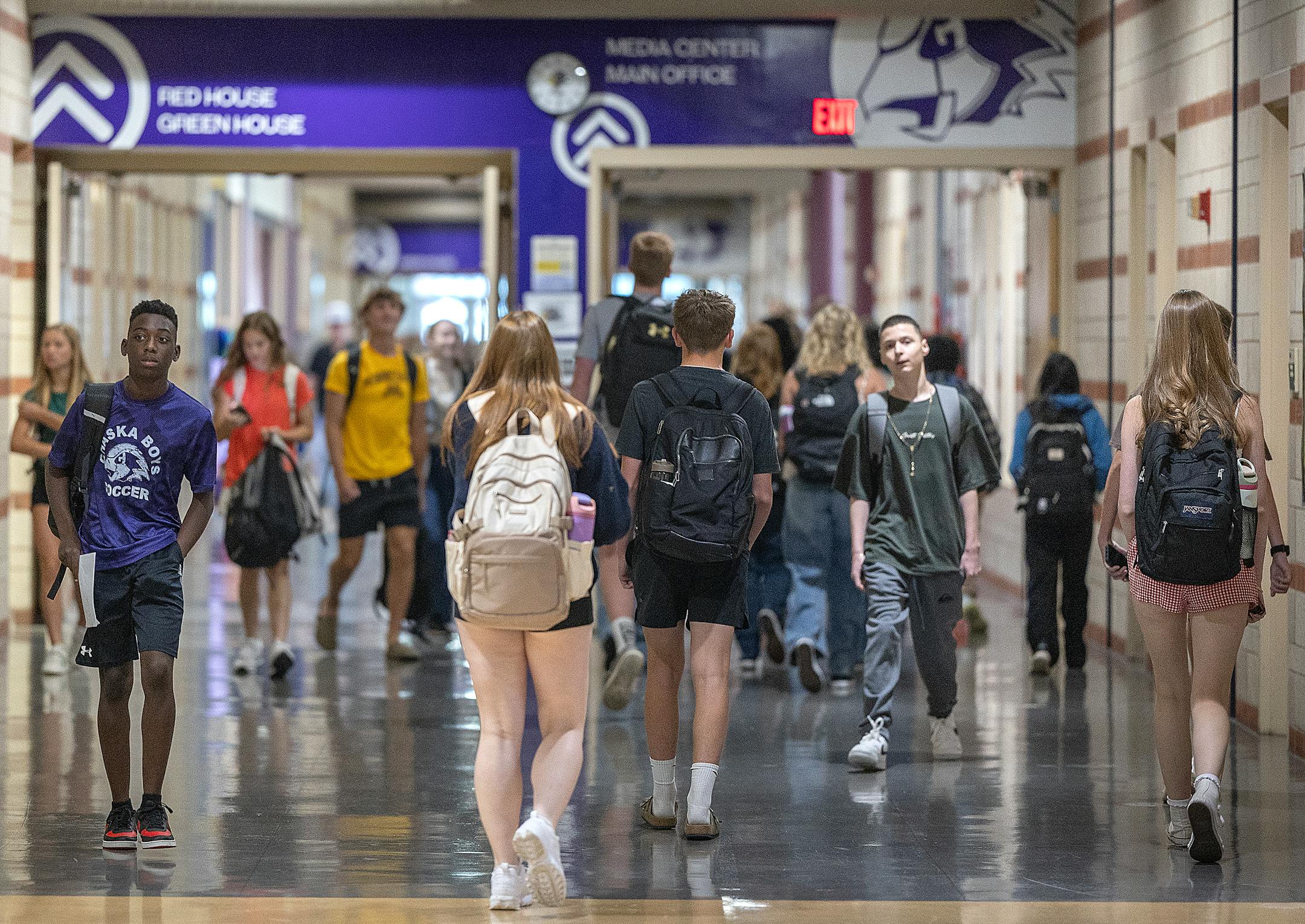
Students make their way through the halls of Chaska High. (Elizabeth Flores/The Minnesota Star Tribune)

That’s why schools are conducting family and student surveys and working to offer popular programming. Districts have to market themselves in a way that was unimaginable in an era without so much school choice.

Even some of the most sought-after districts have budgets and programs that depend on maintaining high enrollment numbers.
Fridley Public Schools’ International Baccalaureate (IB) curriculum has been a draw for open-enrolled students, who bring more than $8 million to the district each year, Superintendent Brenda Lewis said.

That’s “vital to our financial stability and our ability to provide robust programming,” she said.

Which districts gain?

Minnesota was the first state to allow such inter-district public school choice, beginning in the late 1980s. The percentage of public school students choosing open enrollment has gone up in recent years, shifting numbers just as districts face budget challenges and uncertainty about federal funding.

Some of the biggest effects can be seen in small districts, where a few incoming or outgoing families can swing overall attendance numbers and the percentage of students who are open-enrolled. If a child is open-enrolled, their siblings get priority consideration if demand exceeds available spots in a school.

But some of the other standouts are among the state’s largest districts.

Minnetonka has long relied on open enrollment to draw thousands of nonresident students. Nearly 40% of the district’s 11,000 students last year lived outside its borders.

“Families in Minnesota can choose the education they want for their children,” said JacQueline Getty, spokeswoman for Minnetonka Public Schools. She said families choose Minnetonka schools for the academic offerings, including language immersion programs, and a focus on science, math and coding. “Open enrollment broadens our diversity as a district and allows us to offer a wider variety of courses.”

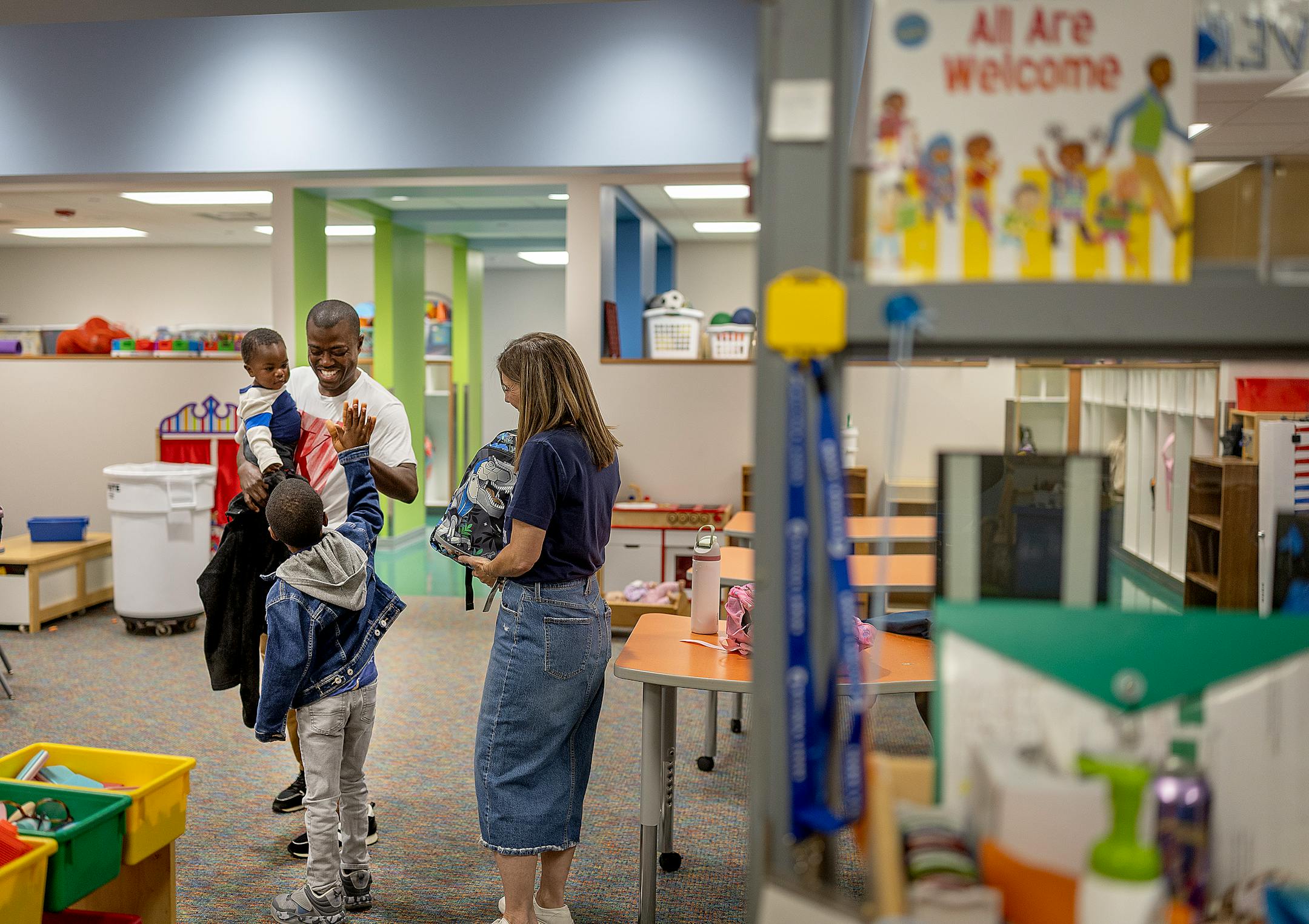
Kindergarten teacher Janae Porthan, center, watches as her students says goodbye to his dad on the first day of school at Victoria Elementary. (Elizabeth Flores/The Minnesota Star Tribune)

Some districts offer transportation beyond their borders, but most families who enroll kids outside their home district are responsible for getting them to class. As a result, open enrollment is often less popular in rural districts, where commutes can be long.

In more urban and suburban areas, district boundaries can run right through neighborhoods, and the proximity makes it an easier decision.

That was the case for Angela Higgins’ family, who live inside the Robbinsdale district near the boundary of Hopkins Public Schools. Other families in the neighborhood had children in Hopkins schools and the Hopkins bus stop was just down the street, so Higgins decided to open enroll her son, now an eighth-grader, in the Hopkins district when he started kindergarten.

“My kids would have done great anywhere but we’d heard great things about Hopkins and decided to go for it,” Higgins said. “It was pretty straightforward and I got the impression that the school really welcomed a lot of open enrollment.”

Factors behind losses

The reasons some school districts lose students can be complicated.

Some popular metro-area school districts, including Wayzata Public Schools, have more students leaving than coming in because districts can limit open enrollment at grade levels that are at capacity.

Movement among districts also includes students choosing charter schools, which are spread across the state but concentrated in the Twin Cities metro area.

The Minneapolis Public School District and St. Paul Public School District had the highest percentages of students leaving to enroll in charters.

“Our district’s ongoing focus is to make MPS the district of choice for Minneapolis families,” said M.A. Rosko, Minneapolis Public Schools’ spokeswoman. “As long as open enrollment remains state policy, MPS will continue to do everything it can to retain and recruit students.”

That pressure is felt by most districts in areas with choices that include public, private, charter and home school options, Croonquist said.

“We are one of the leaders in the country in choice, and families obviously take advantage of it,” Croonquist said. At this point, he added, open enrollment has “been around so long here that it has just become part of the fabric of our education system.”

For Marea Perry, who open-enrolled her five children in Roseville schools, having public school choice enables parents to find the right fit for their kids.

“All my kids had different personalities so it was about finding the right school that could draw out their success,” said Perry, who also has fostered many children who attended schools in various districts. “Having options, without feeling closed in, gave us hope and a voice in that success.”

Correction: This story has been updated to correct the number of public school students in Minnesota.
about the writers

about the writers

Mara Klecker

Reporter

Mara Klecker covers suburban K-12 education for the Star Tribune.

See Moreicon

Karina Kumar

Intern

Karina Kumar is an intern for the Minnesota Star Tribune.

See Moreicon