
Advertisement

White House, Minnesota Supreme Court chief justice quietly negotiated deal over ICE enforcement in courts

Four days later, chaos unfolded inside the Hennepin County Government Center.

The Minnesota Star Tribune
February 21, 2026 at 12:23AM
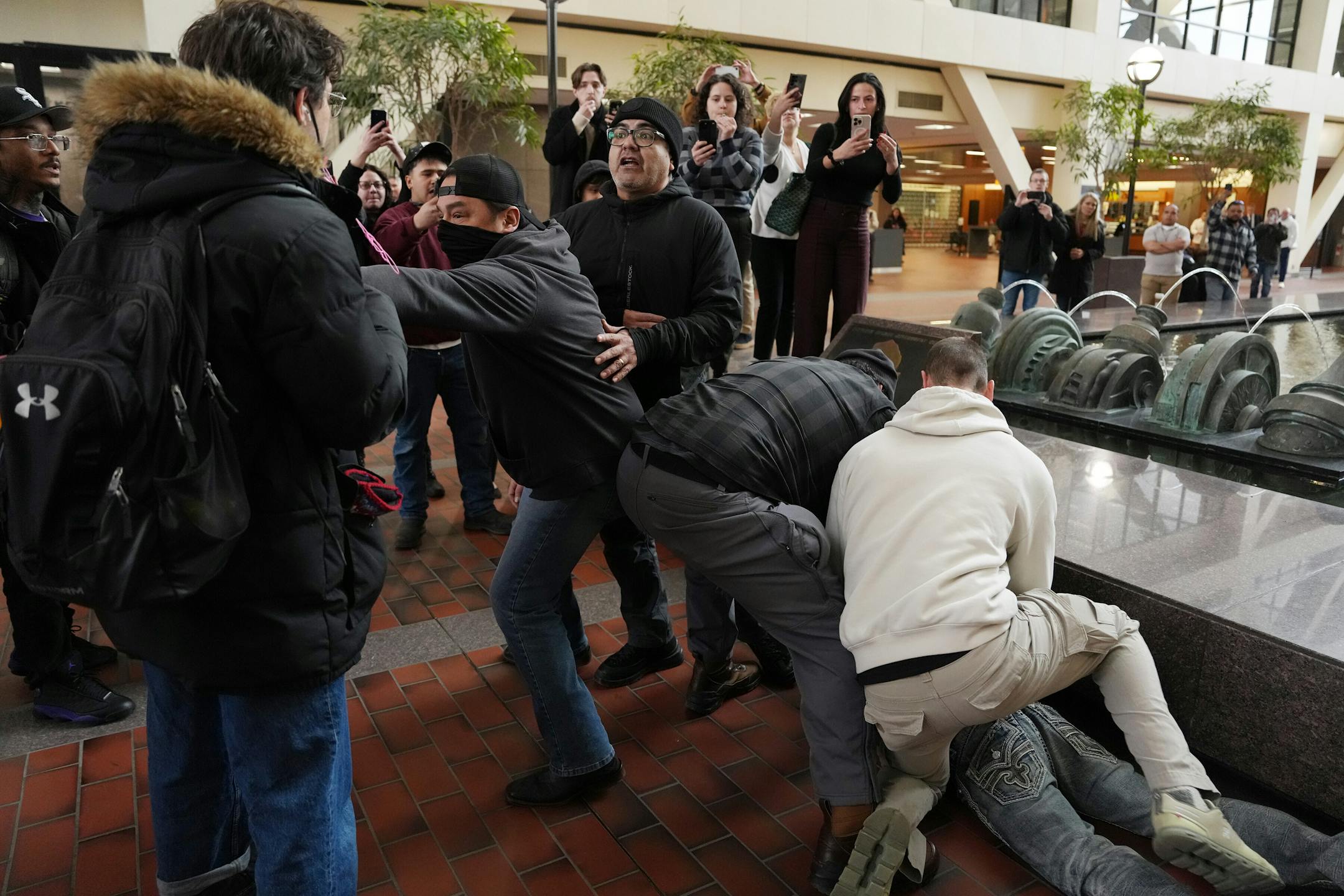
ICE agents executed a chaotic detainment inside the Hennepin County Government Center four days after Minnesota Supreme Court Chief Justice Natalie Hudson met with White House border czar Tom Homan. (Anthony Soufflé/The Minnesota Star Tribune)
Advertisement

Earlier this month, Minnesota Supreme Court Chief Justice Natalie Hudson met with White House border czar Tom Homan and received commitments for clearer restrictions and communication around federal immigration enforcement at state courthouses.

Four days later, ICE agents executed a chaotic detainment inside the Hennepin County Government Center amid a swarm of lawyers and observers as people moved through the skyway of downtown Minneapolis at lunchtime.

On Feb. 6, Hudson met with Homan and ICE St. Paul field office Director Sam Olson to make several requests of the federal government including: that ICE no longer conduct operations inside Minnesota courthouses; that if they need to operate inside a courthouse they do it in “low-traffic areas” and not inside courtrooms; that ICE agents not bring long guns into courthouses; that ICE coordinate with local sheriff’s offices before conducting operations at or near courthouses; and that ICE provide a local point of contact to improve communication with the courts.

Hudson’s requests were largely accepted, according to Kyle Christopherson, spokesperson for the Minnesota Judicial Branch, who confirmed details of the meeting and the agreement.

Homan and Olson made several commitments, including to conduct future operations outside of courthouses, “unless safety requires officers to enter,” and that Olson would serve as a local point of contact for the courts with federal agents. Homan agreed that ICE agents would not make arrests inside courtrooms and that it was not ICE policy to bring long guns into courthouses.

There was no public announcement of the agreement by the Minnesota Judicial Branch and top prosecutors and public defenders say they were not told of it.

On Feb. 10, ICE agents detained 18-year-old Junior de Jesus Herrera Berrios inside the Government Center. Several agents were positioned in the public lobby while another agent moved from floor to floor inside the courthouse looking for Herrera Berrios.

Herrera Berrios was seen sprinting through the lobby of the courthouse, trailed by federal agents, before being tackled to the ground, handcuffed and taken out of the courthouse as whistling and screams came from a swarm of lawyers and observers. Three days later, Herrera Berrios was ordered released from federal custody by U.S. District Judge Donovan Frank because the federal government provided no evidence it had a warrant to arrest him.
Advertisement
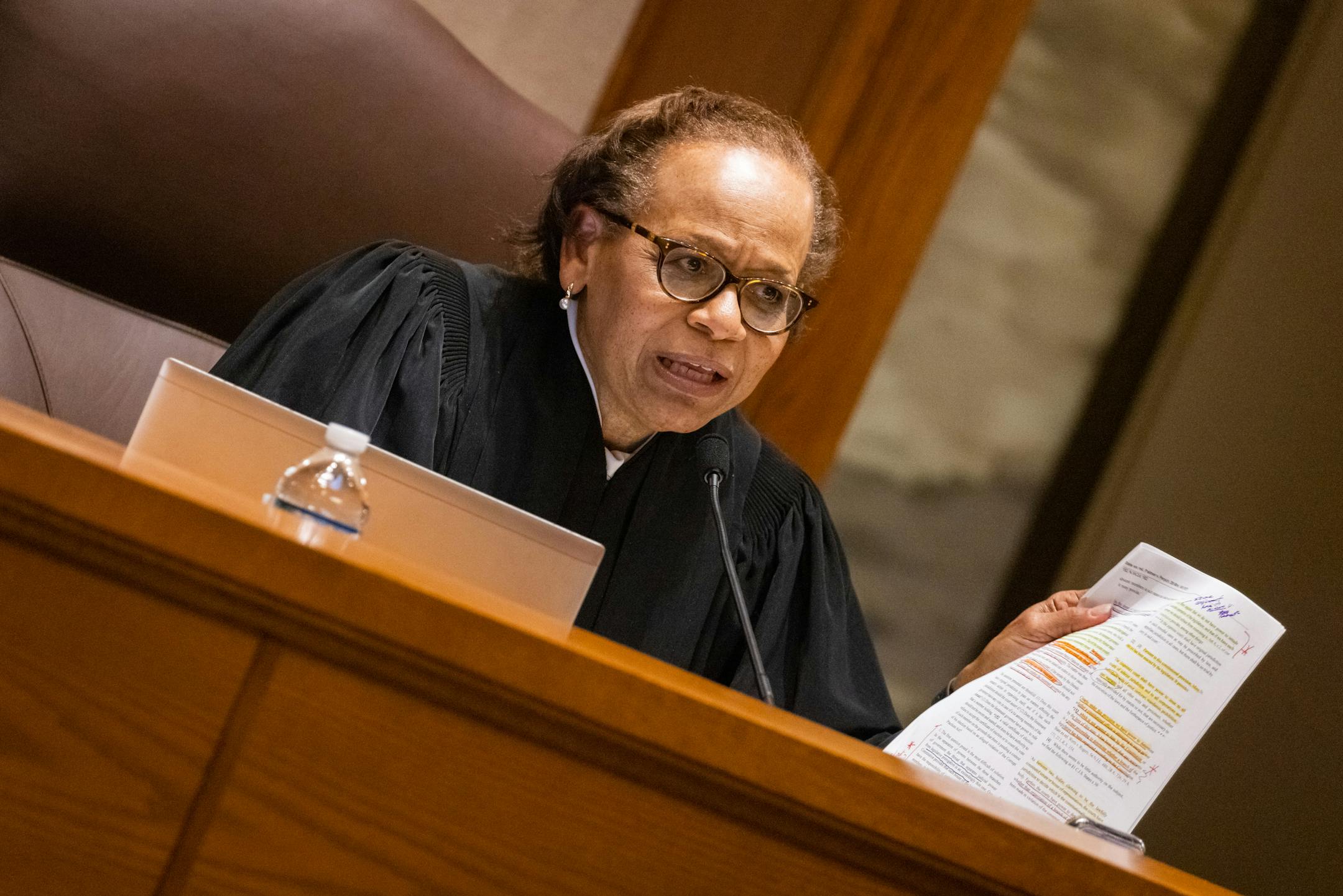
Minnesota Supreme Court Chief Justice Natalie E. Hudson questions attorney Nicholas Nelson during oral arguments at the Minnesota Judicial Center in St. Paul, Minn., on Thursday, Jan. 23, 2025. (MPR News photo/Ben Hovland) ORG XMIT: Minnesota Legislature (Ben Hovland/MPR News)

The federal government argued that Herrera Berrios was subject to Title 8 immigration enforcement, which Frank rejected because Herrera Berrios “has been in the United States for over three years” and is not an arriving noncitizen.

Tricia McLaughlin, the assistant secretary for the Department of Homeland Security, called Frank an activist judge appointed by former President Bill Clinton who had “released a criminal with drug charges back onto American communities.”

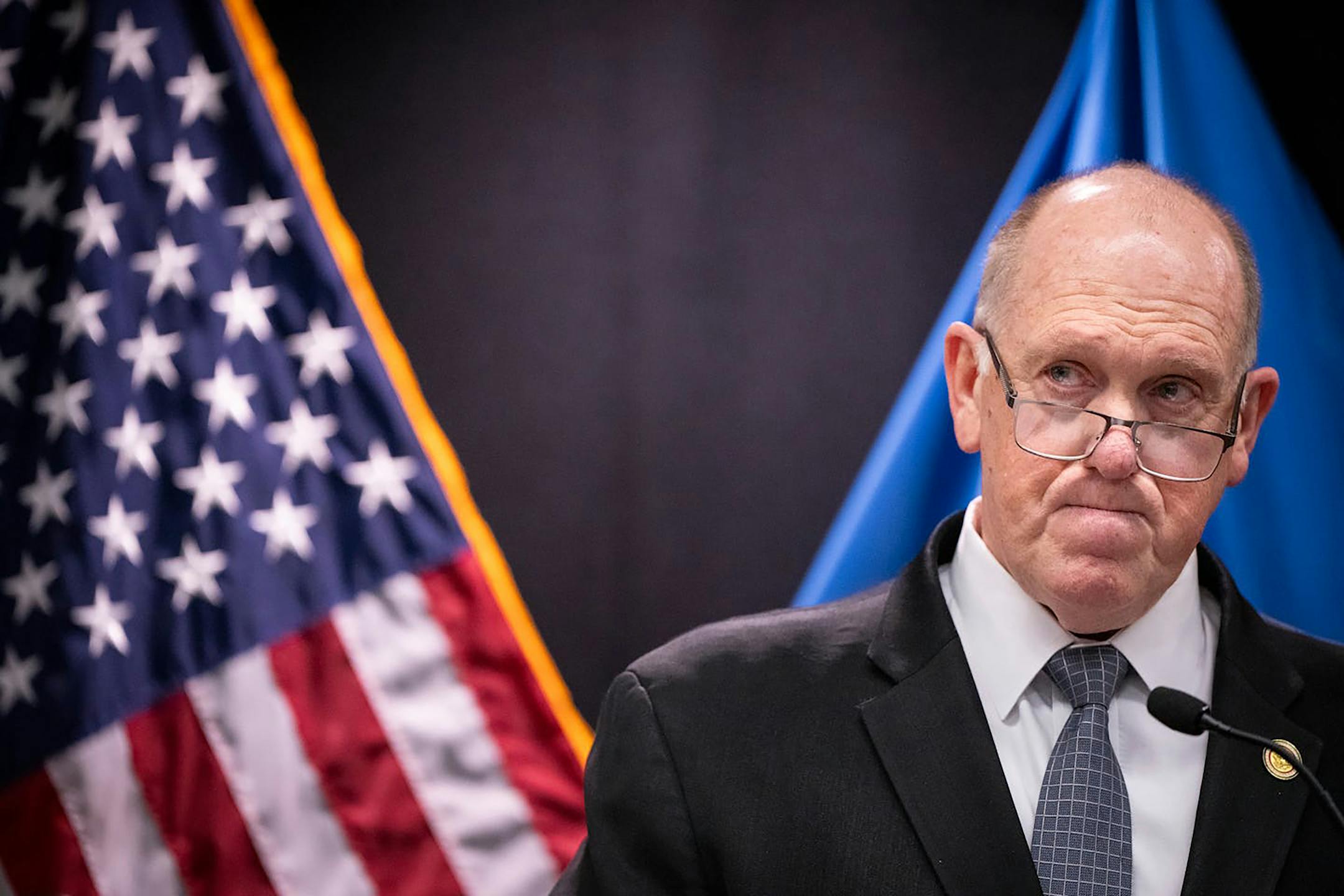
Border czar Tom Homan has vowed more targeted immigration enforcement. (Leila Navidi)

Courthouses were one of the first areas to be targeted for increased immigration enforcement by the Trump administration when he began his second term in 2025. A renewed focus on courthouses arose after the arrival of Homan in January following the shooting deaths of Renee Good and Alex Pretti by federal agents. Homan vowed more targeted immigration enforcement.

In 2025, several prosecutorial offices asked Hudson to use the Supreme Court’s “inherent authority” to protect courthouses by enacting a policy to prevent or limit immigration enforcement, noting that 11 state supreme courts had already done so. Hudson declined.

Mike Berger, the chief public defender for Hennepin County, said that while his office was not made aware of the meeting between Hudson, Homan and Olson, “I believe that this is a start to ensuring that due process proceeds for all those, including our clients, that are availing themselves to the court system.”

He argued that federal agents should provide a judicial warrant if they are going to detain someone inside the courts.

Advertisement

“Our clients, and all our community members, deserve judicially reviewed warrants for arrests to be made.”

Hennepin County Attorney Mary Moriarty said her office — which operates inside the Government Center — was also not aware of any meeting or agreement between the state judiciary and the White House. She pointed out that the commitments made to Hudson came before the detainment of Herrera Berrios.

“The pervasive fear throughout our community because of federal agent behavior is negatively impacting Hennepin County residents who access services here, victims and witnesses who participate in prosecutions, and our staff,” Moriarty said in a statement. “To avoid further harm, the Judicial Branch can, and should, be fully transparent and take immediate action to protect courthouse access for all Minnesotans.”

Attorney General Keith Ellison said in a statement that he was deeply concerned that the federal government would “abandon a long-standing, bipartisan policy of avoiding enforcement activities outside courthouses.”

Ellison said these actions “severely [interfere] with our justice system” because criminal defendants and victims don’t feel safe coming to court. “Everyone in Minnesota, regardless of their immigration status, must feel safe accessing our court system if we are going to maintain public safety and uphold the rule of law,” he said.

Christopherson, the judicial spokesperson, said he could not comment about Hudson’s feelings over the commitments from Homan and Olson coming days before a chaotic ICE enforcement action inside the state’s largest courthouse.

Advertisement

A request for comment was left with the Department of Homeland Security.

about the writer

about the writer

Jeff Day

Reporter

Jeff Day is a Hennepin County courts reporter. He previously worked as a sports reporter and editor.

See Moreicon

More from News & Politics

See More
card image
Renée Jones Schneider/The Minnesota Star Tribune

U.S. District Judge Laura Provinzino said the courts have been more than patient with prosecutors struggling to comply with court orders amid a surge of immigration cases.

Advertisement