

Advertisement

Minneapolis weighs two options, both heavy on affordable housing, for old Kmart site

Two developers have put forth plans for housing, nonprofit services and retail at Nicollet Avenue and Lake Street; residents are asked to weigh in.

The Minnesota Star Tribune
February 21, 2026 at 3:12AM
Demolition was underway at the site of the former K-Mart on Lake Street and Nicollet Avenue on Nov. 15, 2023, in Minneapolis. (Aaron Lavinsky/The Minnesota Star Tribune)
Advertisement

Minneapolis is asking residents for feedback on two different visions for the old Kmart site on Nicollet Avenue, both of which offer affordable apartments, space for nonprofits and square footage for a few retail shops.

The city has talked about redeveloping the area for years. In 2020, Minneapolis paid $9.1 million to buy out the discount retailer’s lease in hopes of reconnecting the two sides of Nicollet Avenue.

Officials imagined the south Minneapolis parcel as eventually including a high-density mix of homes and businesses with public gathering space. Plans stalled during the civil unrest after George Floyd was killed, and during the pandemic, but eventually started moving forward.

Nicollet Avenue — which was cut off to through traffic at Kmart’s insistence when the retailer arrived in the ‘70s — will be rejoined and open to cars. A pedestrian and bike promenade will run diagonally through the 10-acre site, and a new city park will sprout up. Trees and sidewalks will line the street.

In January, the city received two proposals for the first phase of the development now that Kmart has been demolished and much of the new stretch of Nicollet has been paved. City officials want residents to weigh in through March 5.

“These proposals line up with the vision created during three years of planning and over 20,000 conversations with the community,” said a city email sent to residents this week.

The majority of the square footage in both plans is dedicated to housing. Recreation areas, community spaces, retail and underground parking are present in both. Each concept has its own sustainability features, and the Minneapolis Parks and Recreation Board will provide programming on-site regardless of which is picked.

City staff will recommend one of the options in April. The mayor and city council will make the final decision on who gets to redevelop the prized parcel.
Advertisement

Aeon brings big nonprofit partner

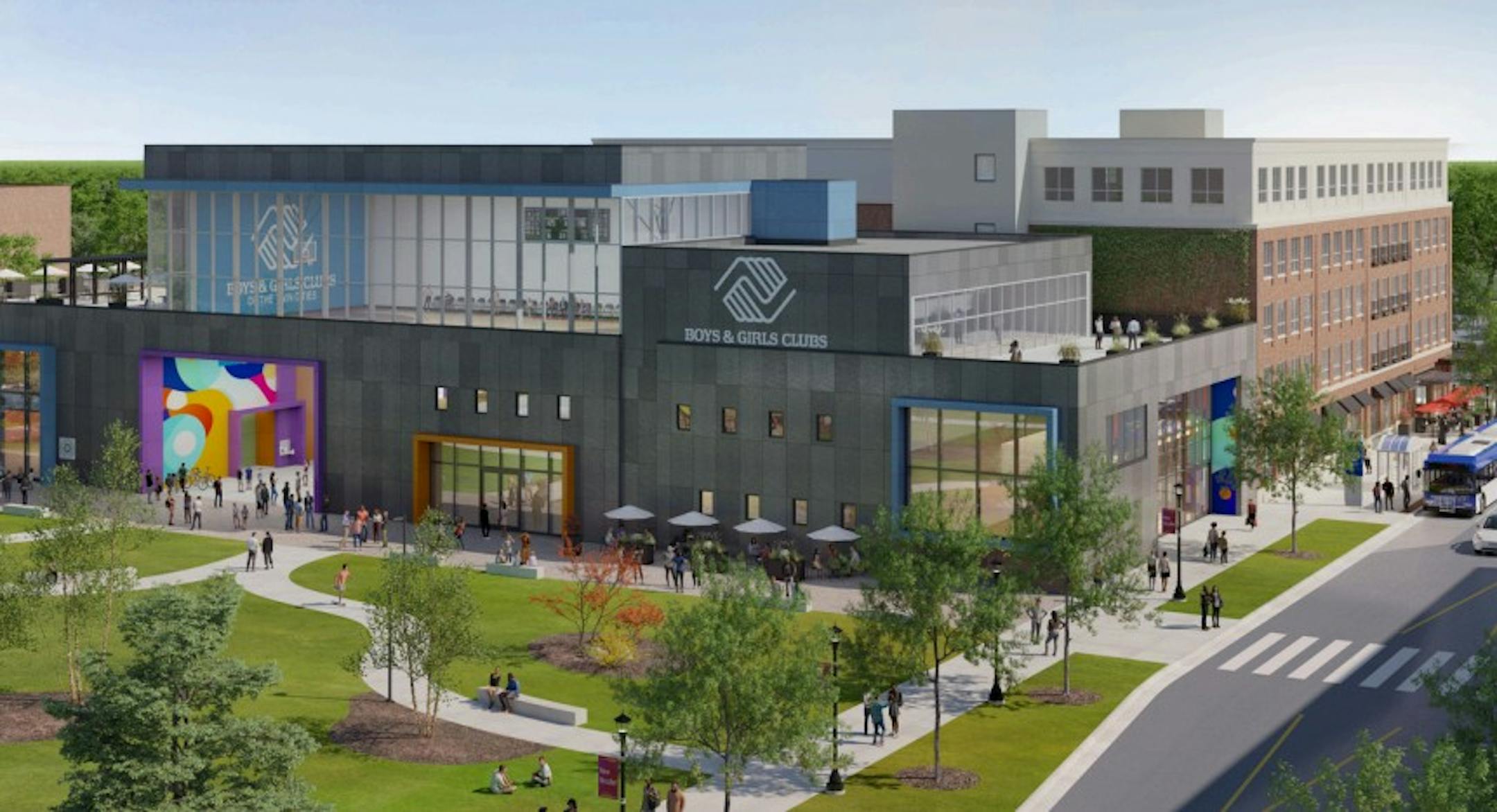
The first option comes from Aeon, a Minnesota nonprofit founded in 1986 that has 46 affordable housing properties, including 29 in Minneapolis. With more than 5,000 housing units already in the metro area, Aeon would develop, own and run this property.

An illustration shows a boxy building featuring glass walls, an exterior in shades of grey and a brightly-colored mural. At another angle, five levels are shown and the exterior is mostly brick, with a restaurant and sidewalk seating on the street level.

This option, a 196,000-square-foot-building, has a slightly lower percentage of space for retail and parking and a higher share of square footage dedicated to the nonprofit partner providing community services, the Boys and Girls Club of the Twin Cities.

Aeon's proposal for the former Kmart site at Nicollet Avenue and Lake Street, facing a new city park.

The five-story building would house 76 apartments; all are considered affordable to people making three different income levels, each below the area’s median income. There are 20 units for people from the lowest income bracket and 44 at the highest, which is still 60% of the median income. The largest number of units — 40 total — have two bedrooms and there are no four-bedroom units.

The median income in the Twin Cities is $132,400 for a family of four and $92,700 for a single person. If that family or individual were making 50% of the area median income, an affordable apartment for them would have to rent for $1,721 or less. For a single person, the rent would need to be $1,241 or less to be considered affordable, or costing less than 30% of their income.

The Boys and Girls Club would be a partner and move its main offices on site, with free youth programming provided. Their space would include a gym, a teen tech center, a community kitchen and gathering space, a STEM lab and office space.

Advertisement

There’s about 5,000 square feet dedicated to retail, enough for two or three shops to be developed, owned and run by Occupiable Art Real Estate Development. The plan includes parking space, with 141 total spots; 20 are on the ground level and the rest are underground.

Trellis aims for higher density

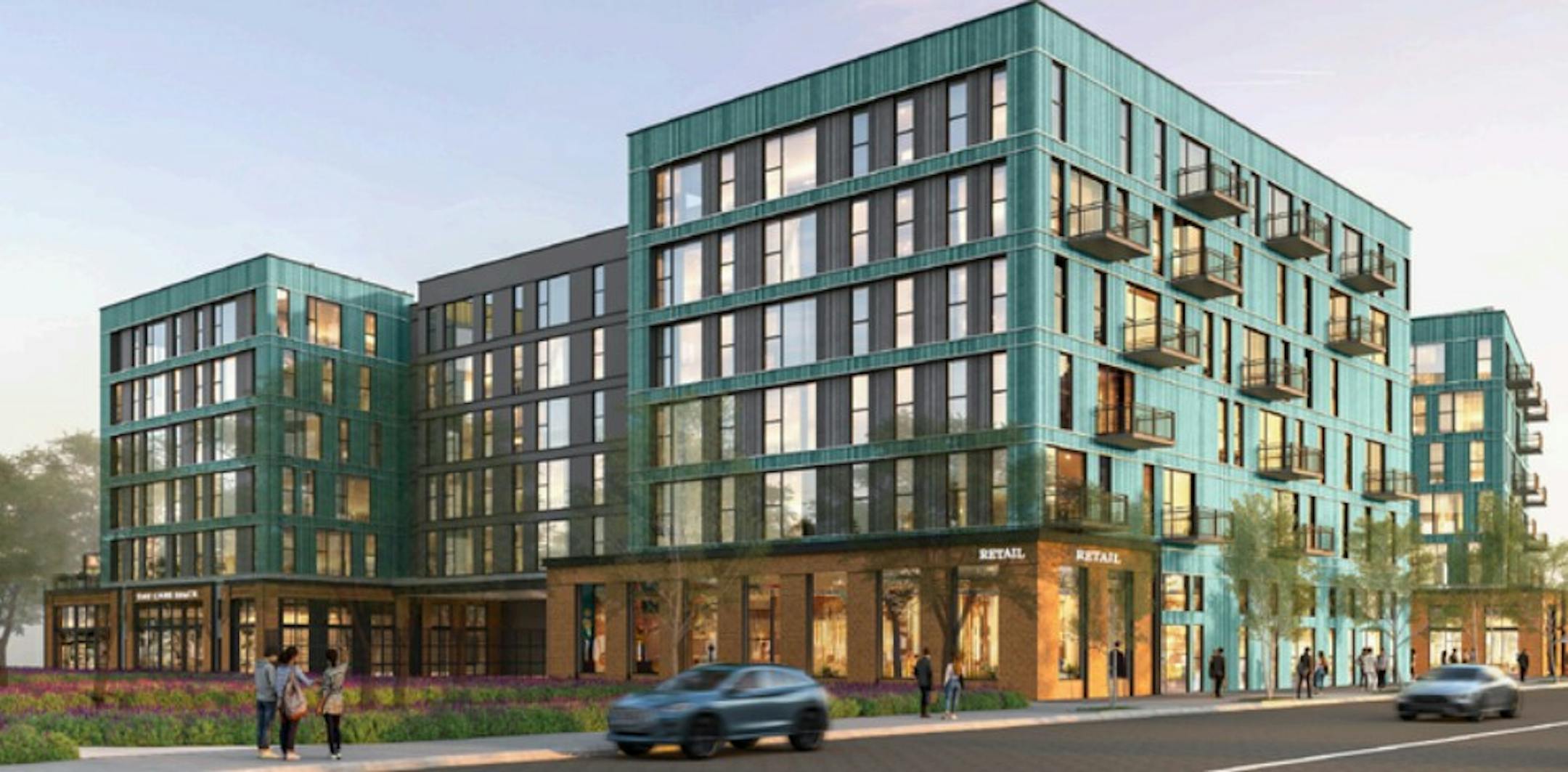
Trellis, which was founded in 1991 and manages 50 affordable housing projects, sketched out its own concept for the site. The Minneapolis-based nonprofit currently owns and manages a total of 4,500 housing units. Trellis would be the lead developer, owner and operator, with 1st Class Residential Properties co-developing and co-owning the building.

A drawing illustrates a six-story building with a blue exterior for most levels and what looks like brick for the ground floor. A smaller picture with a Lake Street view shows a similar exterior, including many balconies and a courtyard.

Compared to Aeon’s proposal, the Trellis concept is one story taller and larger overall at 280,000 square feet. With room for 30 more apartments, it includes space to partner with three nonprofits for services and has 74 additional parking spots.

Trellis plans include six stories of affordable housing with retail on the ground level.

The Trellis plan includes 119 apartments considered affordable to people at three different income levels, all below the area’s median income, including 11 for those with disabilities. There are 14 apartments available for the lowest income bracket and 35 at the highest; the majority — 60 units — are aimed at people in the middle, or 50% of median income. Simpson Housing will provide supportive housing services for the 13 units available to once-homeless people.

Most apartments have two bedrooms, though there are 11 four-bedroom units for larger families.

Advertisement

A smaller percentage of the total space is dedicated to nonprofits, though the two plans come out even in their total square footage. Three nonprofits will work with Trellis, including the Neighborhood Development Center, which will manage the two retail shops; Build Wealth MN, which would lease space in the building; and the Boys and Girls Club, which would move its main offices on site and provide free programs.

The Boys and Girls Club space will offer places for clubs, study rooms, health and fitness areas, a gym, office space, an outdoor area and square footage for job and life-skills training. There are 215 total parking spots, including nearly 170 underground.

about the writer

about the writer

Erin Adler

Reporter

Erin Adler is a news reporter covering higher education in Minnesota. She previously covered south metro suburban news, K-12 education and Carver County for the Minnesota Star Tribune.

See Moreicon

More from News & Politics

See More
card image
Aaron Lavinsky/The Minnesota Star Tribune

Two developers have put forth plans for housing, nonprofit services and retail at Nicollet Avenue and Lake Street; residents are asked to weigh in.

card image
Advertisement