
Student test scores remain flat in Minnesota. See how your school did.

Attendance rates are up across student groups as districts pilot ways to give kids a sense of belonging at schools.

August 29, 2025 at 2:33PM
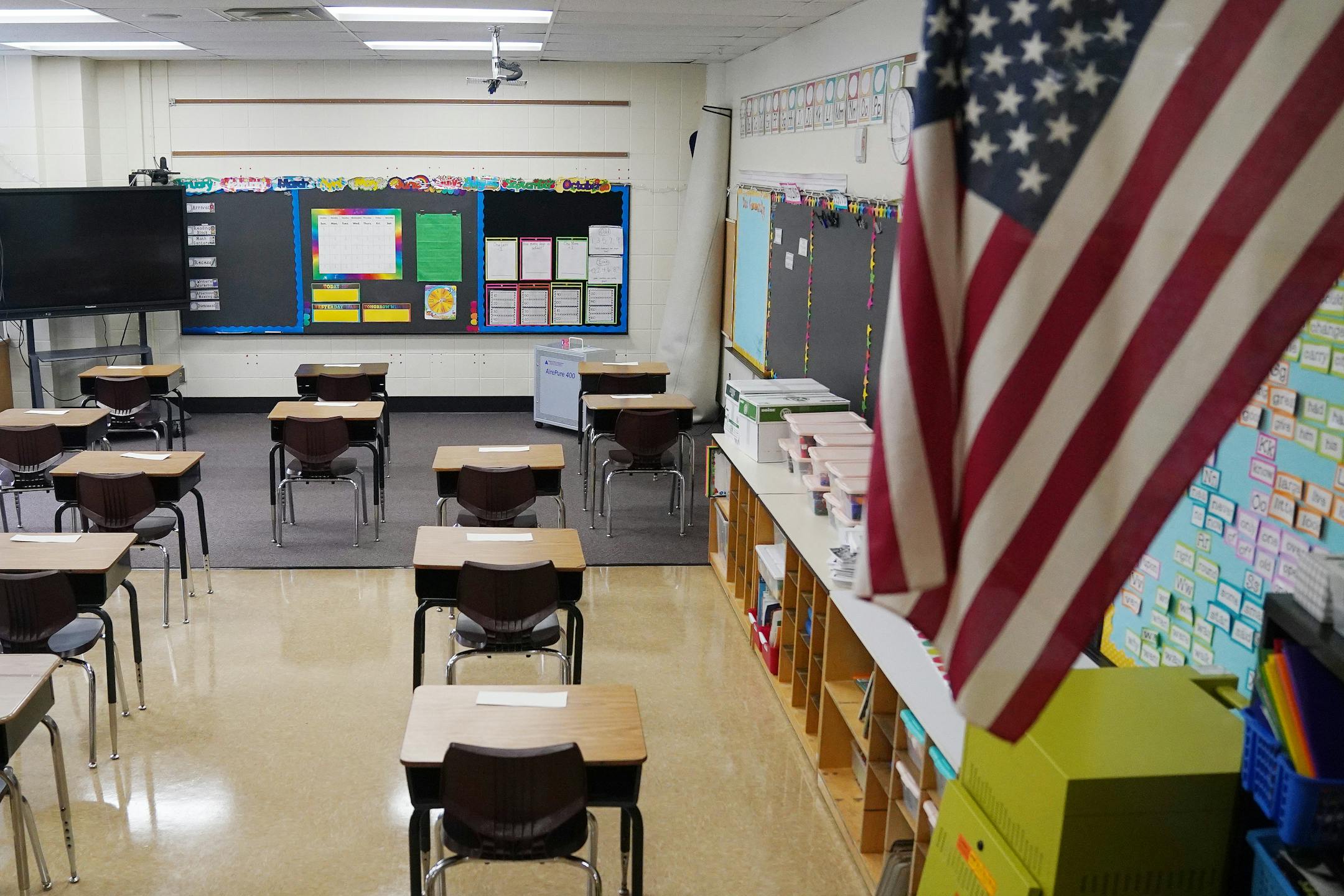
Minnesota student test scores remained largely flat again last year. (Anthony Soufflé/The Minnesota Star Tribune)

Minnesota test scores held steady in 2025 — still leaving about half of students short of grade-level benchmarks in math and reading, new data shows.

Black and American Indian students, and students of two or more races, showed some progress, however, in closing some of the nation’s widest achievement gaps.

“While assessment results reflect a moment in time, the work happening in our classrooms every day is building the foundation for long-term student success,” state Education Commissioner Willie Jett said Thursday.

Hopes are high for future literacy gains following the passage in 2023 of the Read Act, which places a greater emphasis on phonics. Some schools had already embraced the back-to-basics approach, and have reported success at the local level.

“It is not whether the Read Act is working; it’s where it is working,” said Katie Pekel, executive director of educational leadership at the University of Minnesota. “These are the schools we should be writing case studies about or holding up as lighthouse examples.”

More than 30,000 teachers were in pipelines to be trained statewide as of January 2025 in what is a multi-year effort to improve literacy.

Students still are struggling to meet grade-level standards in math, and racial disparities persist, according to Minnesota Comprehensive Assessments (MCA) data.

Josh Crosson, executive director of the education advocacy group EdAllies, which works closely with underserved communities, said he believes achievement gaps are not about “what kids can and can’t do,” but about access to programs and quality instruction.

This year, the state Senate proposed eliminating algebra as a state high school standard — the wrong message to send, he said, when test scores lag and students need every opportunity to build skills.

Black students, however, posted nearly a 1 percentage point gain in math proficiency, and children of migrant farm workers improved in math and reading, according to a Minnesota Star Tribune analysis of state data.

Statewide, 45.2% of all students tested proficient in math, and 49.6% in reading.

Improving literacy

Pekel said that while the MCAs are helpful in determining reading proficiency, districts also have state-approved means of tracking a student’s progress throughout the school year — and that those local assessments can be even more illuminating.

White Bear Lake, which began training kindergarten teachers in the “science of reading” four years ago, has achieved success on both testing fronts.

With nearly all K-5 teachers now having completed their training, 48.7% of last year’s third-graders tested proficient in reading — the highest level in three years, a district official said this week.

The local progress reports show 72% of last year’s kindergartners hit their benchmarks by year’s end: “It’s exciting to see,” said Alison Gillespie, assistant superintendent for teaching and learning.

Like White Bear Lake, St. Paul tapped pandemic funds to get an early start on phonics-based instruction, and when the money dried up, the district dedicated its own funds in 2024-25 to continuing to provide small-group instruction to struggling students.

At EXPO Elementary, every K-2 teacher has been trained in the science of reading, and small-group interventions have been shifted to grades three through five, where 52% of all students tested proficient — a 7 percentage point gain, Principal John Bjoraker said Wednesday.

Anoka-Hennepin Superintendent Cory McIntyre said that the state’s largest district has been piloting science of reading techniques at low-performing schools, and “they’ve been beating the odds with this new approach.”

Tackling chronic absenteeism

Student attendance data released Thursday came with a one-year lag, but Crosson said it still was useful because 2023-24 was the first year in which universal school meals and a suspension ban went into effect.

According to the data, 75.5% of students attended at least 90% of the time, up from 74.5% in 2022-23.

Twelve districts now are in the second year of piloting ways to keep students in school. Minneapolis plans to deploy “student success navigators” to work with families with kids in multiple schools. Outreach should begin in about three weeks, a district official said.

Correction: This story has been updated to correct Cory McIntyre's name.
about the writers

about the writers

Anthony Lonetree

Reporter

Anthony Lonetree has been covering St. Paul Public Schools and general K-12 issues for the Star Tribune since 2012-13. He began work in the paper's St. Paul bureau in 1987 and was the City Hall reporter for five years before moving to various education, public safety and suburban beats.

See Moreicon

Mara Klecker

Reporter

Mara Klecker covers suburban K-12 education for the Star Tribune.

See Moreicon

MaryJo Webster

Data Editor

MaryJo Webster is the data editor, overseeing a team of data journalists and working with reporters to analyze data for stories across a wide range of topics.

See Moreicon

More from News & Politics

See More
card image
Leila Navidi/The Minnesota Star Tribune

Friday’s morning commute and weekend travel could be impacted by the snow.

card image
card image