
Analysis: Another fourth-quarter collapse against the Mercury closes the curtain on the Lynx season

Phoenix won the WNBA semifinal playoff series by rallying to victories in the final three games.

The Minnesota Star Tribune
September 29, 2025 at 10:30AM
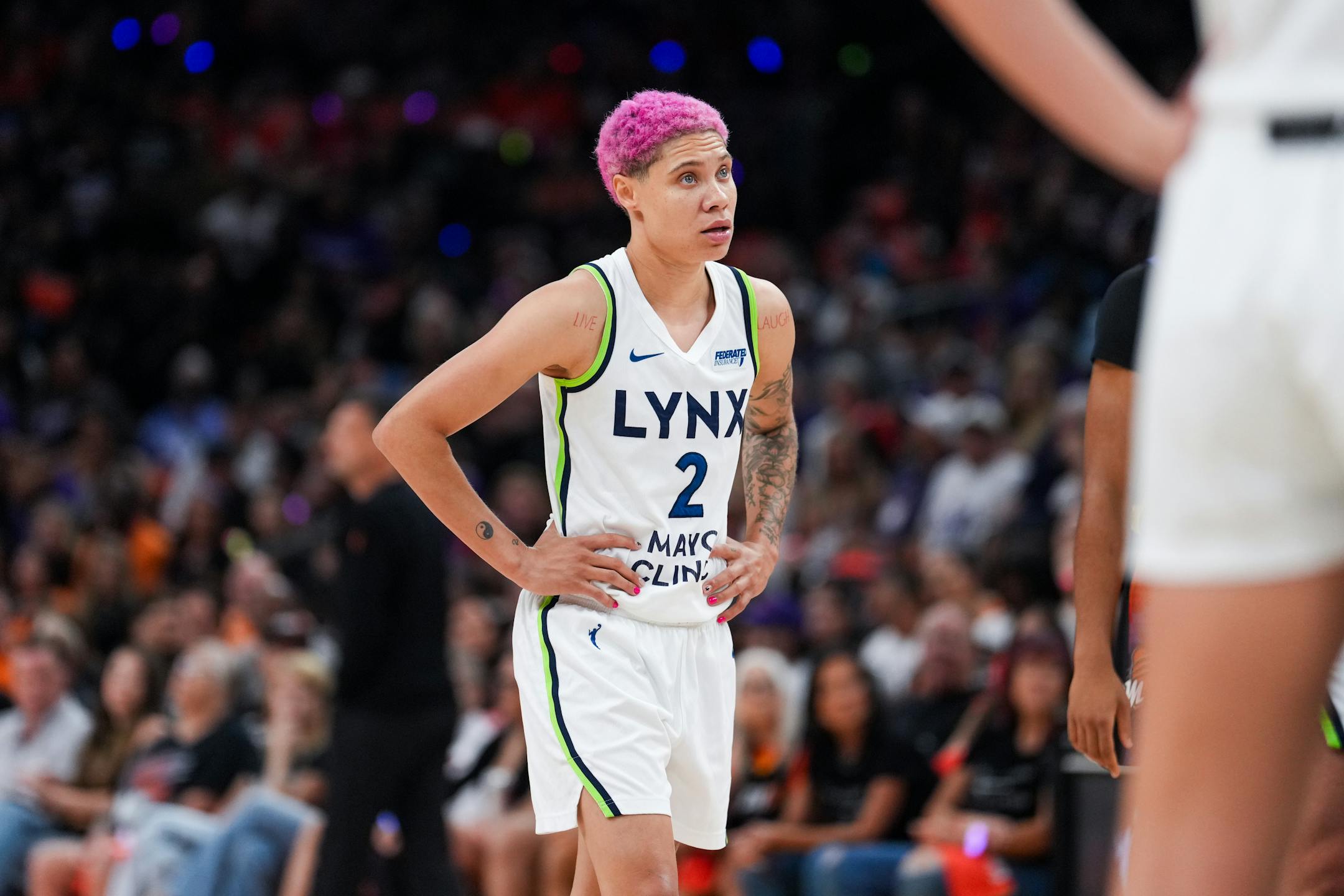
Lynx guard Natisha Hiedeman looks on during her team's loss in Phoenix on Sunday night. (Samantha Chow/The Associated Press)

PHOENIX — The Lynx seemed as if they couldn’t miss from beyond the arc in the third quarter of Game 4 of their WNBA semifinal series against the Mercury on Sunday night.

Guard Kayla McBride made all four of her three-point attempts, and the Lynx were 6-for-7 from deep and pulled ahead by 13 points.

It looked as if McBride might will the Lynx, who trailed 2-1 in the best-of-five series, back to Minneapolis for a winner-take-all Game 5.

But the Mercury punched their ticket to the WNBA Finals with a formula they had relied on to put the Lynx on the ropes in the first place: ratcheting up defensive intensity in the fourth quarter. And that sealed an 86-81 victory which eliminated the Lynx, the best team in the WNBA in the regular season, from the playoffs.

The Mercury outscored the Lynx 77-39 across the fourth quarters of Phoenix’s three victories. That included rallying from a 20-point deficit to steal an overtime win in Game 2 at Target Center, then edging out a late victory in Game 3, even by the time Lynx All-Star Napheesa Collier rolled her left ankle and head coach Cheryl Reeve was ejected for protesting the physicality Collier faced.

“We were down 13. We needed to get stops, and then when we get stops, we’re pretty good offensively because we’re playing free and we don’t have time to overthink it,” Phoenix head coach Nate Tibbetts said after Sunday’s win.

Outscored 31-13 in the fourth on Sunday, the Lynx’s shooting was forced backwards and out of the paint.

The Lynx shored up their ball security, an issue that hurt them in the second half of Game 2 with costly late-game turnovers and passes out of bounds. The Lynx turned the ball over just six times on Sunday, none coming in the fourth.

ADVERTISEMENT

But even with the ball firmly in their hands, good looks became hard to come by. The Lynx took just as many three-point attempts in the fourth as they did in the rest of the game combined (12), and made but three. Four shot clock violations in the fourth were a sign that the Lynx’s shot selection was coming out of necessity, rather than continued sharpshooting, against the perimeter defense that has helped the Mercury to this postseason’s best defensive rating.

“They switched and they made it hard for us. I think we didn’t get enough quality shots down the stretch,” Lynx associate head coach Eric Thibault said. “We did a good job taking care of the ball, but we got up against the shot clock on a bunch of possessions.”

The Lynx’s three bigs — Alanna Smith, Jessica Shepard and Masha Kliundikova — shot a collective 0-for-3 in the fourth quarter, with no attempts from in the paint as Shepard’s usage fell from 35% in her 10-point first quarter to 13% in the fourth.

A “lack of execution led to uncertainty” were Reeve’s words to describe Game 2 in regard to turnovers compounding in the clutch. The same could be said about late-game shot selection Sunday.

Phoenix sealed the deal on the other end of the court with three important fourth-quarter threes from DeWanna Bonner, who had been shooting just 12.5% from beyond the arc this postseason.

Alyssa Thomas led the Mercury, who will face either Indiana or Las Vegas in the Finals, with 23 points.

McBride finished with 31 and Courtney Williams 20 for the Lynx, who enter an uncertain offseason a year after keeping all their 2024 starters to try for another spot in the WNBA Finals. Even if they won Sunday, it would have been unlikely Collier could have returned; and top reserve DiJonai Carrington (sprained foot) was also out for the postseason.

Before Game 3, Reeve said that after Minnesota’s first matchup with Phoenix during the regular season, she turned to her staff and said, “That’s the most defense I’ve seen a Phoenix Mercury team play in a very long time.”

And in the postseason, Minnesota saw that same defense — often mismatched in size, usually physical, dialing up in the fourth quarter — when it counted most.

about the writer

about the writer

Cassidy Hettesheimer

Sports reporter

Cassidy Hettesheimer is a high school sports reporter at the Minnesota Star Tribune.

See Moreicon

More from Lynx

See More
card image
Adam Hunger/The Associated Press

The WNBA and players union agreed to an extension of the current collective bargaining agreement to Jan. 9 just before their current deadline ran out Sunday night.

card image
card image