
Advertisement

Ex-FBI agent faults state for failing to ‘hold people accountable’ for fraud

The report from Program Integrity Director Tim O’Malley comes days into a Minnesota legislative session, and many of its recommended fixes require lawmakers’ approval.

February 23, 2026 at 8:58PM
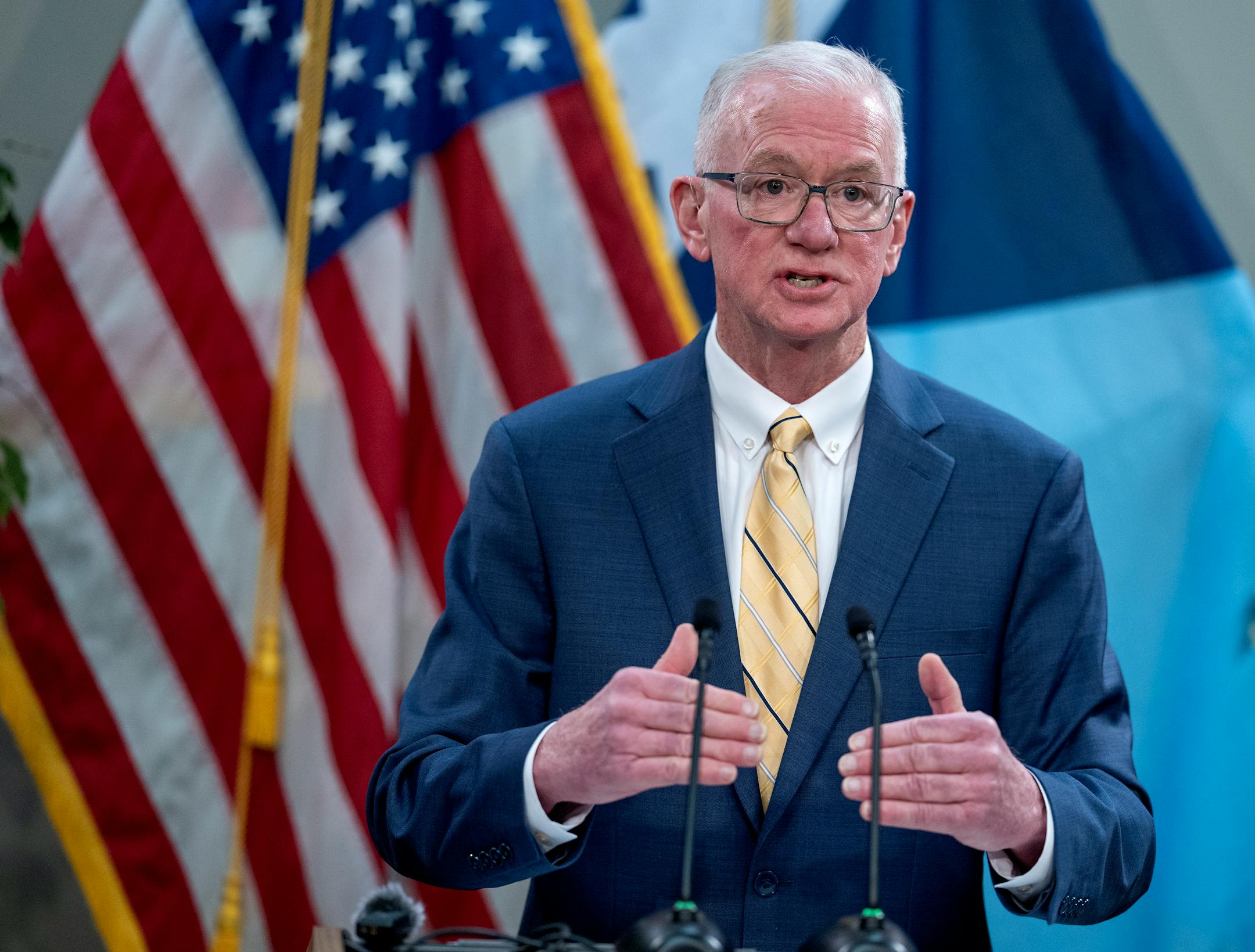
Minnesota Director of Program Integrity Tim O’Malley speaks during a news conference about fraud prevention on Feb. 23. (Jerry Holt/The Minnesota Star Tribune)
Advertisement

The former FBI agent charged with tackling fraud in Minnesota on Monday faulted the state for ignoring warnings about decades of poor oversight of taxpayer dollars before recent scandals thrust the issue into the national spotlight.

But many of the changes outlined by Tim O’Malley, whom Gov. Tim Walz tapped last year to serve as the state’s first director of program integrity, won’t be possible without legislative approval and long-term, expensive work to overhaul the management of public money.

O’Malley’s 57-page report comes days into a legislative session that promises to center in part on tightening up the state’s fraud controls.

Minnesota officials have faced sharp criticism over reports of widespread fraud in an array of social programs, from services that offer housing support to intervention for children with autism. Prosecutors say stolen funds could total $9 billion, though the Minnesota Star Tribune has found that alleged fraud uncovered so far in some state programs is closer to $200 million.

Speaking to reporters in St. Paul on Feb. 23, O’Malley said the state has failed to “hold people accountable” as fraud festered as far back as the 1970s. He urged the governor to appoint an independent statewide monitor capable of overseeing the entire fraud-fighting effort, along with a compliance committee to track progress.

Meanwhile, lawmakers are offering a range of ideas to tackle fraud in the early days of the legislative session, including renewing a proposal to create a statewide Office of the Inspector General.

Other recommendations in the report include strengthening provider screening and standardizing training for state employees to catch misconduct in Medicaid programs.

He urged the Legislature to include money for fraud-prevention efforts in every bill establishing or modifying a program, and then follow up to make sure state agencies follow the rules.

Advertisement

“It’s going to take everybody in the executive branch and the legislative branch to take responsibility for failures in the past,” he said.

While recent scandals have grabbed headlines, O’Malley framed fraud in Minnesota as a decadeslong problem exacerbated by poor oversight and a culture of “compassion over compliance” among some state employees. Since the 1970s, he said, governors and legislators have consistently failed to heed warnings about vulnerabilities in social services.

“Stronger prevention measures should have been taken repeatedly,” he said. “Plans were put in place but not executed effectively.”

The intense focus on the issue from the media and politicians, he added, presents an opportunity for legislators to take decisive action.

“Do things in the next three or four months,” he said, appealing to lawmakers. “Do it while the Legislature is in session, while everybody’s watching.”

Call for ‘effective enforcement’

O’Malley’s road map is one part of the state’s sweeping push to prevent bogus providers from bilking social programs — an effort that’s faced criticism for being both too late and painting all providers with a broad brush.

Advertisement

In late 2025, officials paused payments to providers as they parsed claims in hopes of ferreting out fraud, prompting backlash from some legitimate providers who suddenly found themselves unable to pay employees.

A recent third-party report that state officials commissioned found widespread billing irregularities among autism intervention providers. But the Department of Human Services heavily redacted the report, outraging some lawmakers who hoped it would offer suggestions for legislative fixes.

And weeks after the state committed to cleaning up social services, a wave of lawyers left the U.S. Attorney’s Office over frustrations with directives from the U.S. Department of Justice related to the Trump administration’s immigration enforcement operation in Minnesota. That included Joe Thompson, the federal prosecutor who helmed the effort to hold fraudsters accountable.

O’Malley said Walz and social services commissioners have yet to read his report. He offered to meet with them after they review it, adding that he’s “happy to continue advising” now that his main task has wrapped up.

“Implementing deliberate actionable steps to prevent fraud will only succeed through effective enforcement, otherwise well-intended plans will again not be executed,” he said. “Changes will not become embedded, and today’s opportunity to get this right will be lost.”

about the writers

about the writers

Eva Herscowitz

Reporter

Eva Herscowitz covers Dakota and Scott counties for the Star Tribune.

See Moreicon

Jessie Van Berkel

Reporter

Jessie Van Berkel is the Star Tribune’s social services reporter. She writes about Minnesota’s most vulnerable populations and the systems and policies that affect them. Topics she covers include disability services, mental health, addiction, poverty, elder care and child protection.

See Moreicon

More from News & Politics

See More
An MVTA Route 477 bus departs the Apple Valley Transit Station
The Minnesota Star Tribune

Suburban transit providers say they are running a lean operation and claim data used to compile a new report is old and does not paint a true picture.

card image
Advertisement