
Why is Minnesota so vulnerable to Medicaid fraud?

There are several tough-to-fix challenges in the state’s generous system that serves people with disabilities and the elderly.

The Minnesota Star Tribune
February 13, 2026 at 12:00PM
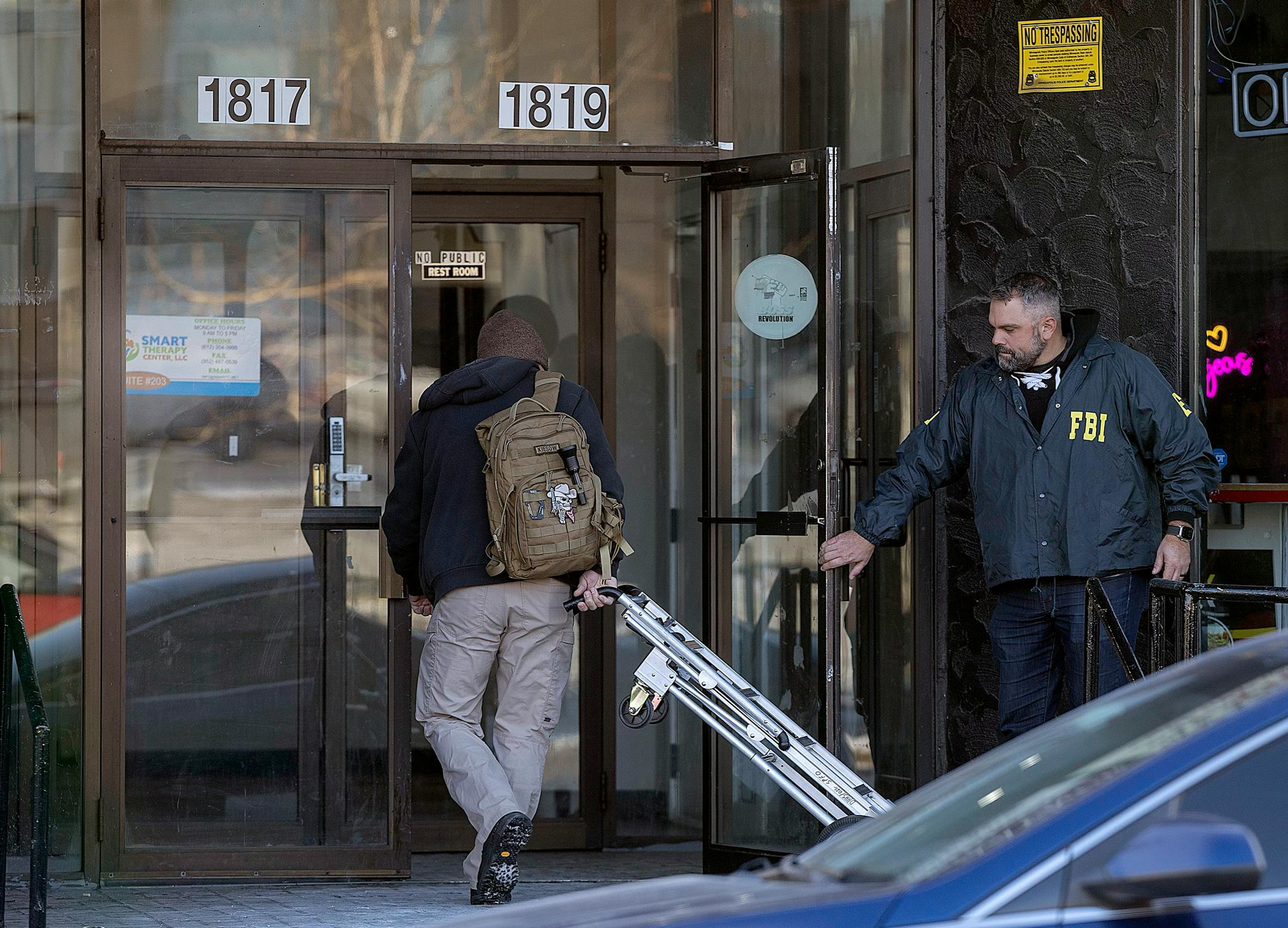
Members of the FBI supervise the removal of boxes and electronic equipment from Smart Therapy Center’s business office in Minneapolis on Dec. 12, 2024. (Elizabeth Flores/The Minnesota Star Tribune)

Companies claimed to help people find housing, support kids with autism and provide long hours of assistance to allow people with disabilities to live in the community.

But court records describe how private businesses, which in some cases billed the state for more than a million dollars of supposed work, submitted claims that were dramatically inflated or utterly false.

Egregious examples of people exploiting Minnesota’s Medicaid programs are front and center as election season heats up and federal prosecutors raise the specter of billions in stolen taxpayer dollars. But behind the public outrage lie tough-to-fix vulnerabilities in the state’s generous system to serve people with disabilities and the elderly.

The Minnesota Star Tribune asked more than 15 people who oversee, manage, provide and receive Medicaid services: Why have Minnesota’s social services programs been so susceptible to fraud?

They identified five key challenges, including outdated technology and oversight gaps, that have allowed fraud to fester.

Tough to oversee

Minnesota has been at the forefront of a national shift away from institutionalization of people with disabilities toward home and community-based services.

That move to more independent living is a critical human rights transition, advocates say, but it is also far more difficult to oversee.

It’s harder to verify that a provider shows up and does all the things they bill for when the work happens in an individual’s home, many people in the industry said. And instead of the old model in which one organization was paid to do the bulk of the work, a host of providers are billing for different pieces of someone’s services.

“How do you create a system that monitors what every single one of them is doing?” asked John Estrem, CEO of disability service provider Hammer & NER. “We’ve created a system that is incredibly more complicated … but we haven’t really built the controls.”

For example, the state launched the Medicaid-funded Integrated Community Supports in 2021 to train and assist people with tasks such as making appointments and caring for themselves.

Ultimate Home Health Services was one of the hundreds of providers that enrolled to do that work. A search warrant application describes how the business claimed to provide services to one client, Kelly R., in the St. Paul apartment it rented to her.

The state paid the company on average $375 a day to help her. But while they billed for 443 days of work during a 447-day stretch, Kelly told investigators she got little support and often had no contact with the company.

In a step toward strengthening oversight, federal law changed to require states to institute an electronic visit verification process for providers of certain home and community-based services to document that they show up to do the work. The state started rolling that out a few years ago and just started reviewing and enforcing compliance this year.

However, the visit verifications can’t track whether someone actually does what they claim during their time with a client, and it only applies to some services. It’s not used for Integrated Community Supports.

Who is accountable?

Minnesota is one of about 10 states where the state supervises social services, and counties and tribal governments administer them.

Several people said that decentralized system is expensive and results in oversight gaps.

Generally, the state reviews and oversees businesses that want to provide disability services. It also handles some payments to providers. However, in Minnesota — like most states — the majority of Medicaid enrollees get services through a managed care organization, like HealthPartners or Medica. So those health care organizations, not the state, are widely responsible for contracting with and reimbursing providers for an individual’s services.

Meanwhile, counties assess and manage the people seeking assistance.

Many of the state’s 87 counties outsource case management responsibilities, contracting with private companies to do that front-line work. Some Minnesotans who have been getting disability services for decades said they have seen an increase in case manager turnover, with less-experienced people taking on big caseloads and struggling with outdated technology that is time-consuming and error-prone.

The state’s payment rate for case managers is too low, and workers lack clear guidance and are not adequately documenting whether services have been provided, said Rep. Mohamud Noor, the Democratic co-chair of the House Human Services Committee and a former system administrator at the Department of Human Services.

He said counties are abdicating responsibility by using contracted case management while the state, which receives all the billing data, is not coordinating things.

A couple of county workers said when they have come across a fishy provider and flagged the state, they received little or no response.

“The left hand doesn’t know what the right hand is doing,” Noor said.

Outdated technology

Even an experienced case manager is not well-positioned to spot fraud patterns, several people in the field said.

Case managers are required to check in with individuals getting services twice a year. While they authorize the amount of services someone can get, they cannot see what providers are billing for that individual, Hennepin County Human Services Area Manager Deborah Ackerman said. And the people on their caseload use a spectrum of providers.

“If that provider is working with 800 or 900 different case managers to serve 800 or 900 different people, the only way to recognize a pattern would be in a technology system where you might see something flagged,” Ackerman said.

However, as fraudsters became more innovative and savvy, the systems that state and county workers use and the state’s data analytics to detect problematic billing have remained inadequate.

Human services systems do not share common identifiers, making it hard to detect if someone submits false or misleading information across multiple systems, officials said. The state sent a letter to counties in January saying that, starting with one 37-year-old system, they are taking a step toward enabling automated, reliable data sharing between IT systems. But full modernization would be massively expensive, state leaders have said.

Last fall, the state contracted with an outside firm, Optum, to do enhanced reviews of provider claims before they are paid. Optum has been looking for suspicious trends, like a provider that bills the same number of hours week after week in a way that “does not comport with human reality,” Minnesota Medicaid Director John Connolly said. That type of review is an industry best practice, he said, and while some managed care plans have it, the state did not.

Optum staff said in an initial report that it found vulnerabilities across 14 state programs identified as high-risk.

“These vulnerabilities stem from weaknesses in monitoring, auditing, and inter-agency communication, which undermine program integrity,” the report warned. “Such gaps can result in beneficiary harm, improper payments, eligibility errors, or intentional fraud, waste, and abuse.”

Lack of safeguards, education

So far, recent fraud charges out of the U.S. Attorney’s Office have focused on two programs: one helped people find and keep housing; the other provides behavioral and developmental interventions for young people with autism.

Those benefits, developed in the past decade by the Department of Human Services and legislators, have been widely identified as lacking sufficient safeguards. An indictment of Kaamil Omar Sallah, who was charged with defrauding the Housing Stabilization Services program, describes a low barrier to entry that included enrollment paperwork, a background check and about five hours of online training videos.

“Providers did not have to have a medical license or social work training,” court records state.

Sen. Jim Abeler, a Republican who has long worked on human services issues at the Capitol, said he’s seen a decline in the state’s interest in ensuring provider credibility and more emphasis on dispensing generous and inclusive services.

“Then COVID came and nobody was watching anything,” Abeler said.

Last year, the Walz administration completely shuttered Housing Stabilization Services, which launched in 2020. State officials and legislators added numerous fraud detection measures and guardrails in autism services and other programs.

Making it tough for bad actors to game the system is part of the puzzle, but providers and legislators also said people working in the complicated disability services system need more education on what’s allowed.

Disability rights advocate and Maplewood City Council member Nikki Villavicencio said she and her partner, who both require personal care assistance to help with daily life, have struggled to find quality providers. There are times when they have called roughly 70 companies to get good care.

“Talking to them, they don’t, a lot of times, know what the rules are and what they are supposed to be doing,” Villavicencio said.

Various providers lamented that over the past couple decades the state has simultaneously failed to install adequate oversight measures to catch fraud while piling on regulations that burden good companies.

“DHS implemented multiple layers of licensing, payment and setting rules that are so complex good providers struggle to understand what they should do and require DHS to focus too much time just running those systems,” said Todd Bergstrom, with the Care Providers of Minnesota association.

Clients feel powerless

Prince Cole, who is paralyzed from the neck down, uses home and community-based services and is one of several advocates who said Minnesota needs more thorough reviews of potential providers. He also said someone should check in annually with some clients from each company to see if they are being served.

“We are talking about human lives,” Cole said. “[Providers] should be held accountable so people can receive the care they really, really need.”

Cole and others stressed that people getting services should receive an in-depth education on what they are entitled to, so they can advocate for themselves and ensure a provider is doing what they are supposed to.

Jonathan Murray, another advocate who uses disability services, said it is difficult for people served through state programs to understand what is being billed in their name.

“You’re in this position where you don’t have power,” he said, noting that a system where clients can track billing and appointments — akin to MyChart for health care — would solve a lot of issues.

Murray also said people who would use a potential service should have more say in its design.

Programs like Housing Stabilization Services seemed to be “built for providers,” he said. “And it worked very well for providers who didn’t really care about their clients.”

about the writer

about the writer

Jessie Van Berkel

Reporter

Jessie Van Berkel is the Star Tribune’s social services reporter. She writes about Minnesota’s most vulnerable populations and the systems and policies that affect them. Topics she covers include disability services, mental health, addiction, poverty, elder care and child protection.

See Moreicon

More from News & Politics

See More
card image
card image