
Why are so many Minnesota breweries closing? Here’s a six-pack of reasons.

From tariffs to THC, the local craft beer scene is facing challenges.

The Minnesota Star Tribune
July 24, 2025 at 11:00AM
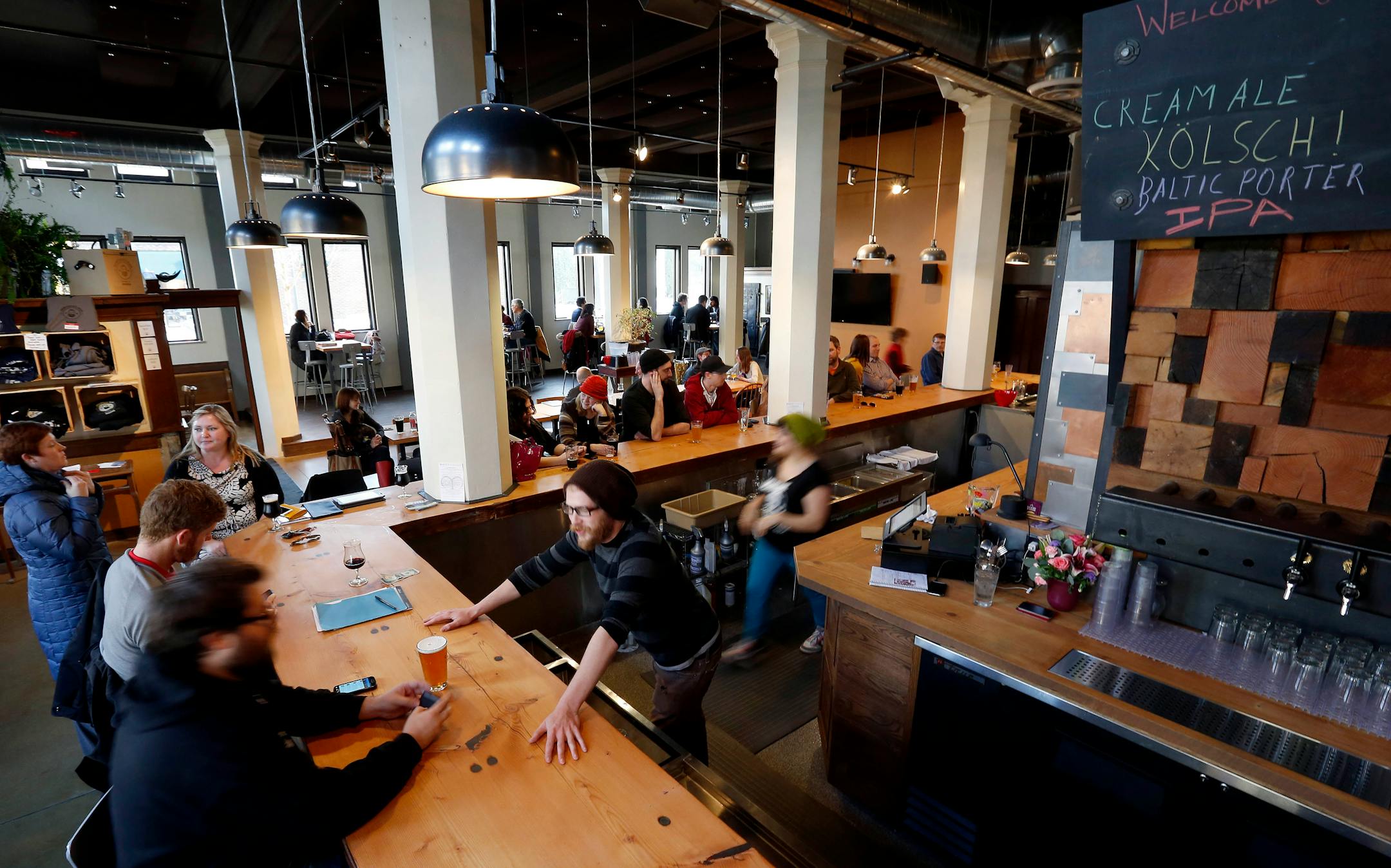
The original taproom for Dangerous Man Brewing Co. helped popularize its northeast Minneapolis neighborhood, but the brewery was priced out and moved before shutting down entirely in March. (Carlos Gonzalez/The Minnesota Star Tribune)

Minnesota had one of the strongest craft-beer booms in the country during the late 2010s, when the number of breweries in the state swelled to more than 230.

That’s more than the market can sustain as the demand for beer has declined while the costs of making it have risen.

Minnesota’s craft-beer boom hasn’t gone bust, but it’s fizzling. One award-winning Twin Cities taproom, Alloy Brewing in Coon Rapids, closed earlier this month. Wild Mind Ales, announced Tuesday it will shut down in a month or two.

They follow a string of closures at other taproom and production facilities over the past two years — including a couple of Minneapolis’ early favorites in the craft-beer boom, Finnegan’s (now brewed by Fulton) and Dangerous Man.

“Things are just very challenging in our industry right now, and it’s not enough just to have good beer,” said Evan Sallee, CEO at the Fair State Brewing Cooperative in northeast Minneapolis, which recently sold its production facility as it emerged from Chapter 11 bankruptcy.

Other recent brewery closures: Eastlake, 612, Burning Brothers, Able Seedhouse and Lakes & Legends in Minneapolis; St. Paul’s Tin Whiskers and Clutch breweries, and Chanhassen Brewing. Across the state, the losses have included Mankato Brewery, Revelation Ale Works in Hallock, Fergus Brewing in Fergus Falls and Half Bushel in Litchfield.
Able Seedhouse + Brewery in northeast Minneapolis closed in late-2022 after struggling to recover from the COVID-19 pandemic. (Bre McGee/For the Minnesota Star Tribune)

“We’re seeing all kind of societal changes affecting the beer industry right now that are kind of dramatic,” said Utepils Brewing Co. owner Dan Justesen, whose taproom and brewing facility in Minneapolis’ Bryn Mawr neighborhood are holding steady.

“But also just the cost of everything is going up, like insurance and gas and the boring things that are a part of most businesses,” he added.

The challenges Minnesota brewers are facing at the moment:

1. Oversaturation. Was it too much to ask for nearly every neighborhood in Minneapolis to get its own brewery? Apparently, yes. The number of breweries in Minnesota jumped from about 35 in 2011 to 237 in 2023, an increase brought on by the so-called Surly Bill that the Legislature passed in 2011, paving the way for breweries to sell their product on-site in taprooms.

With so many new breweries emerging, Justesen said, customer trends “went from people asking, ‘What’s good?’ to, ‘What’s new?’ And so some good breweries got lost.”

2. Declining sales. Put simply, young adults don’t drink as much as in the past. In 2024, the Distilled Spirits Council of the United States reported a rare 1% national decline in alcohol sales. A 2023 Gallup survey found that 62% of respondents under age 35 said they drank alcohol in 2021-2023, down from 72% in 2001-2003.

It’s not only a challenge for breweries. Restaurants, music venues and corner bars are feeling the pain, too. Minneapolis’ famed Palmer’s Bar cited an almost 20% decline in alcohol sales before announcing its pending closure.

3. Rising costs of ingredients. Needing a constant supply of barley, hops and yeast, breweries are closely tied to the agriculture business — which is tied to the weather. Prices have been driven higher in recent years by drought, floods and other extreme weather. The increased number of breweries also led to higher demand.

“There are price challenges in just about everything related to making beer right now,” said Omar Ansari, owner of Surly Brewing. “It’s hard to pass along those increases to the customers because they’re strapped for cash, too, and the last thing they want to pay more for is a good ol’ pint or a six-pack. So most of us just wind up eating those increases.”

4. Tariffs. Minnesota breweries do a lot of business with Canada. Much of the aluminum used for canning beer comes across the northern border, and metals have been particularly affected by President Donald Trump’s on-again, off-again tariffs. A lot of the barley used by local brewers is from Canada, too, and agriculture has factored heavily in the tariffs debate.

Meanwhile, tariff negotiations with China and across the Pacific have caused the price to go up for brewing and canning production parts and machinery.

“It’s kind of like it was with the pandemic, where there’s just so much uncertainty over tariffs,” said Bob Galligan, director of government and industry relations for the Minnesota Craft Brewers Guild. “It’s the not knowing that’s making everyone uneasy.”

5. Rising rents. Seven years ago or so it seemed like new breweries were popping up everywhere. A lot of the leases that were signed then have come up for renewal in recent years. This, too, has been a problem for bars and restaurants as well as breweries. The restaurant Young Joni is closing this fall due to a rise in rent in the same northeast Minneapolis neighborhood that housed Dangerous Man Brewing, which moved out for the same reason. They helped make it a hot neighborhood but couldn’t afford to do business there anymore.

“Rent has especially been a problem for the urban breweries, where rent prices have gone up the most,” Galligan said.

6. Taxes. Beyond rent increases, breweries in Minneapolis and St. Paul have faced steeper taxes. There’s an extra 3% tax on liquor sales in downtown Minneapolis, for instance. Statewide, Minnesota breweries pay about twice as much per barrel of beer as in Wisconsin: about $4.60 per barrel compared with $2 a barrel next door, according to the industry site AlcTax. Nationally, Minnesota’s tax on beer is about average.

Bright spots

There have been positives. For one, Minnesota’s legalization of cannabis for recreational use in 2023 gave breweries a hot new market, prompting many to begin brewing THC seltzers that have become popular.

“THC drinks have definitely been a good thing for those of us who can make them, but not all breweries can,” said Justesen at Utepils, whose four-can Happy Pack series has become one of the bestsellers among THC drink offerings.

New breweries are still opening, too, partly offsetting the closures. They include Brühaven in Minneapolis, Rail Werks Brewing Depot in Columbia Heights, Haggard Barrel in St. Louis Park, Trove in Burnsville, Ripple Effect in Rogers and Paddlefish in St. Peter.

No matter how many breweries are left standing, the lobbying representative for the Craft Brewers Guild takes solace knowing it will be a lot more than there were just a decade-plus ago.

“The whole point of the craft-beer boom was to make good, fresh beer more widely available, and obviously we’ve achieved that,” Galligan said.

“Do we have too many breweries now? We’ll see. But we can go into almost any bar or restaurant now and get a good beer, so I consider that a big win for the industry here.”

about the writer

about the writer

Chris Riemenschneider

Critic / Reporter

Chris Riemenschneider has been covering the Twin Cities music scene since 2001, long enough to earn a shoutout from Prince during "Play That Funky Music (White Boy)." The St. Paul native authored the book "First Avenue: Minnesota's Mainroom" and previously worked as a music critic at the Austin American-Statesman in Texas.

See Moreicon

More from Eat & Drink

See More
card image
Provided by Patisserie 46

John Kraus and Elizabeth Rose are planning a restaurant, retail and production facility for their next project.

card image
card image