Election takeaways: Frey wins third term in Minneapolis, a historic St. Paul upset and a DFL Senate

State Rep. Kaohly Her channeled frustration with stubborn problems in St. Paul to defeat Mayor Melvin Carter.

The Minnesota Star Tribune
November 5, 2025 at 6:40AM
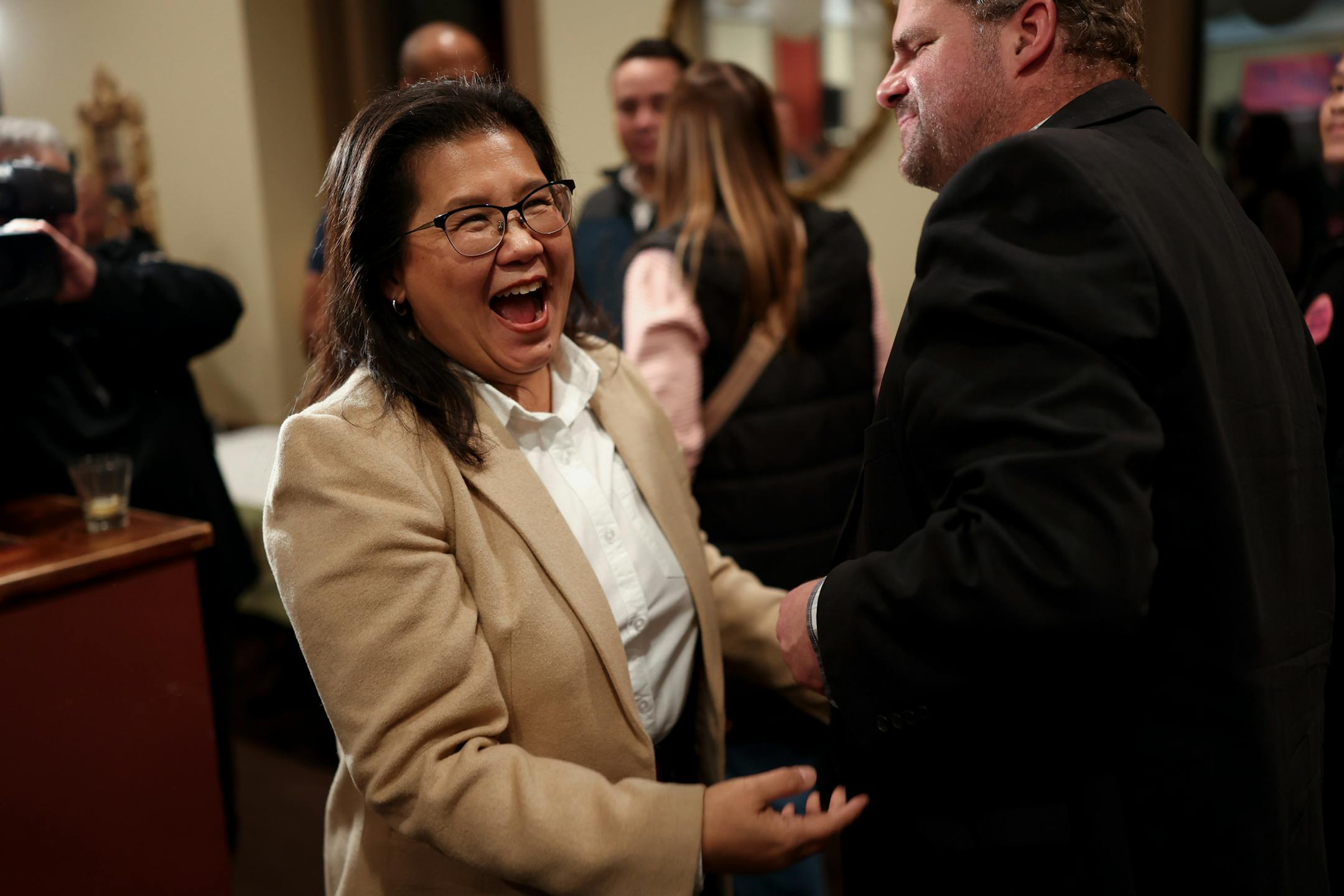
St. Paul mayoral candidate Kaohly Her arrives at her election night party at Sweeney's Saloon in St. Paul. (Carlos Gonzalez/The Minnesota Star Tribune)

Minneapolis voters sent a mixed message about how the city will be governed for the next four years, re-electing Mayor Jacob Frey to a third term but backing a majority of council candidates that are to Frey’s political left.

The results are similar to 2021, when Frey fended off left-wing challengers. The outcome could also extend a political dynamic at City Hall that was marked by clashes between the council and Frey.

The mayor did not receive more than 50% of first-choice votes, but he prevailed over challengers like state Sen. Omar Fateh after a second round of tabulation in the ranked-choice election.

Progressives hung onto a council majority over the relative moderates in the DFL, though the bloc may not be able to override Frey’s vetoes as often as they have for the past two years.

In St. Paul, the race for mayor was a seismic result on the state’s political landscape, with state Rep. Kaohly Her upending city politics by scoring an upset victory over Mayor Melvin Carter.

Carter has long been viewed as a potential candidate for higher office, but voters rejected his bid for a third term as Her channeled frustration with a lack of progress on stubborn problems like high property taxes, flailing economic development and blight in downtown and neighborhoods like Midway.

Her painted herself as a beacon of competency, a person who would bring new eyes and fresh urgency to an office some viewed as complacent and disengaged in the face of sluggish recovery from the pandemic.

Here’s what you need to know about Tuesday’s results:
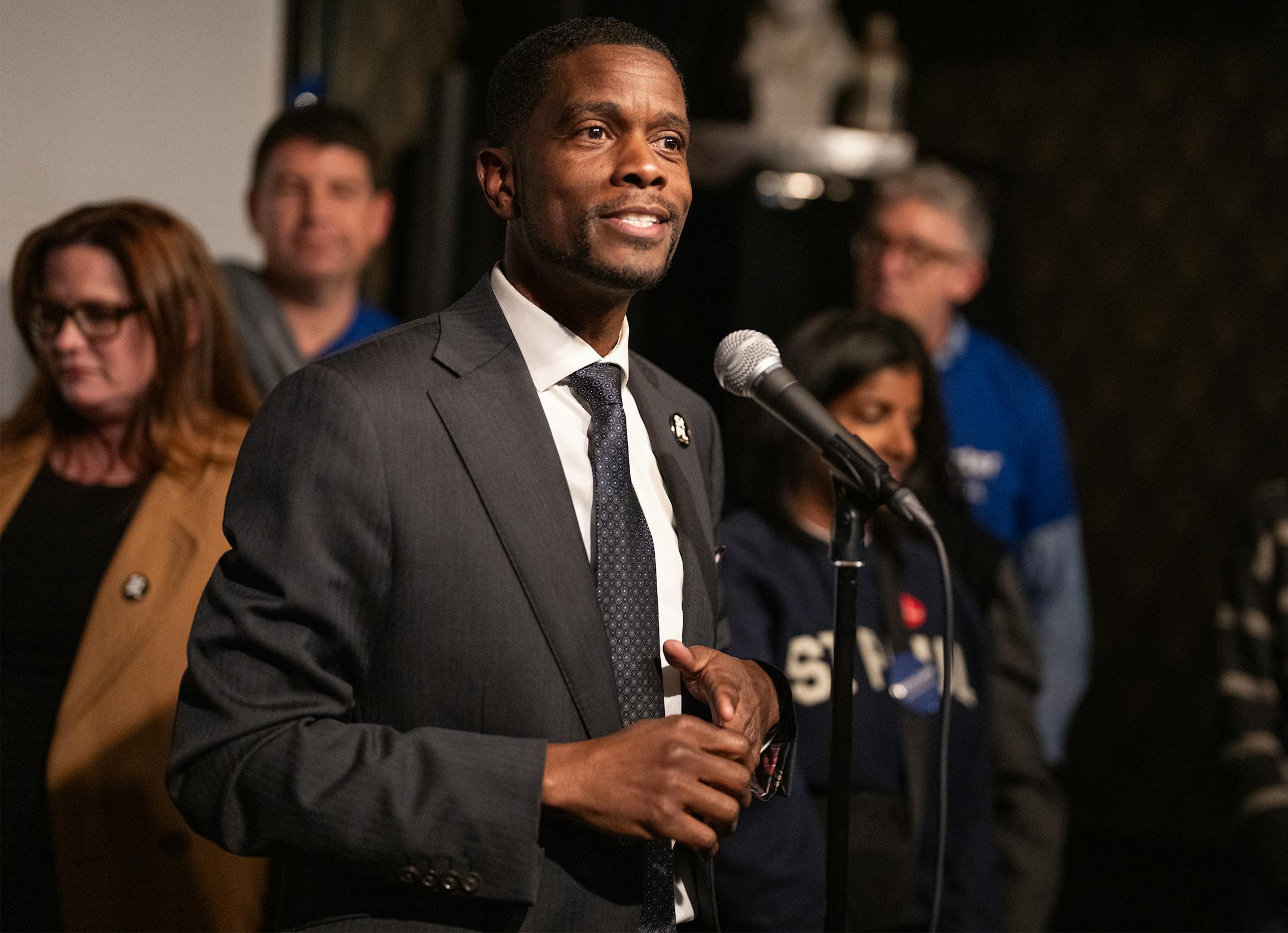
Mayor Melvin Carter thanks his supporters as he conceded on election night. (Richard Tsong-Taatarii/The Minnesota Star Tribune)

Her topples Carter

Her’s victory represents a shocking political slide for Carter, who was so popular during his last re-election that he won 61.6% of the vote and never faced a serious challenger.

On Tuesday, Carter received nearly 41% of first-choice votes compared with 38% for Her. Yan Chen got 10% and Mike Hilborn 9%.

When the city tabulated additional votes, Her won narrowly, marking the first time that second-choice ballots have affected the outcome since the city’s first mayoral ranked-choice voting election in 2013.

Unlike Minneapolis, the campaign was not a debate among relative moderates in the Democratic Party and a further-left faction. The two candidates had similar views on many policy issues. Her, a four-term legislator, was once Carter’s political director and has described the mayor as a mentor.

The two even campaigned together on Tuesday in favor of a ballot measure that would give the city more power to fine businesses that break city rules.

Her’s late entry to the race in August also gave the legislator a short window to campaign, potentially hobbling her chances by limiting the time she could spend knocking on doors, running advertisements and making a case to voters.

The mayor campaigned with an optimistic pitch, describing St. Paul as a city on the upswing after the pandemic and the damage to businesses after the murder of George Floyd. He highlighted a drop in gun violence, and positioned himself as defending the city against President Donald Trump’s policies and as a leader on restricting access to guns.

Her initially said she took on Carter because of DFL House Speaker Melissa Hortman, who said lawmakers should campaign every cycle, even in a safe seat, to earn voters’ support.

In the end, Her found Carter was vulnerable in an electorate unhappy with the status quo. “These seats don’t belong to us,” Her remembered Hortman saying.

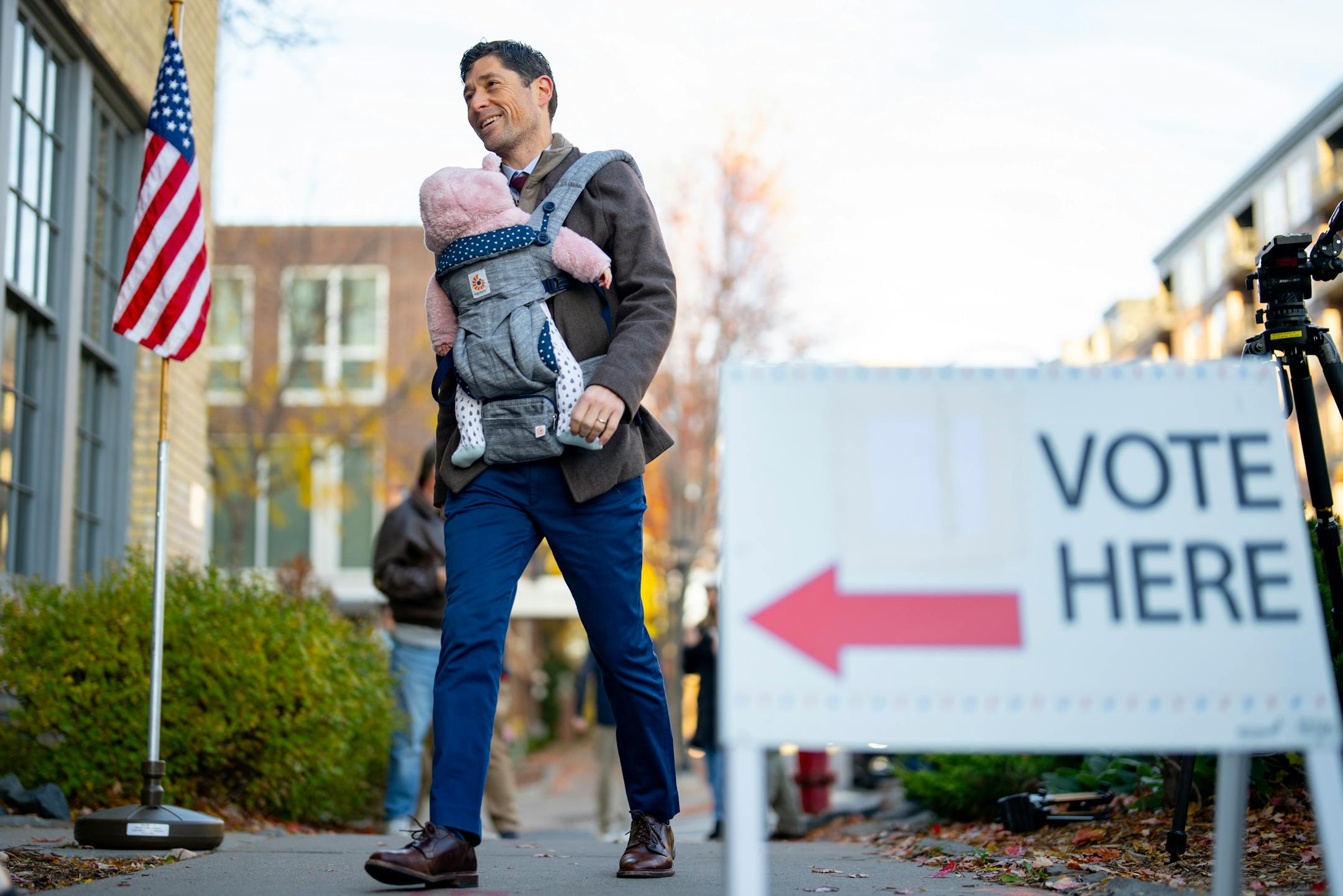
Minneapolis Mayor Jacob Frey holds his 4-month-old daughter, Estelle, as he walks into his polling place at Machine Shop in Minneapolis to cast his ballot on Tuesday. (Alex Kormann/The Minnesota Star Tribune)

Frey wins third term

Frey emerged with a victory in another bitter fight between factions of the DFL Party.

Frey won a third four-year term by prevailing over several challengers to his left, including the second-place Fateh, a democratic socialist who became the best hope for progressives.

Fateh had at times been compared to Zohran Mamdani, the energetic mayor-elect of New York City, though the Minneapolis candidate did not generate as large a following or the viral social media content that propelled Mamdani to a wide victory Tuesday.

Frey picked up nearly 42% of first-choice votes, while Fateh had about 32%. Former pastor DeWayne Davis won 14% and entrepreneur Jazz Hampton 10%.

Fateh, Davis and Hampton teamed up to try to boost their chances of winning second-choice ballots, but not enough voters followed the suggestion to rank the three candidates but not Frey.

The alliance did not neatly align with the campaign’s ideological divide. For example, both Hampton and Frey oppose rent control.

The muddled results in Minneapolis come after two years of clashing between Frey and the more progressive council, which includes three democratic socialists.

The results for mayor suggest Frey’s standing may not have changed much after eight years in office. In 2021, Frey won about 49% of final round votes, while his top challenger finished with 38%. Those opponents campaigned with a “don’t rank Frey” message.

This year, Frey finished with 50% of final-round votes and Fateh had 44%.

An anti-Frey council?

A progressive council paired with Frey as mayor would continue an adversarial and sometimes rancorous environment at City Hall over the last two years.

Not only have the sides traded barbs — sometimes profane — but seven council members have managed to round up two additional votes to override Frey’s vetoes.

In 2024, that majority overrode Frey’s vetoes of a minimum pay rate for rideshare drivers, an Israel-Hamas ceasefire resolution, and a carbon emissions fee. The bloc attempted but failed to override Frey’s veto of a new labor standards board and a denial of raises for about 160 high-paid city employees. (Frey supported giving the raises.)

Progressive candidates won in seven Minneapolis wards, while candidates more aligned with Frey have won in six wards.

Still, it’s not clear that the progressive bloc will be able to overturn Frey’s vetoes in the same way given the new makeup of the council.

The only incumbent council member to lose was Katie Cashman, who was ousted by Frey-aligned Elizabeth Shaffer.

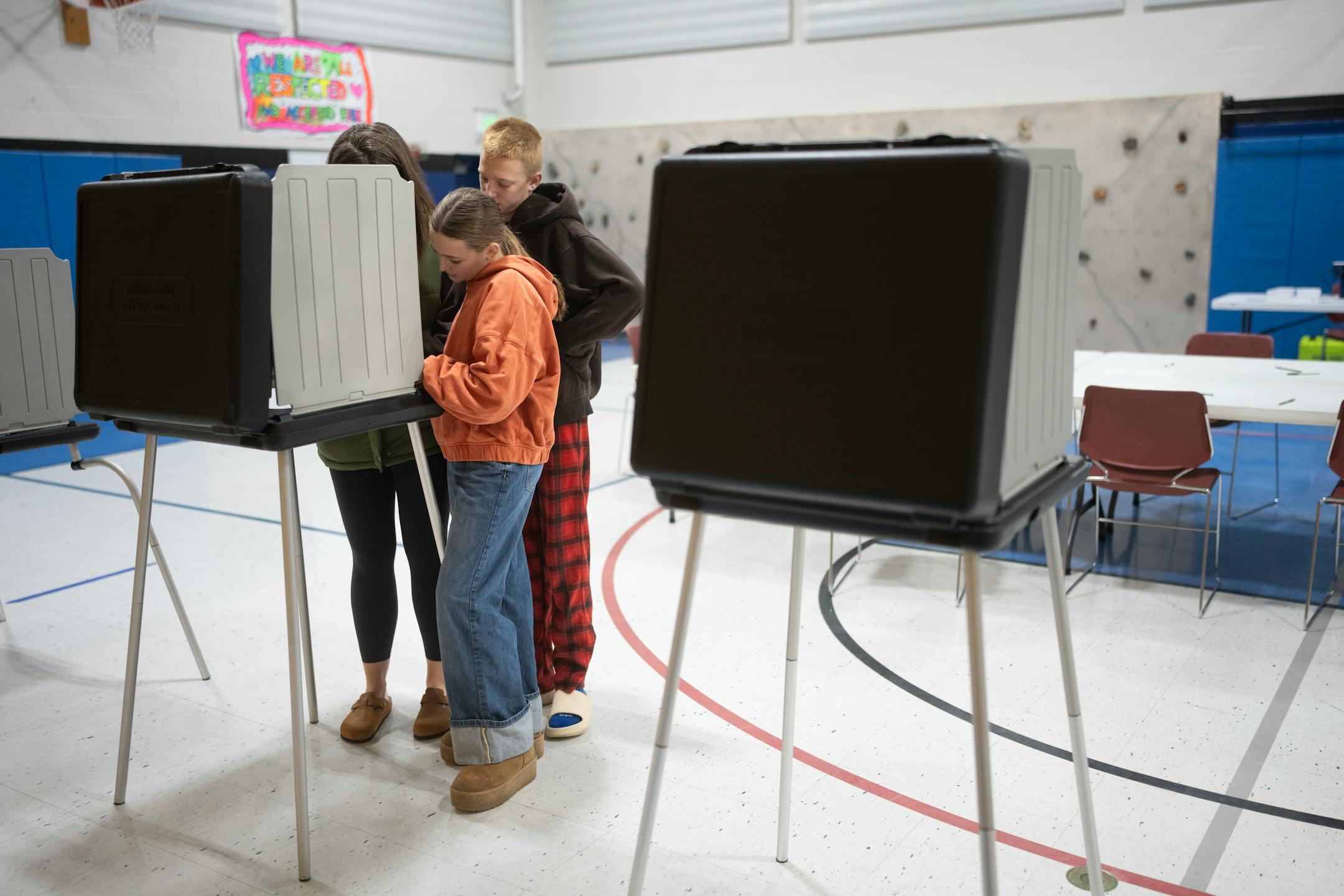
Kristen Lindstedt took her children, Judah, 12, and Joy, 10, to the polls at Woodbury Elementary School in Woodbury on Tuesday. “They’ve come with me to elections since they were tiny,” said Lindstedt. (Renée Jones Schneider/The Minnesota Star Tribune)

DFL holds state Senate

Democrats will keep a slim 34-33 majority in the state Senate after easily winning a special election where Republicans hoped to capitalize on any voter discontent with the DFL after former state Sen. Nicole Mitchell resigned in the wake of a burglary conviction.

If voters were frustrated that Mitchell stayed in office — and was a key vote for Democrats on significant legislation — while fighting those charges, that anger wasn’t enough to swing the race for the Republican.

Democrats are facing a growing number of investigations into Medicaid fraud in state programs, but that did not help the GOP to victory either.

The outcome is yet another sign of Democratic strength in the Twin Cities suburbs. Mitchell’s suburban district, which includes Woodbury and parts of Maplewood, was once favorable ground for Republicans. But voters there have reliably voted for Democrats over the last several elections.

DFL state Rep. Amanda Hemmingsen-Jaeger beat Republican Dwight Dorau by 24 percentage points. Mitchell first won office in 2022 with a smaller margin, beating Dorau by more than 17 percentage points.

Republican Michael Holmstrom Jr. easily won a special election for state Senate by 24 percentage points in a conservative-leaning district that includes Buffalo, Annandale and Monticello. Longtime Republican Sen. Bruce Anderson died in July at 75.

The elections also could be seen as a measure of voter enthusiasm for President Donald Trump and a preview of 2026, when the state will pick members of Congress, and governor.

Democrats did better in both Senate districts than in 2022, a midterm election year for President Joe Biden. The DFLers also ran ahead of Kamala Harris in the 2024 presidential election.

Josie Albertson-Grove, Deena Winter, Matt McKinney and Susan Du of the Minnesota Star Tribune contributed to this story.

about the writer

about the writer

Walker Orenstein

Reporter

Walker Orenstein covers energy, natural resources and sustainability for the Star Tribune. Before that, he was a reporter at MinnPost and at news outlets in Washington state.

See Moreicon

More from Politics

See More
card image
Richard Tsong-Taatarii/The Minnesota Star Tribune

Democrats argue they can win big in the 2026 midterms if the party focuses on affordability and fighting Trump’s agenda.

card image
card image