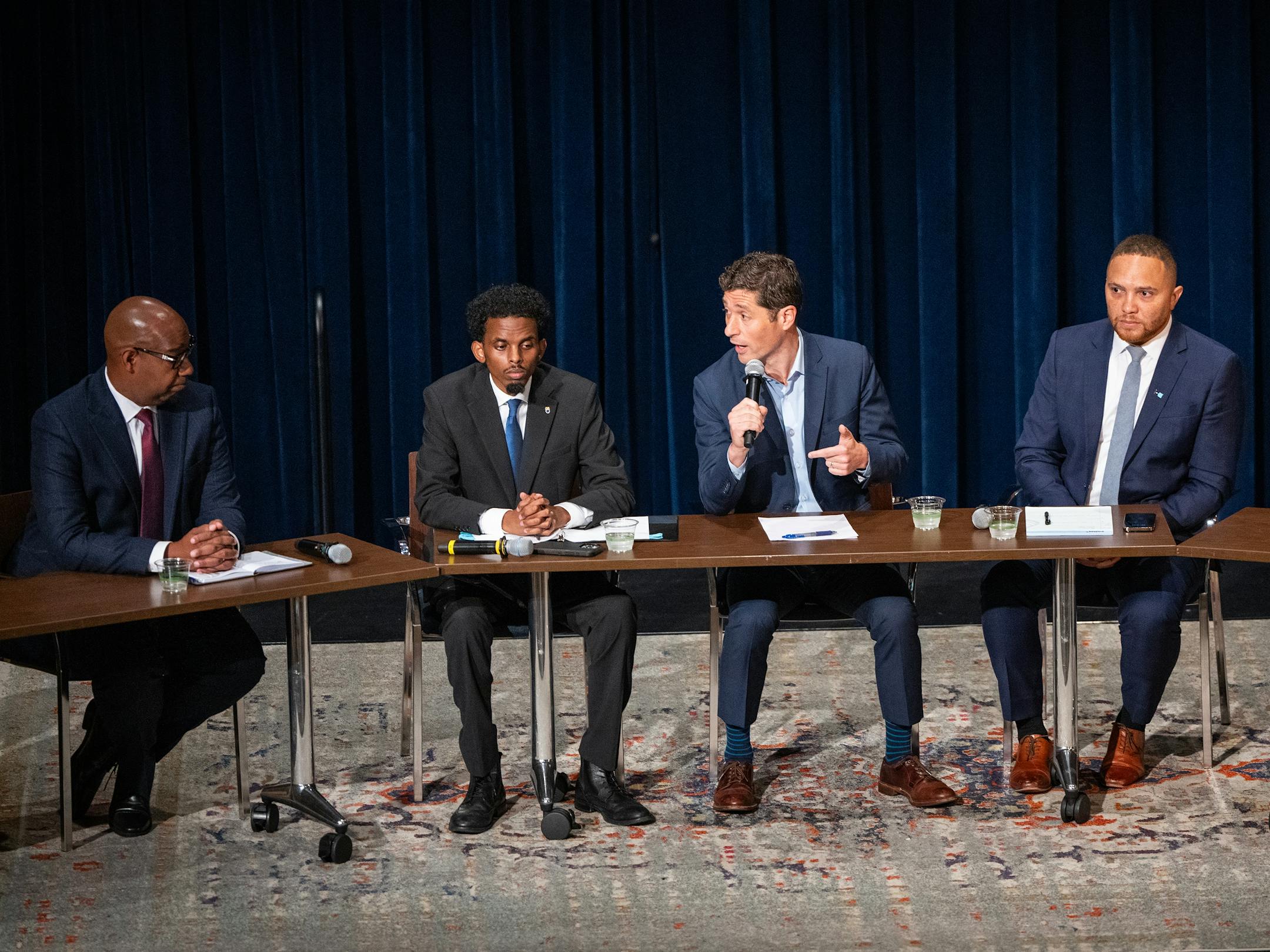
In mid-September at the Lake Harriet Band Shell, three candidates vying to be the next mayor of Minneapolis — Omar Fateh, the Rev. DeWayne Davis and Jazz Hampton — stood together and urged voters to “rank all three” when voters cast their ballots under the city’s ranked-choice voting system.
The moment captured something rare in local politics: rivals campaigning as a team. Calling themselves a “slate for change,” the three men told voters to treat them not as competitors but as allies in their bid to unseat Mayor Jacob Frey.
Their strategy is straightforward: If one challenger is eliminated, votes transfer to another — and keep support inside the same anti-incumbent bloc.
It’s a new twist on the RCV playbook, turning a system designed to reward consensus into a strategy for collective opposition. Yet it has also created some strange bedfellows in a city where even small differences among competing left-of-center ideologies are often fiercely debated.
A system that rewards coalitions
Minneapolis adopted ranked-choice voting in 2009, eliminating its low-turnout August primary and allowing voters to rank candidates in a single November election.
Voters can rank up to three candidates. If no one wins a majority of first-choice votes, the last-place finisher is eliminated, and those ballots are redistributed to the next available choice. The process repeats until someone crosses 50%.
Jeanne Massey, executive director of FairVote Minnesota and a longtime champion of ranked-choice voting, said turnout in city general elections has roughly doubled since the system was adopted and elections moved to November, rising from about 25% in pre-2009 cycles to more than 50% in recent contests.
Early signs suggest voters remain engaged. Minneapolis City Clerk Casey Carl said Thursday that nearly 5,000 people had cast ballots within the first 20 days of early voting, a record pace for a city election.