
Invasive tree pathogen that causes red oaks to ‘bleed’ found for first time in Minnesota

Researchers at the University of Minnesota found the “sudden oak death” pathogen at a Hennepin County nursery.

The Minnesota Star Tribune
November 12, 2025 at 7:47PM
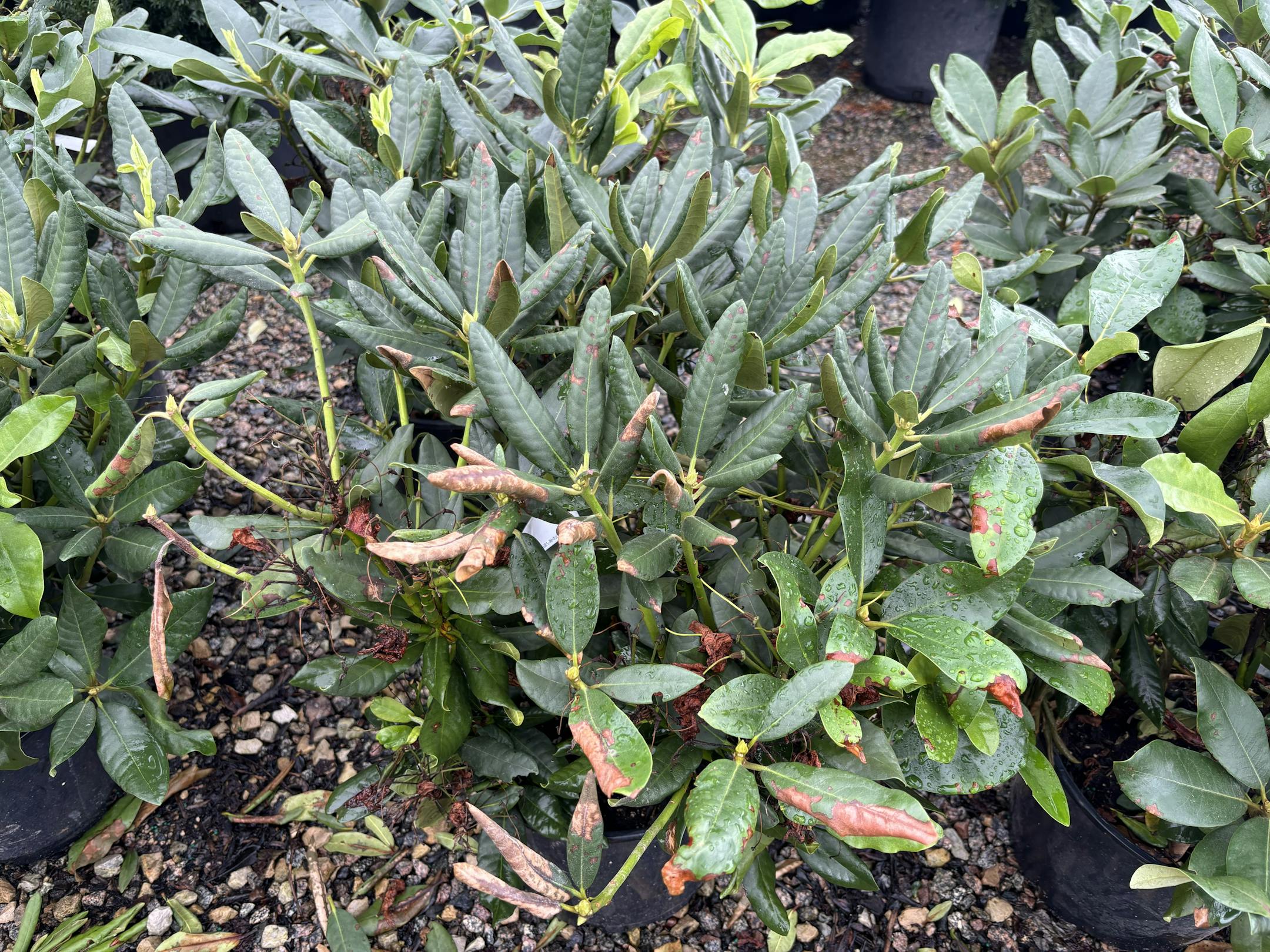
A rhododendron showing signs and symptoms of the pathogen Phytophthora ramorum: brown curling leaves and brown cankers on the stem of the plant. (Nick Rajtar/Provided)

A devastating pest that has killed tens of millions of oak trees in California was discovered for the first time in Minnesota, researchers announced this week.

The “sudden oak death” pathogen, which behaves like a fungus and is always fatal to red oaks, was recently discovered on a rhododendron plant at a Hennepin County nursery. The plant has been destroyed, and the pathogen does not seem to have spread to any others in the nursery or in the nearby soil, researchers said.

“It appears to be an isolated incident so far,” said Nick Rajtar, a postdoctoral associate at the University of Minnesota. “So it’s not time to sound the alarm bells quite yet, but this is a scary pathogen that nobody wants to see get established here.”

The rhododendron sample was taken in July as part of a testing program led by researchers at the U’s Invasive Terrestrial Plants and Pests Center. The U has been using a grant from the state’s Environmental Trust Fund to hunt for invasive forest pests and diseases that could potentially be introduced to Minnesota through nurseries.

The microscopic pathogen, Phytophthora ramorum, isn’t a fungus but is closely related to one. It originated in Asia and spreads spores that can lie dormant in the soil, and even swim through water.

“So you can imagine how that could be problematic at a nursery when they’re watering plants that are very close together,” Rajtar said.

The pathogen was found in California in 2000 and has been steadily spreading east.

Sudden oak death infects the bark of otherwise healthy oaks in their prime. It destroys the tissue inside the tree and makes it seem to bleed, turning the bark a dark reddish brown and forming cankers that seep red liquid. As the tissue is destroyed, the tree can no longer circulate food and water.


It takes a couple of years for the pathogen to kill an infected tree, but individual oaks often don’t show any signs of illness or of being under attack until just a few weeks before they die. That gives the appearance that the pathogen kills them almost immediately.

The pathogen can live on rhododendron and other popular ornamental garden shrubs without killing those shrubs. It can quickly spread from those shrubs to oaks, where it is always deadly.

Outside of California and Oregon, the pathogen has established a foothold in Appalachia and is spreading in British Columbia. So far it has not been known to spread in the Midwest. Iowa found an infected plant at a nursery in 2019, apparently an isolated case, Rajtar said. Infected plants were also found in Wisconsin nurseries, he said.

Researchers hope that the bitter winters of Minnesota are a defense against the pathogen, but they don’t know yet how well it could survive here.

Oak trees may be the single most important plant for fostering wildlife in the state’s ecosystem. Their acorns provide ready food for everything from squirrels and rodents to black bears. Their leaves harbor and feed massive numbers of caterpillars, which, in turn, support entire populations of songbirds.

Nobody knows how to eradicate the pathogen once it establishes itself and begins to spread.

Minnesota Department of Agriculture officials said they will continue to monitor and test the soil, water and plants at the nursery where the infected sample was found.

about the writer

about the writer

Greg Stanley

Reporter

Greg Stanley is an environmental reporter for the Minnesota Star Tribune. He has previously covered water issues, development and politics in Florida's Everglades and in northern Illinois.

See Moreicon

More from Environment

See More
card image
Courtesy Rick Sandri

A citizens group is testing wells as North Star Manganese tries to develop a mine. More than half the sites tested high enough that the water cannot be used in infant formula.

Rising above the treeline (Top of this photo), on the shore of Birch Lake, the Twin Metals Copper Nickel Mine Plant site and Tailings Management site is part of the proposed plan. ] In theory, the copper-nickel mine Twin Metals wants to build in the headwaters of the Boundary Waters Canoe Area Wilderness is a zero-discharge mine — a closed loop that will endlessly recycle millions of gallons of water, including rainwater and the polluted process water it uses to extract ore and