
Wells for drinking water near possible Minnesota mine tainted with manganese

A citizens group is testing wells as North Star Manganese tries to develop a mine. More than half the sites tested high enough that the water cannot be used in infant formula.

The Minnesota Star Tribune
December 5, 2025 at 10:26PM
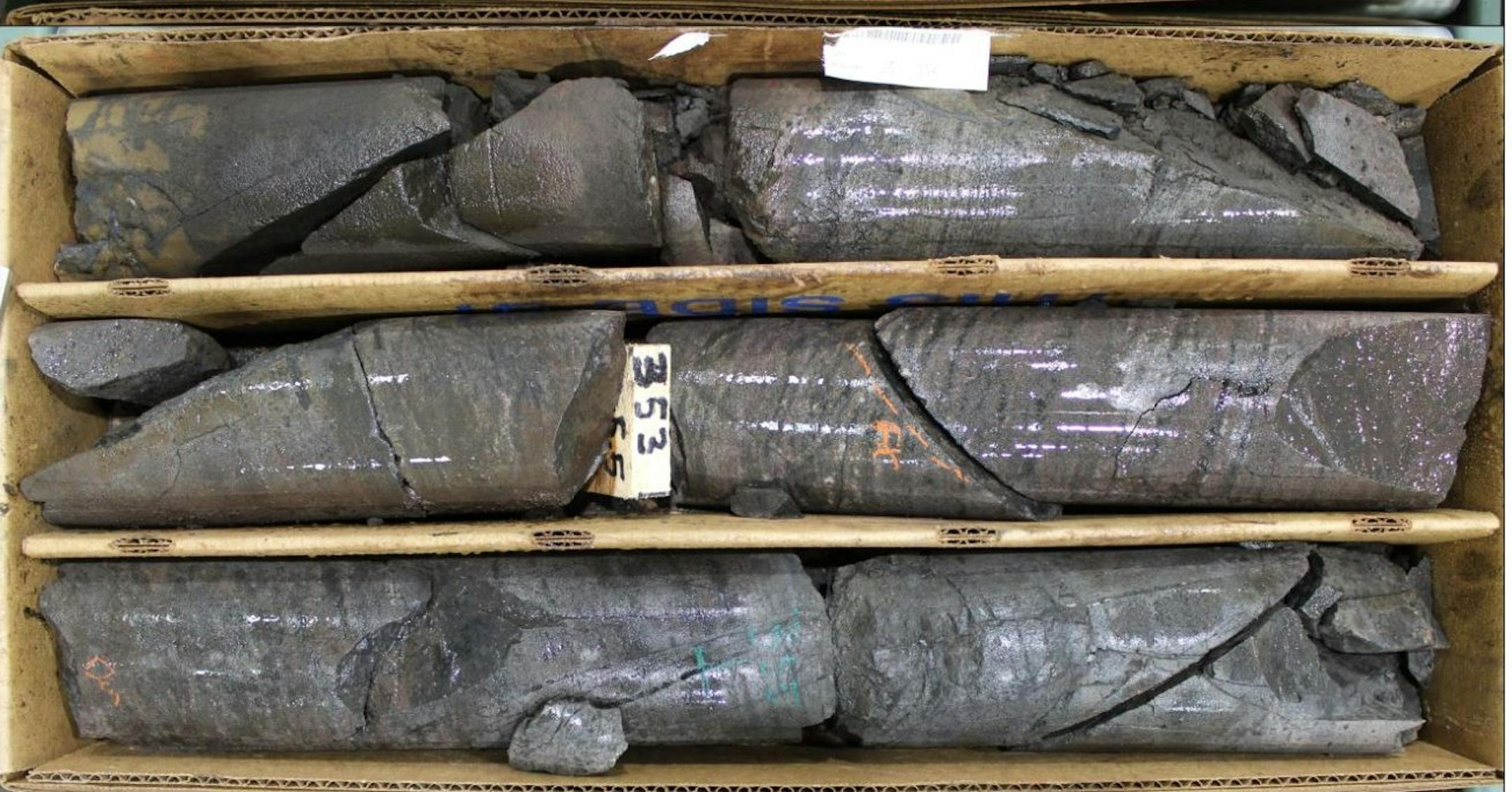
Mineral cores drilled by the company North Star Manganese, which wants to open a mine in Emily, in Minnesota's lakes country. (Courtesy Rick Sandri)

A developer is taking steps to open a mine in a small town in Minnesota’s Lakes Country, aiming to tap into the richest manganese deposit in the United States. Concerned that the mine could pollute drinking water, a group in Emily, Minn., tested wells and discovered some are already tainted.

A citizens group formed to study the pros and cons of a mine tested samples from 21 private drinking water wells. Twelve contained enough manganese, a neurotoxicant, that the water could not be used in infant formula. Five of those wells had enough of the metal that the EPA warns adults against drinking it.

Dan Brennan, a founder of Emily Mine Information Group (EMIG) and a member of the Emily City Council, said the group undertook the water tests because “nobody was doing the baseline testing we thought was necessary.” Macalester College provided students to do the testing and helped fund the first round. A grant from the Western Mining Action Network will help EMIG test two more times next year.

The results of the October sampling, Brennan stressed, only show existing conditions. Mine developers have not drilled for rock samples in the area since 2023, and EMIG is not suggesting that that activity caused the contamination.

But the new data adds to existing concerns as the mine appears to be gaining momentum. Emily could become the latest Minnesota flashpoint in a debate over whether extracting minerals essential for clean energy can be done without polluting another precious resource, water.

North Star Manganese, the mine developer, told the Emily City Council last month that its consultant had determined a mine project would be profitable. At that meeting, on Nov. 12, several residents expressed concerns their drinking water would be tainted by a manganese mine.

Rick Sandri, a founder of North Star Manganese, said he takes contamination concerns seriously, and that they will be studied closely when the project gets closer to environmental review.

“We know that there is a potential project there,” Sandri said. “We fully recognize that water will be one of the main items that we have to be looking at.”

Prospects and risks

The vein of iron and manganese in Emily, a small tourism-dependent town about 20 miles northeast of Brainerd, has been well-known since the last century. U.S. Steel explored it as a possible iron mine in the 1940s and 50s, but there was too much manganese in the deposit to make it worth their while, said Joe Henderson, director of the Lands and Minerals Division at the Minnesota Department of Natural Resources.

More recent attempts to mine the vein have failed to launch. Cooperative Mineral Resources, a company linked with Crow Wing Power, tried and failed to use water alone to extract the metals in 2011.

The Star Tribune revealed in 2018 that former executives of Crow Wing inked deals to give themselves direct royalties from a future mine. The power cooperative serves about 40,000 customers, and is a nonprofit that is owned by its members. Two companies tied to the utility own land and mineral rights at the site, but they tapped North Star in 2019 to take over mine development, at a site 2 miles north of downtown Emily.

Manganese is used in steelmaking and is an essential metal in batteries. North Star is proposing to make a manganese-sulfate salt that would be useful for those batteries, in electric vehicles and other technologies. That would require chemically processing manganese ore after it is mined.

North Star hasn’t decided whether it would site a processing plant in Minnesota, Sandri said.

Commodity and contaminant

Manganese is an essential nutrient for humans in small doses, and commonly found in foods like spinach. But in higher amounts, it can cause developmental problems and issues with attention in children, according to the Minnesota Department of Health. It’s also a common contaminant in many parts of Minnesota, where it’s naturally found in soils deposited by glaciers in the last ice age.

When the metal reaches 100 parts per billion in drinking water, “that’s where we begin to see nervous system and developmental system effects” in infants, said Kris Klos, a supervisor in the health risk assessment unit in the Minnesota Department of Health. The agency says that water with manganese above that level should not be used in formula.

EPA also warns people of all ages not to drink water with manganese above 300 parts per billion, because of potential nervous system damage. Klos said there is “wiggle room” in that level, however, because it assumes people already are consuming a significant amount of manganese in their diet.

Neither threshold is legally enforceable, unlike drinking water limits on lead or PFAS chemicals. But the recent testing in Emily has found several homes that already are above the manganese limits, with slightly more than half of the wells testing above the warning level for infants.

In the case of two homes, the manganese clocked in above 1,000 parts per billion.

“I wouldn’t drink that,” Klos said.

Bob Karls, the hydrogeologist who designed the testing program for EMIG, said the highest results were surprising. By contrast, in a few wells, no manganese was found at all — which made him question whether those homeowners already had water treatment systems that the testing hadn’t accounted for.

Brennan said EMIG is sending letters to homeowners this weekend that will explain their test results and health warning levels.

Those who want to reduce the manganese in their water can install water softening systems, or reverse osmosis for the worst contamination. But there’s limited grant funding to install those systems on private wells. A whole-home reverse osmosis system can cost up to $12,000 to install, according to an MDH estimate.

Moving past kindergarten

Sandri, of North Star, likes to say that his mine proposal has just “graduated kindergarten.” There’s years of work to do before ground is broken.

Right now, the company estimates that a manganese mine could potentially run for 23 years, and employ between 75 and 100 people. Manganese concentrations found at the site average around 17.4%, and North Star estimates the mine would produce up to 1,200 metric tons of material a day.

Next year, the company’s consultants will weigh different designs, though Sandri thinks the mine will be underground, and start planning their own environmental sampling program.

North Star has rights to 291 acres of private land, but it has asked the DNR for access to an additional 800 acres. Sandri said the additional land mostly will be used as a buffer between mining operations and the neighbors.

But the leasing request sent to DNR has been stalled since 2021. Henderson, of DNR, said local officials haven’t been uniformly supportive of it. He said that North Star promised to educate the public on the additional leases before DNR advances the request to the state board that needs to approve it.

Sandri also said North Star still is negotiating the project’s royalty rates with the state.

Granting leases would allow for more mineral exploration, but it doesn’t mean the agency is approving a mine, Henderson said.

Meanwhile, Karls, the hydrogeologist, has suggested to EMIG that the group should think about additional testing. Air pollution could be another major concern, and it might be helpful to measure whether manganese is already in the air, dispersed in dust from soils rich in the metal, Karls said.

EMIG was founded to collect information, Brennan said, and has not taken a formal position on whether a mine should open in Emily. Still, he questioned whether the mine would fit in an area known for its cabins, lakes and snowmobiling — and that already has manganese in the water.

“It doesn’t take much for somebody who’s coming to recreate to choose another town over the one with a manganese mine,” he said.

about the writer

about the writer

Chloe Johnson

Environmental Reporter

Chloe Johnson covers environmental health issues for the Minnesota Star Tribune.

See Moreicon

More from Outdoors

See More
card image
Courtesy Rick Sandri

A citizens group is testing wells as North Star Manganese tries to develop a mine. More than half the sites tested high enough that the water cannot be used in infant formula.