
Gray wolf numbers fall to their lowest level in a decade in far northern Minnesota

The Voyageurs Wolf Project estimated a 20% decline in wolf numbers this year, likely because of mild winters and fewer deer.

The Minnesota Star Tribune
October 27, 2025 at 8:38PM
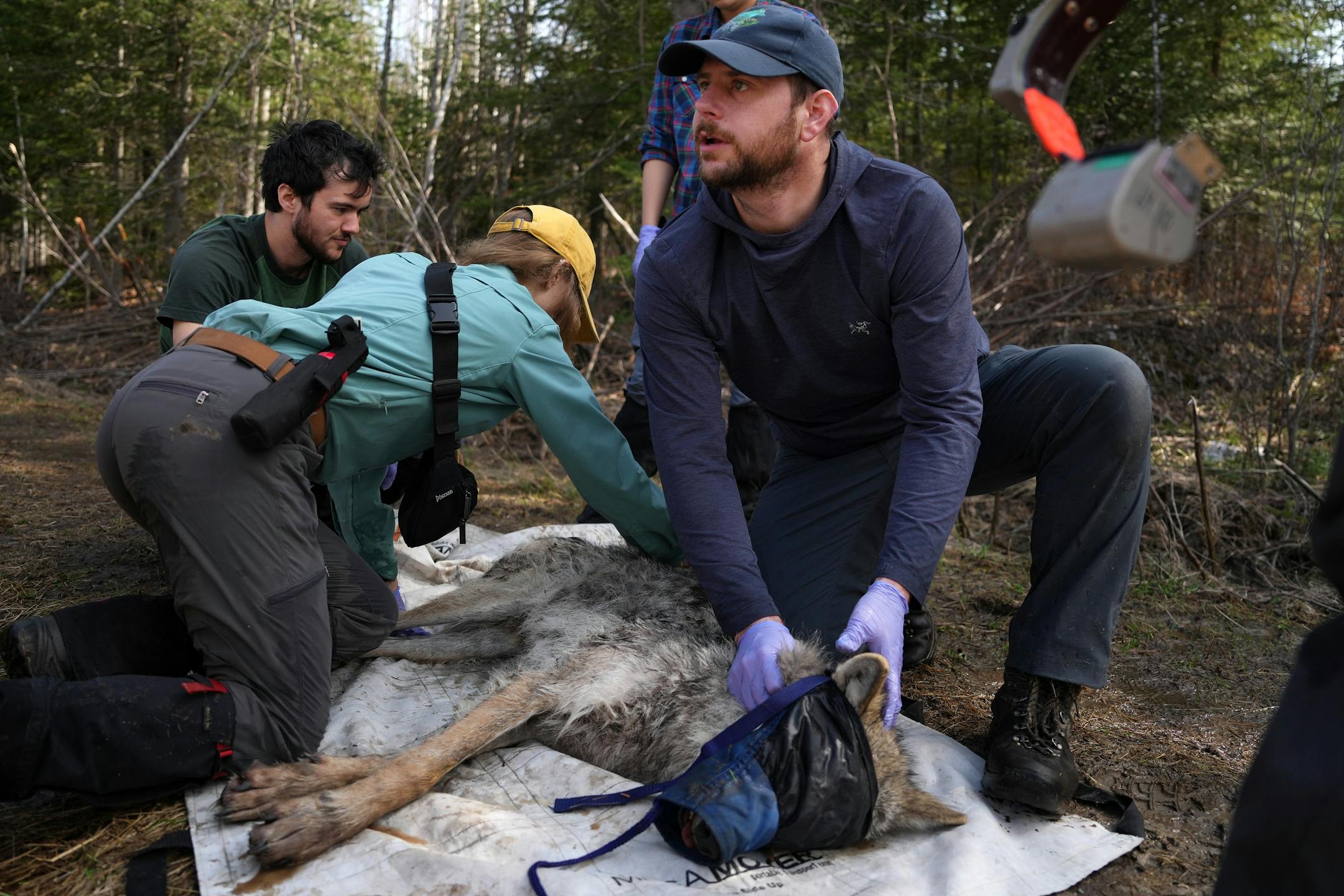
Researchers with the Voyageurs Wolf Project fit a GPS collar on a wolf in 2023. Mild winters and scarce deer have likely taken a toll on gray wolf populations. (Anthony Souffle/The Minnesota Star Tribune)

A string of mild winters and scarce deer may have taken their toll on northern Minnesota’s wolves.

The wolf population in and around Voyageurs National Park dropped to roughly 100 this year, its lowest point in more than a decade, according to an annual survey from the Voyageurs Wolf Project.

Researchers estimated there were 45 wolves per 1,000 square kilometers in the woods around Voyageurs, down from 55 in 2024 and 65 in 2023.

The dip is part of the natural ebb and flow between predator and prey, said Tom Gable, project lead.

The wolf population in the area is still healthy and will likely climb again as deer numbers rebound, he said.

“It follows a fairly typical pattern,” he said.
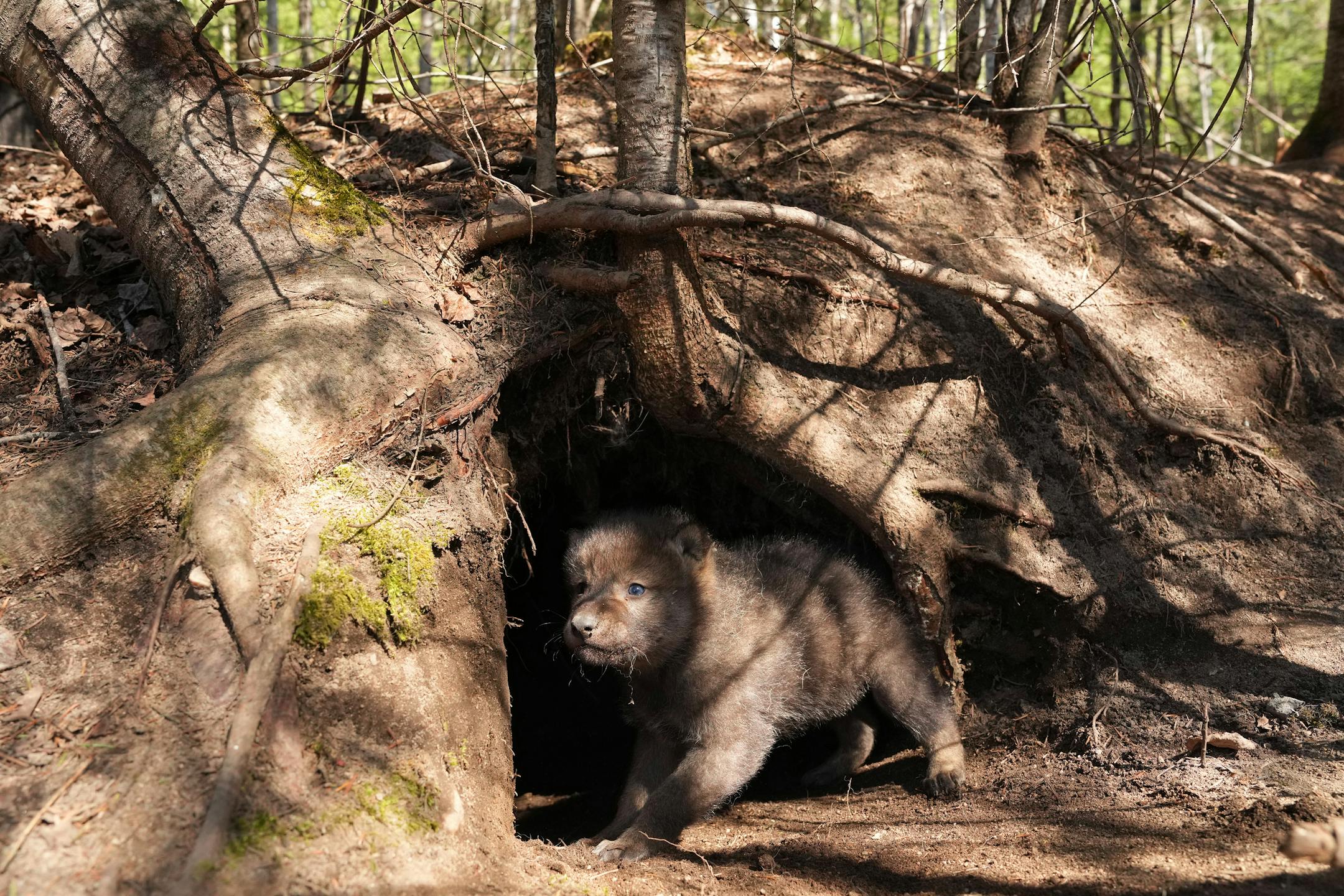
A male pup stands outside its den after researchers from the Voyageurs Wolf Project tagged and recorded its measurements while conducting pup counts in May 2024 near Kabetogama, Minn. (Anthony Souffle/The Minnesota Star Tribune)

The winters of 2022 and 2023 were unusually severe in northern Minnesota, with deep snowpacks lasting well into spring. That snow, especially when it lingers into April and May, is tough on deer.

“Deer can weather deep snow for a month or two, but if it drags into spring it really starts to challenge them,“ Gable said.

That’s because they’ve already burned through most of their fat reserves to survive the winter. The snow makes it harder for them to move, requiring more energy to get around and evade wolves. Eventually, the deer become a relatively easy meal.

Gable said the deer population in the Voyageurs area was cut in half by the spring of 2023, following the two severe winters.

Mild winters, on the other hand, are extremely difficult for wolves. Without snow on the ground to slow them down, deer stay fast and energized and better able to elude predators. All other sources of food for the wolves, including beavers, fish and blueberries, are inaccessible. The wolves burn through their fat reserves by the spring and struggle to raise their pups.

The winter of 2024 was one of the mildest ever recorded in northern Minnesota. Another mild winter in 2025 brought very little snow, as well.

The Voyageurs Wolf Project, run by the University of Minnesota, has followed dozens of wolves since 2014 using GPS collars and several hundred trail cameras to track the size and behavior of more than 24 wolf packs that live and hunt in the area. The project is funded by the state’s Environment and Natural Resources Trust Fund.

Minnesota has more wolves than any other state in the Lower 48 and is the only place in the United States outside of Alaska that never eradicated them.

The state’s wolf population has been stable since the 1990s, typically fluctuating between 2,400 and 3,000. The Minnesota Department of Natural Resources has not yet completed its 2025 population estimate.

Gable said he couldn’t say if wolf populations fell in other parts of the state as steeply as they did in the Voyageurs area.

The pattern may already be turning back in the wolves’ favor.

Deer numbers in the Voyageurs area jumped more than 10% in 2024, Gable said. Early signs show that deer numbers may have had an even bigger jump this year.

More deer in the woods means more food for the wolves — that is, so long as they get a little help from the snow.

about the writer

about the writer

Greg Stanley

Reporter

Greg Stanley is an environmental reporter for the Minnesota Star Tribune. He has previously covered water issues, development and politics in Florida's Everglades and in northern Illinois.

See Moreicon

More from Environment

See More
card image
Courtesy Rick Sandri

A citizens group is testing wells as North Star Manganese tries to develop a mine. More than half the sites tested high enough that the water cannot be used in infant formula.

Rising above the treeline (Top of this photo), on the shore of Birch Lake, the Twin Metals Copper Nickel Mine Plant site and Tailings Management site is part of the proposed plan. ] In theory, the copper-nickel mine Twin Metals wants to build in the headwaters of the Boundary Waters Canoe Area Wilderness is a zero-discharge mine — a closed loop that will endlessly recycle millions of gallons of water, including rainwater and the polluted process water it uses to extract ore and