Hundreds of service workers at the University of Minnesota could continue strike through weekend

Some dining halls on campuses statewide were shut down Wednesday. More than 1,400 workers are on strike after voting down the U’s final offer.

September 11, 2025 at 5:30PM
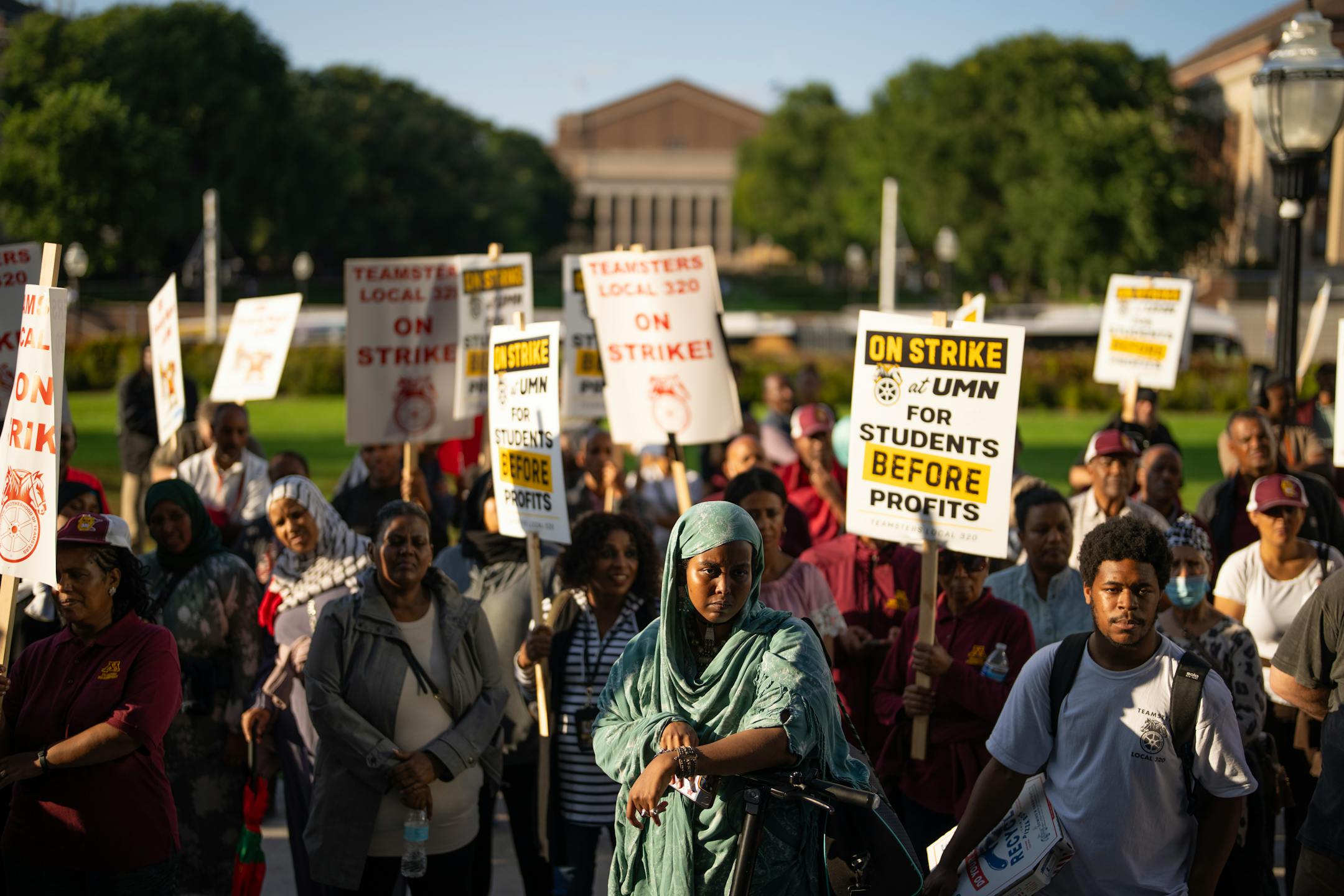
Teamsters listen to a speaker while picketing in front of Coffman Union on the U of M campus in Minneapolis as their strike entered its second day on Wednesday. (Jeff Wheeler/The Minnesota Star Tribune)

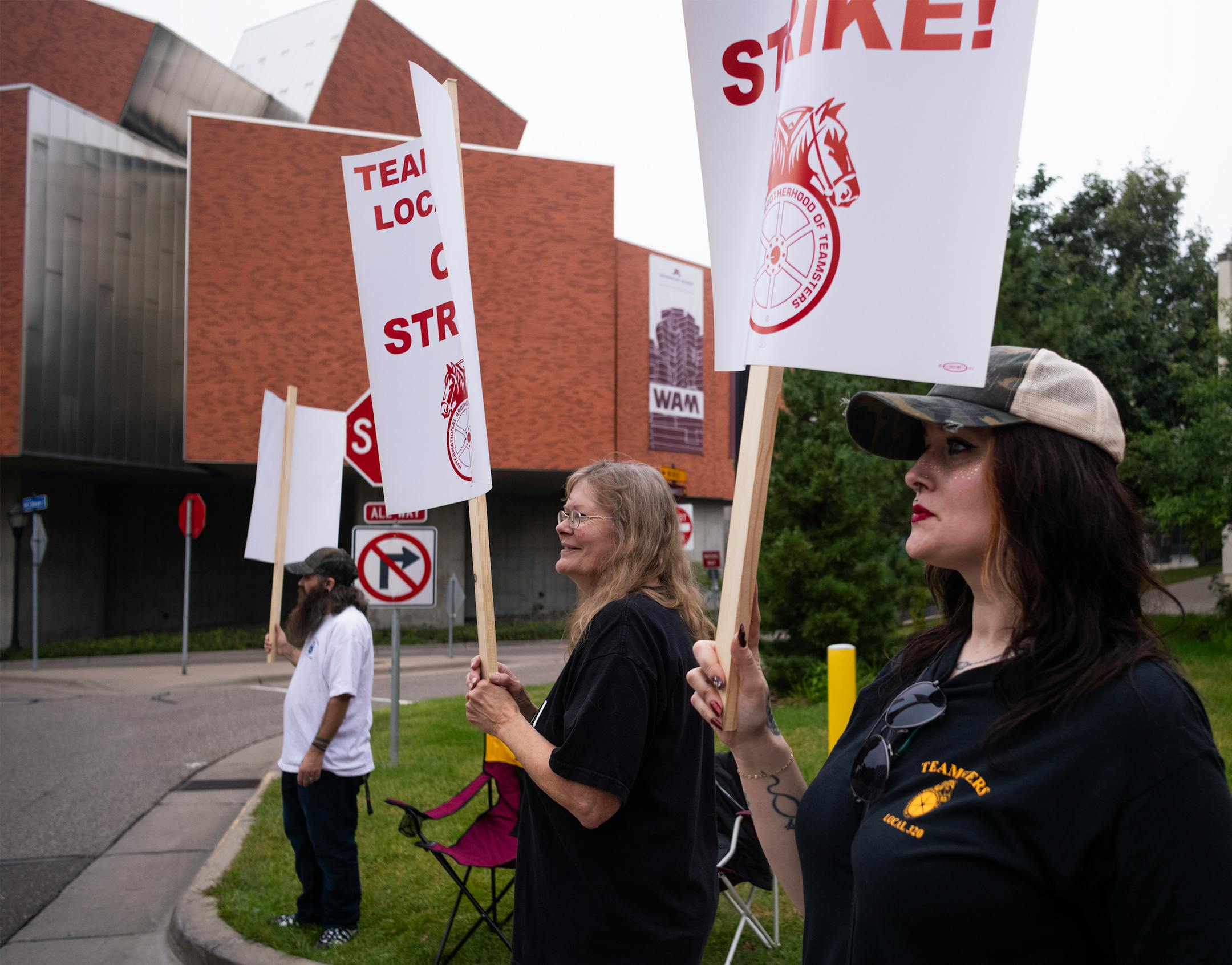
Dining halls and restaurants went dark, deliveries were reduced or halted and workers shouted demands for better wages at University of Minnesota campuses across the state Wednesday as the Teamsters’ strike continued.

More than 1,400 service workers, including custodial, maintenance, food service and sanitation workers, have walked off the job in the first Teamsters strike since the union was created at the U in the 1970s.

Gus Froemke, a spokesman for Teamsters Local 320, said the strike will likely stretch through the end of the week or into the weekend after the Teamsters turned down the U’s final contract offer.

No date is set for negotiations to restart. He said the Teamsters won’t return to the bargaining table until the U moves on the union’s sticking points over wages and the length of the contract. The two sides have been in negotiations since March.

“The longer this goes, the closer we could get to sitting down,” Froemke said.

The Teamsters are hoping for a 3.5% pay hike to match other U union contracts. The U set its final offer at a 3% wage increase in September, calling it “fair and equitable.” The offer reflects “its continued commitment to all employees throughout the University and its obligation to be fiscally responsible,” the U said.

The strike comes months after the U approved steep tuition hikes and cuts that will eliminate about 300 jobs across its five campuses. Many faculty members and students protested the 7% cut in academic programs and 6.5% tuition increase for undergraduate, in-state students at the Twin Cities campus — the biggest increase in 14 years.

Officials said the tuition hike and budget cuts were necessary after federal research support was cut and state funding remained flat, which amounts to a 3% to 4% decrease, they said, after taking inflation into account. Earlier this summer, the Gophers athletic department also faced a nearly $9 million shortfall.
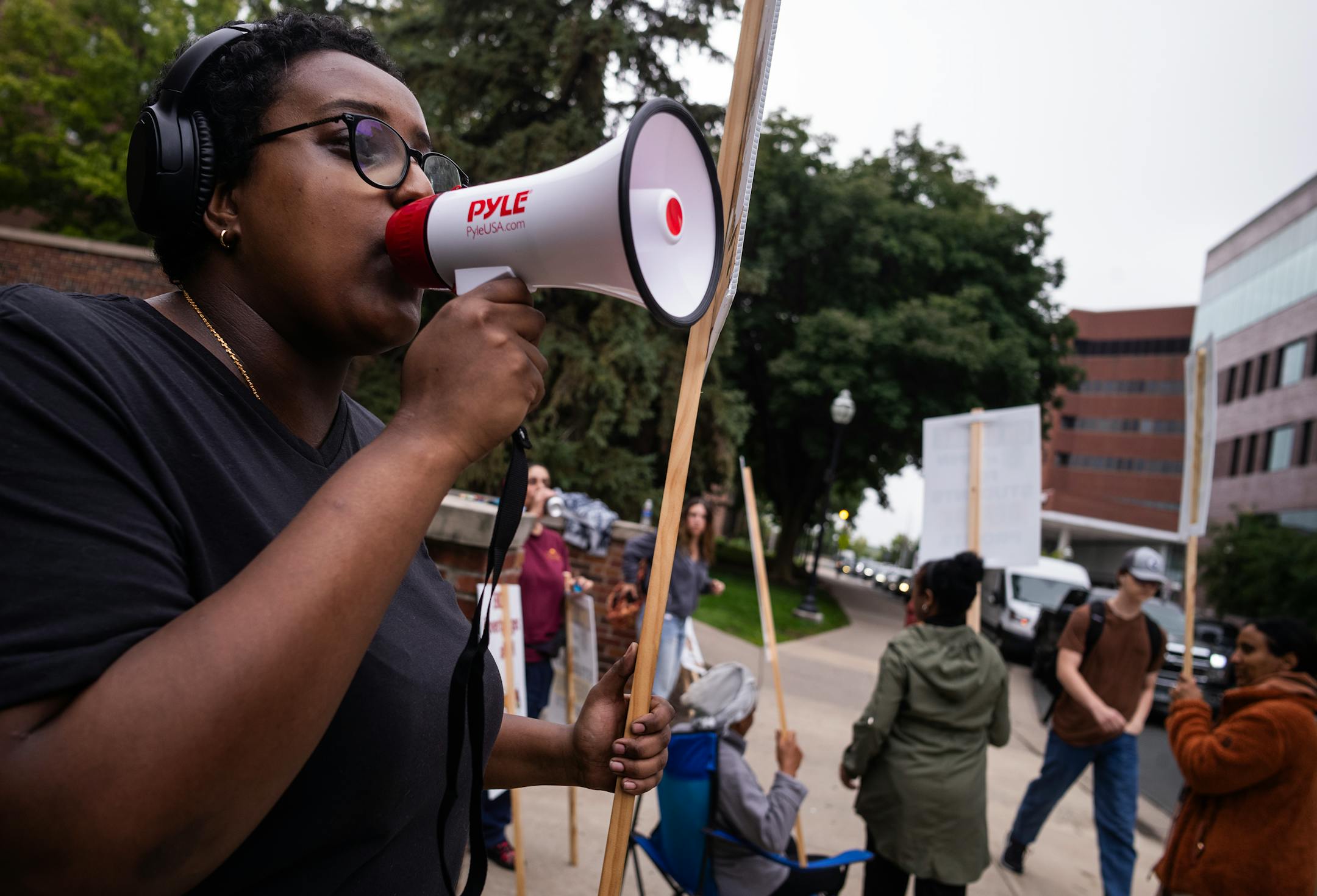
U of M workers, including janitor Bethel Tsegaye, picket on the campus to demand higher wages. (Richard Tsong-Taatarii/The Minnesota Star Tribune)

Picket lines across the state

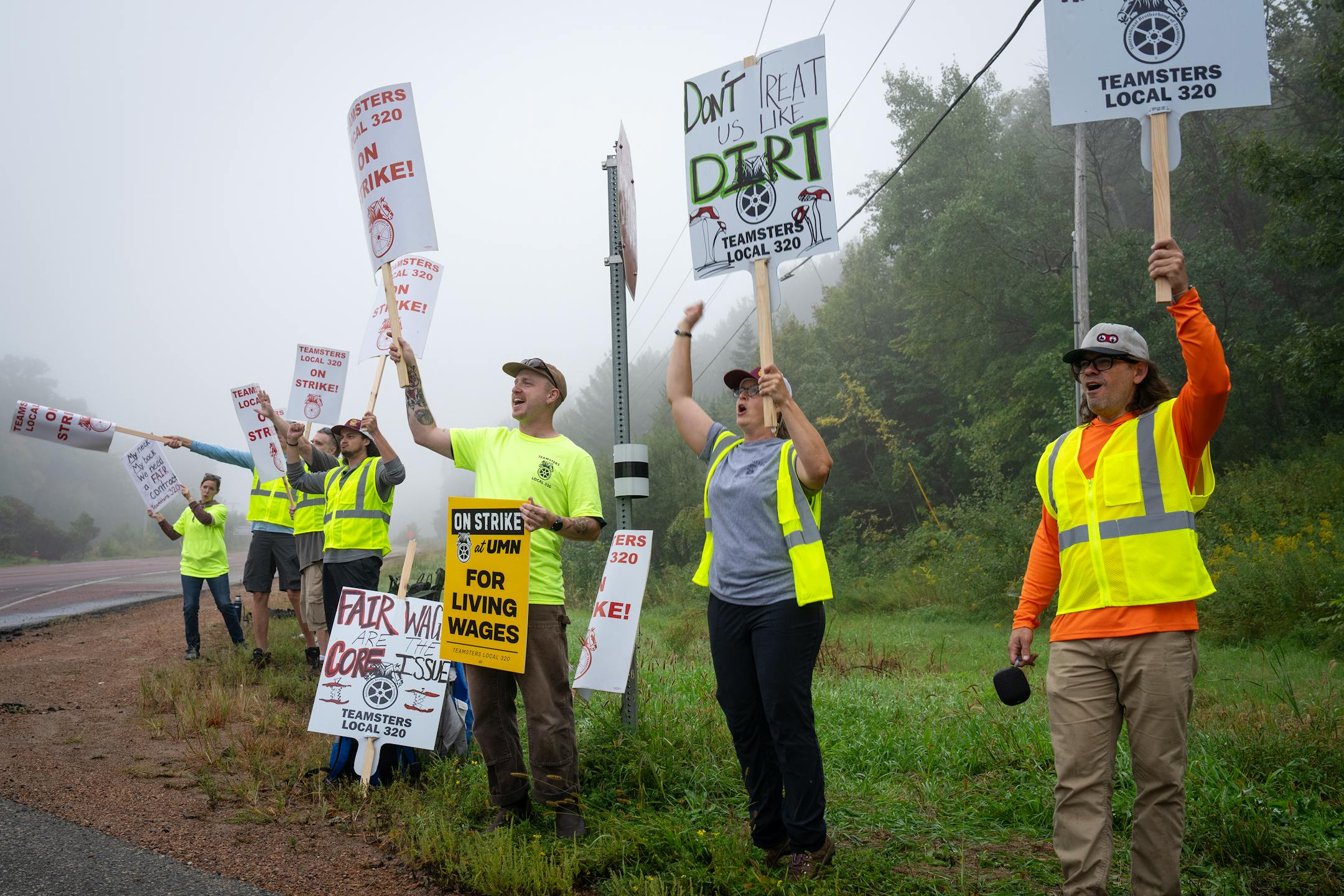
The strike started at 10 p.m. Monday at the Crookston and Morris campuses, at 4 a.m. Tuesday in Duluth and at 7 p.m. Tuesday in the Twin Cities. Workers are also on strike at the U’s satellite locations, including Austin, Grand Rapids and Waseca. In Chaska, employees of the Minnesota Landscape Arboretum, which is part of the U, also picketed.

Workers said it’s the first instance in which employees have left their jobs to picket in recent U history, and possibly ever.

The U said it received “extremely concerning” reports about some picketers’ actions. In Minneapolis, picketers blocked deliveries of essential supplies to the M Health Fairview University of Minnesota Medical Center, the U said. Other picketers threatened to report temporary workers to Immigration and Customs Enforcement (ICE) if they worked during the strike, the U said. One person was arrested but later released for blocking a loading dock, the U said.

In Duluth, the U said a Teamsters leader was issued two citations after smashing a sign on a vehicle. Such “unacceptable actions” won’t be tolerated, the U said.

The Teamsters said in a news release they weren’t aware of any reports about picketers threatening ICE reports, adding that the “unsupported allegation defies logic as the workforce on strike is comprised largely of immigrants.” “Several” picketers were arrested, which the Teamsters said was meant to “intimidate and chill union members” from picketing.

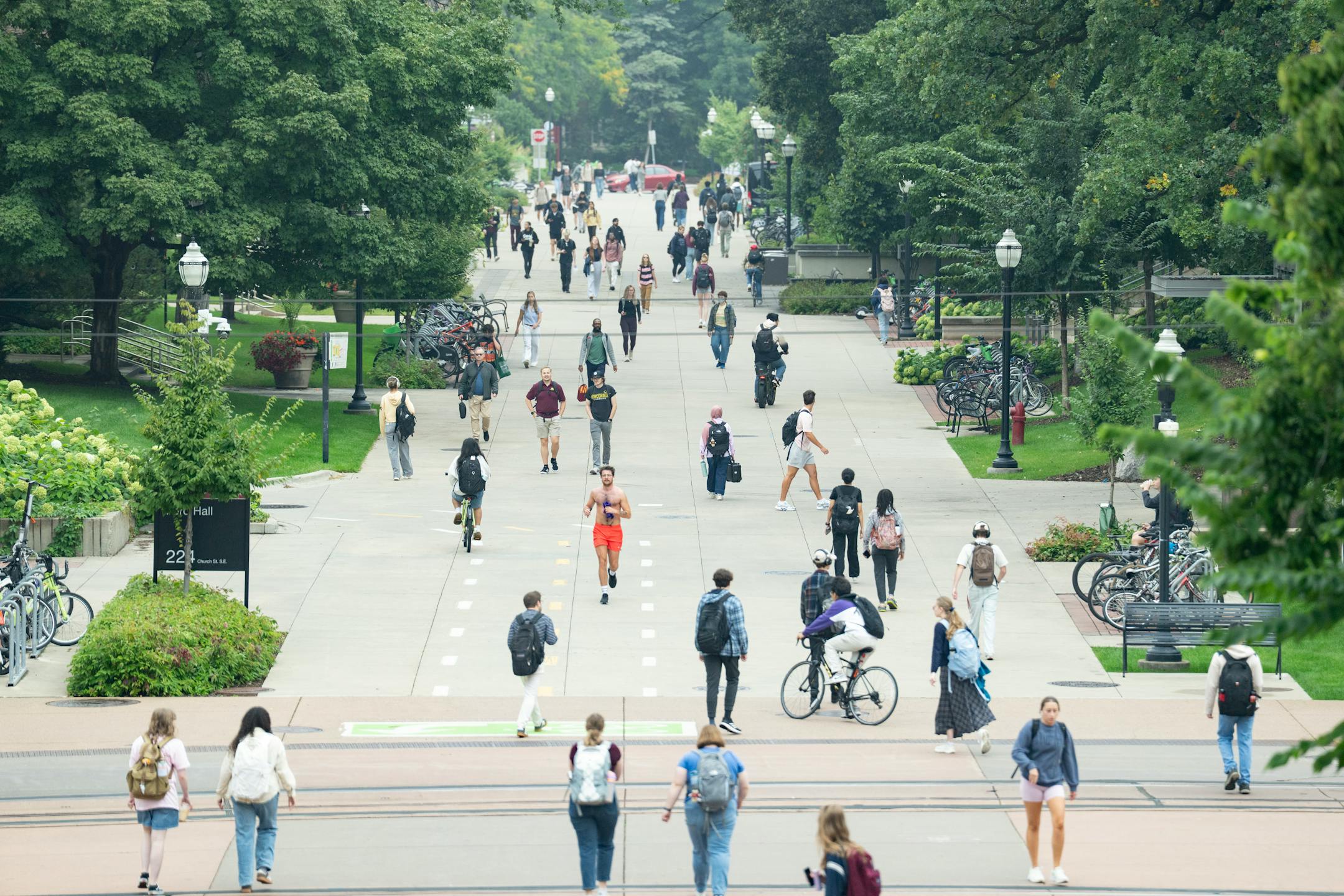
U officials have said they’re trying to minimize the strike’s effects on students.

Students move through the University of Minnesota campus on Wednesday. (Alex Kormann/The Minnesota Star Tribune)

Some students said they didn’t know about the strike while others said they were affected by dining hall changes. Students at Lind Hall on the East Bank said some administrators or office workers appeared to be staffing the dining hall and the Starbucks was closed.

“They had paper plates yesterday,” said Alyssa Pandya, a freshman, adding that some food stations were closed.

Inside Coffman Memorial Union, restaurants were closed. A grab-and-go option was also closed. The bookstore was still open, and students ate at tables on the lower level. A vending machine with sandwiches and salads was nearly empty.

On the Duluth campus, the Plaza Food Court was closed and almost empty at lunch time and a nearby coffee shop was also closed.

“I wouldn’t mind a burger right now,” said Remington Espanet as his friend settled instead for a bag of vending-machine potato chips.

At several campuses, deliveries have been reduced or halted, Froemke said. Students said they missed deliveries of items like toiletries.

Minnesota Landscape Arboretum workers picket on the side of Highway 5 near the entrance of the Arboretum in Chaska. (Leila Navidi/The Minnesota Star Tribune)

A waiting game

David Larson, a professor of labor law at Mitchell Hamline School of Law, said the strike comes at a precarious time for higher education. Limitations on federal funding imposed by the Trump administration change the negotiations, Larson said.

“In past years, we could navigate our differences with some confidence and make it work,” he said. “I don’t know if we can now because what we thought was guaranteed in the past, [with funding], we don’t think is guaranteed anymore.”

For now, it’s a waiting game.

“It comes down to who could weather the storm best,” he said of the strike. “Either the workers are going to say ‘I can’t afford to be on strike any longer,’ or the university is going to feel the pressure and make greater concessions.”

The Bureau of Mediation Services has been working to find common ground between the U and the Teamsters since June 10. The mediators assigned to the case call both sides daily to try to get them back to the table, Commissioner Johnny Villarreal said.

“The Bureau can’t make either side do anything,” Villareal said. “It’s really up to the parties when something changes.”

The Teamsters were on the brink of striking in August before students returned to campus. Instead they stayed on the job while negotiations continued.

“We are not asking for a lot,” said John Harvat, who has worked for building and grounds at the U for 31 years. “We just want to get the wages up a little bit.”

Their last contract ended June 30 but is extended until a new one is reached. The Teamsters also don’t agree with the U on an end date. The Teamsters typically sign three-year contracts ending in June. The U has offered a shorter term, ending in October or December.

“It’s time that the university start to respect its service workers more,” said Justin Rodin, a cook at the Panda Express in Coffman Memorial Union. “I work in dining, and we are the lowest-paid employees at the university.”

Tara McCoy (right), a University of Minnesota employee, joins in on a picket near Coffman Memorial Union on the university campus on Wednesday. (Richard Tsong-Taatarii/The Minnesota Star Tribune)

Twin Cities Teamsters employed by the U are predominantely women and people of color, Froemke said. Starting in June 2023, every Teamster position began at $20 per hour.

When they filed their intent to strike in August, the Teamsters approved “enhanced strike benefits” for U members of $1,000 a week. It’s not clear how long those benefits could last. SEIU-Healthcare Minnesota and Iowa also donated $10,000 to the effort.

Across the campuses, union members carried signs reading “Students Before Profits” and “End Poverty Wages at UMN.”

“We’re not asking for the moon here and we’re really close to a deal,” said Christy O’Connor, who has worked at the U for 26 years.

As she picketed outside Centennial Hall, Bethel Tsegaye said she believes the U isn’t giving workers a living wage.

“We got the president out here making millions,” she said, referring to President Rebecca Cunningham, who makes just over $1 million per year. “She can’t give us a little bit of money?”

Albert Curtis, a facilities management worker for 37 years, said the strike is also about new and younger employees.

“It’s for them to have a future at the U of M — one that’s sustainable," he said.

Sofia Barnett, Christa Lawler and Tyler Church of the Minnesota Star Tribune contributed to this story.

about the writers

about the writers

Erin Adler

Reporter

Erin Adler is a news reporter covering higher education in Minnesota. She previously covered south metro suburban news, K-12 education and Carver County for the Minnesota Star Tribune.

See Moreicon

Eleanor Hildebrandt

Reporter

Eleanor Hildebrandt is a reporter for the Minnesota Star Tribune.

See Moreicon