Service workers across the University of Minnesota system strike

The walkout at the Crookston and Morris campuses began late Monday night. Demonstrators also picketed at the Twin Cities campus.

September 10, 2025 at 2:27AM
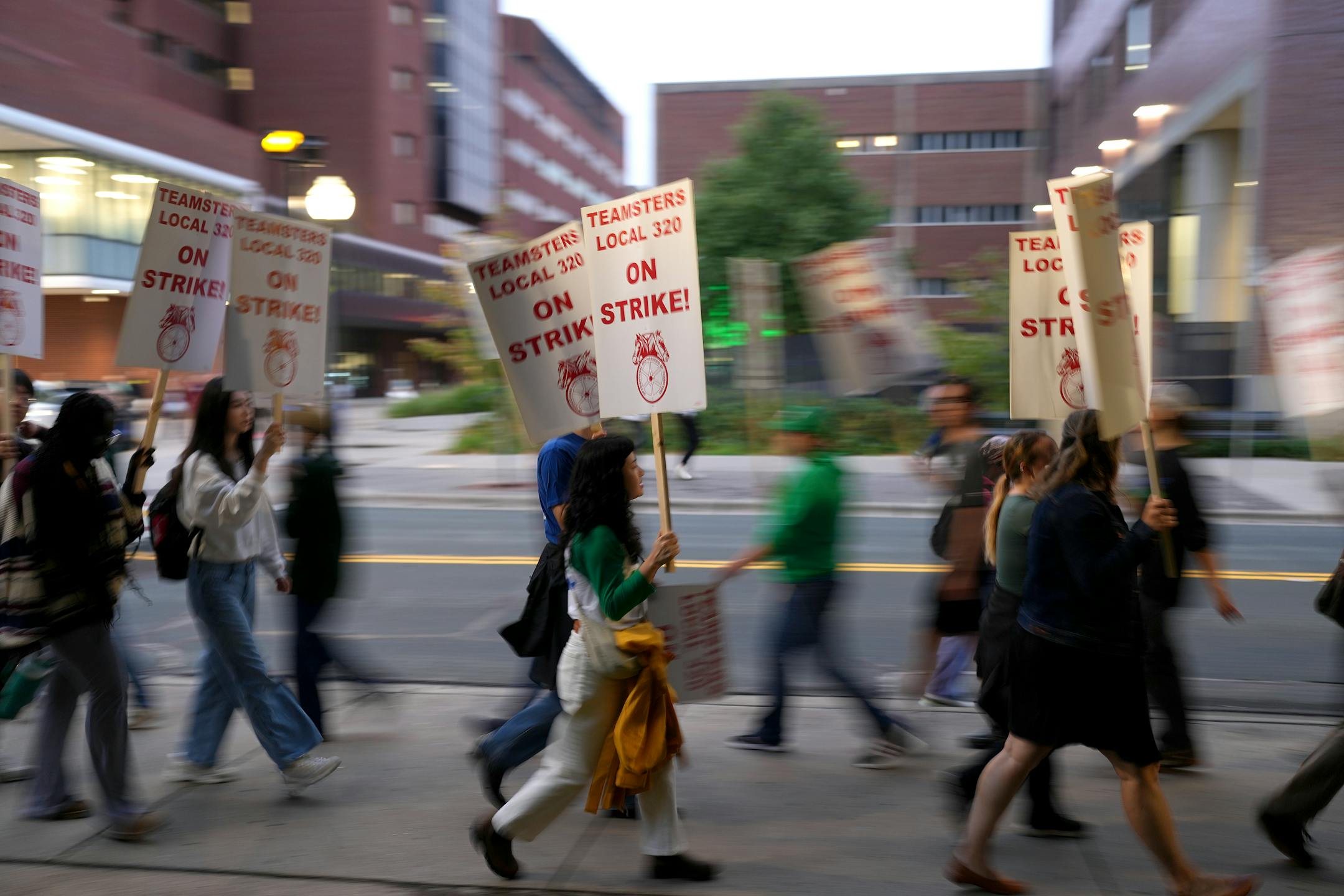
University of Minnesota workers, and members of Teamsters Local 320, strike on SE Harvard Street in Minneapolis on Tuesday. (Jeff Wheeler/The Minnesota Star Tribune)

More than 1,400 University of Minnesota workers began striking this week.

Starting Monday night and continuing into Tuesday evening, custodial, maintenance, food service and sanitation workers and their supporters demonstrated at several campuses as contract negotiations with the university stalled.

As many as 200 people carried signs and chanted Tuesday night at the University of Minnesota’s Twin Cities campus. Picketers marched up and down Harvard Street between the university medical center and multiple student residence halls starting at 7 p.m., just as rain began to fall.

They chanted that workers were understaffed, underpaid and working under an unfair contract. The strike will affect about 900 workers on the campus.
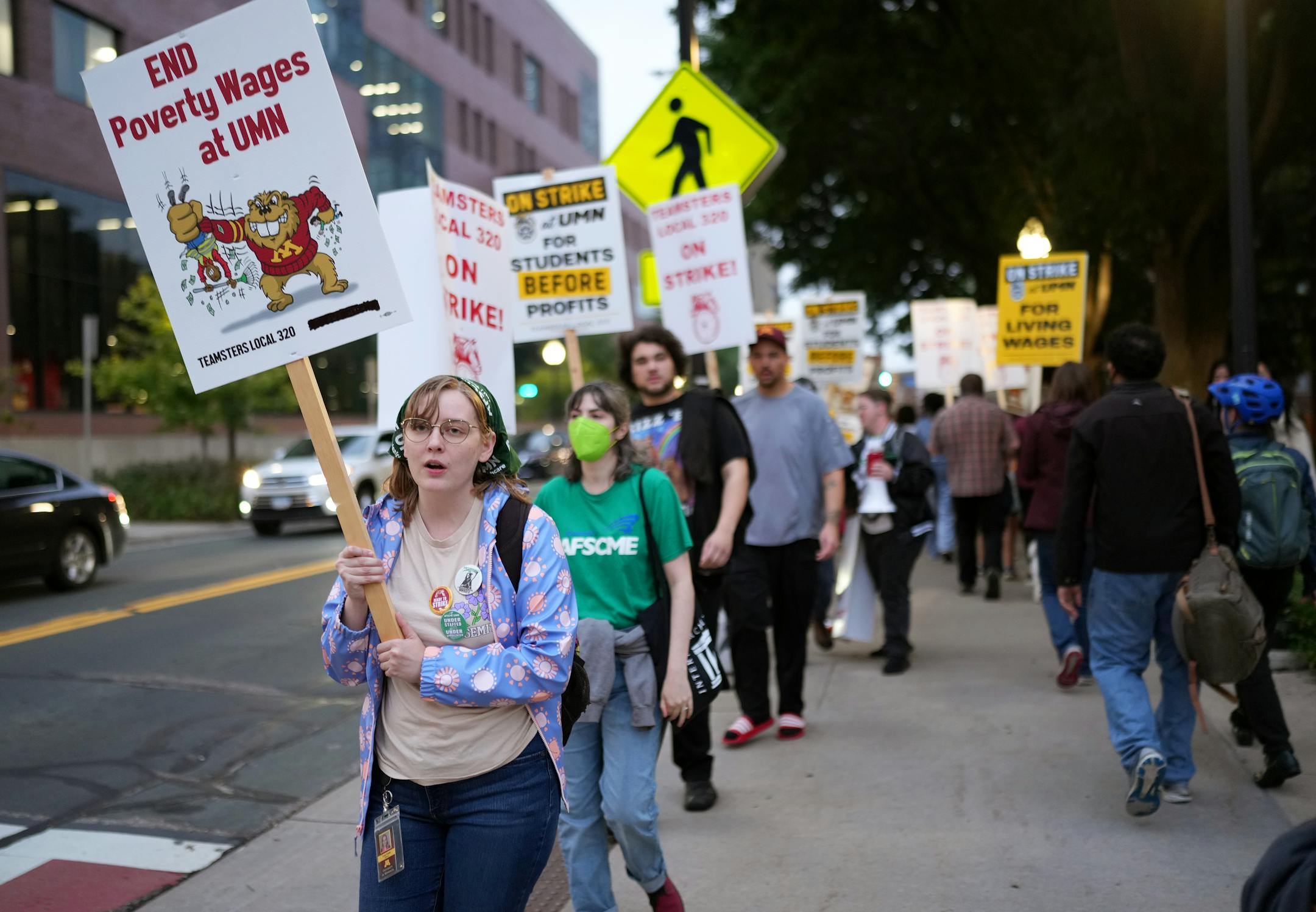
University of Minnesota workers, part of Teamsters Local 320, strike on Harvard St SE in Minneapolis on Tuesday. (Jeff Wheeler/The Minnesota Star Tribune)

Alek Mansour, a groundskeeper for a residence hall, said he felt confident workers would achieve their goals.

“We have no choice, he said. “I think everyone is struggling with this inflation. Everything is expensive.”

Workers also demonstrated on the Crookston, Morris and Duluth campuses.

The university and Teamsters Local 320 have been in contract negotiations since March. The Teamsters voted down the last, best and final offer made by the U on Friday night.
In an email to students’ families, the U said it would try to minimize disruptions while working to reach a contract agreement. But by Tuesday afternoon, effects of the strike had started to ripple across campuses.

The Crookston campus has canceled all nonessential catering events, delayed all nonessential maintenance requests and suspended parking enforcement. The Duluth campus has reduced capacity in its dining services, custodial services, and general maintenance services.

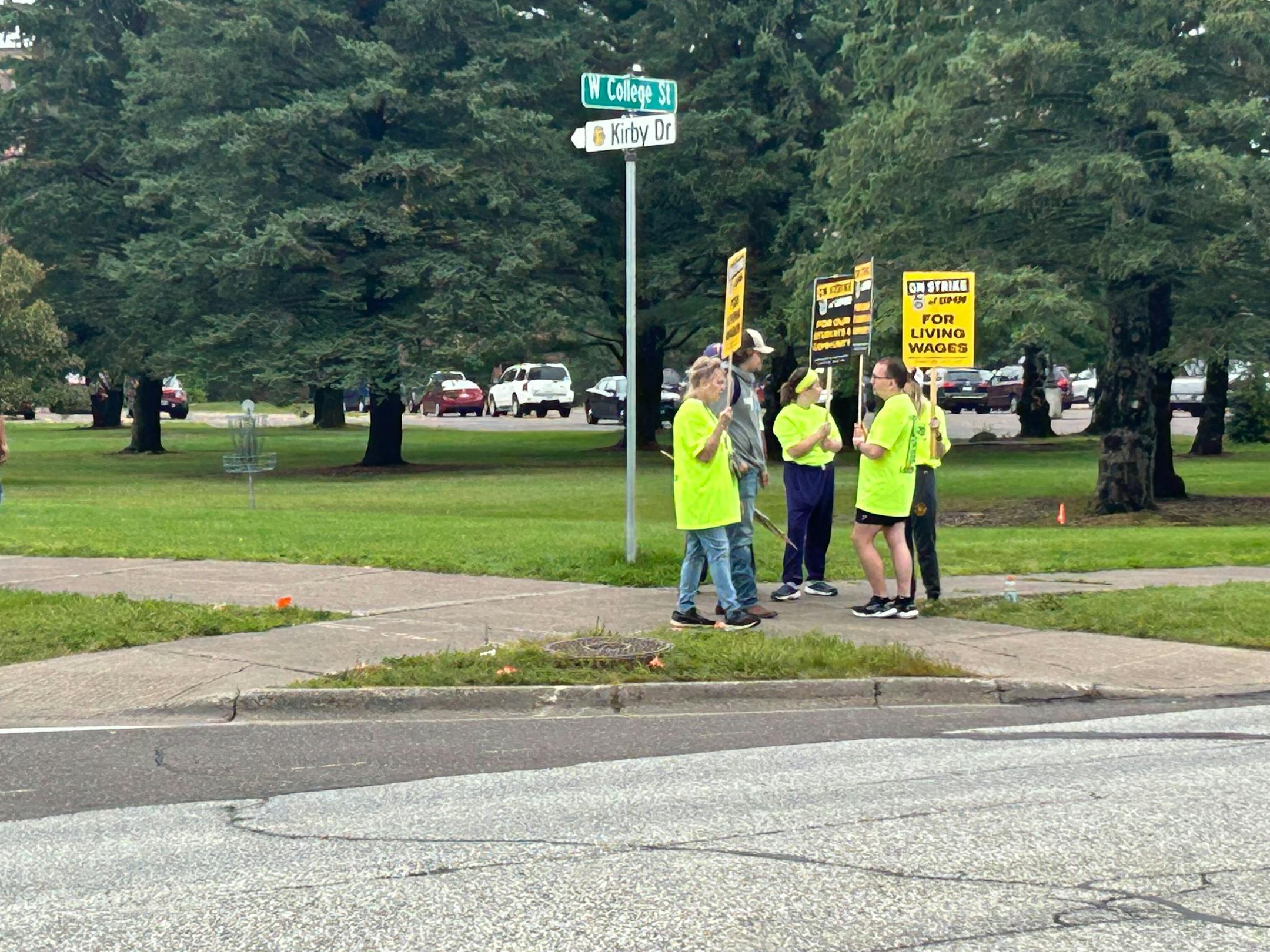
Teamsters members picket at the University of Minnesota Duluth campus on Tuesday, starting at 4 a.m. (Christa Lawler)

The strike affects more than 160 people at the Duluth campus. Union members, from mechanics to food service workers, donned neon yellow shirts and began striking at 4 a.m. Tuesday.

“We are the backbone of this community,” said Kari Young, a union steward who works in food service who has worked at UMD for 25 years. “They don’t think we’re worth it, but they’re going to miss us.”

Young said students were eating off paper plates.

Students in the Twin Cities are already preparing for the dining changes when the strike takes effect. According to a strike update page on the U’s website, many dining halls will be open, but have more limited hours.

That had freshman Lacy Gores wondering about her schedule, since she typically eats a late breakfast.

“I don’t have class until 11,” Gores said. “So, I might not be making it to breakfast for a couple of mornings.”

Satellite locations in Grand Rapids, Waseca and Austin also have striking workers, but none were closed Tuesday, according to the U’s website updates.

This is the first strike since the union’s creation at the U in the 1970s.

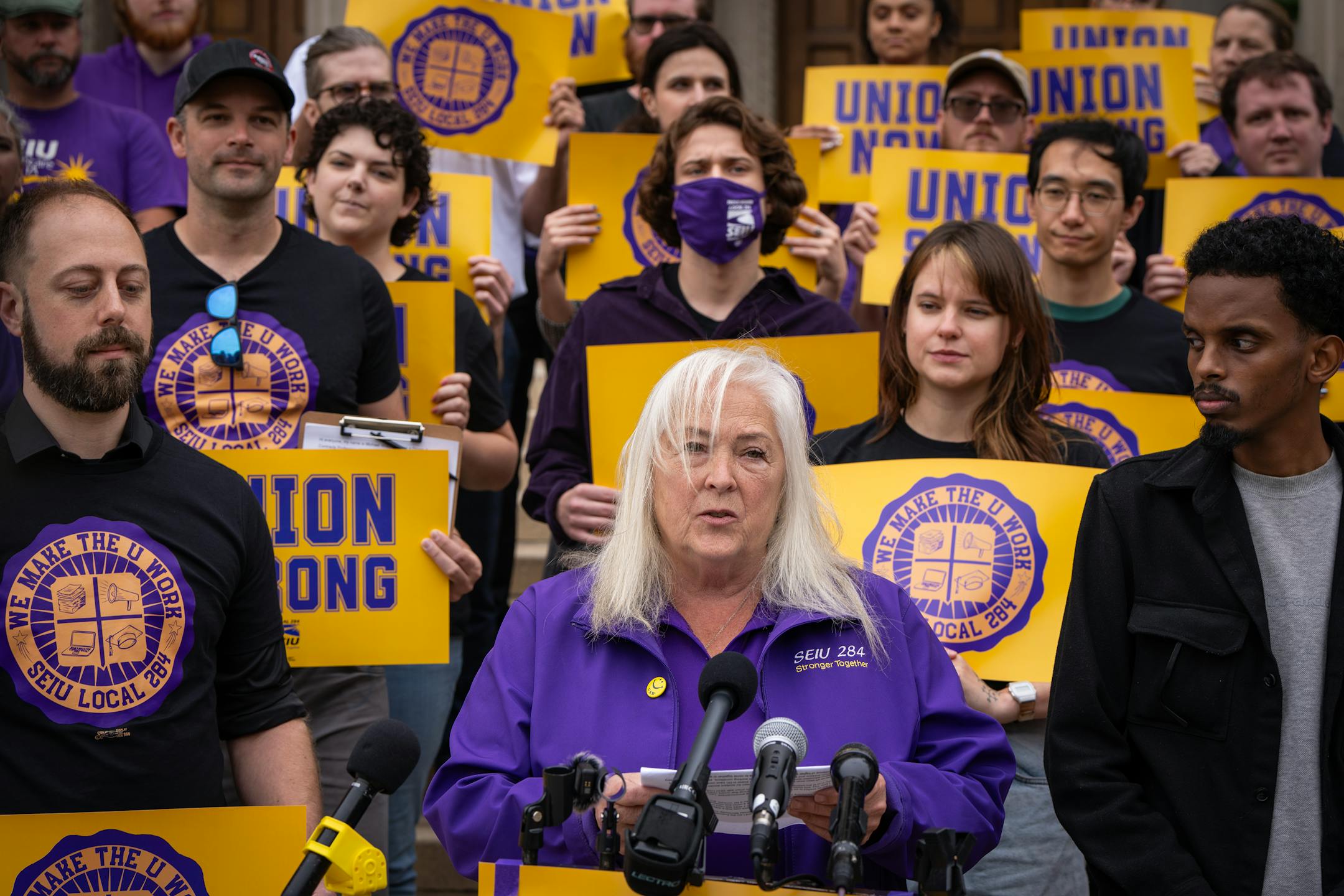
Kelly Gibbons, executive director of SEIU Local 284, joined by University of Minnesota worker and state Sen. Omar Fateh, right, speaks during a union organizing drive news conference at the University of Minnesota in Minneapolis on Tuesday. The union drive comes amid a strike by Teamsters across the U system. (Leila Navidi/The Minnesota Star Tribune)

Unionization push at U

The Teamsters’ strike comes among continued unionization efforts on campus in recent months. Two new unions representing graduate students and medical residents have started in the last few years.

On Tuesday, SEIU Local 284 announced it is working to start another union at the University of Minnesota representing technology, communications, grant writing and student services employees.

“Folks have been stepping up increasingly to say, hey you know what, we do need a union,” said Shaun Laden, organizing director for SEIU Local 284.

He said one of the reasons workers are trying to start a union now is because of the Trump administration’s impact on higher education.

The Teamsters are asking for a 3.5% raise annually, saying that is inline with other unions’ recent contract negotiations. The university has offered a 3% increase. The Teamsters typically sign three-year-long contracts; the university has offered a term shorter than that.

Gus Froemke, director of communications for the striking Teamsters, said the union is willing to come back to the negotiating table if the university is prepared to give them the same wage increase and length of contract as other unions.

“We do understand that the fiscal situation for higher education in the future is in a very peculiar and precarious place,” he said. “This is why we will not settle for anything less than other unions.”

University spokesperson Joe Linstroth said the university remains committed to reaching an agreement, but has “prepared to continue vital services and meet the needs” of campus members while the strike occurs.

He said the university’s offer was a reflection of the university being “good financial stewards at a time when higher education faces profound financial challenges.”

Effect on campuses

The U has been communicating with campus members since the union’s initial intent to strike in August and is updating students, faculty and staff via strike impact pages on its website.

In the email to families, the university thanked parents for their patience.

“We know this is an inconvenience and disruptive to your student’s experience,” the email said. “We take our responsibility to provide students a healthy and safe campus seriously, and will prioritize their ability to learn and thrive during this time.”

Grady Johnson, a union member and gardener at the Twin Cities campuses, said students will quickly notice the strike.

“It will be very clear within a few days,” he said. “The biggest impacts we’ll see on campus immediately [are] the buildings will not get cleaned nearly as well, if at all; the dining halls may be forced to close or run very limited hours; and trash will not get picked up.”

Elliot Hughes of the Minnesota Star Tribune contributed this story.

about the writers

about the writers

Eleanor Hildebrandt

Reporter

Eleanor Hildebrandt is a reporter for the Minnesota Star Tribune.

See Moreicon

Christa Lawler

Duluth Reporter

Christa Lawler covers Duluth and surrounding areas for the Star Tribune. Sign up to receive the North Report newsletter at www.startribune.com/northreport.

See Moreicon