
Four things to know about the federal raid on Lake Street

Federal operation was one of eight conducted across the Twin Cities, and new details reveal what led to the raid.

The Minnesota Star Tribune
August 5, 2025 at 11:26PM
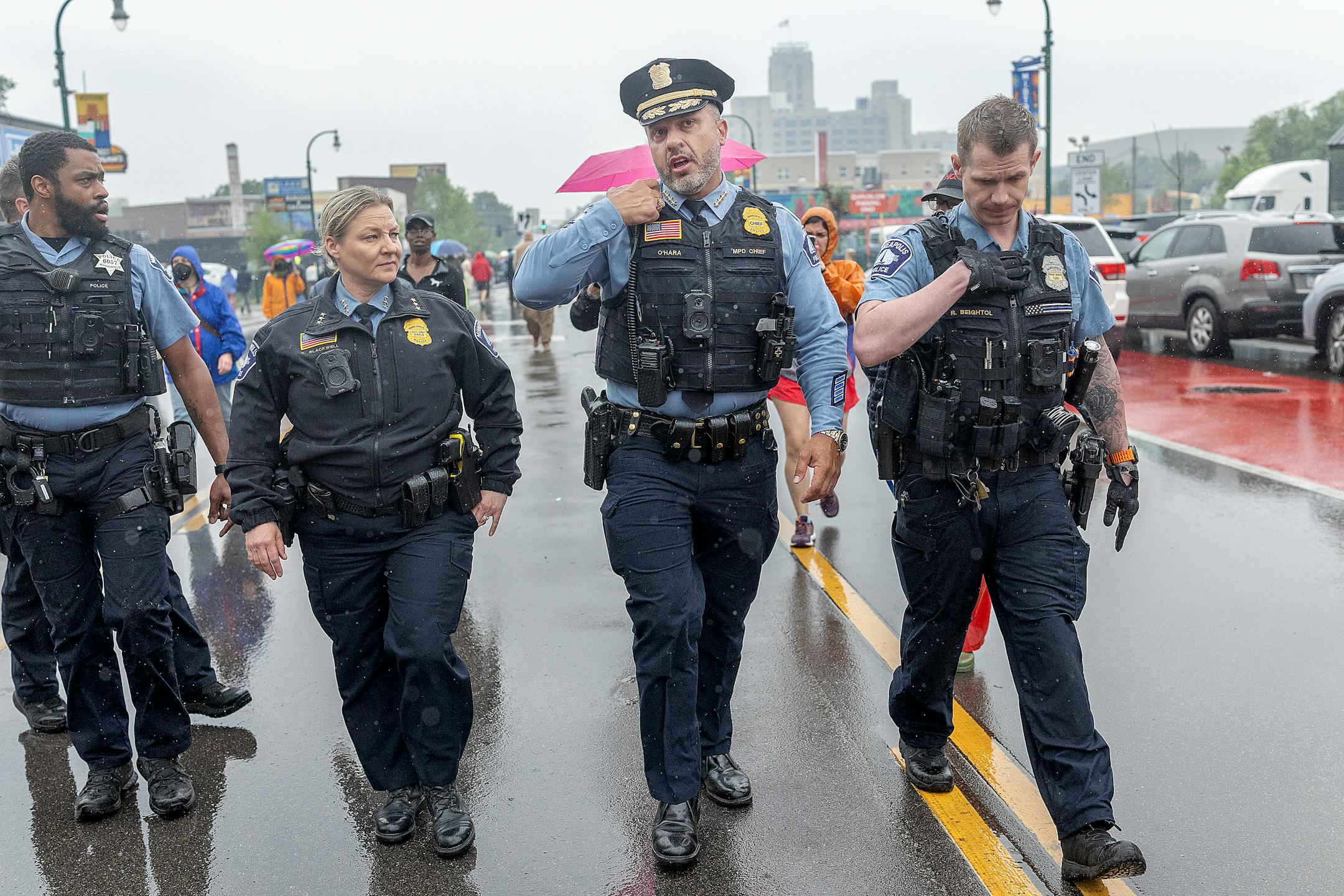
Minneapolis Police Chief Brian O’Hara, second from right, makes his way down W. Lake Street amid protests over a federal raid in south Minneapolis on June 3.
Minneapolis Police Chief Brian O’Hara makes his way down Lake Street as people yelled at him after people protested law enforcement outside Las Cuatro Milpas restaurant amid protest over a federal raid in Minneapolis on June 3. (Elizabeth Flores/The Minnesota Star Tribune)

The Minneapolis City Council released a report Tuesday that said local police officers did not violate the city’s sanctuary city rules during a federal raid in June at a restaurant on Lake Street.

The city’s policy prohibits officers from questioning someone about their immigration status.

The raid sparked a conflict between authorities and scores of protesters, which was amplified by misinformation and gaps in communication about the nature of the law enforcement action.

What have we learned since then?

Raid targeted drugs

Dozens of federal agents with masks and armor arrived outside of Las Cuatros Milpas restaurant on the morning of June 3. Protesters and City Council members learned of the operation through text chains and social media, showing up to the scene where a confrontation sparked between agents and protesters who yelled “shame” while blocking authorities’ path.

That was one of eight raids conducted across the Twin Cities focused on human and drug trafficking as well as money laundering, according to authorities. Federal officials described the action against a “groundbreaking criminal operation” and said it marked a “new chapter in how we confront complex, multidimensional threats.”

Agents raided the restaurant and other locations as part of an investigation into a drug trafficking organization.

A judge authorized the raids on May 30 after authorities found more than 900 pounds of methamphetamine in a Burnsville storage unit. Those drugs are estimated to be worth more than $22 million.

Restaurant owner arrested

While the city has confirmed no arrests were made at Las Cuatros Milpas on Lake Street on the day of the raid, restaurant owner Francisco Estrada-Deltaro was taken into custody at his home on the same day.

He has since been charged with illegally re-entering the country after being deported three times before. Estrada-Deltaro spent weeks in federal custody at the Freeborn County jail after the raid.

Witnesses reported agents bearing insignia from the Department of Homeland Security, DEA, FBI, ICE and the Bureau of Alcohol, Tobacco, Firearms and Explosives. ATF agents in St. Paul helped control crowds at the scene with help from the Hennepin County Sheriff’s Office and Minneapolis Police Department.

Raids at other locations

Federal raids took place at eight places across the Twin Cities on June 3. Authorities did not disclose the other locations, save for another raid at the Las Cuatro Milpas restaurant’s second location in Bloomington.

A federal court filing later revealed that agents began searching in Burnsville, Bloomington, Inver Grove Heights, Lakeville, Minneapolis and Northfield at 6 a.m. that day.

Local officials criticize federal response

Gov. Tim Walz criticized the operation, adding that he and other officials were not notified.

“It was chaotic,” Walz said at the time. “Any professional, especially in law enforcement or the military, tells you, you do not want chaos.”

Minneapolis Mayor Jacob Frey and Police Chief Brian O’Hara called agents’ response “tone deaf,” but many City Council members called for a review of officers’ actions during the raid to find if they violated Minneapolis’ sanctuary city principles.

about the writer

about the writer

Kyeland Jackson

General Assignment Reporter

Kyeland Jackson is a general assignment reporter for the Star Tribune.

See Moreicon

More from Minneapolis

See More
card image
Jeff Wheeler/The Minnesota Star Tribune

From Winona State University to Augsburg University and the U, professors are helping students wrestle with misinformation and disinformation.