
More than just a slow winter? Twin Cities had steep drop in December home sales

Compared to the prior year, there was a double-digit decline in the number of signed purchase agreements across the metro last month, posing some concern this isn’t just a typical seasonal dip.

The Minnesota Star Tribune
January 16, 2026 at 12:01PM
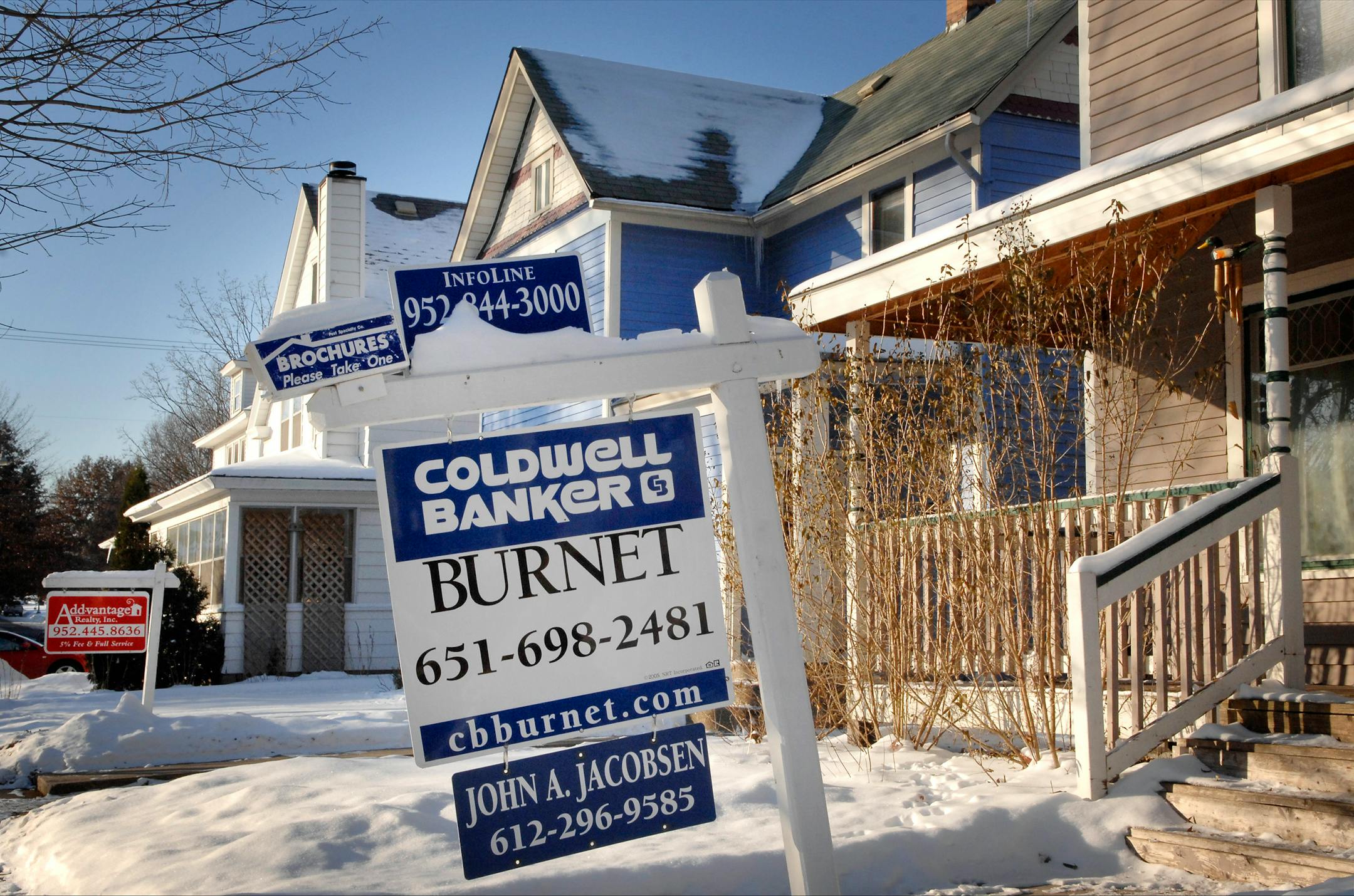
In this December 2007 file photo, some St. Paul houses were for sale. Pending home sales last month in the Twin Cities fell to the lowest level for any month since January 2008, the beginning of the subprime mortgage crisis. (Glen Stubbe/The Minnesota Star Tribune)

For Twin Cities real estate, 2025 ended with a chill, despite the most favorable mortgage rates of the year.

In December, homebuyers across the 16-county metro area retreated, causing a 10% annual decline in the number of signed purchase agreements, according to new data from the St. Paul Area Association of Realtors.

Those pending sales fell to the lowest level for any month since January 2008, the beginning of the subprime mortgage crisis.

Sellers were nearly as scarce. There was a 4% decline in new listings during the month, leaving buyers with the fewest options they’ve had all year. That scarcity of listings helped boost prices, as buyers in many parts of the metro found themselves bidding against others. On average, sellers got only slightly less than their asking price, and houses sold within just a couple of months.

While a December downturn isn’t unusual, the depth of the most recent declines injects new uncertainty in a market that’s so far been resilient amid widespread economic instability.

Buyers gain an edge

Sarah Fischer Johnson, a managing broker for Edina Realty, said while buyers are generally more skittish right now, there’s plenty of demand. There just aren’t enough houses.

That’s why when houses are competitively priced and in tip-top condition, they’re still selling quickly.

“[Buyers] are more patient and thoughtful in their decisionmaking,” Fischer Johnson said. “They feel like they finally have leverage, and they’re using it carefully.”

Sellers, too, are becoming more realistic, she said, as they realize they’re not likely to sell their house for what comparable ones sold for earlier in 2025.

Standoff continues

While the December slowdown wasn’t the first dip of the year, it was by far the largest, capping another frustrating year for both buyers and sellers struggling to make sense of an often vexing market.

Despite that, there were more closings during all of 2025 than in each of the two previous years. But only by a small margin.

Those gains came in the face of growing economic concerns and a persistent standoff: homeowners who didn’t want to give up their record-low mortgage rates or list their houses for fear they wouldn’t find a suitable replacement vs. buyers who had been fretting about paying too much or settling for a house that didn’t fully meet their needs. That dynamic has stifled sales in virtually every corner of the metro.

“Long gone are the days of ‘Put the sign in the yard, and the offers will come in quickly,’ ” Fischer Johnson said. “There are more frequent price adjustments and fewer bidding wars.”

Where those do still happen is among buyers who are immune to mortgage rate fluctuations.

Bj LaVelle, a broker with Roost Realty/Compass, recently received multiple offers on a sprawling 17,000-square-foot estate in Medina. It sold in December for $4.75 million; the buyer paid cash.

Fewer listings, more distractions

In many parts of the metro, buyers still outpace sellers.

At the current sales pace, there were only enough listings to last just under two months. That was a slight decline from the year before and far below the three-to-five-month benchmark that’s considered evenly balanced.

Fischer Johnson noted there were several factors this December that might have put shoppers on the sidelines. The Christmas and New Year holidays fell in the middle of the week, and it was a cold and snowy month overall. Plus, many house hunters were holding out for better options.

“Many buyers have said, ‘Let’s wait one more month and see what the spring market delivers,’ ” Fischer Johnson said.

Pending sales last month fell in every price range, but the decline was greatest for the least-expensive listings. Houses priced at more than $1 million also posted a rare decline, falling nearly 8% year-over-year.

That decline was especially notable because sales in that price range have been tallying the biggest annual gains for most of the year.

Prices on the rise

Still, for all of 2025, closings — an indication of purchase agreements signed during the previous couple of months — managed to eke out a modest gain on the previous year, rising 2.3%.

The shortage of listings, and pent-up demand in some areas, helped boost the median price of all closings last year to $390,000, a 2.6% increase from last year. It was also the year the median house price in the Twin Cities broke $400,000 for the first time.

Though annual price gains are slowing, home prices in the Twin Cities have increased at or above the national average, according to an oft-watched report that tracks repeat sales of the same home. The S&P Cotality Case-Shiller Home Price Index showed that during October, the most recent month of available data, prices in the metro increased 2.76% compared to the nation’s 1.36%. That was the fifth-highest gain in the country at a time when several metros saw declines

Buyers’ retreat during December wasn’t unique to the Twin Cities. Redfin, an online brokerage, said this week pending home sales across the U.S. fell 7.4% compared to the same time last year.

Optimism for a late spring market

Officials at Minnesota Realtors, the trade group that represents Realtors throughout the state, said it’s clear affordability challenges, weak consumer confidence and political uncertainty are all factors that heavily influence home sales.

What’s less clear is whether December’s steep decline will continue into the spring market.

“It’s possible this is just a blip,” said David Arbit, the group’s director of research. “If housing supply can expand, homebuyers remain employed and rates stay where they are or fall slightly, we could see further gains in housing demand. A lot hinges on rates and the economy, which are themselves intertwined.”

Sarah Deziel, a sales agent with the Stillwater office of Brix Real Estate, is optimistic for the near future. She recently worked with buyers who looked at a $825,000 house in the eastern suburbs. Though the property had been on the market for about a month, the sellers garnered multiple offers. Even though her clients offered slightly less than the list price, they were the winning bidders.

On the flip side, she put a $1.3 million Stillwater house on the market in November. With no offers, the sellers decided to pull it from the market and list in the spring, historically an active time for homebuying and selling.

“We think the market will peak in April, a little later than last year,” she said. “Right now, it’s definitely more of a buyer’s market, but that shift is coming.”

about the writer

about the writer

Jim Buchta

Reporter

Jim Buchta has covered real estate for the Star Tribune for several years. He also has covered energy, small business, consumer affairs and travel.

See Moreicon

More from Real Estate

See More
card image
Glen Stubbe/The Minnesota Star Tribune

Compared to the prior year, there was a double-digit decline in the number of signed purchase agreements across the metro last month, posing some concern this isn’t just a typical seasonal dip.