Thousands of Minnesota college students could lose financial aid as program faces $102M deficit

College students across Minnesota may get less financial aid from the Minnesota State Grant program after already seeing cuts.

The Minnesota Star Tribune
November 8, 2025 at 12:00PM
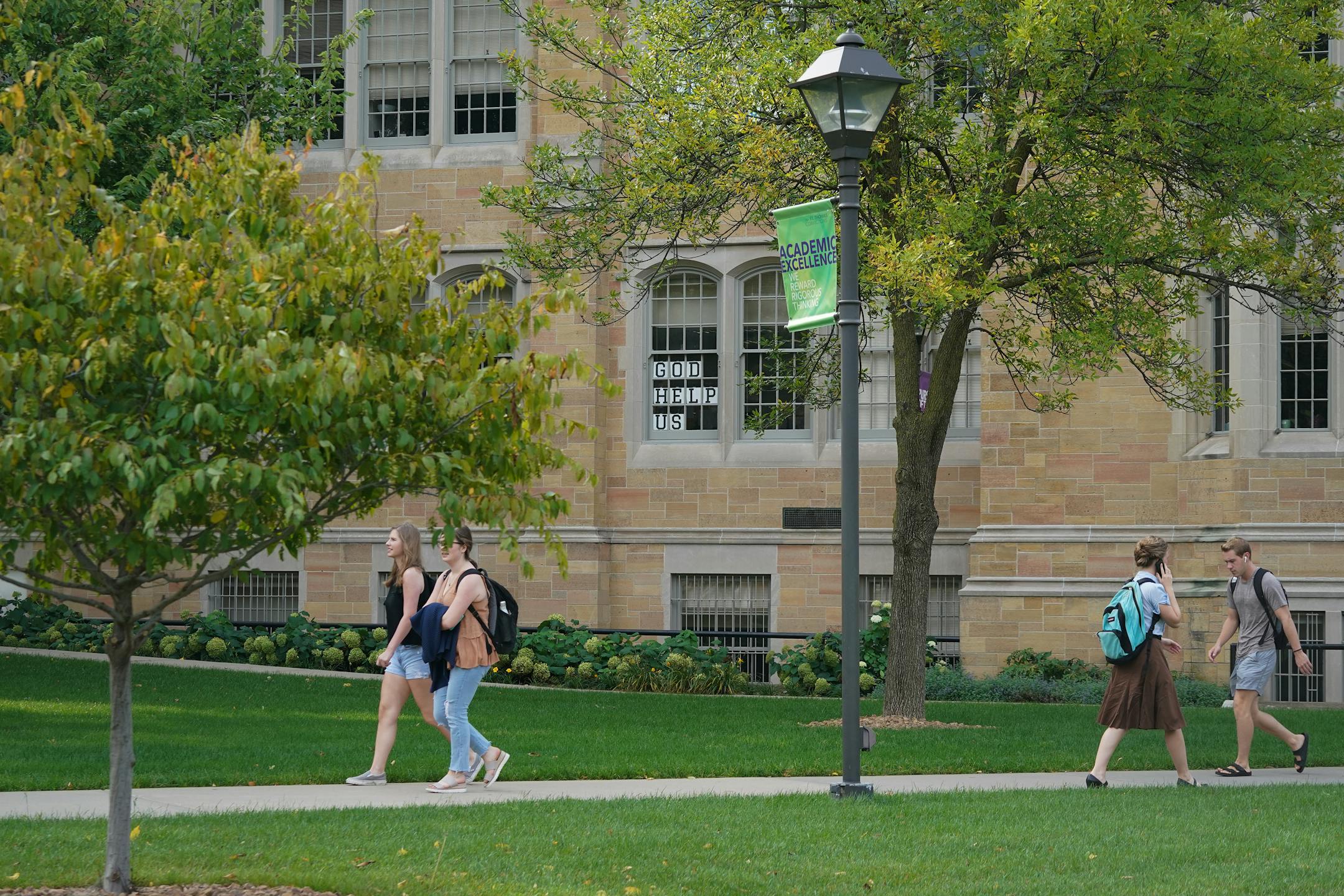
The St. Paul campus of the University of St. Thomas, photographed in 2019. (Shari L. Gross/The Minnesota Star Tribune)

Minnesota’s largest financial aid program likely will come up $102 million short in the current biennium, a situation that may require students’ financial aid awards to be cut in the coming semesters.

It’s the third consecutive year that the Minnesota State Grant program has run a multimillion-dollar deficit, and the new projections come just months after legislators made several last-minute cuts and changes to the program’s formula to fix the last shortfall of $239 million. They also boosted its funding by $44.5 million.

The State Grant provides funding to low- and middle-income students attending any Minnesota college. Changes made in July saved the program but reduced the average student’s award by $475 this fall, state officials said.

“It’s worrisome ... because the financial aid is so critical to students,” said Paul Cerkvenik, the Minnesota Private College Council’s president. “I also think it’s really important to recognize there’s a deficit because there’s more students going to college, and that’s a really good thing.”

Rep. Marion Rarick, R-Maple Lake, said the deficit was “a lot of money” and likely would result in grant awards being pared down again.

“They’re definitely going to see some sort of rationing because I don’t know how we can make up a $102 million shortfall,” said Rarick, also the House’s co-chair of the Higher Education Finance and Policy committee. “We have no new money.”

Nicole Whelan, the State Grant research manager for the Office of Higher Education (OHE), said that, though the situation was a big deal, students and families shouldn’t be “overly worried.”

Several factors caused the deficit, she said, including 4,000 more students enrolling in Minnesota colleges and universities this school year and 2,200 more qualifying for the State Grant.

“Then the students that are applying [for financial aid] are needier,” she said. “And they might be needier because of a change in how the feds were calculating their level of need.”

She noted that the Free Application for Federal Student Aid (FAFSA) made major changes effective in 2024-25. The lowest-income students are now getting a larger Pell Grant and more students are qualifying for Pell Grants, which means more State Grant dollars given out, since Minnesota determines awards using federal financial aid numbers.

In 2023, legislators made several investments to communicate that “college was for everybody” and hopefully increase enrollment, Whelan said.

They included creating the North Star Promise, which provides free tuition at public institutions for families making $80,000 or less and continuing Direct Admissions, which tells high school seniors which colleges they could attend before applying. They also held tuition flat for two years in the Minnesota State system.

“Everything that was done has been successful ... evidenced by the increased enrollment, and now we just have to figure out how to fully support those students,” she said.

Gene Pelowski, a DFL legislator for 38 years, had predicted more State Grant funding problems after last summer’s “interesting combination” of fixes. He said the higher education committee should have an interim hearing “to figure out the scope of this thing” and prepare legislation for the coming session.

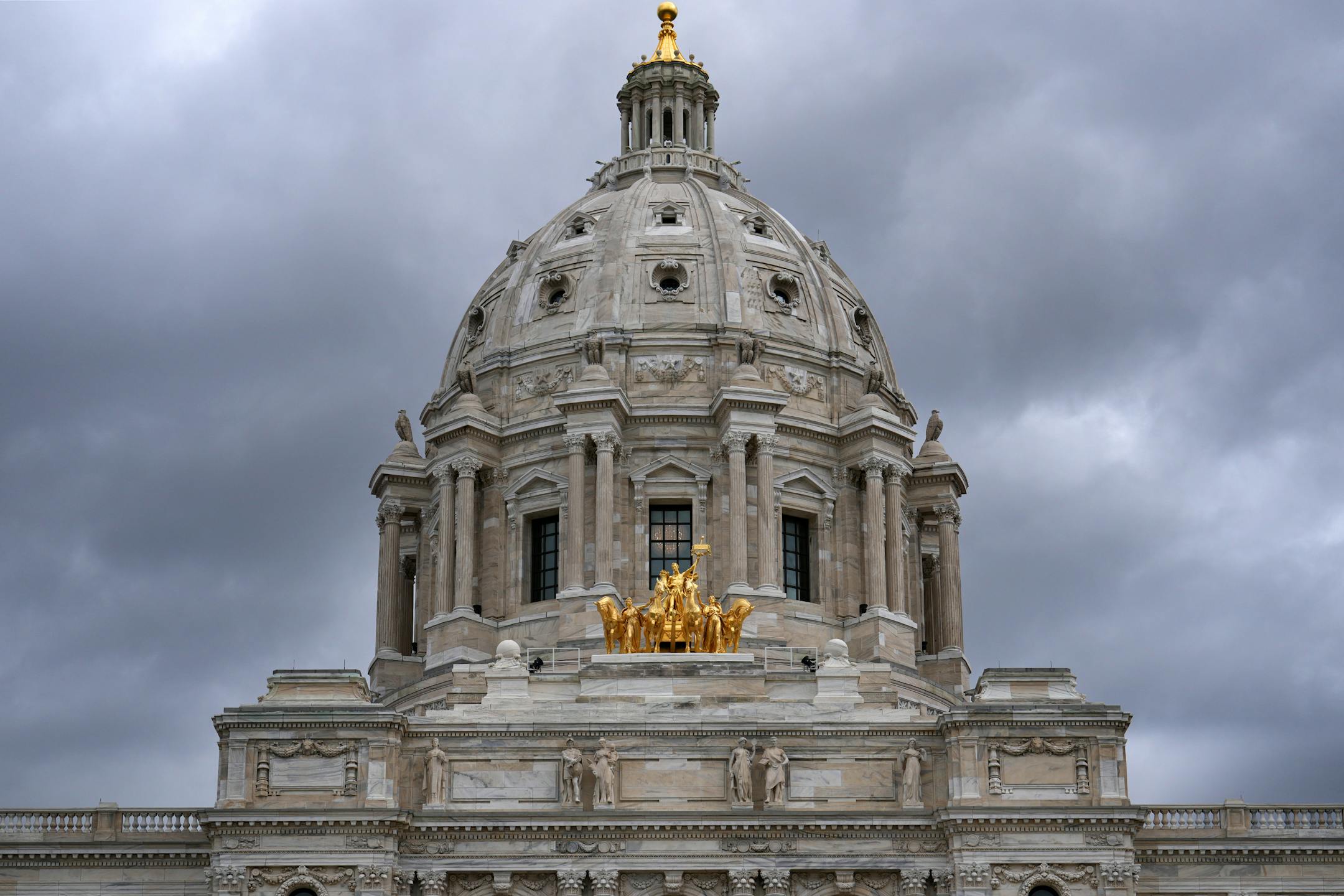
Heavy clouds hang overhead as the Minnesota Legislature headed into the final weekend of its 2025 session in May. (Anthony Soufflé/The Minnesota Star Tribune)

Minnesota State Grant deficit

The State Grant also saw eleventh-hour cuts to students’ awards in 2024 to patch a $40 million hole.

This fall, enrollment was up 4% at Minnesota State colleges and the University of Minnesota. At Minnesota State universities, enrollment sank 3%. Private nonprofit schools’ enrollment jumped 3%.

But Rarick said those bumps alone aren’t enough to account for the deficit. She noted tuition increases across all types of schools this fall, including 6% at both Minnesota State Universities and the U. The State Grant award also includes money for students’ “living and miscellaneous expenses” such as housing, food, books and internet costs, based on a federal formula. That number went down this year but is projected to go up next year.

Both changes mean the State Grant program will need to give out more money, Rarick said.

“We’re serving slightly more people, that is true,” she said. “But really costs are skyrocketing all over.”

This year’s share of State Grant recipients in the lowest four income brackets actually decreased, she said.

Whelan said college enrollment also is likely going up now because of uncertain economic times, as that’s the typical trend. The state hasn’t had time to “right size” the program amid all the recent changes. The Office of Higher Education is required to ration grants if there’s a deficit, she said.

Cerkvenik said the additional students attending college now will help fill a void in college-educated workers in Minnesota in the coming decades, which will persist. Before last year, enrollment had dropped for more than a decade.

But he doesn’t see it continuing to climb; Minnesota will hit a small enrollment cliff after 2027 and then it will be flat, he said.

To avoid future funding gaps, the State Grant program could move to an open appropriation rather than fixed one, meaning the money allotted would equal the need. Another idea is starting a reserve fund for deficit years. The Legislature could allocate additional, one-time funding this year, he said.

How this affects college students

In July, State Grants for this year were projected to range from $100 to $17,717, depending on students’ family income. Fewer students qualified than would have under previous calculations.

Victoire Mwakana, a University of St. Thomas senior, said he is concerned for students who already got lower awards this year.

“The State Grant has been a crucial resource in my college journey,” he said.

His classmate, Alissa Gottwald, got no State Grant this year compared to $3,000 last year and $5,000 her sophomore year. She recently had to take out additional private loans.

“It was really upsetting,” she said.

At Century College in White Bear Lake, Pam Engebretson, the director of financial aid and scholarships, said Century’s lowest-income students — at the poverty level or below — saw a $159 decrease in their State Grant award for the fall semester compared to last fall. They were also hit with a $157 tuition hike, she said, meaning they will have to come up with an extra $630 for the school year.

They’re likely taking out more student loans and using more public resources as a result, she said.

If it happens again, staff at colleges will have to explain it and shoulder the blame, she said, adding that for students, it’s “absolutely another hardship.”

about the writer

about the writer

Erin Adler

Reporter

Erin Adler is a news reporter covering higher education in Minnesota. She previously covered south metro suburban news, K-12 education and Carver County for the Minnesota Star Tribune.

See Moreicon

More from Politics

See More
card image
Alex Kormann/The Minnesota Star Tribune

For weeks ICE has stepped up enforcement in the Twin Cities as part of “Operation Metro Surge.”

card image
card image