
Fewer students will qualify for Minnesota college financial aid program after cuts

The Minnesota State Grant program, which provides grants to low- and middle-income undergraduates, also got $44.5 million in new funding to address a deficit.

The Minnesota Star Tribune
July 22, 2025 at 2:19PM
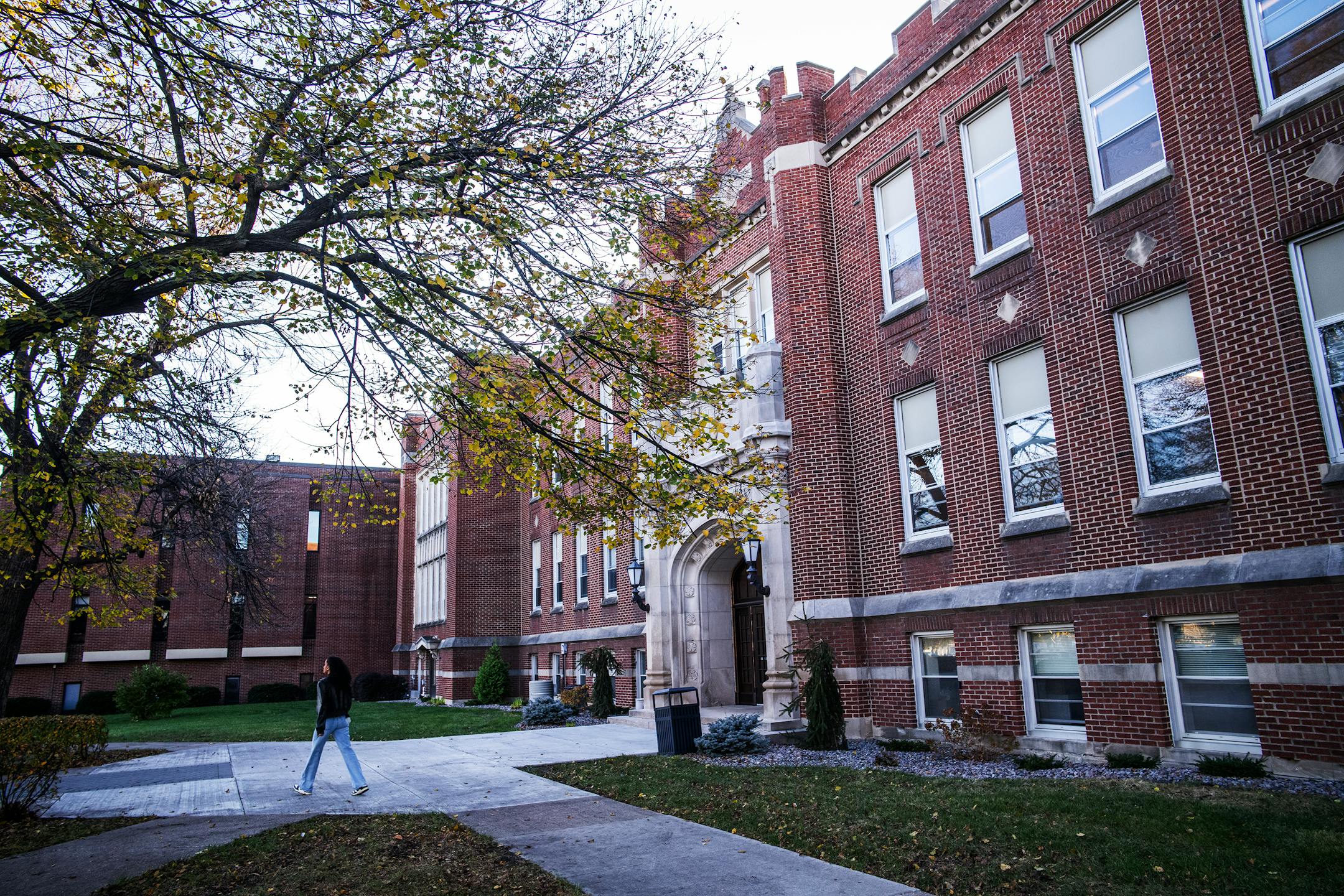
A student walks past Meyer Hall at Concordia University in St. Paul in 2024. (Richard Tsong-Taatarii/The Minnesota Star Tribune)

Some college students are waiting to find out whether their grant will decrease this fall after the Legislature plugged a $239 million hole in the budget of Minnesota’s largest financial aid program.

Lawmakers took on the deficit in the Minnesota State Grant’s budget during the special session last month. They boosted the program’s funding by $44.5 million over the next two years while also making a series of cuts to the program, which provides funding to low and middle-income students attending any Minnesota college.

Most of the program’s shortfall was addressed by changing the formula of who qualifies for the grant and how much they will receive, which is based on variables like income and family size. The Legislature also made trims to some higher education programs and added funding to others.

Fewer students overall will get the State Grant than would have qualified under previous calculations, officials said. But the Office of Higher Education and other sources said it’s too soon to tell how altering qualifications will affect the average student’s grant.

Legislators, students and higher education officials said they were grateful the program survived a rocky session filled with compromises and cuts.

“This was a huge concern for so many people who are in the college-access space, especially supporting low-income students,” said BG Tucker, executive director of College Possible, a national nonprofit that helps students attend college. “The fact that they were able to address [the deficit] is really, really wonderful.”

Some 71,000 Minnesota students received the State Grant last year. Grants will range from $100 to $17,717 for the 2025-2026 school year.

Sen. Zach Duckworth, R-Lakeville, said higher education was one of only a few areas in the budget that saw a funding increase. The Legislature was trying to meet as many needs as possible, ensuring “everybody still gets something; it’s just a little bit less.”

“I don’t think anybody was entirely happy with the end results, but the fact that we were able to increase some funding [to the State Grant overall] for students and families was a good thing,” he said.

Some changes are temporary and will be revisited, Duckworth said.

Last summer, the State Grant program weathered last-minute cuts to students’ awards due to a $40 million funding deficit. Average grants were reduced by $175 to $730, depending on students’ family size, income and other factors.

Paul Cerkvenik, president of the Minnesota Private College Council, said the Legislature made a “really significant investment” and noted that it was the second-largest funding increase in the grant’s history.

But he hopes to see the State Grant formula return to how it was in previous years.

“The State Grant program only works the way it’s intended if all the students’ actual costs are taken into account ... and if the family expectation [for college costs] is realistic for the family,” he said.

State Grant formula

Legislators in June made a number of changes to the complex formula of who qualifies for the State Grant and how much they get.

Awards are based on each student’s tuition and fees along with other college costs, called “living and miscellaneous expenses.” The most significant alterations included:

  • Changing the maximum period a student can receive the grant from six years of full-time attendance to four years.
    • Moving up the application deadline to 30 days after the semester begins.
      • Increasing how much of the total cost of college students considered dependents and their families are responsible for paying.
        • Lowering the amount students receive for living and miscellaneous expenses, which includes expenses like room and board and transportation.
          • Reducing the maximum amount awarded toward tuition and fees to what the University of Minnesota’s Twin Cities campus charges plus 2% for each of the next two years, regardless of how much tuition increases there. If a student attends a school that costs less, they are awarded the average cost of tuition and fees at that institution.

            Tucker noted that more low-income students in Minnesota are attending college over time, which she said is a good problem to have.

            She said a student qualifying for the full Pell Grant, a form of federal financial aid based on income, and attending a private college or the U full time will see their grant decrease by about $520 this year because of the change to the living expenses allowance.

            “That is going to impact [students’] bottom line,” she said. “It’s millions in cost savings to just change that percentage point.”

            Duckworth noted that change saved the state $63 million.

            Financial aid boost

            Financial aid packages are still being calculated this summer, so officials from colleges and universities said they’re still figuring out the impact of the State Grant changes on students.

            Brittany Tweed, Metropolitan State University’s financial aid director, said she wasn’t worried about students there scrambling to find extra money when they get their financial aid packages because the school already has low tuition and fees.

            Still, the university will look for more financial aid for students affected by lower State Grants this year, she said.

            Michael McMahon, vice president for enrollment management at St. Mary’s University of Minnesota, said some students are seeing bigger grants this year while others’ grants are smaller. St. Mary’s students’ average award was $5,571 in the 2023-2024 school year and $4,994 last year.

            “It definitely does make a huge impact for affordability,” he said.

            Brendan Frazier, a senior at Concordia University in St. Paul, said the grant has been a huge benefit for him, even though it’s gone down a bit each year, ranging from $8,000 to $7,500.

            “There are a lot of students that are going to be following after me and my concern is for them, too,” he said.

            Frazier testified at the Capitol about the program’s value, as did Jaedyn Fellenz, a rising sophomore at St. Mary’s.

            Last year, grants were rationed, Fellenz said, and it had a “pretty big negative effect on a lot of students.”

            Her State Grant award was about $7,000 last year; the financial aid office told her to expect the same amount this year.

            “It is a weight off my shoulders,” she said. “Even though I’m getting it, it’s still good for people like me to speak up ... because the more people we get talking about it, the better chances we have of getting some funding back.”

            about the writer

            about the writer

            Erin Adler

            Reporter

            Erin Adler is a news reporter covering higher education in Minnesota. She previously covered south metro suburban news, K-12 education and Carver County for the Minnesota Star Tribune.

            See Moreicon