Can Target’s return-to-office mandate revive downtown Minneapolis?

The influx invigorated the Minneapolis core during the retailer’s annual meeting as return-to-office mandates signal a power shift from workers to employers.

September 9, 2025 at 10:15PM
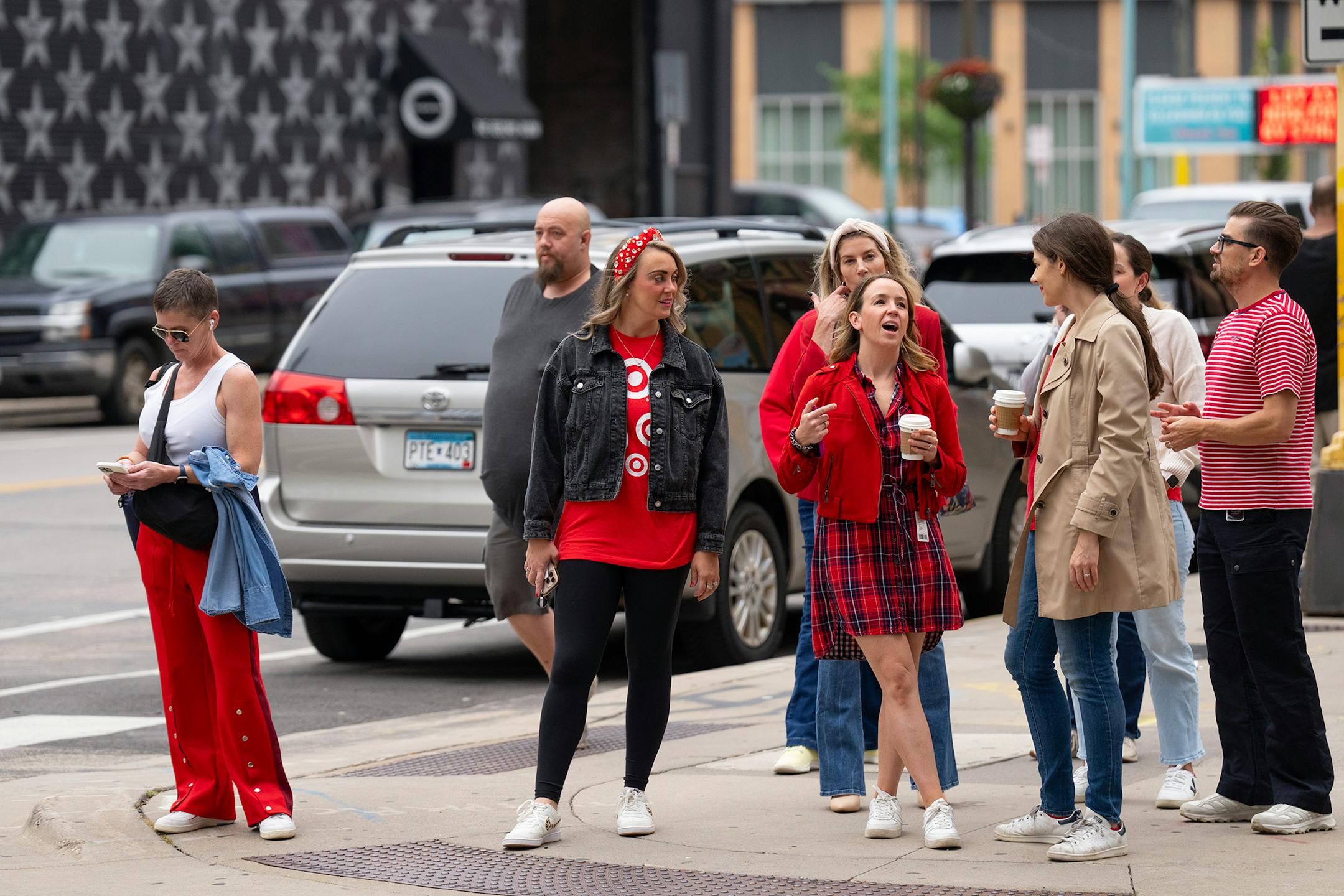
Target employees wait to cross the street Tuesday for an annual meeting of Target managers from around the country at Target Center in Minneapolis. (Alex Kormann/The Minnesota Star Tribune)

Downtown Minneapolis on Tuesday was bustling and bright red.

Hundreds of Target employees — donning signature red apparel for the annual all-company meeting — swarmed the streets and skyways. Their return marked the symbolic end of the work-from-home era for many of the retailers’ employees and scores of other Twin Cities workers.

Downtown Minneapolis’ civic boosters and businesses have long pined for this moment.

“It is an exciting week,” said Adam Duininck, CEO of the Minneapolis Downtown Council. “I’m really excited to see more red shirts and Target employees downtown.”

The mega retailer is downtown Minneapolis’ second-largest employer, just behind Hennepin Healthcare, and has long served as an emotional anchor for downtown life.

Target’s annual meeting Tuesday coincided with the start of the company’s return-to-office policy that will bring many headquarters employees back to Nicollet Mall three days a week. The mandate comes as employers throughout the metro area and across the country, from Ameriprise and Medtronic to JP Morgan and Amazon, call the rank-and-file back to their desks.
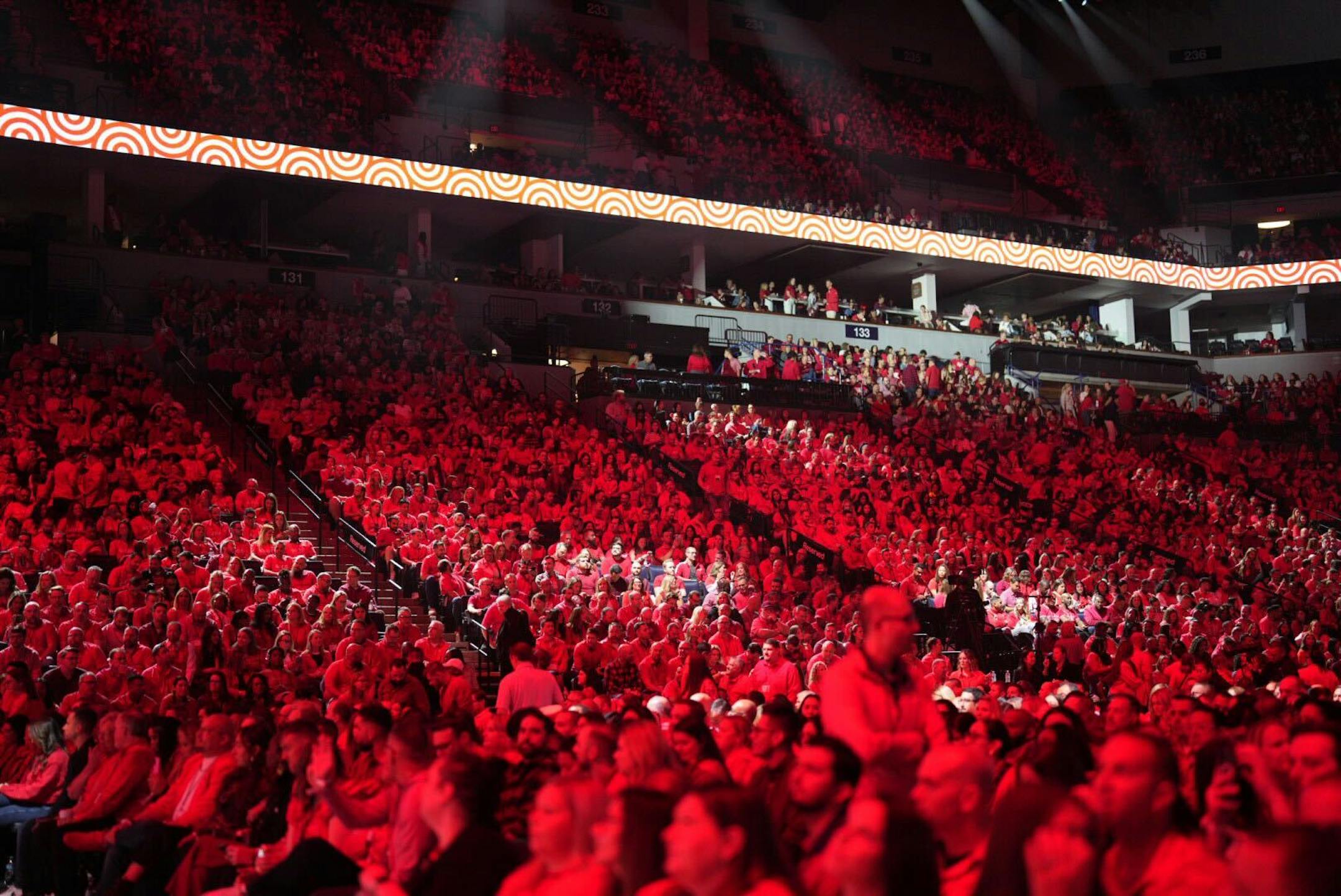
Target employees fill Target Center for Target Together, the company's annual meeting in Minneapolis on Tuesday. (Alex Kormann/The Minnesota Star Tribune)

It’s a dramatic reversal from the Great Resignation of a few years ago, when jobs were plentiful, and employers eagerly granted signing bonuses and flexible work arrangements.

The job market has since cooled, giving employers more power and tying nervous workers to their current roles. U.S. employers added just 22,000 jobs in August, according to data the Labor Department released Friday. A routine revision Tuesday showed there were 911,000 fewer new jobs than previously thought during the 12 months ending in March, stoking fears of an economic downturn.

For Minneapolis officials, boosters and business owners, though, there’s reason for optimism. They expect having more workers downtown will invigorate the urban core, which has struggled to rebound from the bleak foot traffic of the COVID-19 pandemic.

The Downtown Council reported that, before the pandemic, the average number of workers downtown on a given day was 219,000. Today, downtown is at about 70-75% of that volume.

Target employees — clad in red Hawaiian shirts, red plaid flannels, red patterned dresses and vibrant red hijabs — moved through downtown in packs Tuesday morning. Groups of coworkers chatted excitedly; others greeted friends with waves, exclamations and hugs.

“I wonder if Taylor Swift is going to perform,” one employee joked to a small group, prompting laughter as they walked through the skyway. Target’s annual pre-holiday meeting often features splashy musical guests, though a Target spokesman said the event hasn’t hosted a performer the past two years.

“Have fun,” another told a friend as they split ways at the headquarters entrance.

At Corner Coffee across the street, barista Michael Kanu wiped sweat from his forehead shortly before 9 a.m. It was his first quiet moment after a steady swarm of Target employees had stopped in for coffee starting about 7:30 a.m.

Customer traffic had nearly doubled since last week, Kanu said: “They are coming in droves.”

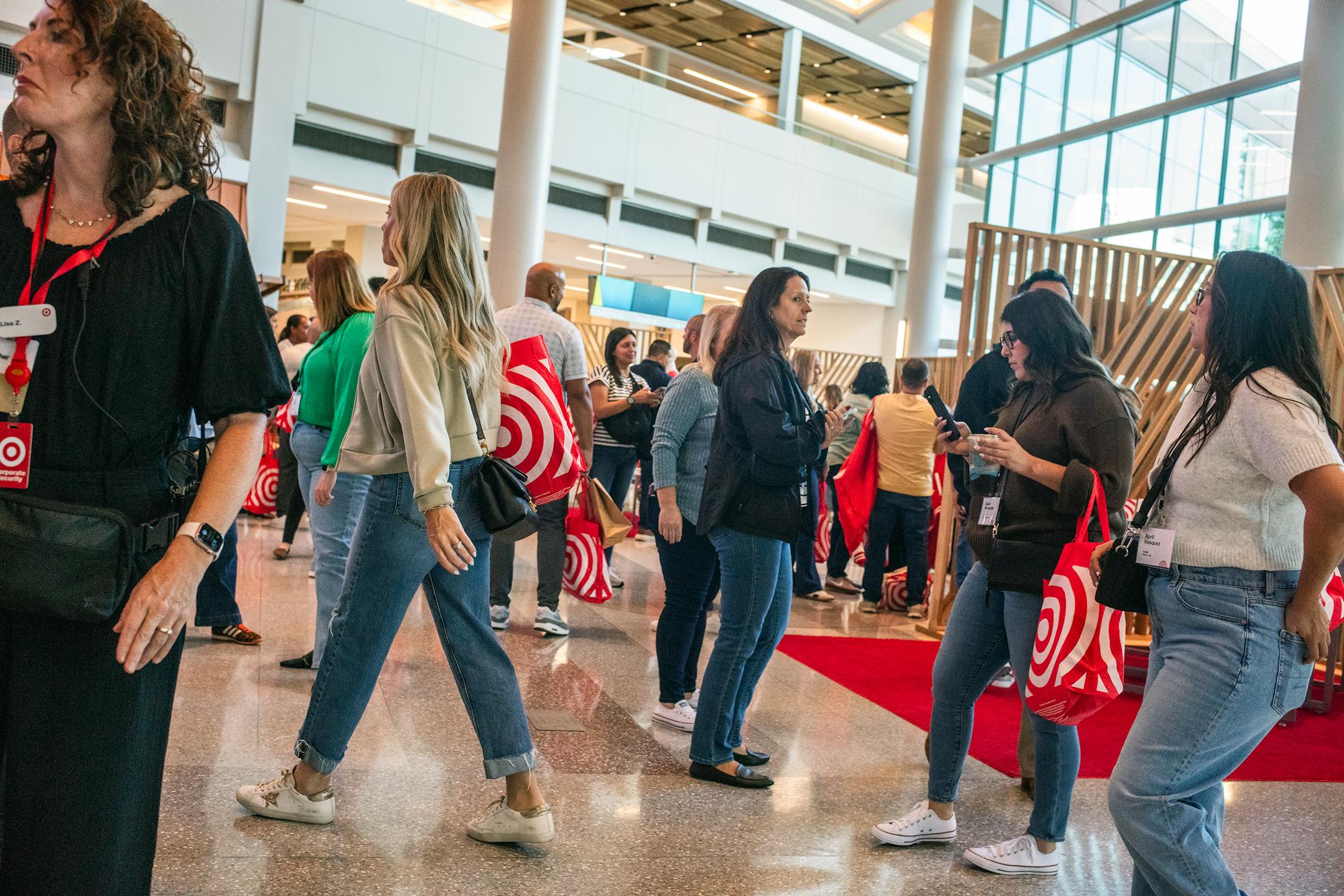
Target employees gather Monday morning at the Minneapolis Convention Center as the company's "Target Together" event kicked off to start the week. (Richard Tsong-Taatarii/The Minnesota Star Tribune)

Felicity Riedell, wearing a fluorescent safety vest, directed cars into the parking ramp at LaSalle Avenue between Ninth and 10th streets. The ramp’s supervisor said the morning rush was heavier than usual.

“We’re starting to fill up a lot more — especially starting last week. It was one of our best weeks in years for the city of Minneapolis system,” said Damon Noga, general manager at ABM Parking Services.

Several Target employees on their way to the company’s general session at Target Center declined to comment on the record about the retailer’s push to bring staff back into the office.

Many said they already live in the Minneapolis area and weren’t concerned about commuting downtown three days a week. Joe Watson, strategy implementation lead at Target, has been working in-person downtown for a while. So he said being downtown early Tuesday morning was not a big change.

Yet others expressed confusion about why some divisions, namely Target’s commercial unit, were part of the mandate while others were not.

The retailer hasn’t changed its corporate policy, which allows leaders to set team work plans based on roles and preferences. But Target has started requiring employees with local contracts to return to Minneapolis. And because teams sometimes include employees with both remote and local contracts, some will have to return to the office while others continue to log in remotely.

Target employee Austin Herman, 37, of Chanhassen, has been working remotely since the pandemic began. His enterprise sustainability team has stayed remote, in part to attract employees with a specialized skill set, he said.

“We just want the best talent,” said Herman, a hockey fan who was wearing a bright red jersey with “Target” splashed across the front.

There are benefits to seeing fellow remote teammates — including people who work on the other side of the country — and being able to collaborate in person, Herman said as he paused for a moment to greet a co-worker. He was also looking forward to spending time downtown and visiting some favorite eateries.

But working remotely has meant more time with family, he added, including his young children. And since his team is so far-flung, it probably wouldn’t make sense to go back to the office full time.

“I’m on Zoom calls anyways,” he said.

about the writers

about the writers

Emma Nelson

Editor

Emma Nelson is a reporter and editor at the Minnesota Star Tribune.

See Moreicon

Carson Hartzog

Retail reporter

Carson Hartzog is a business reporter covering Target, Best Buy and the various malls.

See Moreicon

Emmy Martin

Business Intern

Emmy Martin is the business reporting intern at the Minnesota Star Tribune.

See Moreicon

More from Economy

See More
card image
Mary Altaffer/The Associated Press

There are seven answers in the form of tech companies like Nvidia, Apple and Microsoft. But their outsized impact could spell disaster if the AI bubble bursts.