Advertisement

Ramstad: What GOP gubernatorial candidates say about growth and immigrants

At the biggest yearly gathering of business and political leaders, Republicans talk about the issue that has hurt their chances to win statewide office.

Columnist Icon
The Minnesota Star Tribune
February 18, 2026 at 7:06PM
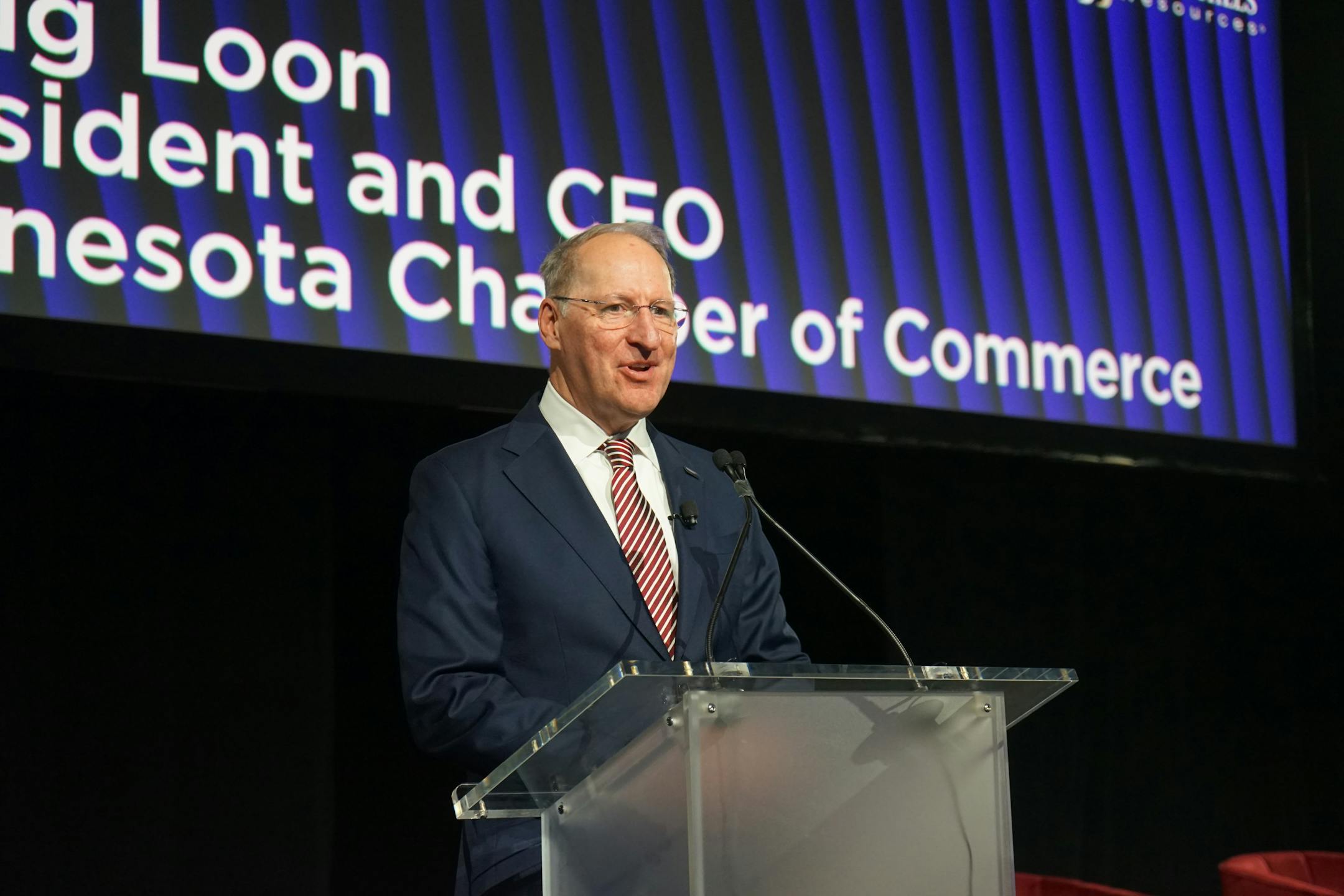
Doug Loon, president of the Minnesota Chamber of Commerce, said at the Session Priorities dinner in St. Paul on Feb. 17 that the chamber will advocate for immigration reform at the federal level. (Grant Erickson )
Advertisement

Fraud against government services may be the topic Republican candidates for governor talk publicly about the most, but I learned Tuesday night most of them also think a lot about how to increase the state’s slow growth and how immigrants will need to play a role in that.

I interviewed six of the GOP hopefuls during a reception that preceded the Minnesota Chamber of Commerce’s Session Priorities dinner, the traditional capstone to the first day of the legislative session that has become the year’s biggest gathering of political and business leaders.

“We absolutely need to grow back legal immigration, and we need our federal government to do robust immigration reform that makes sure we have a system that meets the needs of the economy,” Kristen Robbins, a state representative from Maple Grove who is running for governor, told me.

And I listened in as business executives and leaders of various chambers from around the state also asked face-to-face questions. “I don’t agree with that,” one businesswoman said to a candidate who slightly disparaged immigrants. She shook his hand and said, “But good luck to you.”

The chamber and business crowd lean Republican, of course. The dozen or so attendees I asked at the dinner said the party’s chances to win statewide office diminished substantially because of Operation Metro Surge, the crackdown on undocumented immigrants by federal agents that frequently turned violent, disrupted the lives of thousands of Minnesotans and killed two.

The ineptitude and malevolence of the entire endeavor diminished support across the nation for the Trump administration’s approach to immigration. Minneapolis attorney Chris Madel ended his campaign as a GOP gubernatorial hopeful, saying the operation “expanded far beyond its stated focus on true public safety threats.”

A day after the killing of U.S. citizen Alex Pretti by federal agents, the Minnesota Chamber made headlines by producing a statement signed by leaders of 60 of the state’s largest companies calling for “de-escalation” of Operation Metro Surge.

That statement drew plenty of criticism for its mild tone. Whatever role that statement played, President Donald Trump recognized the operation had become a debacle and began to unwind it.
Advertisement

The entire episode has crystalized for many business leaders in Minnesota that, over too many sessions of Congress and presidential administrations, leaders in Washington failed to update an immigration system structured in the 1980s.

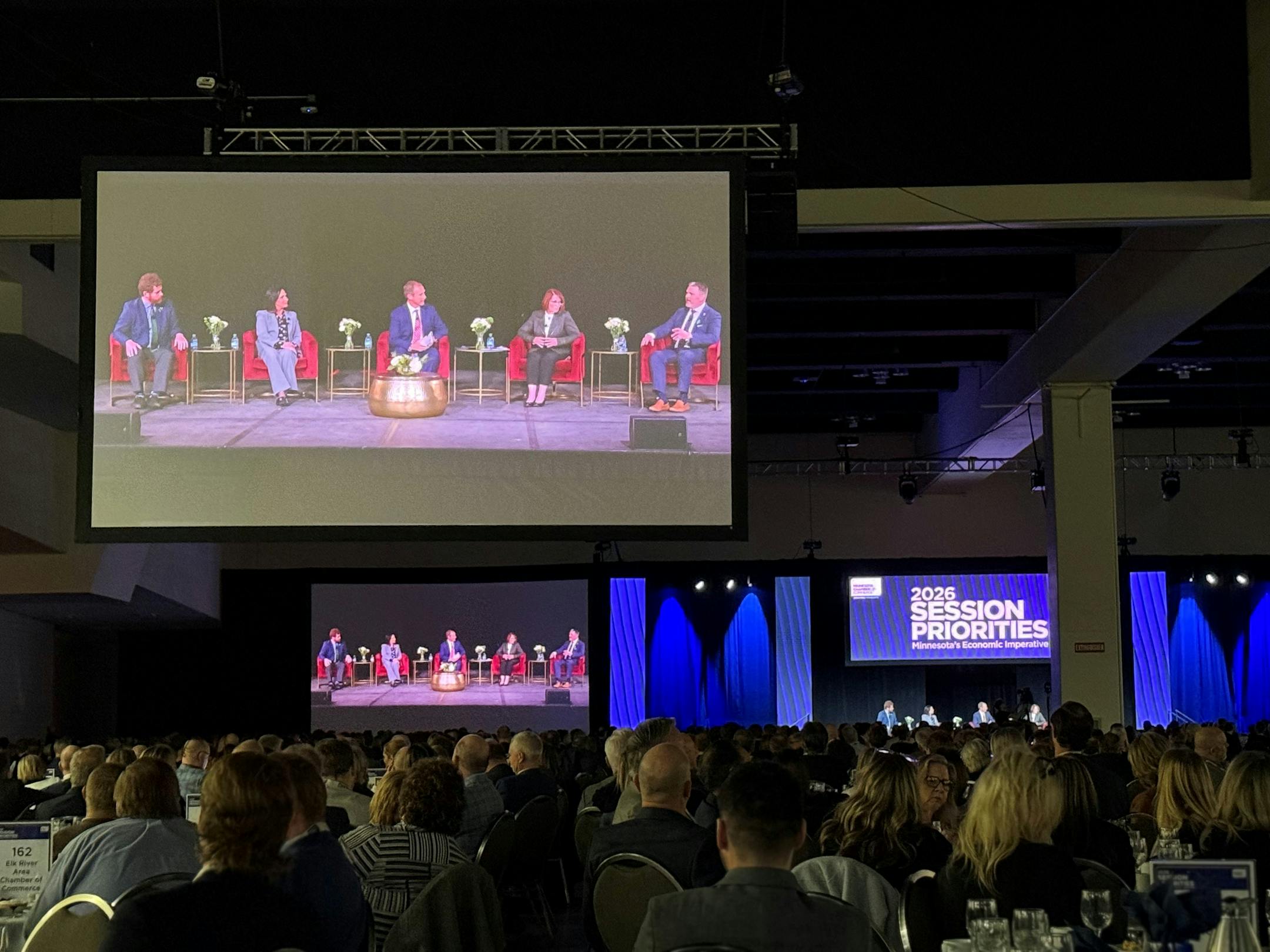
Legislative leaders spoke about priorities for the 2026 session before a crowd of more than 1,000 Minnesota business owners, executives and advocates at a dinner hosted by the Minnesota Chamber in St. Paul on Feb. 17. (Evan Ramstad)

Minnesota Chamber President Doug Loon told me he thinks there would not have been an Operation Metro Surge had the nation’s immigration system been modernized. Before the crowd of more than 1,000 people, he said: “I ask you to join us in promoting meaningful and needed immigration reforms.”

That’s an idea that still divides Republicans. So I was not surprised in my interviews that the frontrunners for the GOP nomination for governor, House Speaker Lisa Demuth of Cold Spring and Twin Cities businessman Kendall Qualls, were a bit circumspect.

“I support enforcing federal immigration laws and while we do that, the governor and our city leaders need to be cooperative in that. As far as growing our state here and doing that with legal immigration and a pathway forward, that is the priority,” Demuth said.

Qualls said, “We have a legal pathway and even the green-card pathway. Greater Minnesota, agribusinesses, they need that. All for that. But it’s got to be legal and has to be controlled.”

I raised my questions about immigration as I talked with the candidates about the state’s slowing population and workforce growth, which has been a running theme in this column. Last weekend, I proposed candidates for state and federal office offer a growth target for Minnesota’s population and suggested 1% as a benchmark, up from 0.5% rate the state has experienced in the 2020s.

Advertisement

Demuth and Robbins, perhaps no surprise as members of the current Legislature, possess the most policy ideas to spur population growth.

“Lowering personal income tax, changing the tax structure on our corporations, that is what really fits into growth in our state,” Demuth said. She said she would release specific income tax rate proposals later in the campaign.

Robbins proposed shrinking the number of tax brackets to gradually reach a flat rate, a process Iowa has gone through. She noted that state spending would also have to come down and that future spending growth should be based on population growth plus inflation.

Qualls said he favors cutting the state tax rate to 6% from its current 9.8%. Patrick Knight, another Twin Cities businessman who, like Qualls, is a military veteran, proposed greater reliance on sales taxes, including expanding it to more services, and flattening income taxes.

Brad Kohler, a former professional fighter from Champlin, said the business tax rate should be cut to zero. Only he and Phillip Parrish of Kenyon, a veteran and businessman from Kenyon, took up my request to put numbers on population growth.

Parrish said he thinks Minnesota ought to aim for 3% growth, beating fast growers like Florida and Texas. Kohler said Minnesota ought to aim for a population of 11 million, nearly double its current size.

Advertisement

Mike Lindell, founder of Chanhassen-based MyPillow and the closest thing Trump has to an acolyte in the Minnesota governor’s race, didn’t attend the Chamber event.

about the writer

about the writer

Evan Ramstad

Columnist

Evan Ramstad is a Star Tribune business columnist.

See Moreicon

More from Business

See More
card image
Grant Erickson

At the biggest yearly gathering of business and political leaders, Republicans talk about the issue that has hurt their chances to win statewide office.

Main entrance to the Gonda Building. For more than a century, the city of Rochester has been shaped and defined by the Mayo Clinic. Now the Mayo has a $6 billion vision to reshape the city and itself.Wednesday, February 21, 2013 ] GLEN STUBBE * gstubbe@startribune.com ORG XMIT: MIN1302211648220346
Advertisement