

Ramstad: Immigration is Minnesota’s top issue. We need to hear specific numbers.

Look at my targets and see how you they make you feel.

Columnist Icon
The Minnesota Star Tribune
February 14, 2026 at 1:00PM
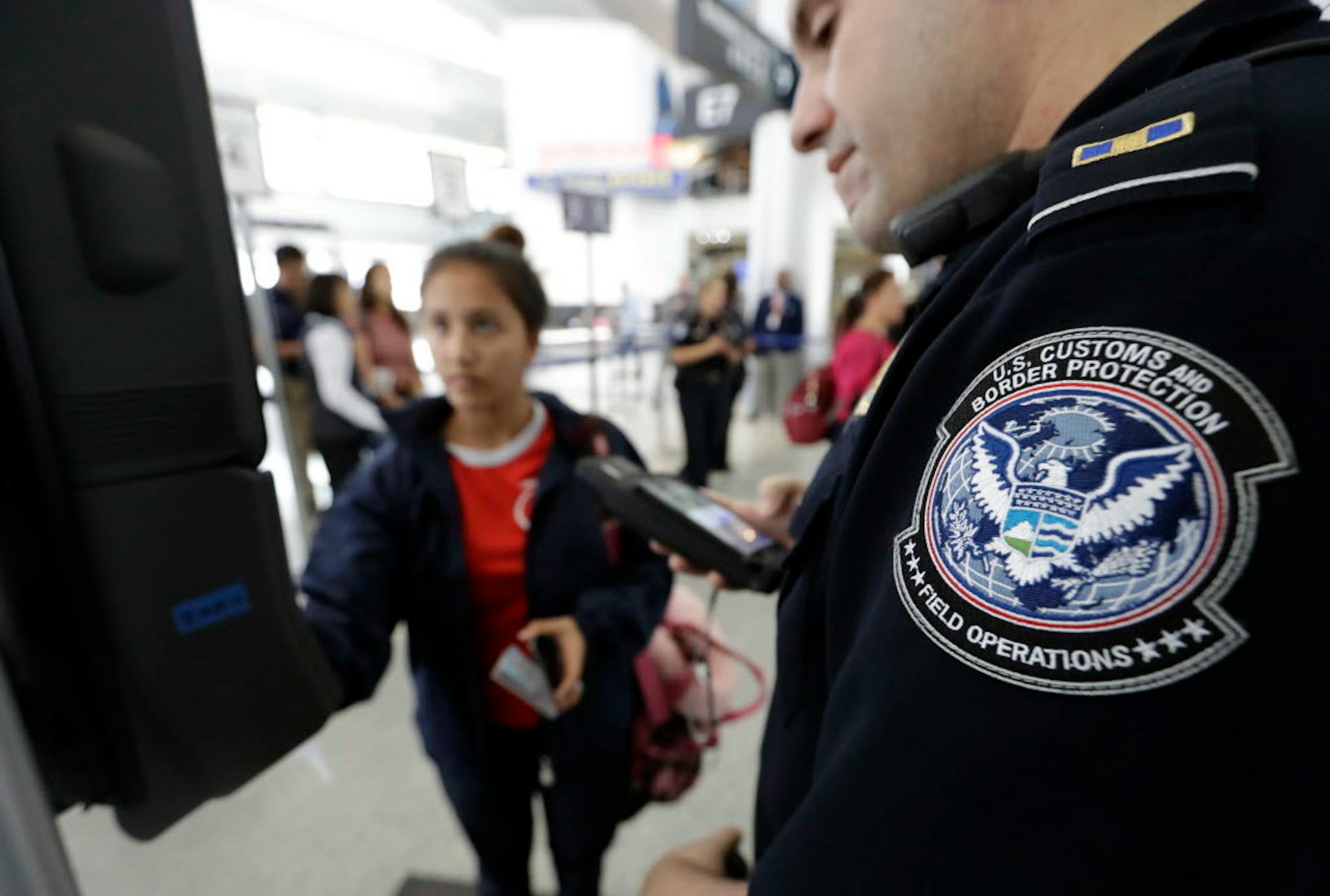
U.S. Customs and Border Protection officer Julio Corro, right, helps a passenger navigate one of the new facial recognition kiosks at a United Airlines gate before boarding a flight to Tokyo, Wednesday, July 12, 2017, at George Bush Intercontinental Airport, in Houston. The Trump administration intends to require that American citizens boarding international flights submit to face scans, something Congress has not explicitly approved and privacy advocates consider an ill-advised step toward a su
Minnesota's reliance on immigrants for its population and economic growth is becoming the hottest political issue in 2026, though few want to talk about it seriously. (David J. Philip/The Associated Press)

If we’ve learned one thing over the last few months of fraud scandals and marauding federal agents, it’s that the hottest issue in Minnesota politics is the role of immigrants in the state.

How strange that political candidates try to avoid it.

When Minneapolis attorney Chris Madel exited the gubernatorial race as a Republican prospect, he got the most attention for saying national Republicans’ immigration crackdown in Minnesota made it “nearly impossible” for a GOP candidate to win statewide this year.

I was more struck by what Madel told a Wall Street Journal reporter as he left a gubernatorial debate a week earlier: “They didn’t ask one question about immigration, but they asked about abortion,” Madel said. “It’s like, what are your priorities here?”

Minnesota is in a bind. Immigration is at the heart of it. People running for state and federal office this year need to talk about it directly.

The bind is that the state, growing more slowly than ever, now relies most on immigrants for growth and that reliance produces costs before yielding benefits.

On top of that, the short-term costs in education and human services payments compete with the growing cost of care for huge numbers of retired baby boomers.

Further complicating the problem is racial tension. Most new immigrants to Minnesota are from Latin America or Africa, while the aging baby boomers are mostly descendants of white European immigrants from the 19th and early 20th centuries.

Right now, no political aspirant, Republican or Democrat, is directly discussing immigrants, the state’s need for them and the tradeoffs related to them. Instead, they speak in code.

Consider the social media post on Super Bowl Sunday from Michele Tafoya, who is seeking the GOP nomination for U.S. Senate. Tafoya said she planned to fold laundry during halftime rather than watch the much-hyped performance by Puerto Rican singer Bad Bunny. It was the kind of shot that got lots of attention in right-wing media — and showed no regard for the role of Hispanic immigrants in Minnesota now or in the future.

Republican gubernatorial hopeful Kendall Qualls, a Black businessman, has done something similar by criticizing the diversity, equity and inclusion wave that grew out of the Floyd moment. His belief in less government help for people of color is plain enough but he’s also sending an indirect signal on immigration.

Meanwhile, Democrats, particularly after confronting the siege of Operation Metro Surge, have tended to wander off onto topics like abolishing federal law enforcement agencies rather than fully engaging in what the nation’s immigration policies should be — and why they are so important for economic growth.

One way to force this issue, I believe, is for every candidate running for state or federal office in Minnesota to declare a growth target for the state’s population. They should also say the mix of native-born and immigrants needed to reach that target and offer a vision for national immigration policy that will be needed to get the state growing faster than it has been.

I’m not running for anything, but I’ll go first.

Minnesota should target 1% annual growth in its population, or around 60,000 new people every year to the current total of nearly 6 million.

That’s very aggressive for this era. It’s more than twice the rate the state has been growing in the 2020s. In the July 2024-June 2025 census year, Minnesota added 33,000 people.

One percent growth would also be faster than Minnesota expanded in the 2000s and 2010s, though slower than in the 1980s and 1990s.

It would put the state closer to the current growth rate of Texas, which has five times Minnesota’s population and grew 12 times faster last year.

Minnesota’s natural rate of growth — calculated by subtracting deaths from births — is being pressured by the huge size of the aging baby boomer generation. As a result, the state needs to recruit more people from other states or immigrants from other countries.

In some recent years, Minnesota has relied on immigrants for more than half its population growth. I’ll take an even more aggressive stance and say we need to target 45,000 new immigrants from other nations to reach our goal of 60,000 new residents a year. Minnesota should then grab 10,000 people a year from other states and the other 5,000 from natural growth until it gets beyond the boomer decline.

Achieving that would take a massive overhaul to federal immigration policy. Start with the bipartisan Border Act of 2024 that Donald Trump kiboshed to keep immigration boiling as a political issue during his run for office. That legislation set limits on border crossings, but it also sped up the asylum process and made a small increase in the number of green cards.

Build from there an even speedier asylum process, 30 days instead of the 90 in that legislation. Then reform visa programs to assure workers aren’t exploited. Add a deposit-with-interest system for temporary workers to come and go from the U.S.

So there’s a baseline for you to talk to candidates about in coming months. Come up with your own targets, but remember Minnesota is unlikely to grow faster than now without increasing immigration a lot.

If a candidate won’t talk specific numbers with you, he or she should just stay on the sidelines.

Sign up here to follow Evan’s columns by email.

about the writer

about the writer

Evan Ramstad

Columnist

Evan Ramstad is a Star Tribune business columnist.

See Moreicon

More from Business

See More
card image
Keith Srakocic/The Associated Press

From older filers to military taxpayers and more, many qualify for some kind of assistance this year.