

Ramstad: Trump’s ICE push in Minnesota is part of a makeover of America’s population

He dislikes that immigrants have become such a major source of population growth in the state and country.

Columnist Icon
The Minnesota Star Tribune
January 17, 2026 at 1:00PM
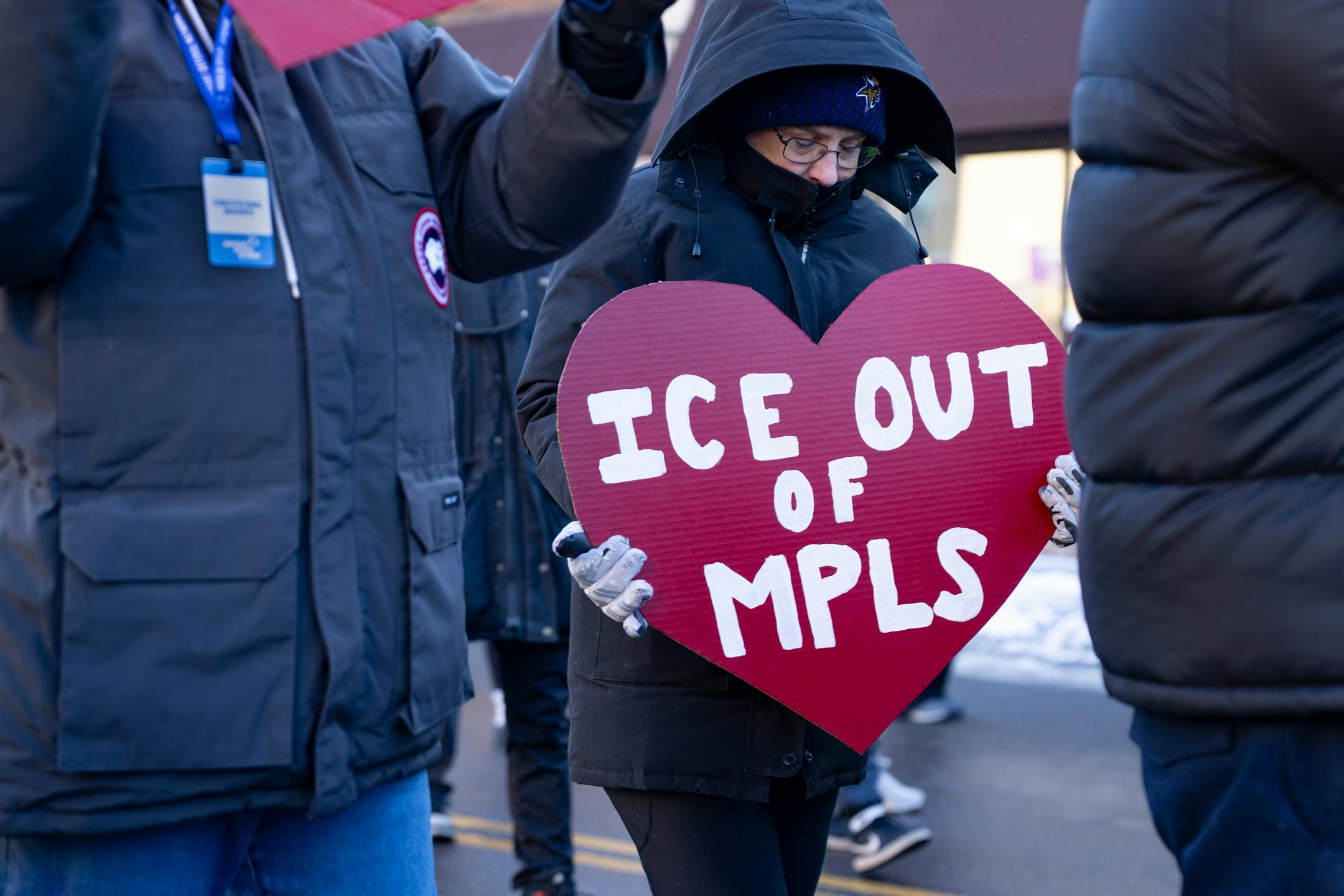
A demonstrator at an anti-ICE protest in Minneapolis in December 2025. ICE is targeting immigrants in Minnesota at a time when immigration has proven the main driver of population growth. (Alex Kormann/The Minnesota Star Tribune)

Here’s the cold economic way to look at the deployment of ICE officers in Minnesota this month.

President Donald Trump sent thousands of them to one of the nation’s slowest-growing states, and one of the farthest from the southern border, in search of undocumented immigrants he thinks are harming the American economy.

He sent the masked federal agents to a state that has relied on international immigrants for the majority of its population growth of 131,000 people this decade, the slowest-growing period in its history.

The estimated number of undocumented immigrants in the state is around 80,000, though there is no precise data on when they arrived. With perhaps half of them in the workforce, they would account for just over 1% of the 3 million people working in Minnesota.

I regularly write that Minnesota has not been overrun by undocumented immigrants. These figures, coupled with the state’s low unemployment rate and high labor participation rate, are why.

Tragically, one of the ICE officers on Jan. 7 killed a non-immigrant woman who had moved to the state with her partner and her youngest child from Kansas City not long ago. Their arrival helped diminish the net loss of residents to other states that has been a negative aspect of Minnesota’s population trends this decade.

Seeing that death and hundreds of people being snatched up until they can prove citizenship, the analytical part of my brain moves beyond the horror and terror to a rather banal question:

Does Donald Trump want Minnesota to shrink?

That’s not clear. What is clear is Trump and his acolytes want Minnesota and the United States to rely far less on immigrants for population and economic growth. They will sacrifice population growth — and the economic growth that comes with it — if it too much of it comes from immigrants.

Trump adviser Stephen Miller last month said “the great lie of mass migration” is that a country is merely attracting individuals. “At scale, migrants and their descendants recreate the conditions, and terrors, of their broken homelands,” he wrote on social media.

Of course immigrants bring some of the culture and behavior of their home countries with them. But it’s nonsense to think that they don’t assimilate and adopt America’s culture and conditions.

I believe the administration’s entire approach on immigration — including provisions in the “One Big Beautiful Bill” that slowed legal immigration — will end up hurting economic growth for the country and Minnesota in coming years.

And unfortunately for Trump, he is trying to change the source of population growth at the last possible moment.

On the day ICE agent Jonathan Ross shot and killed Renee Good in Minneapolis, the Congressional Budget Office updated its 30-year population forecast for the U.S., saying annual growth would slow from 0.3% over the next decade to an average of 0.1% from 2037 to 2056.

It said net immigration, which is the number of people who migrate to the United States minus the number who leave, will soon become even more important to population growth because the annual number of deaths in the U.S. will begin to exceed the annual number of births in 2030.

In other words, the nation’s population will begin to shrink in 2030 without immigration.

That would have been true for Minnesota starting in the early 2010s. Minnesota lost nearly 70,000 white people, the biggest racial group in the state by far, between the 2010 and 2020 census. Most of that loss was due to death, but some moved to other states.

And yes, some people move because they don’t like Minnesota’s high taxes. Domestic outmigration prevails in much of the Midwest regardless of states’ tax structures, however.

The day after the ICE shooting in Minneapolis, the Heritage Foundation, a right-wing think tank with enormous sway on the Trump administration, published a report decrying the decline of marriage and two-parent households in the U.S. for its role in population decline.

“Over the course of 60 years, casual sex, abortion, childlessness by choice, and no-fault divorce became normalized, while marriage and the natural family became stigmatized,” the report said, marking the 1960s as a turning point in American attitudes and behaviors.

And it added, “With the decline in American marriage came an even more precipitous drop in the number of children brought into the world.”

The report takes a sweeping approach to “restoring the American Dream,” noting that economic dynamism fuels national optimism and the attractiveness of raising children. Heritage wants government agencies to direct grants to cities and towns with high marriage rates and give bigger tax credits to families with three or more children.

Other slow-growing countries have tried similar ideas to increase fertility rates among their citizens. No one has succeeded yet.

But ICE agents came to Minnesota because of this idea that America must grow through larger families instead of immigration.

Renee Good, a mother of three, paid for that idea with her life.

about the writer

about the writer

Evan Ramstad

Columnist

Evan Ramstad is a Star Tribune business columnist.

See Moreicon

More from Business

See More
card image
Alex Kormann/The Minnesota Star Tribune

He dislikes that immigrants have become such a major source of population growth in the state and country.

card image
card image