
D.C. Republicans struggle to cut deal for ethanol expansion, risking wrath from farmers

GOP feels normally solid farm country starting to shake politically.

The Minnesota Star Tribune
February 18, 2026 at 12:00PM
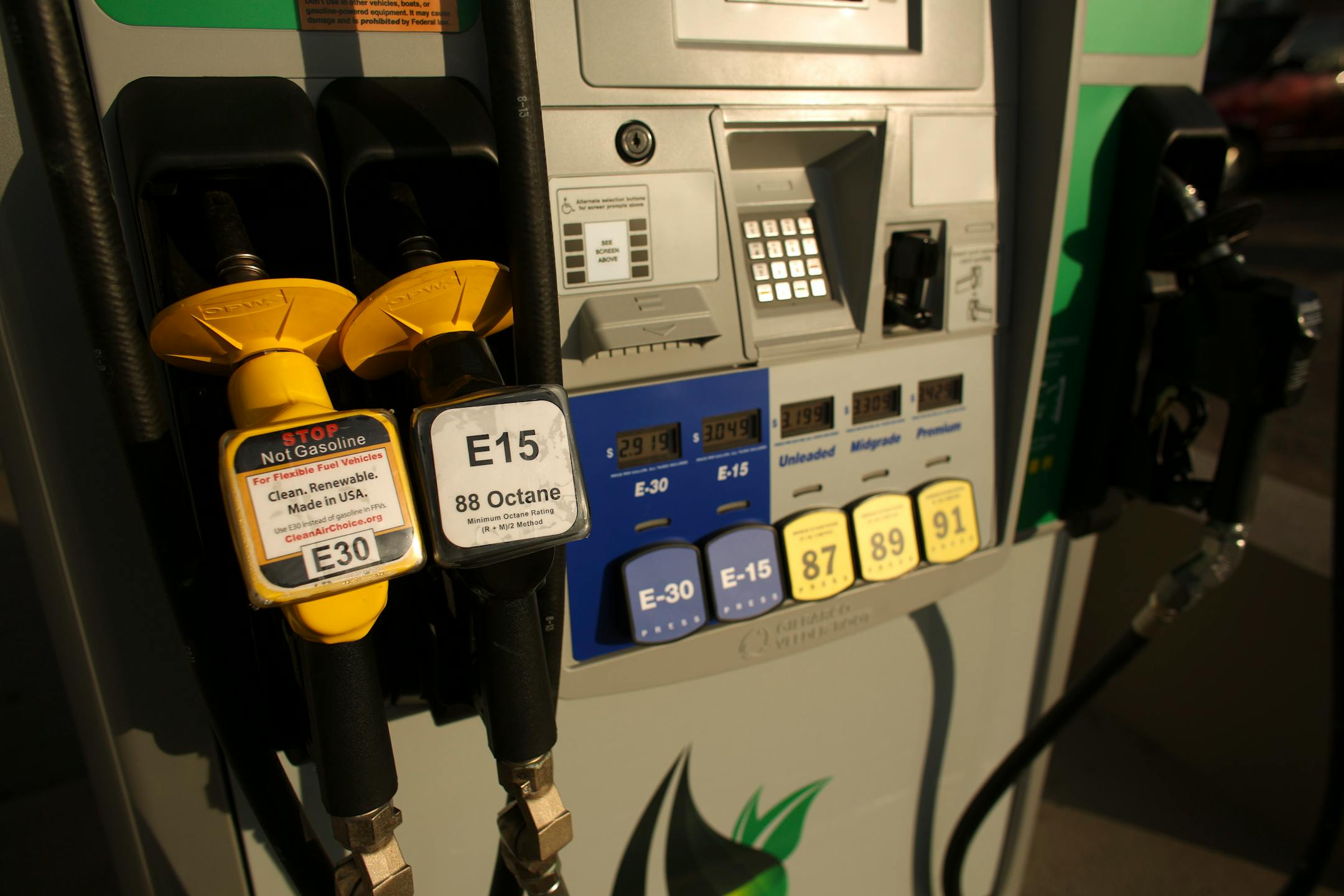
The higher-ethanol fuel blend called E-15 has hit the Twin Cities through an unusual marriage between the state's corn growers and independent gas stations. The first E-15 pump opened this month at Rich Bohnen's station in south Minneapolis, under a new brand name Minnoco with new pumping equipment designed for E-15 that was financed by the corn growers' trade group. (Jeff Wheeler/The Minnesota Star Tribune)

WASHINGTON, D.C. - The Republican-controlled Congress and Trump administration have yet to authorize year-round higher ethanol blends, the latest fumble on a farm agenda that could grow into a political liability as the midterm election season heats up.

An all-GOP task force charged with bringing forward a solution between pro-ethanol forces and oil refinery lobbies to nationalize year-round E-15 fell short of a self-imposed deadline this week.

Minnesota and corn belt states already have a waiver to allow the fuel blend with more ethanol in it, but in another year where crop farmers can’t sell all their harvest and commodity prices are low, the move to make E-15 nationwide seemed like it would be a solid win for farmers.

Stalled farm bill negotiations and trade woes from tariffs already have weakened support for Republican leaders, putting some congressional seats at risk that were solid red for many years.

E-15 uses more ethanol than the 10% currently allowed year-round in gasoline blends.

Ethanol supporters had anticipated a breakthrough from the task force on Feb. 15, with an expected vote in the House of Representatives later this month. Last month, the House approved a so-called “minibus” funding package without including year-round E-15, after objections from small refineries.

But the date came and went with no announcement, leaving Growth Energy, the National Corn Growers Association and the Renewable Fuels Association all wondering what’s next, if anything.

Allowing E-15 sales across the nation could be a boon for corn farmers, who are struggling with record leftovers in the bins from the 2025 harvest and weak commodity prices.

“Charlie Brown never gets [to kick] the football,” said Richard Syverson, a farmer from Douglas County in western Minnesota and past president of the Minnesota Corn Growers Association, explaining the mounting frustration in the industry. “We’ve been on the edge of this for 10 years.”

There’s also growing concern, say observers on Capitol Hill, that a slumping farm economy may hurt Republicans in the coming midterm elections this November.

It’s not only been the saga of E-15, which had been teed up for a vote in a package during the last weeks of President Joe Biden’s term in office before tech billionaire Elon Musk decried the spending package as a “terrible bill.” Farmers also point to a continued impasse on negotiations of a long-overdue farm bill and how the administration’s tariff policies have affected soybean exports and caused other trade woes.

Last week, the Minneapolis Federal Reserve’s survey of farm land lenders found 64% of these banks reporting a decrease in income during the fourth quarter from a year earlier. The ongoing ICE round-up across Minnesota has exacerbated a tight labor market across the region, especially for dairy farms.

Late last month, President Donald Trump visited Iowa, saying he’d sign any E-15 bill that hit his desk. But across the Upper Midwest, a few seats held by Republicans have showed signs of becoming competitive, from a House race in Des Moines to a senate race in Nebraska.

In southern Minnesota’s First District, the national Democratic Party’s campaign arm has thrown a spotlight on Rep. Brad Finstad, a Republican who has represented the region since 2022, saying Finstad’s seat is competitive to a Democratic challenger.

Finstad, a farmer who sits on the House Agriculture Committee, had said it was “disappointing” that the House funding package did not include an E-15 provision. His office did not return multiple requests for a comment on this story.

Jake Johnson, a Rochester teacher challenging Finstad, said last week farmers are closely watching what happens to E-15’s fate, as the district grows 3 million acres of corn annually.

“The fact that our guy [Finstad] can’t deliver is a point of frustration,” Johnson said.

Historically, bad farm economies have twisted election results. In 1986, Democrats retook control of the U.S. Senate amid a catastrophic farm economy.

Comparisons to the 1980s can be overblown, say farmers in 2026. But prices are soft, and anxieties are high. U.S. corn growers busted bins last fall, growing a record 17 billion bushels of corn. But that means a lot of corn still sits there.

Today, the price of corn on the Chicago Stock Exchange sits just above $4.30, meaning it’s below the cost of production for many farmers. Corn hasn’t been above $5 a bushel since a year ago.

One off-ramp for corn could be grinding more to make ethanol.

In January, the American Petroleum Institute, which represents most of the nation’s largest oil and gas interests, called for Congress to swiftly “advance a durable path forward on year-round E15 and balanced reforms to the small refinery exemption program.”

But the nation’s mid-sized refiners, which historically have been allowed leeway under the small refinery exemption, have objected to the deal.

Ongoing negotiations on Capitol Hill had sought to harmonize the corn and oil lobbies. But at least so far, say corn growers, the oil lobby has won.

Harold Wolle, a past president of the National Corn Growers Association and a farmer in Madelia, Minn., outside of Mankato, was one of 27 retired ag and government officials who recently wrote a letter to members of Congress warning of a “widespread collapse” of the agriculture industry due to Trump administration policies.

“The recent failure of Congress to include E-15 legislation in the appropriations legislation is just one more sign that congressional leadership does not fully grasp the depth of the current farm crisis,” the letter said.

Trey Mewes of the Minnesota Star Tribune contributed to this story.

about the writer

about the writer

Christopher Vondracek

Washington Correspondent

Christopher Vondracek covers Washington D.C. for the Minnesota Star Tribune.

See Moreicon

More from Agriculture

See More
card image
card image