Target’s corporate archivists preserve a century of Minnesota retail history

From past iterations of shopping carts to a salvaged Target Center “T,” these researchers can trace the Minneapolis-based retailer’s roots back to Dayton’s department store in the early 1900s.

The Minnesota Star Tribune
November 11, 2025 at 12:01PM
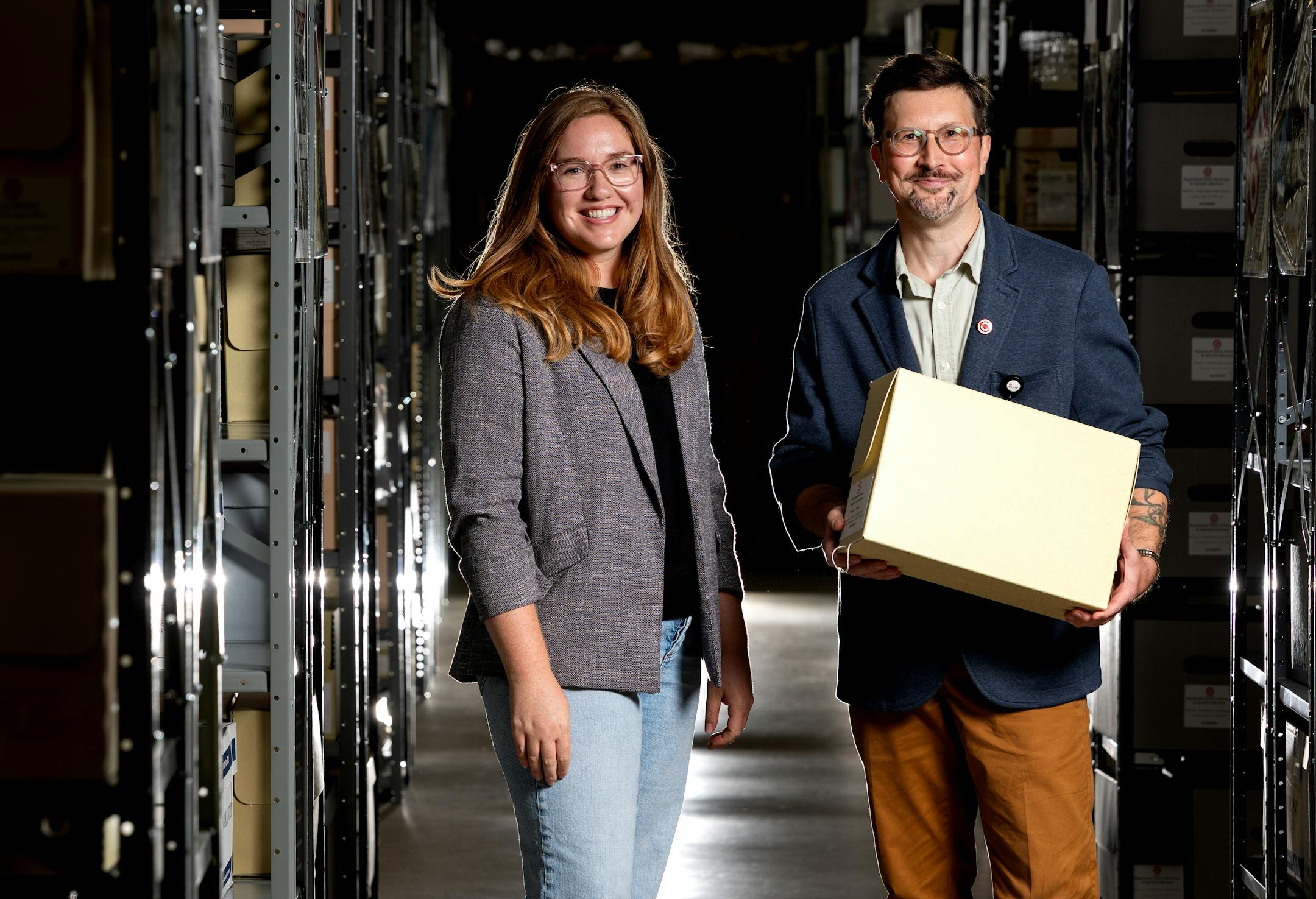
Robert Wood and Amanda Cowden are responsible for collecting, organizing and safeguarding more than a century’s worth of Target's history, all stored at the retailer's northeast Minneapolis warehouse. (Carlos Gonzalez/The Minnesota Star Tribune)

Tucked inside a climate-controlled warehouse in northeast Minneapolis: a treasure trove of Target history.

Boxes lined with acid-free tissue hold vintage Dayton’s packaging. A Marshall Field’s restaurant counter gleams under sterile lighting. And reams of old marketing materials and weekly ads fill the shelves. All are part of the big-box retailer’s corporate archive.

Together, Robert Wood and Amanda Cowden collect, organize and safeguard more than a century of the Minneapolis-based Fortune 500 company’s history, from the early days of Dayton’s department store to the digital age of the Target app.

Target’s history began in 1902, when George Dayton opened Goodfellow Dry Goods in Minneapolis. Several generations of the family grew it into a multimillion-dollar business and eventually established the first Target, a discount offshoot from the main department store, in Roseville in 1962.

Today, there are nearly 2,000 Target stores nationwide, and the now-multibillion-dollar company is weathering an era of upheaval.

All of that is Wood and Cowden’s job to sniff out and preserve. Sometimes their work supports Target’s legal teams in defending the company’s intellectual property. Other times, it helps set designers create realistic period pieces.

Like for the 2020 Netflix show “Selena: The Series,” the project required several hours of research as well as gathering photos, signage and product details to replicate a 1980s Target store in South Texas. It amounted to “all of 15 seconds” of screentime, Wood said.
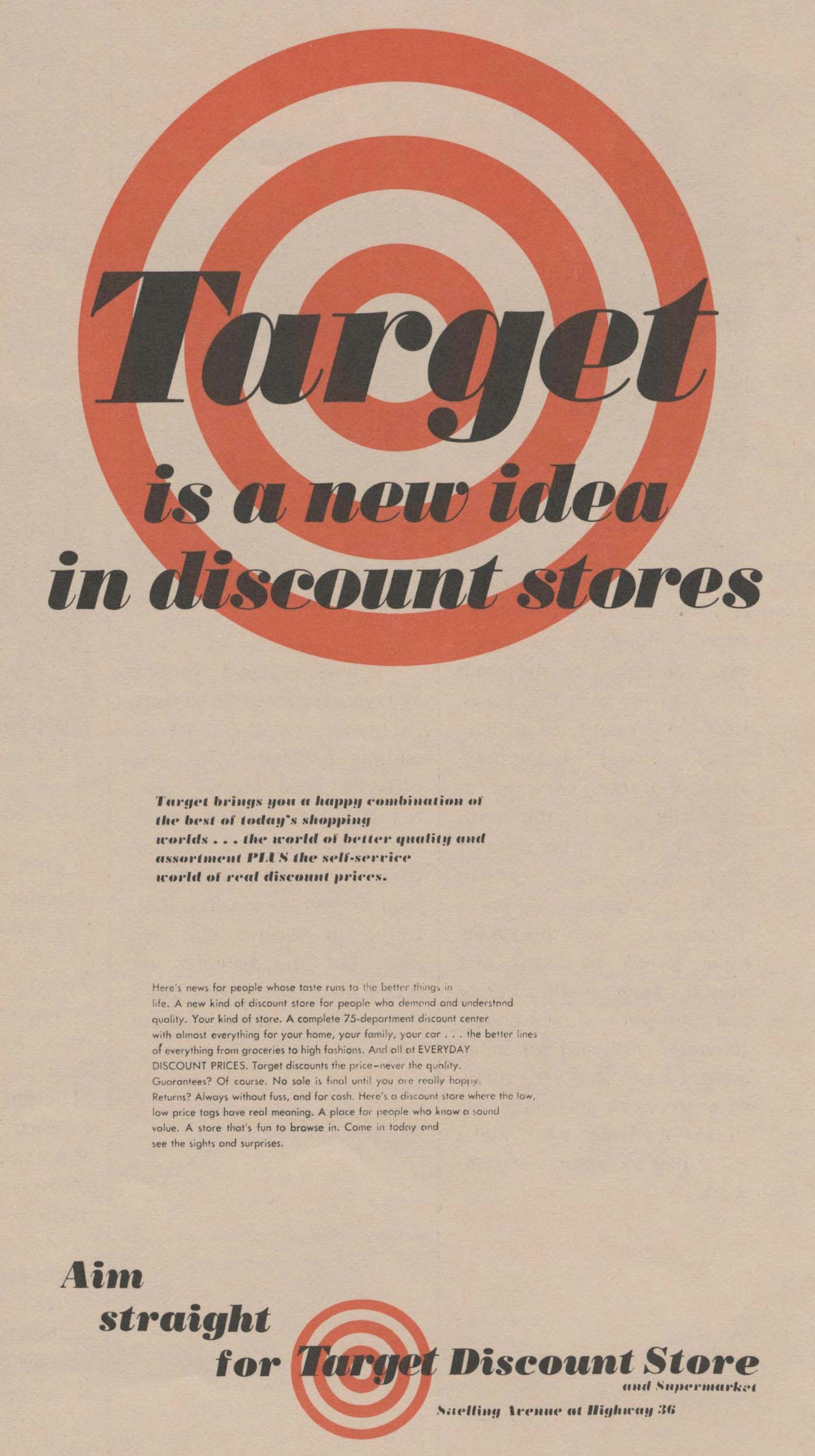
Robert Wood and Amanda Cowden are responsible for archiving the retailer's history, including a 1962 advertisement introducing the first store. The original Target logo had one additional ring from 1962 to 1968 until it was dropped in favor of the signature three-ring bullseye. (Target)

A recent crossover TV ad between Target and another Netflix show “Stranger Things,” required imagining a 1987 Target store in the fictional town of Hawkins, complete with old signage and the retailer’s customer-favorite — but now mostly extinct — food court serving salty popcorn, ICEEs and personal Pizza Hut pies.

That, at least, Wood could pull from his own memory. He worked at the Brooklyn Center Target’s photo lab developing film in the early ‘90s. Wood joined Target’s photo production team in 1999, later leaving to pursue an art history degree. A visit to the Getty Museum in Los Angeles “cemented” his decision to become an archivist, which eventually brought him back to Target.

“I couldn’t look away. I just loved it,” he said. “As my parents would say, ‘What are you going to do with an art history degree?’ Well, I’m doing something with it.”

Cowden came from more of a research background, earning a master’s degree in library and information science. She thought she’d end up in academia, but an internship at General Mills’ corporate archive sparked her interest in the field.

In an interview edited for clarity and length, the duo shared what it’s like to be in their shoes.

What’s an average day like as a corporate archivist?

Wood: We wear several hats. When we’re not doing research for a request, we might be organizing our collection, arranging and describing the collection, or trying to procure the things we need.

Cowden: One week, we’ll be working on a project for a temporary exhibit, and then next week, we’ll be working on something completely different. Sometimes it’s digital, sometimes it’s physical, so there is no typical day. Sometimes we do back-to-back tours [for Target employees] where we just talk about what we do all day. We don’t want to just be here to put items in a box and put them away. We want them to be used.

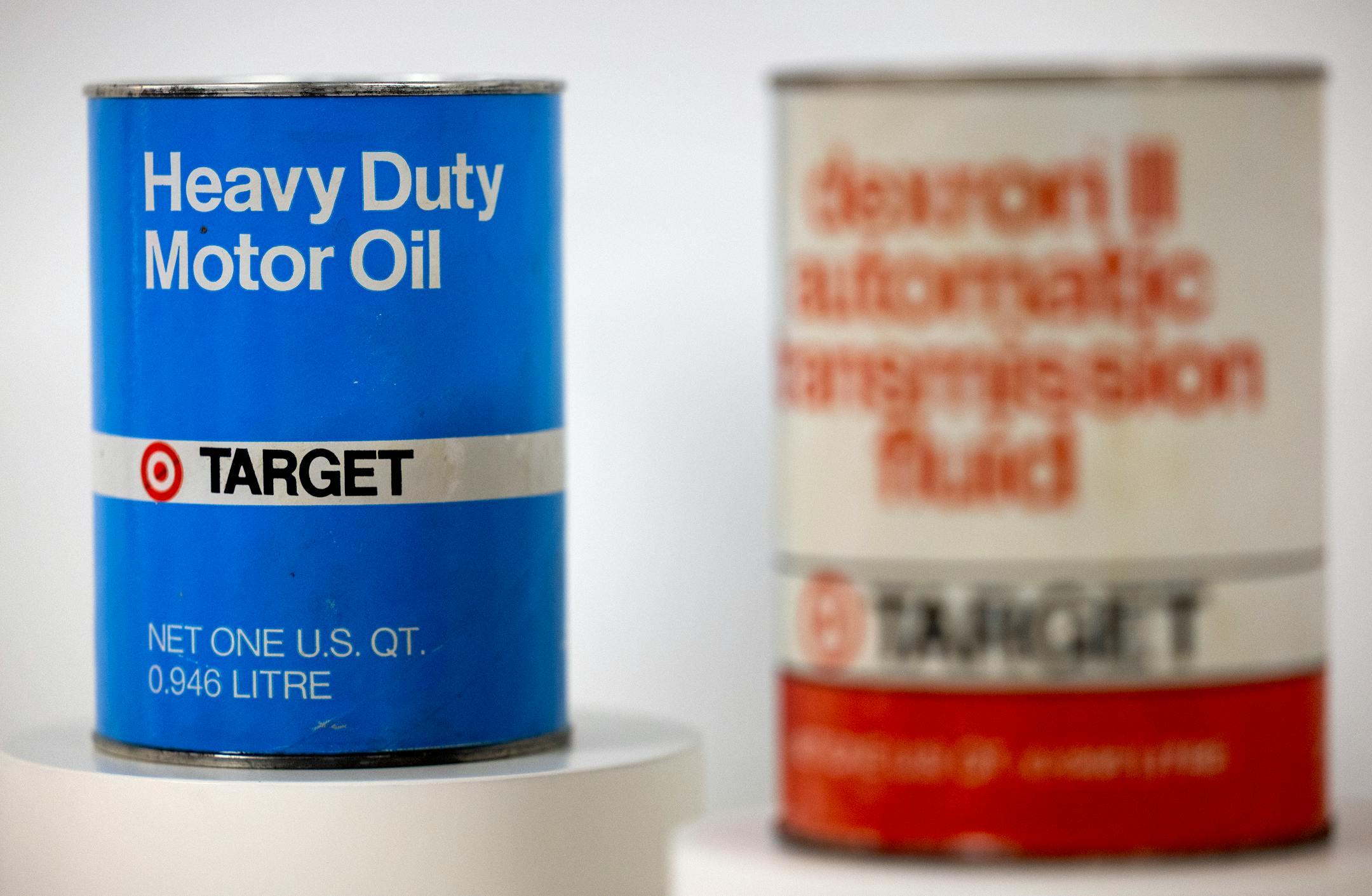
Target previously sold motor oil and transmission fluid. The cans, dated to the 1970s, had oil in them up until a few weeks ago, Cowden said. The pair had to have someone surgically remove the oil to better preserve the packaging. (Carlos Gonzalez/The Minnesota Star Tribune)

What skills are important to your job?

Cowden: You have to be curious, and you have to be interested. That Super Target weekly ad is not particularly exciting. But if you’re wearing the right hat when thinking about it, it can be interesting. And it takes a really long time to get the acumen about what’s in here, why it’s valuable and what matters. We have predecessors. People will come after us. We just steward our portion for this time.

Wood: And being an archivist for a corporation represents a lot of work for several different teams. The photography, the art direction, the decision to promote a particular item for a particular community.

How do you track down new inventory?

Cowden: We get almost all of our content from other teams. And then other times, it’s just research, like looking at our own marketing and communications and saying, “We should probably have a copy of that.”

Wood: We don’t spend money collecting for the most part as a policy, but we have had donations, like the ‘T’ from Target Center was pulled out of a dumpster. We saved it, and it’s been electrified and used in other exhibits. We are very scrappy as a team of two.

Cowden: We did not do the dumpster pulling, just to be clear. That was another team member, and he donated it to us. When the capital ‘T’ went to a lower ‘t’ at Target Center, it was chucked. And then saved.

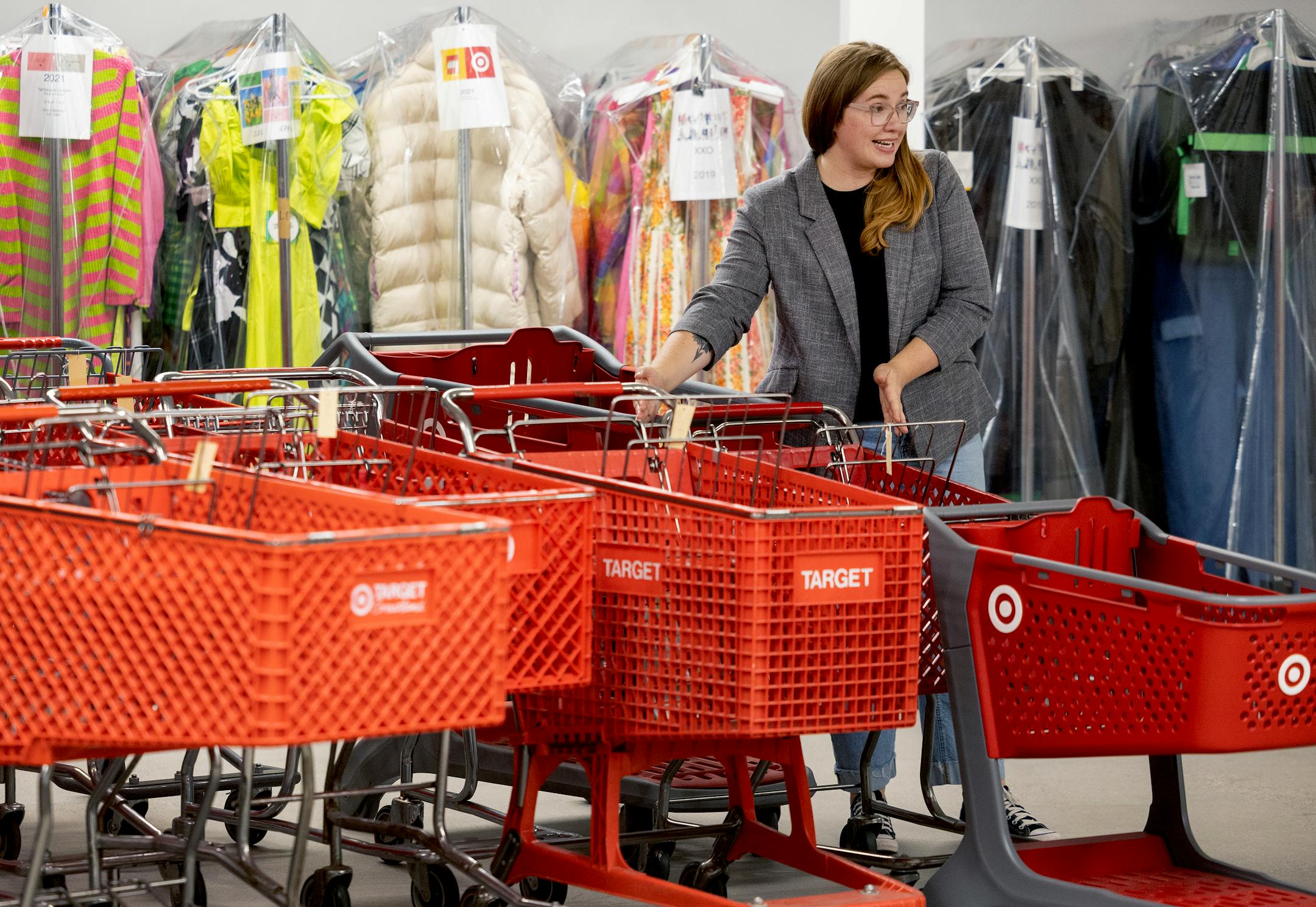
Target's corporate archive keeps a version of every branded shopping cart. The first cart, shown by Cowden, is about the same size as the cart in front that was designed for Bullseye, the company mascot, to push. (Carlos Gonzalez/The Minnesota Star Tribune)

What’s the most interesting item in the collection?

Cowden: I always say, it depends on what project I’m working on. I’ll open a box, and then I’ll be in love with that thing. I should have a better answer to that question, but I don’t. There’s too much in here to love.

And the most tedious part of the job?

Cowden: You do have to love routine things. I spend a lot of time doing digital tasks. The weekly ad is no longer produced in a physical paper, so I have to find the digital PDF. I have to label it properly. I have to put it in the proper place.

Wood: But that’s the balance. When we have those moments where we can do something physical, we can give our brain a break, and then have the satisfaction of completing this particular task. Whereas there are other areas of the collection that will never be finished. We know that. The backlog is decades. Moments that haven’t happened yet will need to be archived in the future. Questions we haven’t thought of will come our way with ties to Target’s history.

What should people know about archiving?

Wood: There’s always an organic need for this kind of a collection. Whether a company designates somebody to do the job, there are people who naturally will start collecting and creating this timeline of content because they’re proud of their work or because they know there’s value in referencing it later on. There’s always somebody in a corporation that has a closet full of history.

In Their Shoes is an occasional series highlighting Minnesotans at work. If there’s a type of job you want us to profile — or if you have someone who would be a good candidate — email us at InTheirShoes@startribune.com.

about the writer

about the writer

Carson Hartzog

Retail reporter

Carson Hartzog is a business reporter covering Target, Best Buy and the various malls.

See Moreicon

More from In Their Shoes

See More
card image
Richard Tsong-Taatarii/The Minnesota Star Tribune

Christian Metzler, a native of Austria, came to St. John’s campus in Collegeville, Minn., last year to carry on the tradition of making music.

card image
card image