
Secrecy surrounds possible plans for gigantic data center in southeastern Minnesota

An email from the Department of Employment and Economic Development is the first concrete evidence of Google’s search for a data center site in Pine Island, near Rochester.

The Minnesota Star Tribune
July 22, 2025 at 8:48PM
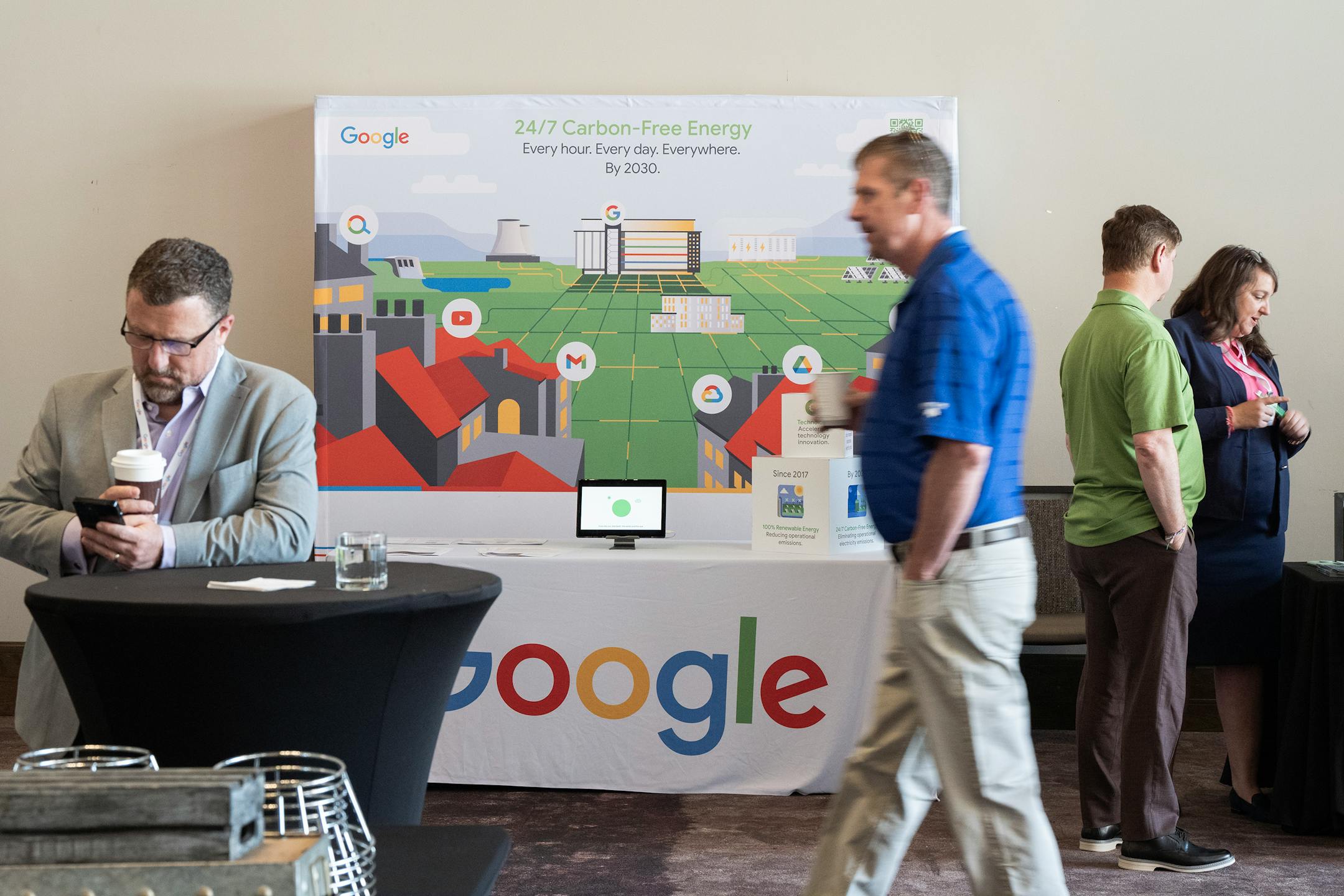
Google was a sponsor at the Mid-America Regulatory Conference (MARC) in Minneapolis last year hosted by state utility regulators. (Richard Tsong-Taatarii/The Minnesota Star Tribune)

A Minnesota economic development team convened a meeting in March about a potentially colossal data center on farmland near Rochester. Google was the one tech company invited.

It’s the first concrete evidence of Google hunting for a Minnesota data center site after the company ramped up a lobbying offensive earlier this year to influence tax breaks and data center regulations in the state.

The project, slated for the small city of Pine Island, is notable for its size. The development would sit on 482 acres and could have a footprint of 3 million square feet. That’s more than four times the size of an $800 million data center under construction by Facebook’s parent company in Rosemount, and nearly twice the square footage of U.S. Bank Stadium.

Google, which did not respond to requests for comment, has not publicly said if it’s behind the Pine Island project or if it has any other data centers in the works.

It’s possible the state, or a construction firm working to advance the Pine Island site, was gauging Google’s interest.

The cadre of state officials organizing the March meeting invited Jorge Solis, whose LinkedIn profile identifies him as a data center negotiator for Google who specializes in commercial real estate acquisition and development. The agenda centered on a “Potential Pine Island Data Center,” as well as lucrative state tax breaks for data centers.

Also invited was Chris Lloyd, senior vice president and director of infrastructure and economic development for Virginia-based McGuireWoods Consulting, a data center siting expert. Lloyd and Solis did not respond to a call seeking more information about the meeting.

The Minnesota Department of Employment and Economic Development (DEED) disclosed the meeting invite last week in response to a Minnesota Star Tribune request for public records about Google and data centers. DEED took almost four months to fulfill the request, releasing the invite and a brief email setting up the private meeting.

Colleen Eddy, a member of DEED’s business development office, asked Lloyd to “please forward on the invite to others who should be in attendance.” The agency declined to comment.

The Pine Island project is in the early stages of development.

The lack of information is common in an industry in which developers and data center operators routinely hide details of major projects, such as the amount of energy needed or the company that will run the facility.

Google’s name is not on the project documents. Ryan Cos., a Minneapolis-based construction firm, has handled a regulatory review with the city. Ryan Cos. does not operate data centers, and either has a tech company lined up to run the site or is hoping to attract one.

Pine Island has only worked with Ryan Cos., said City Administrator Elizabeth Howard. “We really have no idea” if Google is involved, she said. “It’s my understanding that a third party isn’t set in stone.”

Sen. Steve Drazkowski, a Republican who represents Pine Island, said he wasn’t aware of the project. Drazkowski has criticized nondisclosure agreements signed by some Minnesota cities including Farmington and Hermantown to hide information about a project or its developer. It’s not clear if Pine Island has a nondisclosure agreement.

A spokesperson from Ryan Cos. said they “don’t have information to share at this time” about Google or its business plans.

Xcel Energy, which would supply power to the development, said it’s generally in talks with developers about new data centers but directed questions about specific firms to those companies.

Minnesota trails its peers in a fierce competition among U.S. states to attract these large-scale data centers, which provide the computing muscle for cloud services and artificial intelligence products like ChatGPT.

But a boom could be on its way. Developers have proposed at least 11 large-scale data centers in Minnesota, including Meta and Microsoft. Amazon, however, suspended a major project earlier this year in Becker. Google backed out of a data center plan in Becker in 2022.

Data centers bring construction jobs and local tax revenue.

The huge amount of energy data centers will require has raised questions about whether the state can meet its climate goals. Others have questioned whether data centers will sap Minnesota’s water resources, though at least some data centers use relatively small amounts of water.

Earlier this year, the Legislature set new rules for the burgeoning industry. Data centers now have to comply with guidelines aimed at protecting Minnesota’s climate goals, water and household electric bills. They also have to pay for energy conservation projects that help low-income families.

Stantec Consulting Services prepared a 297-page draft review of the Pine Island project for Ryan Cos. Stantec analyzed two development scenarios, one with a smaller data center project and another with a much larger footprint.

The draft review says the data center would not cool its servers with water, but rather with an “air-cooling system” to minimize water use.

Google has pledged to be “climate-conscious” in using water to cool its data centers. For example, Google says it chose to use an alternative cooling method to preserve water at a data center in water-scarce Arizona. The company has a water stewardship program that involves improving the health of watersheds.

about the writer

about the writer

Walker Orenstein

Reporter

Walker Orenstein covers energy, natural resources and sustainability for the Star Tribune. Before that, he was a reporter at MinnPost and at news outlets in Washington state.

See Moreicon

More from Environment

See More
Rising above the treeline (Top of this photo), on the shore of Birch Lake, the Twin Metals Copper Nickel Mine Plant site and Tailings Management site is part of the proposed plan. ] In theory, the copper-nickel mine Twin Metals wants to build in the headwaters of the Boundary Waters Canoe Area Wilderness is a zero-discharge mine — a closed loop that will endlessly recycle millions of gallons of water, including rainwater and the polluted process water it uses to extract ore and
Brian Peterson/The Minnesota Star Tribune

The copper-nickel mine is controversial for its proximity to the Boundary Waters Canoe Area Wilderness, and the Biden Administration had canceled its leases.

card image
card image