
A north Minneapolis shingle factory is closing, but the fight over pollutants goes on

Community members have been advocating for change for 30 years. The expected closure of the GAF Roofing site will not end their campaign.

For the Minnesota Star Tribune
February 6, 2026 at 9:50PM
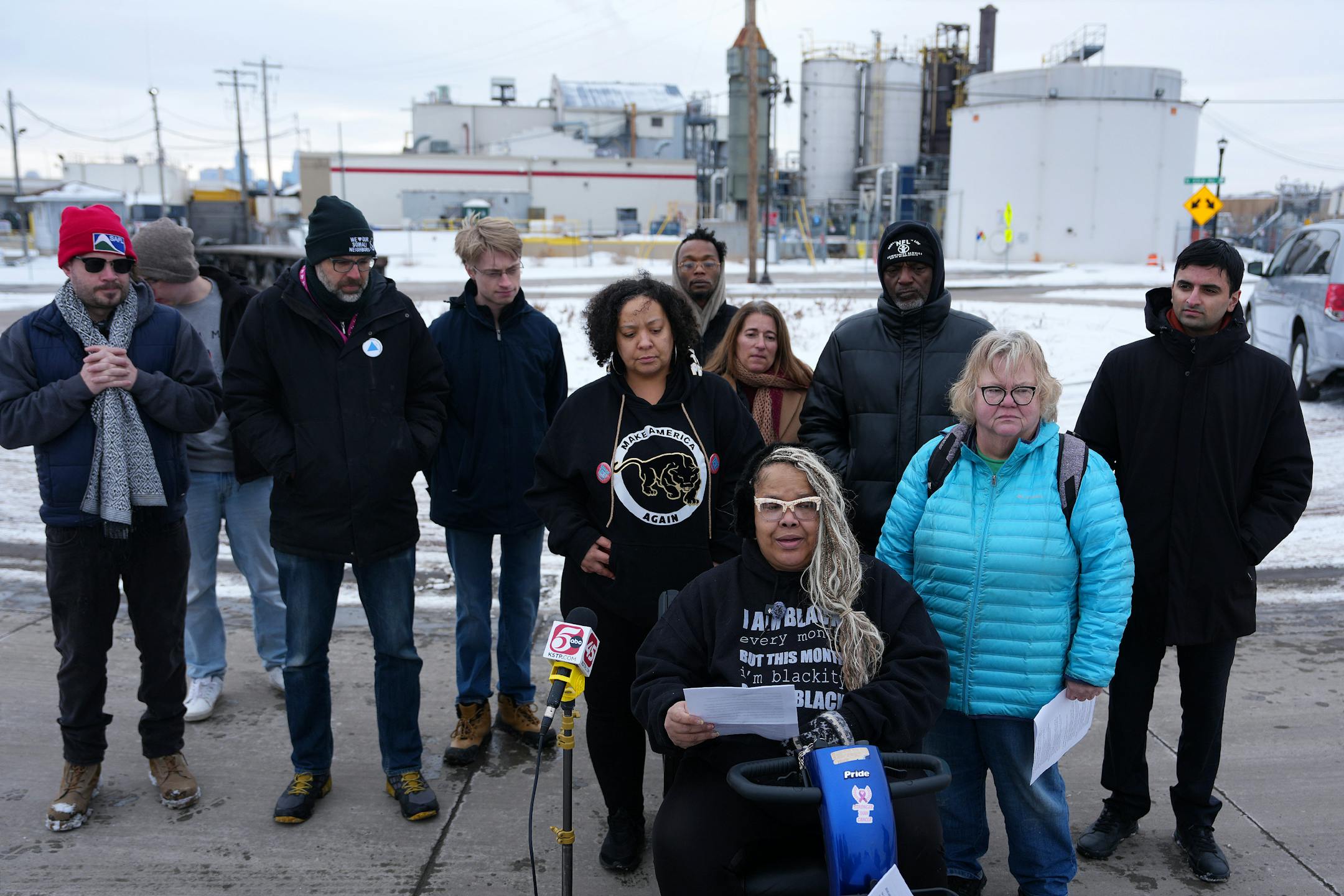
Audua Pugh speaks during a press conference Wednesday, Feb. 4, outside the GAF Roofing plant in north Minneapolis. She and other community members are asking to be included in conversations about the future of the site. (Anthony Souffle/The Minnesota Star Tribune)

For more than 30 years, residents of North Minneapolis have been at odds with GAF Roofing, claiming the company was to blame for adverse health outcomes in the area. When the roofing material manufacturing company announced on Jan. 26 that it will be closing its Minneapolis location, the fight did not end.

Community members from Bottineau, Hawthorne and Jordan neighborhoods gathered outside the company’s Lowry Avenue plant Feb. 4 for a press conference where they demanded it complete an environmental assessment of all GAF plants and pay to clean up the Minneapolis site.

“This isn’t a celebration, it’s accountability,” said Roxxanne O’Brien, a North Side resident who helped organize the press conference.

The closure of the plant, scheduled for April, will end the company’s more than 60-year history in the Minneapolis neighborhood and result in layoffs for 120 workers.

A GAF spokesperson wrote in an email statement the company is closing the plant as part of an effort to support long-term growth by “strategically investing in the manufacturing sites that have the most significant advantages in scale and capability to meet our customers’ needs.” Environmental factors did not influence their decision, they said.

The Minneapolis plant closure is one of several recent moves by GAF, which owns and operates 30 factories in the United States. The company closed its solar shingle manufacturing facility in San Jose, Calif., in Dec. 2025 and relocated to Georgetown, Texas. It also plans in 2029 to close its plant in West Dallas, where residents have also expressed concerns over pollution.

The spokesperson said that GAF already has ceased operations at the Minneapolis site and has started the process of decommissioning the factory. This “will be conducted in accordance with all regulatory and remediation requirements,” they said.

At the press conference, O’Brien demanded that the company pay for an environmental assessment of the site and clean up any chemicals or toxic waste the assessment uncovers. She said in an interview with the Minnesota Star Tribune that she also wants GAF to pay the community additional funds.
“There’s still time for GAF to meet with the community and have a discussion,” O’Brien said.

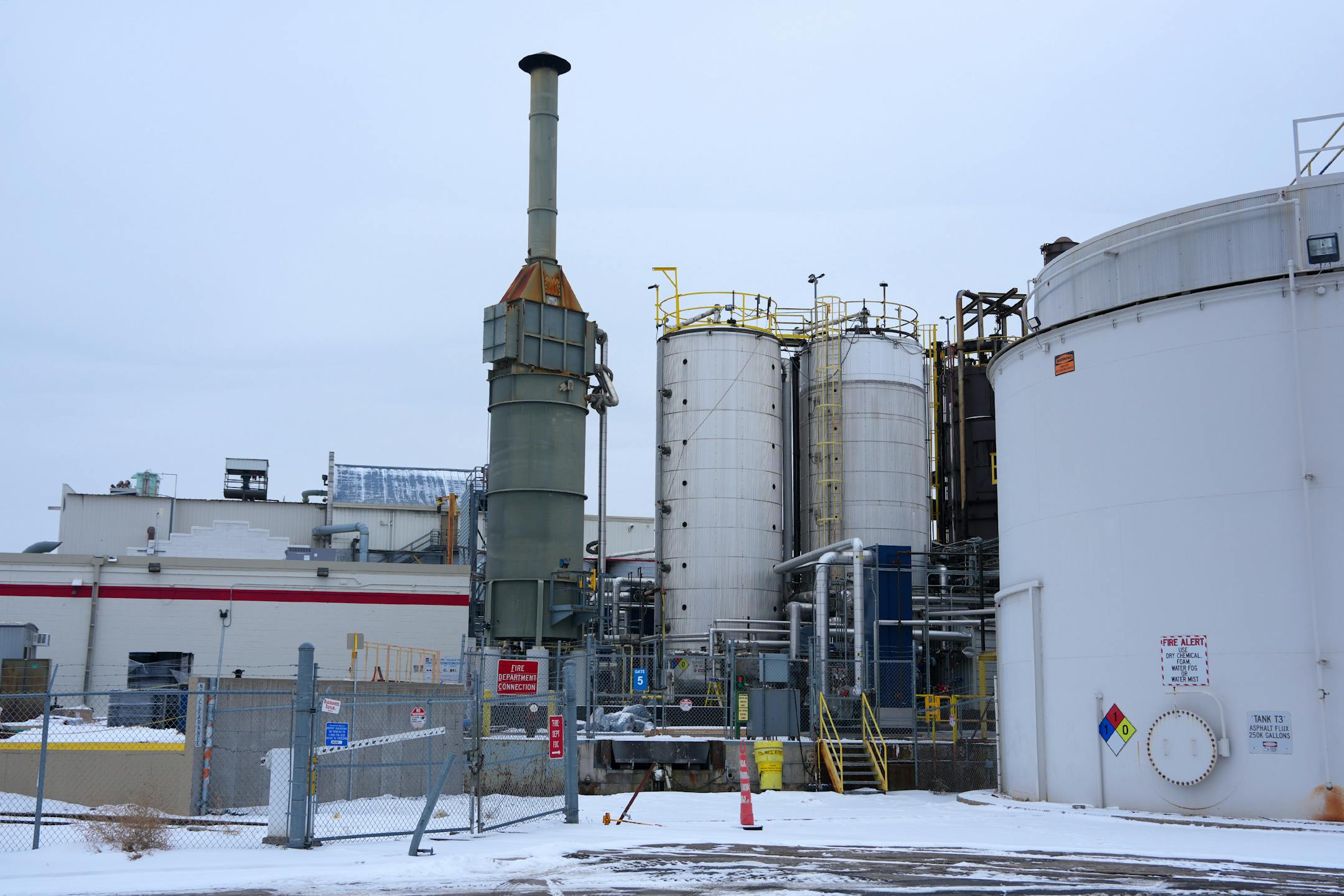
The GAF Materials roofing plant in north Minneapolis. (Anthony Souffle/The Minnesota Star Tribune)

Mariam Slayhi, president of the Bottineau Neighborhood Association, began protesting GAF 10 years ago because she could smell the strong odor of smelting shingles, which are made from fiberglass and asphalt, coming from the plant.

“I could smell odors coming from GAF wafting into the neighborhood, and I was a runner, and I was having some problems with breathing,” Slayhi said. “I knew something was wrong with the air, and I wanted to find out more.”

Slayhi attributes her own health issues and those of some of her friends and neighbors to emissions from the plant.

“I want remediation,” Slayhi said. “I want retribution for the damage they have done in the neighborhoods for the people. I want them to own what they have done. I want them to clean up the mess. I want them to pay for it.”

The GAF plant has a nonexpiring air permit, which regulates the amount of pollutants the company can legally emit. The Minnesota Pollution Control Agency last inspected the plant in March 2024, according to an email statement from Daniel Stohl, an MPCA spokesman. According to MPCA records, the latest inspection found that the company was operating within permissible limits.

“We will continue to monitor the facility’s operations, emissions, and discharges to ensure the health and safety of nearby residents,” Stohl wrote.

According to a statement from a GAF spokesperson, “Throughout our more than 60 years in Minneapolis, this facility has not only operated well within compliance with all applicable environmental regulations, but was also recognized by the Minnesota Pollution Control Agency for ‘Going Above & Beyond’ for our investments to voluntarily reduce air emissions.”

Stohl declined to comment on the GAF statement.

GAF has taken steps to lower its emissions in recent years. In 2015, the company spent $1million on equipment that allowed it to burn off more volatile organic compounds. In 2022, the MPCA recognized GAF for reducing air emissions by voluntarily installing a $4.5 million pollution-control unit called a regenerative thermal oxidizer at its Minneapolis facility.

Slayhi said she noticed some improvement in air quality since the installation of the RTO, but said she still smelled burning asphalt on occasion.

Residents have been protesting the plant since 1995, when they first contacted the MPCA with concerns about emissions from GAF.

In 2016, the Bottineau Neighborhood Association hired researchers from the University of Minnesota to conduct a study of pollution-related death rates of residents in the area. The study found that elevated rates of cancer and asthma in the area.

The study did not determine the cause of these elevated rates, but the neighborhood association pointed to the GAF plant.

A 2017 assessment by the MPCA found that the industrial area in North Minneapolis on the West side of the Lowry Avenue Bridge had elevated levels of formaldehyde, chloroform, heavy metals and lead in the air.

Following the discovery, the former Northern Metals Recycling facility in the Lowry area moved to Becker, Minn., and paid $2.5 million to resolve air pollution complaints in a settlement with the MPCA. But activists also questioned whether GAF was partially responsible for elevated pollutants in the area.

At the press conference, O’Brien pointed to a history of industrial factories placing plants in neighborhoods with higher populations of low-income residents and people of color.

O’Brien worked with Rep. Fue Lee, DFL-St. Paul, to write Minnesota’s 2023 Cumulative Impacts Law, which makes it more difficult for an air-polluting facility to get a permit in an environmental justice area, which is an area with a high percentage of non-white or low-income residents, as defined in the law.

North Minneapolis has a large population of people of color and residents below the poverty line. Forty-five percent of residents in Hawthorne neighborhood, which is adjacent to the GAF plant, are Black, and 43% of residents live below the poverty line, according to 2022 census data. About 18% of Minneapolis residents are Black and about 16% live below the poverty line.

North Minneapolis residents are not alone in their fight against GAF. Residents of West Dallas, Texas, initiated the GAF’s Gotta Go campaign in 2021. Alap Dave, who traveled to Minneapolis from West Dallas for this week’s press conference, said the area “smells like home.”

“I’m so happy to say that the next time I come here, that’s not gonna be the case,” Dave said.

At the press conference, O’Brien demanded that community members have a say in the future of the site. She said her main focus right now is to clean up the area, but residents have floated ideas about what to do after the site is cleaned up. These include building a community center for families and youth or returning the land to indigenous people.

“We deserve to lead at that table, whatever development happens next,” she said.

about the writer

about the writer

Yvette Higgins

More from Environment

See More
card image
Anthony Souffle/The Minnesota Star Tribune

Community members have been advocating for change for 30 years. The expected closure of the GAF Roofing site will not end their campaign.

A natural gas furnace. Natural gas prices have fallen this week and are in the throes of a two-month skid, thanks in part to plentiful supplies.
Frosted Birch trees reach for the sky on a bitter cold morning in December. ] Minnesota -State of Wonders, Arrowhead in Winter BRIAN PETERSON • brian.peterson@startribune.com
Grand Marais, MN 2/14/2014