Some Minnesota colleges see surprising influx of international students

Some schools feared fewer international students would enroll this fall after the Trump administration’s efforts. But early numbers show some are seeing the reverse.

The Minnesota Star Tribune
September 5, 2025 at 11:00AM
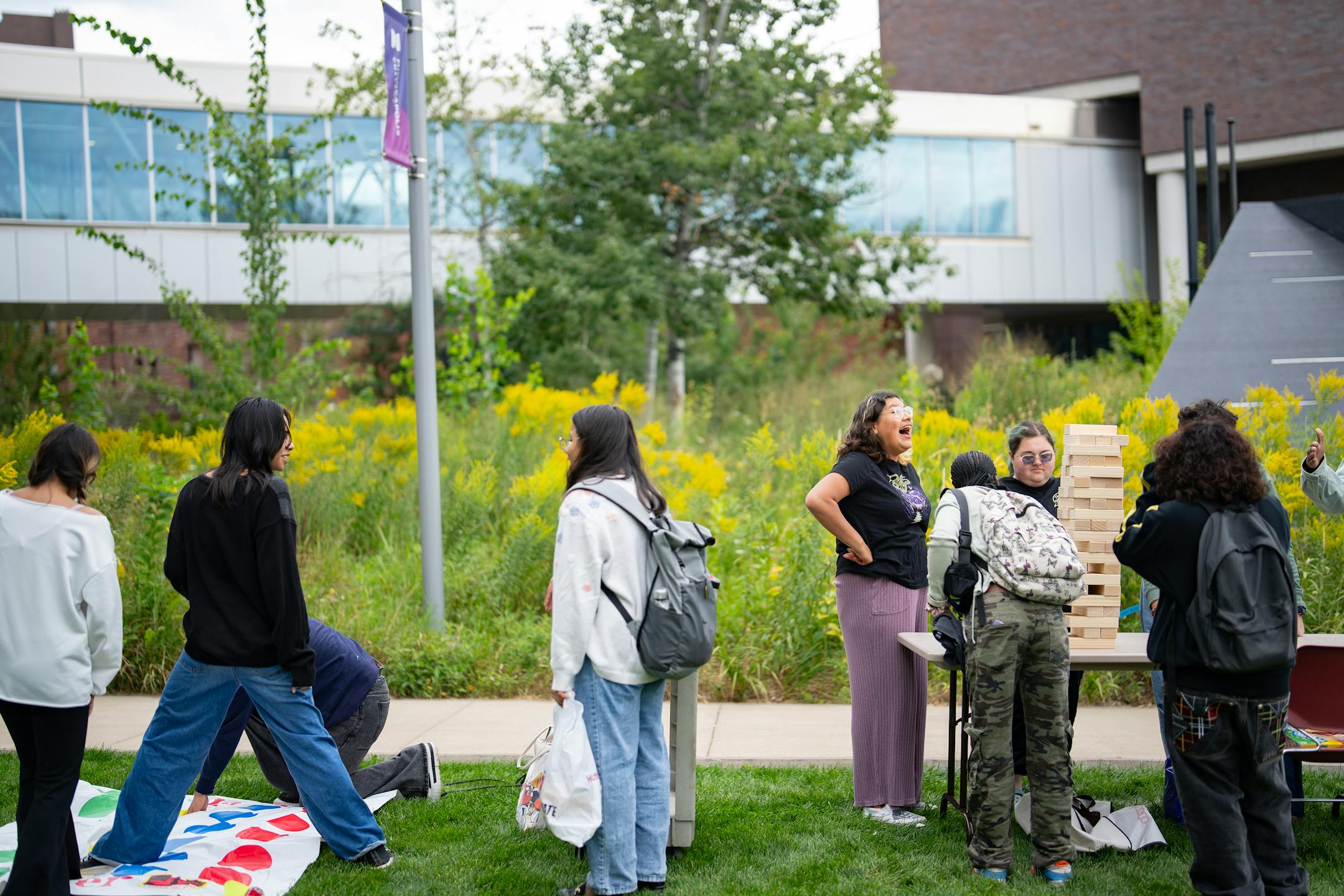
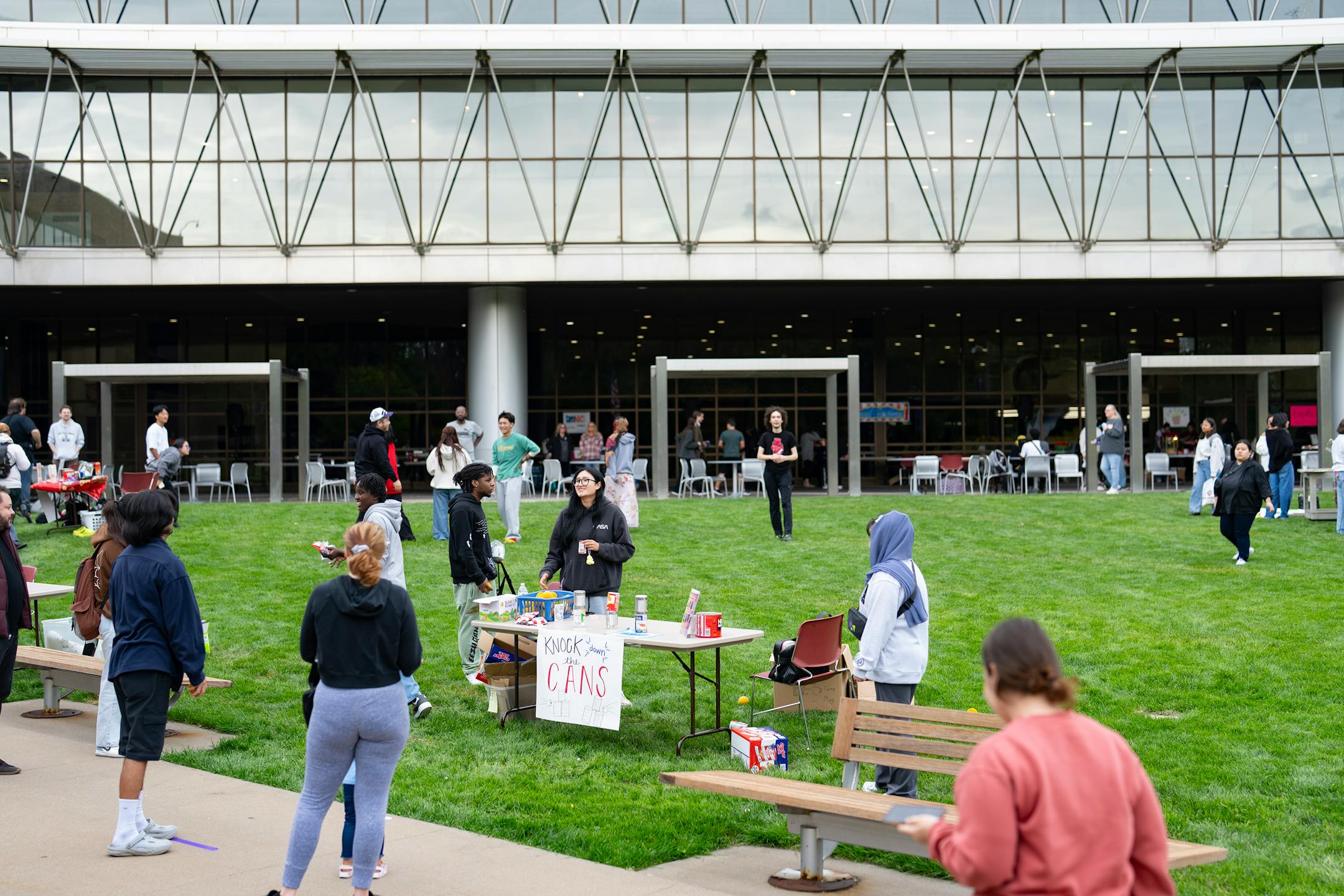
Students attend the Fall Carnival at Minneapolis College in Minneapolis on Thursday. The event was open to all students at the college. (Alex Kormann/The Minnesota Star Tribune)

Despite dire predictions of steep declines this fall, some Minnesota colleges and universities are actually welcoming more international students.

An early snapshot of 11 public and private schools shows that nearly half are seeing an increase in the number of international students, despite the Trump administration’s efforts to limit their numbers. The rest of the institutions surveyed are split between decreased enrollment and numbers comparable to last year’s.

One of the biggest gains was at Bethany Lutheran College, a liberal arts school in Mankato, where international enrollment is up 50% compared to the last year.

“It’s just been the approach of our team [to emphasize] that it’s still a very welcoming environment for international students,” said Jeffrey Lemke, vice president of admissions and marketing at Bethany Lutheran. “That is a difference in what they’ve heard otherwise.”

Earlier this year, the federal government terminated visas and increased social media vetting and background checks for international students — bringing delays and uncertainty. Last week, Trump proposed restricting the length of time certain visa holders, including international students, are allowed to stay in the country.
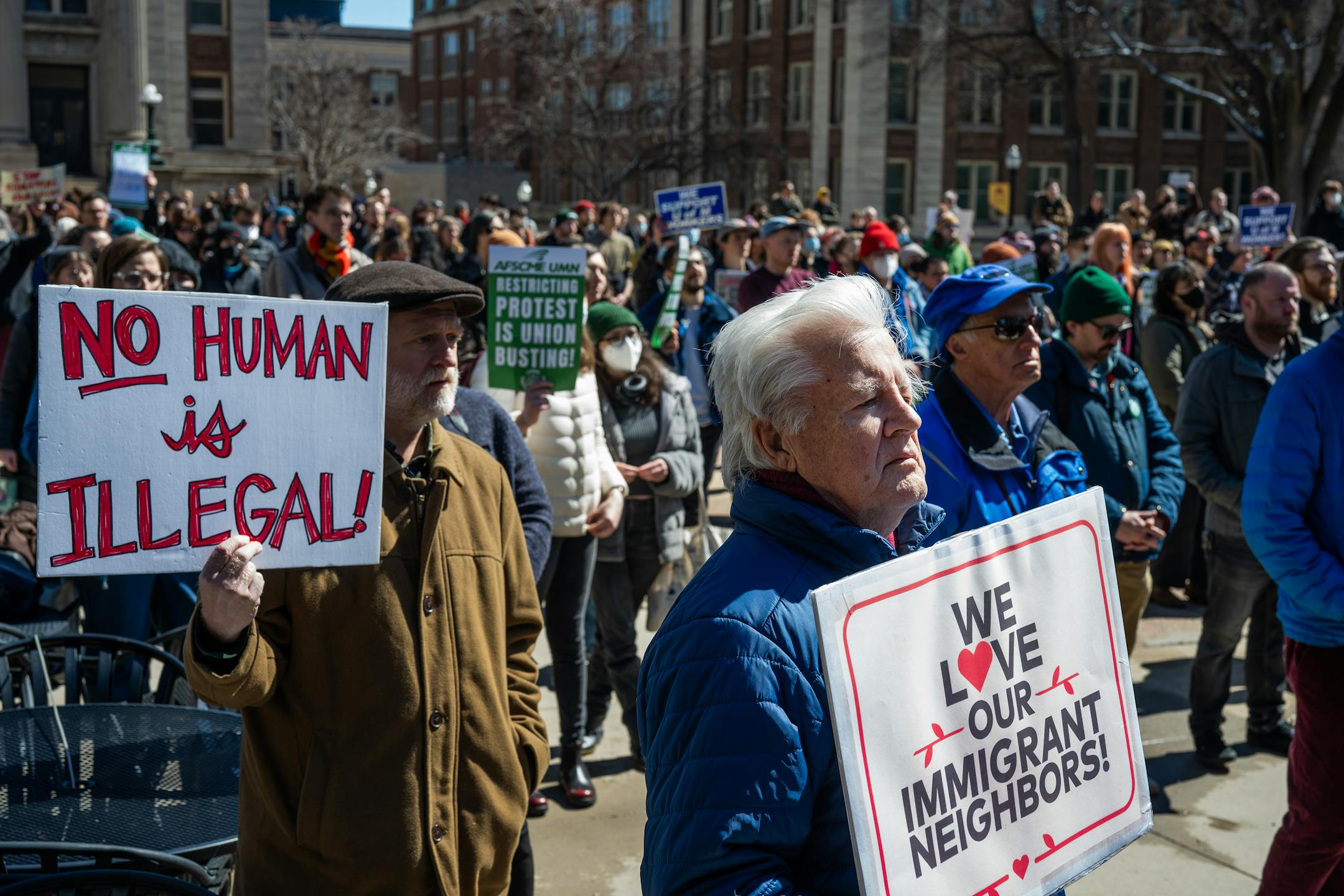
Demonstrators attend a rally on March 31 to protest the detainment of a University of Minnesota graduate student by ICE agents on Northrop Plaza at the University of Minnesota. (Jerry Holt/The Minnesota Star Tribune)

Minnesota college leaders have worried that lower international enrollment could cost them revenue and hurt diversity on campuses. Nearly 15,000 international students attend Minnesota schools, bringing an estimated $488 million to the state.

“These sort of carte blanche actions fundamentally send messages that students are unwanted,” said Will Coghill-Behrends, dean of global education at Minnesota State University, Mankato, which has 2% fewer international students enrolled this year, or about 30 students.

Many other colleges and universities, like the University of Minnesota, didn’t share their enrollment numbers; some prefer only to share statistics later in the fall, when they’re more precise.

Other schools are still waiting for international students to arrive on campus due to visa delays. At Mankato, which had the state’s third-highest number of international students in 2024, dozens of students were unable to arrive by Aug. 25, the first day of classes.

In response, the school is starting an intensive mid-semester program in October to help about 40 to 60 of these late arrivals catch up, compressing 16 weeks of courses into eight. It aims to help them feel part of the incoming class, instead of making them defer to January.

“Imagine yourself as an 18- or 19-year-old young person, so ready and gung ho and excited to start school in the fall, and then suddenly because of this visa issuance delay, you’re not able to,” Coghill-Behrends said. “That just felt kind of heartbreaking to us.”

In a statement, the State Department said that it takes time to ensure applicants don’t pose a security risk.

Another two dozen Mankato students couldn’t get visas to study in the United States after their countries were added to the Trump administration’s new travel ban list in June, Coghill-Behrends added.

Even at Bethany Lutheran, where students from abroad now make up 28% of incoming students, visa delays led 20 or so students to place themselves on the school’s deferral list in hopes of enrolling in January.

“It has been very frustrating for our accepted international students to have to wait, and sometimes wait indefinitely,” Lemke said. “It’s fun to have an international flavor right here in Mankato and I think it really adds to the education and the perspective that all of us have of the world and how it works.”

Students attend the Fall Carnival at Minneapolis College in Minneapolis on Thursday. The event was open to all students at the college. (Alex Kormann/The Minnesota Star Tribune)

Surprising influx

At Minneapolis College, a two-year school that’s part of the Minnesota State system, this year’s group of 141 international students represents a 21% increase. A large number of students come from Africa, followed by Latin America and Asia.

Heidi Aldes, the college’s dean of enrollment and student affairs, said she attributed that influx to an international admissions advisor working on recruitment. She added that inexpensive tuition, strong programs for first-year students and wraparound student services, which include things like a food pantry, also helped attract students from abroad.

Minnesota State Moorhead is also seeing more international students, up from 170 last year to 194 this year. The school’s numbers were bolstered by 77 international students who have some credits or an associate’s degree from other U.S. schools and transferred this year. Many students in the “very eclectic group” from 15 states were drawn to Moorhead because they are already registered nurses and want a Bachelor of Science degree in nursing, said Tom Reburn, admissions dean.

“We have a uniquely strong nursing program and so students seek that out,” Reburn said.

Two other Minnesota State two-year schools also saw gains this fall. North Hennepin Community College in Brooklyn Park has 11% more international students than last year, with 92 students, and Minnesota West Community and Technical College in Worthington is up about 6% to 38 international students.

Declining international students

At Mankato, the decline isn’t as bad as administrators had feared after a wave of unexpected visa revocations and detentions by U.S. Immigration and Customs Enforcement (ICE) sent ripples of fear through the campus.

Officials predicted a drop of up to 150 students due to visa delays over the summer and after students’ visas were suddenly revoked. Last semester, a student from Bangladesh, Mohammed Hoque, was arrested by ICE, though a judge later ordered him released, determining that he was targeted for his social media posts.

This fall, other colleges have had comparable international student enrollment. Dakota County Technical College, which is in the process of merging with Inver Hills Community College, saw similar numbers, as did St. Olaf College in Northfield.

But other schools saw declines, including St. Cloud State University, which ranked No. 2 in the state for international student enrollment last fall, behind the University of Minnesota’s Twin Cities campus. Bemidji State University and Concordia College in Moorhead saw lower numbers, too.

Concordia College has 6% fewer international students this fall, said Ben Iverson, vice president for enrollment. He attributes the decline of 110 to 103 students to lower enrollment in 2023 along with visa denials and visa delays this year.

“Students not being able to get visa appointments in time for fall semester kind of prevented that number … of new students from being a little bit bigger,” he said.

Some students who were delayed might come to Concordia in the spring or next fall, but waiting is “a lot to ask of an 18-year-old,” he said.

Iverson noted that India and China typically send thousands of students to the United States, but visa approval rates and the number of available visa appointments have been lower for India in particular this fall, leading to smaller numbers for some schools.

Concordia College enrolls six students each from Tanzania, Uganda and China, and five students each from Rwanda and Vietnam. Other students come from eight other countries.

Iverson said Concordia might have seen even fewer students this fall if it hadn’t made a point to draw from a wide list of countries.

“That’s done intentionally,” Iverson said. “I think in our case, diversification prevented larger declines.”

about the writers

about the writers

Jp Lawrence

Reporter

Jp Lawrence is a reporter for the Star Tribune covering southwest Minnesota.

See Moreicon

Erin Adler

Reporter

Erin Adler is a news reporter covering higher education in Minnesota. She previously covered south metro suburban news, K-12 education and Carver County for the Minnesota Star Tribune.

See Moreicon