
Counterpoint | My response to the ‘Precarious State’ critics

Some people are in their own bubbles, some are fixated on funding for the presentation. In both cases: Denial.

October 26, 2025 at 11:00AM
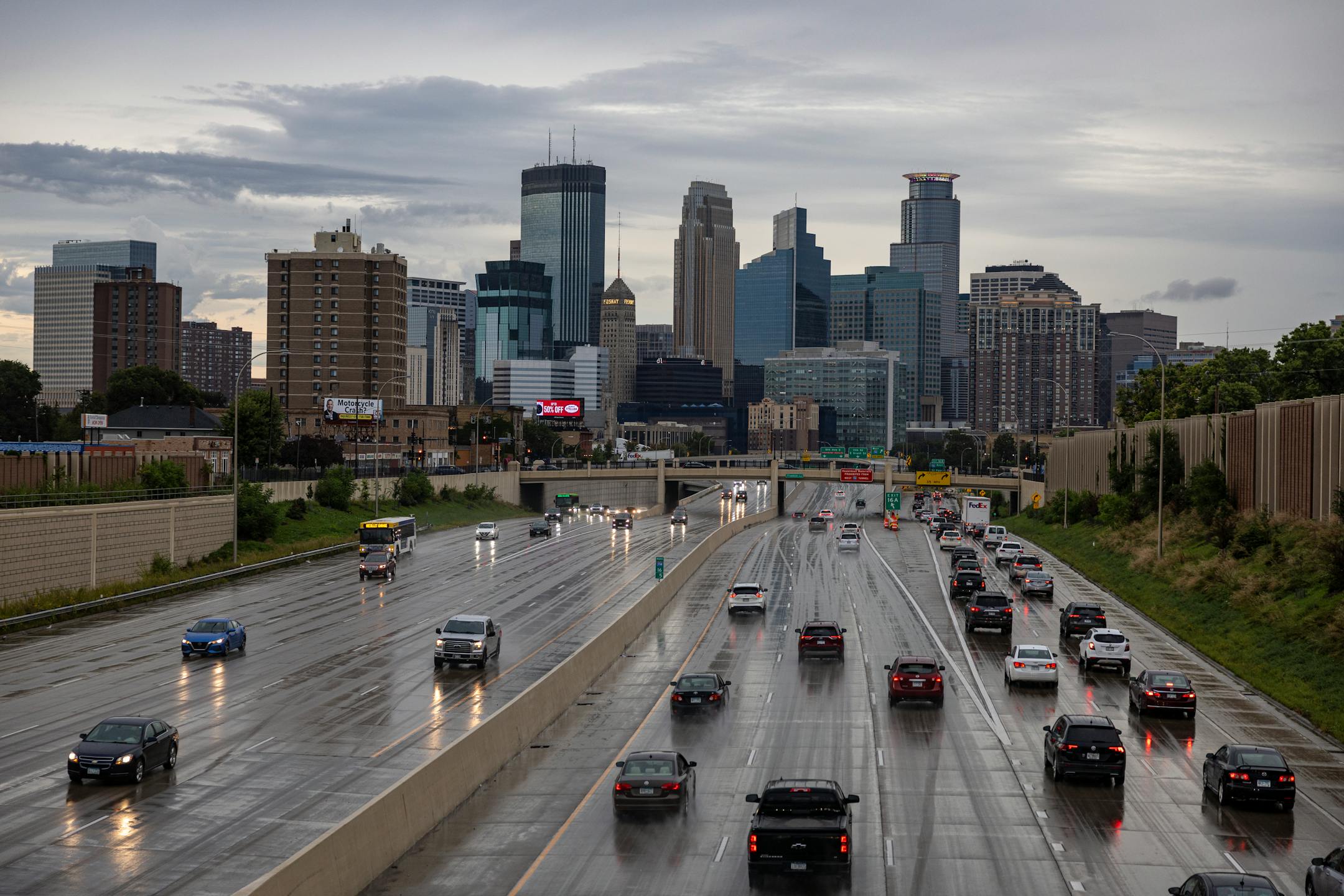
"The honest truth is that both Minneapolis and Minnesota have really serious problems," Carol Becker writes. (Ayrton Breckenridge/The Minnesota Star Tribune)

Opinion editor’s note: Strib Voices publishes a mix of guest commentaries online and in print each day. To contribute, click here.

•••

I was one of the people interviewed for “A Precarious State,” the documentary that talked about issues facing Minnesota and Minneapolis (precariousstate.com). If you have not seen it, the documentary lays out big issues facing both the state of Minnesota and city of Minneapolis. These issues include:

  • Crime, especially in Minneapolis, where drug dealers and drug users occupy parts of the city.
    • The lack of recovery of downtown Minneapolis.
      • The loss of jobs.
        • Wealth leaving Minnesota.
          • The lack of population growth in Minnesota relative to other parts of the country.
            • The declining school rankings compared with other states.
              • The control of the Minneapolis City Council by socialists.
                • The lack of police in Minneapolis.

                  If you don’t think these things are issues, everything the documentary talks about is backed up by data and citations.

                  I have been watching the response to the documentary and there have been a number of themes. One theme is attacking the documentary without even watching it. This comes in two strains. One strain is people reflexively attacking it because they do not want to step out of their filter bubble. The second strain is people who could not watch it because the funders were not named, even though the data used was scrupulously documented and it was reputable reporters who produced it. This seems to imply that people are not intelligent enough to watch something and make up their own minds about it. The issue of finding out who funded it was so important that the Minnesota Star Tribune wrote a whole article about its sleuthing to find out who it was (“Anonymous funders of ‘Precarious State’ film stay ... anonymous,” Oct. 17). Oddly, the article didn’t say, “Don’t read the Star Tribune because it is owned by the richest guy in Minnesota,” but the logic is the same.

                  There is no nefarious plot behind who funded the documentary — it was business leaders concerned about the direction of the state. They didn’t want their names out there because they knew that they would be personally attacked for raising serious issues and their names would distract from the important messages in the documentary.

                  And for those concerned it is some sort of propaganda, you have to ask: Propaganda for what? The documentary talks about the need for education reform. For rethinking our economic growth strategies. For real solutions to crime in Minneapolis. For finding ways to make people want to move to a cold, high-tax, high-regulation state. Hard to see that as propaganda.

                  Another theme is those who reflexively dump on those opposite of them. Conservatives who dumped on Democrats because Democrats dominate in Minneapolis. The far left who dumped on obvious “conservatives” because only conservatives would bring up issues with the bucolic Minneapolis.

                  Then there is the “not my problem” theme. “I live in the suburbs” or “greater Minnesota” so Minneapolis is not my problem. We saw this in Aaron Brown’s column, in which he did a “what about my issues” for greater Minnesota (“We do live in ‘A Precarious State,’ but place-baiting won’t solve that,” Oct. 8). Greater Minnesota has serious issues, too, and deserves a documentary just like the metro area, except there is only so much time in one documentary.

                  But most concerning is what former legislator Pat Garofalo called the “strategy of denial.” Brown’s column reflected this — how he strolled safely from the University of Minnesota’s Twin Cities campus to downtown Minneapolis. Eric Roper did a column for the Star Tribune (“Doomsday docs aside, Mpls.’ lush urbanity makes it a special place”) that literally talked about walking down a passageway of sunflowers in Minneapolis. With a picture of sunflowers and sunshine. He said:

                  “I’ll be biking up a protected bike lane and whiz past charming homes near quaint clusters of small businesses. I’ll be running around the lake and see sailboats framed beneath the downtown skyline. I’ll be at the annual alley dance party with my neighbors, a little toasted.”

                  The message was clear. Minneapolis has “lush urbanity,” not the crime and decline shown in the documentary. Well, only if you read through the literal picture of sunshine and flowers, then the picture of beautiful, well-maintained homes, then past the picture of happy people at a street festival, then pictures of joyous people wandering around downtown on a warm Saturday night, and then past the people lounging by the river did you get to the picture of drug dealers, people passed out on the street, trash, filth and garbage right on his protected bike lane. My friend in the Phillips neighborhood understood the real message – what is happening in your part of the city doesn’t matter because it isn’t what I experience. This was mirrored by many commenters from Minneapolis.

                  You see the same strategy of denial from columnist Evan Ramstad in the Star Tribune (“Crime isn’t our biggest problem,” Oct. 17). First, Ramstad brings up the question of who funded the documentary. Then he notes it has gone viral in business and right-leaning circles. Apparently he thinks moderates and the left are not watching it, which is depressing if true, because the issues in the documentary are real.

                  Crime is the one issue Ramstad talks about. He states:

                  “I agree that personal safety and low crime are baseline conditions for any community to attract people and to prosper. MPD is understaffed. It has made important changes, but the department has a long road to get back to the number of officers its leaders say it needs.”

                  But he doesn’t talk about any of the other serious issues brought up in the documentary.

                  Then there’s “What to make of ‘A Precarious State,’ a film on Minneapolis” (Oct. 13), which really shows the strategy of denial. It refutes that there are any issues, point by point. The article notes that much crime is down since 2022 and 2023, while downplaying that it is still up compared with when we had 950 police officers. It repeats the argument by the far left that the police budget is up, ignoring that we had about 950 police in 2019 and now have possibly 600, so it is really meaningless to say that more money is being spent on non-sworn staff.

                  It refutes Robin Wonsley being the leader of the City Council, despite Wonsley herself claiming that she has authored 40% of all the legislation approved in the last two years. It states that “Wonsley said some of the claims attributed to her were ‘comical.’ ‘What incarcerated individuals have I freed?’ she asked,” without noting that City Council members don’t have the power to free incarcerated individuals.

                  It dismisses the decline in school test scores, without noting that Minnesota continues to slide relative to other states. It dismisses the slow population growth relative to other states (Minnesota was 31st in 2024), saying it has been happening for some time now, so it is not important.

                  It then explains away the issues with the commercial real estate market by talking about the industrial real estate market and the ownership housing market. He also says it is OK that we have fewer housing starts because it is expensive to build here.

                  The message is clear. Everything is fine. Nothing to see. Everything is fine.

                  The strategy of denial.

                  The honest truth is that both Minneapolis and Minnesota have really serious problems. The trajectory is clear, and it is not good. We need real, serious conversations about what is going on and real strategies now to change the direction we are headed.

                  The last thing we need is denial.

                  Carol Becker, of Minneapolis, is a college professor and data analyst. For 16 years she was a member of the Minneapolis Board of Estimate and Taxation. She is a writer for the Minneapolis Times, where a version of this article first appeared.

                  about the writer

                  about the writer

                  Carol Becker

                  More from Commentaries

                  See More
                  card image
                  card image